







































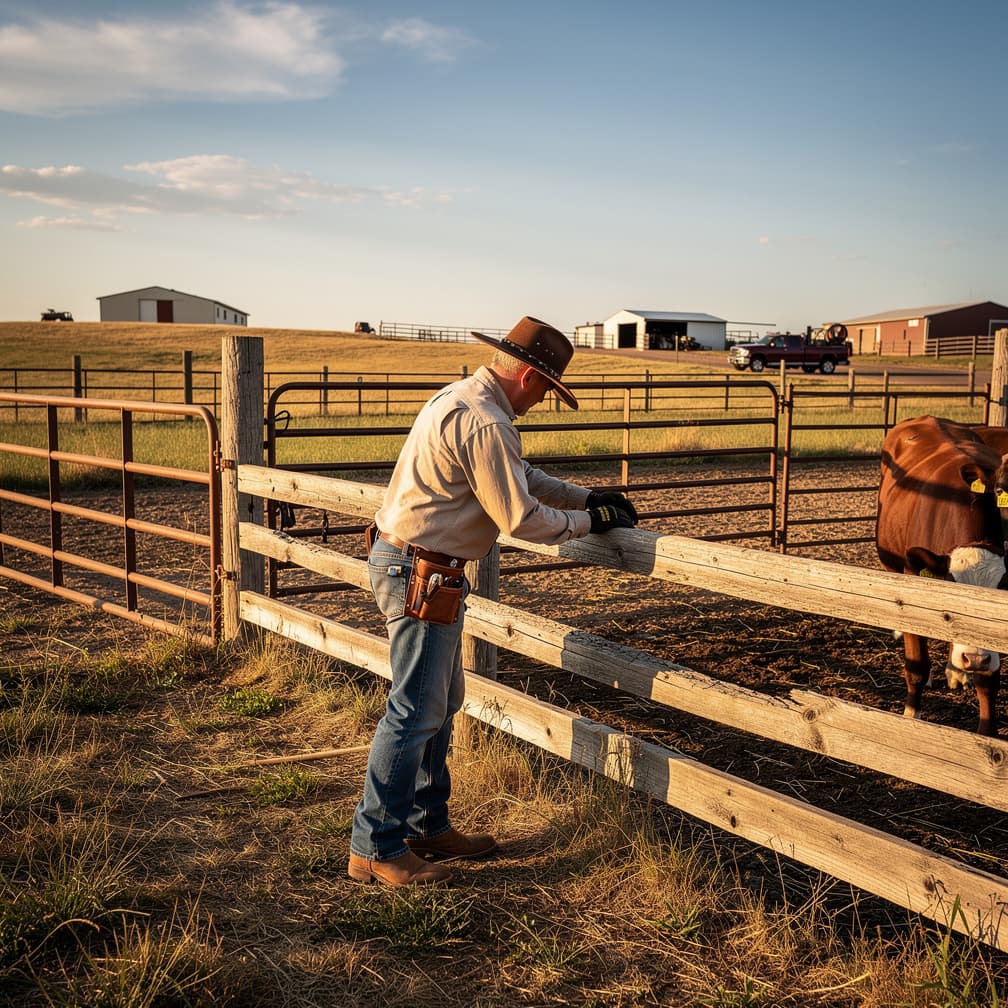

Money spent on Commercial Auto tends to outrun every other line on a ranch, and quotes commonly start around $140 a month per vehicle before anyone reads your driving records. Trucks and trailers earn that number: they are on county roads at first light, loaded, often towing more weight than the truck itself. Ranch insurance in College Station usually costs less when the vehicle list is exact, because a guess gets priced as an unknown. Write down what each truck does, who drives it, and whether anyone borrows a neighbor's rig. If your feed and vet runs cross Brazos County lines, mileage and radius questions matter more than they look. Answer them once and every quote you request gets easier to compare.
What Makes College Station Different
Word travels and so does a claim history, but only one of those reaches your renewal. Loss runs follow your operation from carrier to carrier in Texas no matter how quiet the area is. Two small claims in three years can price a ranch out of the market it started in. That is reason to think hard before filing for a loss you could absorb yourself. Deductibles exist for exactly this decision, and raising one lowers the premium you pay every month. Ask what a claim of a given size does to a renewal before you decide to file it. If your options near College Station are limited, protecting the record protects your access to a policy. Being able to buy coverage in three years is worth more than a small check today.
Local Risk Factors in College Station
After a storm passes, the first hour shapes the claim. Photograph everything before you move it, keep every receipt for temporary repairs, and write down what you did and when. Adjusters working Brazos County handle many claims at once after severe weather, and the organized file gets settled first. Temporary repairs that prevent further damage are commonly reimbursable, while permanent repairs made before an inspection can complicate matters. Ask your carrier what it wants photographed and how quickly it needs notice, since late notice is a routine reason a claim gets challenged. Then ask what happens if a second storm hits before the first repair is finished, because two events in Texas can mean two deductibles rather than one.
What Coverage Does a Ranch in College Station Need?
General Liability
Ask whoever leases you pasture what they want to see, and this is the line they name. It can help cover a third party's injury on your ground, damage you do to somebody else's property, and the defense if a demand turns into a suit. Injuries to your own workers and property left in your care generally sit outside it.
Example: A buyer steps into the wet alley beside the chute, catches a heel, and tears a knee. The medical bills and the demand letter behind them are the kind of claim this line is meant to take on.
Commercial Property
Flood and mechanical breakdown typically sit outside this form, which tells you what it is actually for: the barn, the loafing shed, the panels, the tack and tools inside them, and stored feed, when fire, wind, hail, or theft does the damage. Fencing and animals get treated unevenly, so ask how yours are scheduled.
Example: Wind lifts half the roof off a hay barn and rain finishes the feed stored under it that night. Structure and contents can land on one claim, with your deductible coming off the top.
Commercial Auto
Personal auto policies commonly exclude business use, and that gap is the reason this line exists for ranch trucks, feed rigs, and trailers. It might answer liability when a ranch vehicle injures someone or damages property, plus physical damage to the truck itself where that piece is added. Hauling for hire changes the classification, so disclose it.
Example: A loaded stock trailer sways on a county road out of College Station, clips a mailbox and a parked car, and the driver was a hand you pay by the day. Whether that claim goes anywhere often turns on who was authorized to drive.
Workers Compensation
Payroll is the meter: this line gets rated per $100 of what you pay hired help, and it can cover medical care and lost wages when a worker is hurt doing ranch work. Whether owners and family members are included varies, and requirements differ by state, so get the list of included people in writing.
Example: A hand loading panels at branding tears a shoulder and misses two months of work. Medical bills and part of the lost pay are where that claim goes, provided the payroll behind him was reported honestly.
How Much Does Ranch Insurance Cost in College Station?
Ranch Insurance is a bundle of separate policies, priced separately. The ranges below are typical figures for College Station for each line, except workers compensation, which is rated per $100 of payroll; a quote prices each one against your own operations.
| Coverage | Typical range | What moves your price |
|---|---|---|
| General Liability Insurance | $110 - $380 per month | Industry and risk classification, annual revenue, number of employees |
| Commercial Property Insurance | $240 - $875 per month | Building value and construction type, roof age and condition, fire protection class |
| Commercial Auto Insurance | $230 - $675 per month | Fleet size and vehicle types, driver records and experience, coverage limits and deductibles |
| Workers Compensation Insurance | $0.75 - $2.74 per $100 of payroll | Employee classification codes, total annual payroll, experience modification rate |
Prices shown are general estimates, not guaranteed rates or quotes. Your actual premium will depend on the insurer, coverage selected, business details, location, claims history, and other underwriting factors.
What Are the Insurance Requirements for a Ranch in College Station?
Workers' comp is not mandatory for most private employers here. Texas leaves workers' compensation optional for most private employers. Skipping it leaves injury costs on you, and many clients and landlords still demand proof of it by contract — check the Texas Department of Insurance's guidance before deciding.
State auto liability minimums apply to business vehicles. Texas's minimum auto liability limits are $30,000/$60,000/$25,000 (bodily injury per person / per accident / property damage). Contracts and lenders often require more than the state floor.
Flood damage is typically excluded from standard policies. Standard commercial property and builders-risk-type policies typically exclude flood damage. Flood exposure varies address by address, so check your premises in FEMA's Flood Map Service Center before deciding; if you sit in a mapped flood zone, a separate policy through the National Flood Insurance Program is the usual starting point.
Where to verify licensing and coverage rules. The Texas Department of Insurance publishes consumer guidance and current insurance requirements for Texas businesses. When a contract or lease demands specific wording, the Texas Department of Insurance's guidance is the authoritative place to check.
Get Your Ranch Quote in College Station
Compare rates from multiple carriers. Free quotes, no obligation.
Operating in College Station
- A lender financing a loader or a truck usually wants proof of coverage naming it for as long as the note runs. Letting that lapse in College Station can trigger a force-placed policy priced well above what you would have chosen.
- A fence crew shows up without a certificate and starts digging post holes. If one of them gets hurt, the claim goes looking for the nearest policy, and on your ground the nearest policy is yours.
- Boarding one horse for somebody else puts an animal you do not own into your care. Care, custody, and control language is where that claim gets decided, and general liability forms commonly exclude property in your keeping.
- Carriers want three years of loss runs before they price a ranch, and your current insurer is the one who has to send them. Ask a month before you shop Texas quotes, because waiting on paperwork is how renewals get missed.
How to Buy: Advice for College Station Owners
Trucks are where a ranch's insurance gets expensive and where the paperwork gets sloppiest. List every vehicle, including the one that hauls feed twice a month and the trailer nobody thinks of as a vehicle. Say who drives, whether anyone under a hired arrangement drives, and whether you borrow a rig at branding. Commercial Auto is priced off those answers, and an omission discovered after a wreck is worse than a higher rate. If you haul livestock for anyone else out of College Station, say so, because that changes the classification. Personal auto policies generally exclude business use, and that gap is the one that ends up in court. Check the Texas Department of Insurance's guidance before deciding how to insure a vehicle that does both jobs. CPK compares quotes from participating carriers once that list is honest, and the honest list usually costs less than the vague one.
FAQ
Ranch Insurance in College Station: FAQ
Sometimes, and the details decide it. Liability from a trailer in tow often follows the towing vehicle, while physical damage to the trailer itself usually has to be scheduled. A trailer sitting unhitched at a gate is a third question again. List every trailer on the Commercial Auto quote with values, and ask which of those three situations the form actually addresses.
Not automatically. Commercial Property forms are written around structures and contents, and animals commonly need scheduled livestock coverage or a separate form. Even then the cause matters: death from an accident, from disease, and from weather get treated differently, and some causes sit outside the form entirely. Ask for the list of covered causes in writing before you assume the herd is on the policy.
It puts the other party's name on your policy so your coverage can answer claims arising out of your use of their ground. Landowners and buyers ask for it because it moves the first line of defense to your insurer instead of theirs. Not every form grants it automatically, and some need an endorsement. Confirm your Texas quote allows the exact wording the contract names.
Often, subject to where they sat and how they were secured. Property kept in a locked building gets treated differently from gear left in an open lean-to or a trailer parked by a gate. Some forms sublimit tools sharply while others schedule them by item. Your deductible comes off first, which is why small theft claims frequently cost more in renewal pricing than they return.
The per occurrence figure caps what a policy may pay for one event, and the aggregate caps what it may pay across the whole policy year. A rough season holding a visitor injury, a fence-line dispute with a neighbor, and a delivery gone wrong can burn the aggregate on the first two claims and leave the third one short. Ask for both numbers, and ask whether defense costs are counted against them.
Payroll by job type, a vehicle list with drivers, an equipment schedule with current values, building details, and three years of loss runs. Any contract tied to College Station that names an insurance requirement belongs in the packet too, since it sets the limits you need quoted. Vague answers get priced as unknowns, and unknowns cost money. The same packet sent to several participating carriers is what makes quotes comparable.
Sources
- 1.Texas Department of Insurance(Texas Department of Insurance publishes consumer guidance for insurance buyers.)
- 2.FEMA / FloodSmart(Flood coverage is typically purchased separately; FEMA administers the National Flood Insurance Program.)


