







































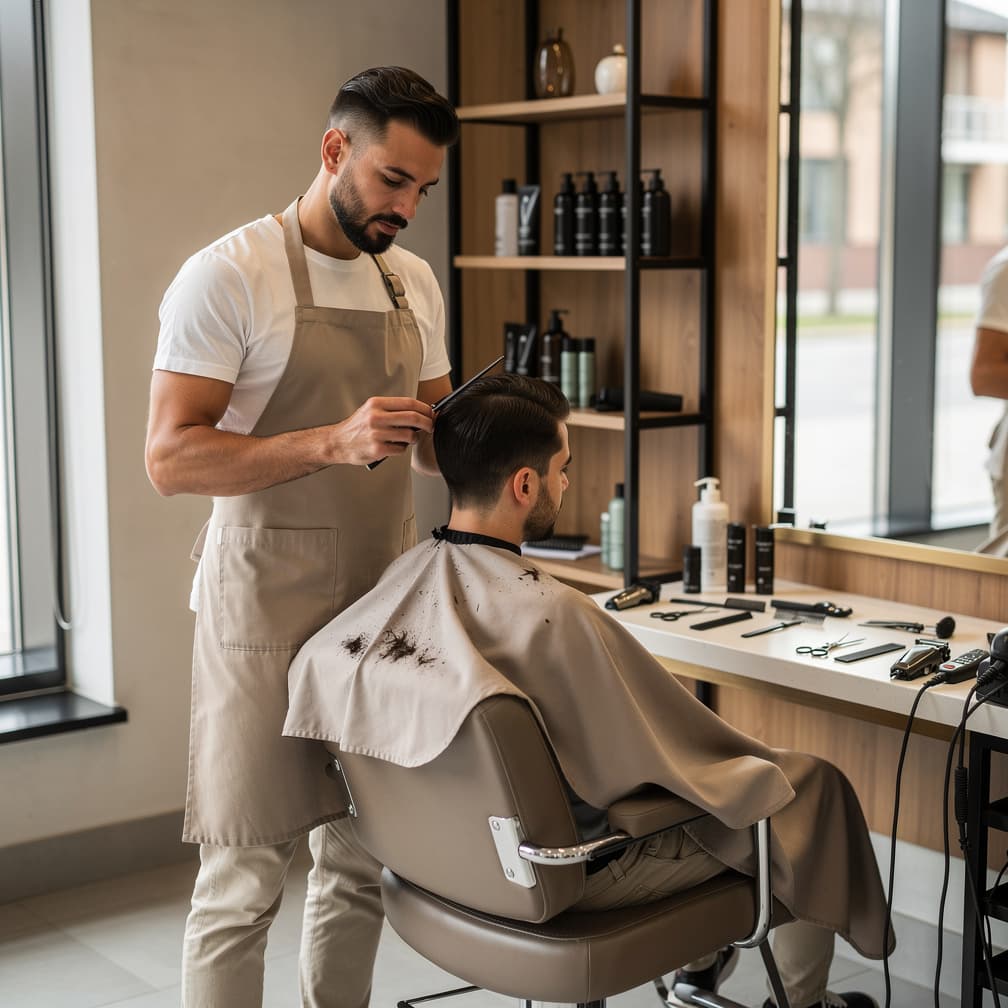

Clippers, trimmers, chairs, and a mirrored wall put real money inside one room, and fire, theft, or vandalism can take all of it in a night. Barber shop insurance in Dallas answers that loss and the one behind it: the weeks the doors stay shut while the space is repaired and the stations are replaced. Lost bookings are not something you can invoice anyone for. Commercial Property, written with a business interruption element, is intended to address both the equipment and the downtime, subject to how the policy is structured. Underinsuring the room is the common mistake, because owners price the clippers and forget the buildout. Walk the floor, total what a full rebuild would take, and compare quotes from participating carriers in Texas with that number instead of a guess.
What Makes Dallas Different
The lease is where your insurance decision actually gets made, long before you ever compare a quote. A landlord holding a contested Dallas storefront can set the required limit and the certificate deadline. You either meet those terms or the unit goes to the next applicant who will. Permit offices and building managers ask for the same paper, usually on their own schedule. None of them read the policy; they read the certificate and the limit printed on it. That is why the limit gets chosen by your counterparties rather than by your own risk. A landlord who can re-let a Dallas County storefront within a week has no reason to bend. Price the policy after you know what the paperwork demands, never the other way around.
Local Risk Factors in Dallas
Severe storms cancel a day of bookings without touching your building at all. Power drops, the roads turn ugly, and clients stay home; none of that is a property loss, and most policies are built to answer property losses. The closed day is simply yours. Where a storm does damage the shop, the picture changes, and business interruption terms may help cover income lost while repairs run their course. The condition most forms carry is that the damage be at your own premises and be a covered cause. A shop in Dallas that lost a day to a dark block does not meet that test. Read the definition in your Texas policy before you count on it.
What Coverage Does a Barber Shop in Dallas Need?
General Liability
Landlords, property managers, and booking platforms ask for this one by name, because a client injured inside your shop becomes their problem otherwise. General Liability is designed for third-party bodily injury and property damage: the slip near the shampoo bowl, the nick from a razor, the coffee cup knocked onto somebody's laptop. It typically does not answer for injuries to your own staff.
Example: A client crosses the wet strip between the bowl and the chair, goes down hard, and leaves with an injured wrist and a lawyer; general liability could help cover the defense and the claim.
Professional Liability
Where General Liability stops is roughly where this one starts. A client who says the color was wrong, the treatment burned her scalp, or the recommendation itself was an error is disputing your judgment rather than pointing at a hazard on the floor. Professional Liability is meant for that argument, defense costs included. Shops offering chemical services are the ones underwriters ask about first.
Example: Three days after a relaxer, a client returns with a raw scalp and the claim that the product was wrong for her hair; professional liability may respond to the dispute that follows.
Commercial Property
Stations, mirrors, clippers, shampoo bowls, the flooring, and the buildout tying them together are most of what you own. Commercial Property can help cover fire, theft, vandalism, and sudden water damage inside that room, subject to your deductible. Flood typically sits outside it and gets priced on its own, and wear and tear reads as maintenance rather than as a loss.
Example: A break-in overnight in Dallas strips three stations of clippers and shears and leaves the front glass in pieces; commercial property is intended to address both the equipment and the door.
Workers Compensation
If barbers sit on your payroll rather than renting chairs, this is the line state rules usually reach for first. Workers Compensation is intended for employee injuries and the wage loss that follows: a cut hand, a back strained lifting a case of product, a fall in the back room. It is rated against payroll rather than sold at a flat price.
Example: A barber carrying towels through the back of the shop slips and misses a month with a torn shoulder; workers compensation can help with the medical bills and the lost wages, depending on the state.
How Much Does Barber Shop Insurance Cost in Dallas?
Barber Shop Insurance is a bundle of separate policies, priced separately. The ranges below are typical figures for Dallas for each line, except workers compensation, which is rated per $100 of payroll; a quote prices each one against your own operations.
| Coverage | Typical range | What moves your price |
|---|---|---|
| General Liability Insurance | $50 - $140 per month | Industry and risk classification, annual revenue, number of employees |
| Professional Liability Insurance | $30 - $120 per month | The services you actually perform, annual revenue or billed fees, limit and retention selected |
| Commercial Property Insurance | $70 - $240 per month | Building value and construction type, roof age and condition, fire protection class |
| Workers Compensation Insurance | $0.75 - $2.74 per $100 of payroll | Employee classification codes, total annual payroll, experience modification rate |
Prices shown are general estimates, not guaranteed rates or quotes. Your actual premium will depend on the insurer, coverage selected, business details, location, claims history, and other underwriting factors. Learn about our pricing methodology.
What Are the Insurance Requirements for a Barber Shop in Dallas?
Workers' comp is not mandatory for most private employers here. Texas leaves workers' compensation optional for most private employers. Skipping it leaves injury costs on you, and many clients and landlords still demand proof of it by contract — check the Texas Department of Insurance's guidance before deciding.
Flood damage is typically excluded from standard policies. Standard commercial property and builders-risk-type policies typically exclude flood damage. Flood exposure varies address by address, so check your premises in FEMA's Flood Map Service Center before deciding; if you sit in a mapped flood zone, a separate policy through the National Flood Insurance Program is the usual starting point.
Where to verify licensing and coverage rules. The Texas Department of Insurance publishes consumer guidance and current insurance requirements for Texas businesses. When a contract or lease demands specific wording, the Texas Department of Insurance's guidance is the authoritative place to check.
Get Your Barber Shop Quote in Dallas
Compare rates from multiple carriers. Free quotes, no obligation.
Operating in Dallas
- Certificates on file carry an expiration date, and nobody reading that folder knows your policy renewed unless you send the new page. Diary it for the week the renewal actually happens.
- Product records matter more than owners expect. When a client blames a scalp treatment, the label, the lot, and the date of the service are the first things your carrier asks you to produce.
- Barbers who split their week between your chair and a second shop elsewhere in Dallas County raise a real question about who employs them and whose payroll they sit on when a claim lands.
- Adding color work or relaxers changes a Dallas shop's risk class, and that change does not politely wait for your renewal date before it starts to matter.
How to Buy: Advice for Dallas Owners
Gather four things before you ask anyone for a number: annual payroll, gross revenue, a list of what your equipment would cost to replace, and last year's loss run. Those four answer most of an application, and guessing at any one of them produces a quote you cannot line up against another quote. Payroll in particular drives Workers Compensation, which is rated against it rather than sold at a flat rate. Revenue and services drive General Liability. The equipment list drives Commercial Property, and it is the item owners shortchange most, usually by forgetting the mirrors, the plumbing, and the flooring. Rules for who must carry what differ from state to state, and the Texas Department of Insurance publishes the current requirements for small employers. With the four numbers assembled, participating carriers can quote your Dallas shop on identical facts, and the comparison finally means something.
FAQ
Barber Shop Insurance in Dallas: FAQ
Usually not. Standard commercial property forms typically exclude flood, and rising water gets priced as its own separate decision. A burst supply line inside the shop is a different question and may be treated as covered water damage, depending on the wording. The distinction turns on where the water came from, which is exactly what an adjuster asks about first.
Start with what your lease demands, since that is a floor you cannot negotiate down after signing. Then ask whether that same number would answer a serious injury claim, because a limit chosen to hit a price gets tested on the worst day. Landlords often settle on a common per-occurrence figure, but the aggregate sitting behind it matters just as much. Ask participating carriers in Texas to quote more than one limit.
Yes, and it happens quietly. Your per-occurrence limit is the ceiling on one client's claim, while the aggregate is the ceiling on everything your shop claims across the policy term. A year of small nicks, spills, and disputed services can eat the aggregate without any single one testing the per-occurrence figure, so the next client shows up against a limit that is largely spent. Ask where defense costs sit, because some forms take them from the same pot.
Only if it was written to. Income lost while a space is repaired is a business interruption question, and it usually rides on the property side rather than standing on its own. It generally requires covered damage at your own premises, so a closure caused by an outage down the block can fall outside it. Ask participating carriers in Texas how their form defines the waiting period.
The shop's policy was written for the shop, and it was not written for you. A client who says your razor caused an injury is making a claim about your work, and the owner's carrier has every reason to point in your direction. Renters commonly carry their own General Liability for that reason, and many chair agreements require it in writing. It is also the first thing a landlord asks for if you take your own space.
Payroll, revenue, the list of services you offer, a replacement value for equipment and buildout, and your loss run from the last few years. Occupancy details matter too: square footage, whether you own or lease, and how many chairs are rented rather than staffed. Accurate answers make quotes comparable. Guessed answers make them noise, and they hand a carrier in Texas something to point at during a claim.
Sources
- 1.Texas Department of Insurance(Texas Department of Insurance publishes consumer guidance for insurance buyers.)
- 2.FEMA / FloodSmart(Flood coverage is typically purchased separately; FEMA administers the National Flood Insurance Program.)


