







































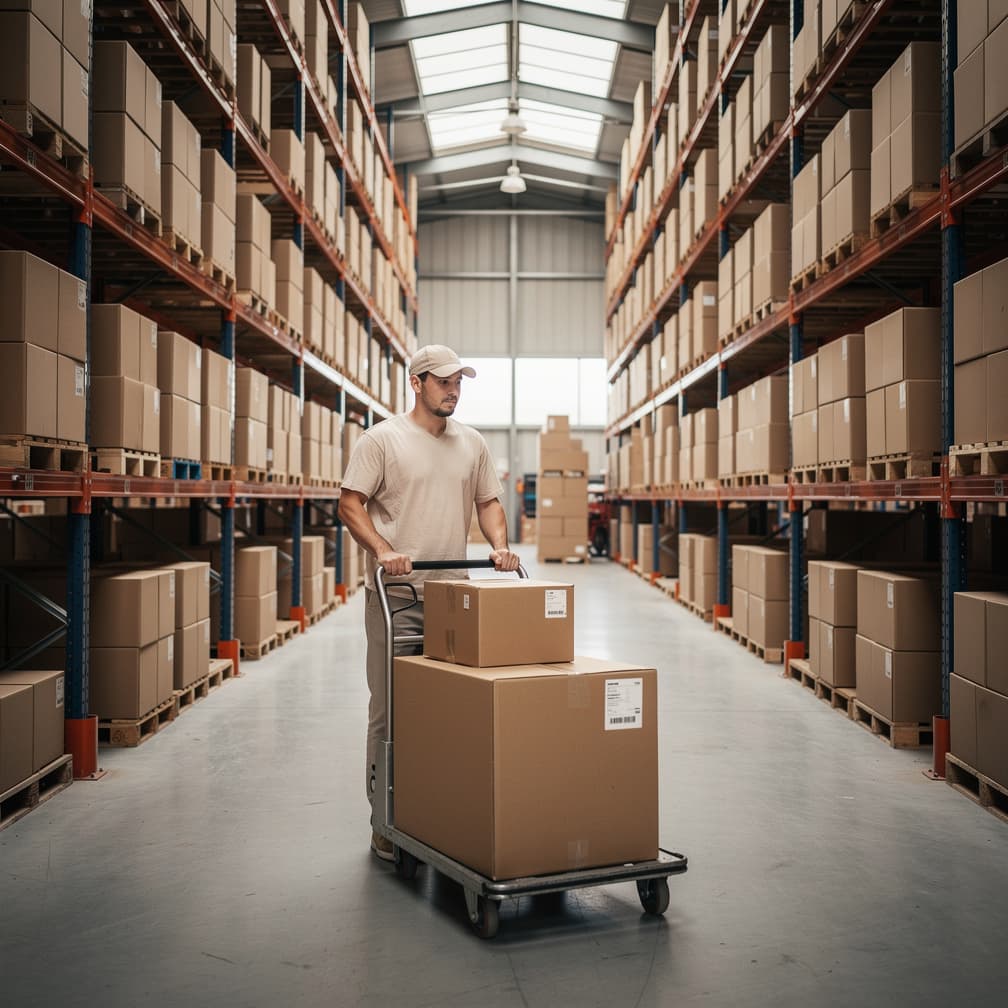

Across Dallas County, about 70,500 businesses generate the receiving docks, mailrooms, and back doors where a courier spends the day, and at every one of them somebody else's rules apply. You do not control the floor you walk on, the ramp you wheel down, or the pallet left in the lane. The whole point of courier and delivery service insurance in Dallas is exposure on ground you never inspected. That is a different problem from a shop owner's, and it is why liability questions on a courier application focus on where you go rather than what you own. Injuries at a delivery point, damage to a customer's door frame, and arguments about who dropped what all begin on someone else's property. Ask how a policy treats work performed at third-party locations. That one question sorts the useful quotes from the rest.
What Makes Dallas Different
The dock supervisor at a receiving bay can turn your driver away over one missing piece of paper. That is the obligation this trade runs on, and it arrives from clients rather than from any government office. A retailer in Dallas can demand proof of coverage before it lets an outside van approach its loading area. Dense receiving operations run on schedules, and a driver who cannot get in is a driver already behind. The document usually has to name the right entity, carry the right limit, and be current on the day. Any of those three failing sends you back to your carrier while the load waits on the truck. Participating carriers in Texas differ on how fast they turn certificate requests around, which is worth asking early. Ask what a certificate request costs you in time before you sign a contract that will require many.
Local Risk Factors in Dallas
Severe storms hit a delivery operation twice: they wreck what is parked and they stop what is moving. Hail dents and a limb through a windshield are one problem; a driver caught between stops with a warning going off on the phone is the worse one. Comprehensive coverage on a Commercial Auto policy may answer for storm damage to the vans, subject to the deductible. What it does not settle is where drivers are supposed to shelter, which is a dispatch decision that becomes a Workers Compensation question the moment somebody gets hurt. Write the stop work rule down before Texas sees its next warning, and make sure a Dallas dispatcher is the one who calls it.
What Coverage Does a Courier & Delivery Service in Dallas Need?
Commercial Auto
Every route contract worth signing asks about this line first. Commercial Auto sits over the vans, cars, and trailers you use to earn money, and it can answer for injury and property damage you cause on the road, plus damage to the vehicle itself where comprehensive and collision are added. A personal auto policy typically excludes driving for hire, so it rarely fills the gap.
Example: A driver misjudges the gap while backing out of a loading bay and crushes the tailgate of a parked pickup. The other owner's repair bill, and any injury claim behind it, may land on this policy once the deductible is met.
General Liability
It does nothing for your own vans and nothing for your own injuries. What General Liability is generally built around is harm to other people and their property while you work: the customer who trips over a parcel, the door frame a dolly gouges, the display knocked over on the way in. A landlord or a shipper can require proof of it before you get through the door.
Example: A dolly slips off a threshold plate and takes the glass panel out of a customer's storefront door. The repair bill, and the argument that follows it, are what a liability form is generally there to meet.
Tools & Equipment (Inland Marine)
Scanners, dollies, straps, racking, and the parcels themselves all move with the van, which is precisely what standard property forms are not built around. Inland Marine can sit over equipment in transit and cargo in your custody, subject to the limit and to the cause of loss. Theft from an unattended vehicle is a common exclusion, and it is worth reading before you lean on this line.
Example: Two cases of pharmacy stock disappear from a van left running at a curb for ninety seconds. Whether anything comes back rests on the cargo limit and on how the unattended vehicle wording reads.
Workers Compensation
Where General Liability handles other people, Workers Compensation handles your own. It typically covers medical treatment and a share of lost wages when a driver is hurt on the job, whether that is a back at a dock or a wrist on an icy path. Rules on who must carry it vary by state, and owners who drive their own routes are often excluded by default.
Example: A driver steps off a dock plate wrong while carrying a heavy box and tears a shoulder. Treatment and a portion of the missed wages could run through the payroll side while the schedule absorbs the rest.
How Much Does Courier & Delivery Service Insurance Cost in Dallas?
Courier & Delivery Service Insurance is a bundle of separate policies, priced separately. The ranges below are typical figures for Dallas for each line, except workers compensation, which is rated per $100 of payroll; a quote prices each one against your own operations.
| Coverage | Typical range | What moves your price |
|---|---|---|
| Commercial Auto Insurance | $750 - $2,500 per month | Fleet size and vehicle types, driver records and experience, coverage limits and deductibles |
| General Liability Insurance | $70 - $240 per month | Industry and risk classification, annual revenue, number of employees |
| Inland Marine Insurance | $60 - $270 per month | Total insured value of the scheduled property, type and age of the equipment, where it is stored and how far it travels |
| Workers Compensation Insurance | $0.75 - $2.74 per $100 of payroll | Employee classification codes, total annual payroll, experience modification rate |
Prices shown are general estimates, not guaranteed rates or quotes. Your actual premium will depend on the insurer, coverage selected, business details, location, claims history, and other underwriting factors. Learn about our pricing methodology.
What Are the Insurance Requirements for a Courier & Delivery Service in Dallas?
Workers' comp is not mandatory for most private employers here. Texas leaves workers' compensation optional for most private employers. Skipping it leaves injury costs on you, and many clients and landlords still demand proof of it by contract — check the Texas Department of Insurance's guidance before deciding.
State auto liability minimums apply to business vehicles. Texas's minimum auto liability limits are $30,000/$60,000/$25,000 (bodily injury per person / per accident / property damage). Contracts and lenders often require more than the state floor.
Where to verify licensing and coverage rules. The Texas Department of Insurance publishes consumer guidance and current insurance requirements for Texas businesses. When a contract or lease demands specific wording, the Texas Department of Insurance's guidance is the authoritative place to check.
Get Your Courier & Delivery Service Quote in Dallas
Compare rates from multiple carriers. Free quotes, no obligation.
Operating in Dallas
- A property manager in Dallas can withhold a dock key until a current certificate names the building owner correctly, spelled exactly the way the lease demands.
- Fuel, tolls, and time decide whether a Dallas route earns anything, and one at fault collision can erase the margin on months of them.
- Scanners, dollies, straps, and racking live in the van and get stolen from it, and they are the equipment nobody remembers to schedule until it is gone.
- Clients in Dallas can require you to indemnify them over delivery problems, which is a promise your business funds whether or not a policy sits behind it.
How to Buy: Advice for Dallas Owners
The biggest uncovered loss in this trade is usually the one nobody quoted for. Owners buy the vehicle line, the liability line, and a cargo limit, then find that a delayed shipment or a disputed handoff sits outside all three, because those are contract arguments rather than physical losses. Read the exclusions with that in mind and be honest about which risks you are keeping. Then price the ones you can move: Commercial Auto for the collision, General Liability for the injury at the door. Reserve cash for the remainder, because no endorsement settles an argument about service. The Texas Department of Insurance publishes consumer guidance on policy exclusions and what they mean. When you know which risks belong on a policy, CPK is where participating carriers in Texas compete for the ones you want to place.
FAQ
Courier & Delivery Service Insurance in Dallas: FAQ
Yes. CPK is a marketplace: you enter your details once and compare quotes from participating carriers writing in Texas, and CPK does not sell, write, or underwrite the coverage itself. What matters is that every quote answers the same question, with the same limits, the same vehicles, and the same driver list. A lower number built on a narrower radius is not a better deal. Compare the wording, then the price.
Personal auto policies commonly exclude driving for hire, and delivery work is the classic example of it. If a claim examiner sees a route sheet, a delivery app, or a client invoice, the personal policy may be treated as void for that trip. Commercial Auto is the line built for vehicles used to earn money, whether the title sits with you or with a driver. Ask before the first route runs, not afterwards.
Expect to supply a vehicle list with titles and use, a driver list with license numbers, annual mileage, a payroll split between drivers and office staff, and three years of loss history. Underwriters also ask what you haul and how far you go, since a route that leaves Dallas County can be priced differently from one that never does. Vague answers get vague pricing, and an answer that turns out to be wrong hands a carrier grounds to argue later.
Anyone whose property you set foot on, in practice. Receiving docks, property managers, hospitals, and corporate clients routinely require a certificate before a driver is let in, and a shipper in Dallas can make it a condition of the contract itself. The certificate names the coverage; an additional insured endorsement is a separate document that actually changes the policy. Ask which one is being requested.
Not automatically. Goods in someone else's custody are usually handled by cargo wording under Inland Marine rather than by a liability form or the auto policy, and the limits that come as standard are often modest. Theft from an unattended vehicle is a common exclusion, so a parcel taken while the driver stood at a door might not be paid. Read the limit, the deductible, and the exclusions as one thing.
Driver records, annual mileage, radius, vehicle count and value, cargo value, payroll, and your own claims history do nearly all the work. Contract limits push it too, because a shipper demanding higher limits is asking your carrier for a bigger promise. What you cannot change quickly is the class itself; what you can change is the driving record sitting behind it. Underwriters price the file in front of them, so two operators in Dallas with the same vans can land far apart.
Sources
- 1.U.S. Census Bureau, County Business Patterns (2022), Dallas County(Dallas County has about 70,500 business establishments.)
- 2.Texas Department of Insurance(Texas Department of Insurance publishes consumer guidance for insurance buyers.)


