







































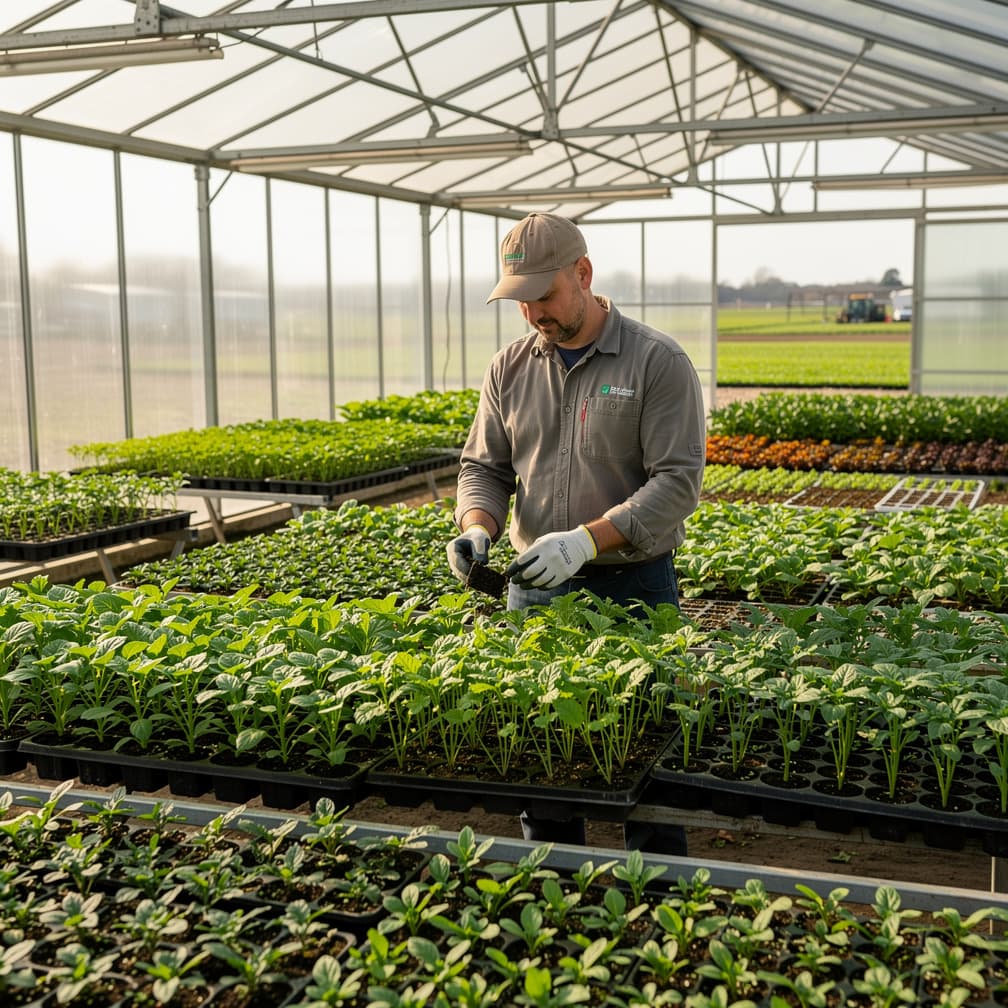

As a nursery and greenhouse business in Dallas, the paperwork finds you long before any loss does. A wholesale account wants a certificate naming it as an additional insured. A property manager wants proof on file before a truck touches the dock. An event organizer wants limits at a number someone picked years ago. None of those requests care what your yard actually risks, and every one of them can stall a sale until it is satisfied. Nursery and greenhouse insurance in Dallas serves two masters at once: the contracts already sitting in your drawer, and the injuries and property losses that keep you awake. Gather every insurance clause you have signed, mark the highest limit among them, and treat that as the floor when you compare quotes from participating carriers.
What Makes Dallas Different
Additional insured wording is where a wholesale account and a small yard usually part ways. A buyer's contract can name entities you have never met, require notice of cancellation, and demand primary and noncontributory language. Your certificate either carries that wording or your flats sit on a dock. Endorsements cost money and take time, so learning this the day before delivery is the expensive route. In Dallas, a buyer with layered contracts can push requirements down to you without ever negotiating them. Collect every signed clause you hold, then hand the whole stack to underwriters at quoting time. Ask what wording participating carriers in Texas will add and what they refuse outright. The refusals matter, because a contract you cannot satisfy is a contract you should not sign.
Local Risk Factors in Dallas
Tornado and straight-line wind do not negotiate with a hoop house. A severe cell can flatten a structure in seconds, drive debris through the glass of the one beside it, and leave stock exposed to whatever weather comes next. Damage from flying debris usually reads as wind damage on a property form, which is the good news, while water arriving through the new opening can turn into a different argument. Commercial Property may respond to the structures and the stock inside them, subject to your deductible and to the values on your schedule. Ask what your form says about debris removal, since clearing a collapsed house off a sales yard is expensive and that cost is not always inside the limit. Settle it for your Dallas operation before storm season in Texas.
What Coverage Does a Nursery & Greenhouse in Dallas Need?
General Liability
Landlords, wholesale buyers, and event coordinators ask for this one by name before you open, ship, or set up a stand. It generally answers third-party injury and property damage: the shopper who goes down on a wet aisle, the basket that falls off its hook onto someone. Your own crew's injuries and damage to your own stock sit elsewhere.
Example: A customer reaches for a pot near the top of a display, the stack shifts, and a falling planter breaks her wrist beside the register. A claim like that may respond to her medical bills and the suit that follows.
Commercial Property
Glass, poly film, hoop ribs, benches, heaters, controllers, and the stock standing under all of it: this line is built around the things you own. Fire, storm damage, theft, and vandalism are the usual covered causes, subject to your values and your deductible. Flood typically sits outside it, and wear on hard-run equipment usually does too.
Example: A heater in the propagation house shorts overnight and fire takes the structure, the benches, and six weeks of seedlings with it. Commercial Property could pick up the rebuild and the lost stock, up to the values on your schedule.
Workers Compensation
General Liability does nothing for your own people, and that gap is what this line exists to fill. Medical care and lost wages after a work injury are the core of it: a back strained on a balled tree, a hand caught under a cart, heat illness in a closed house. Rules vary by state, and the Texas Department of Insurance publishes the current requirements for employers.
Example: A seasonal hire lifts a heavy container off a low bench, feels something give in his back, and is out for a month at the worst point of the year. Workers Compensation might handle the treatment and part of his lost pay.
Business Owners Policy
Buying the property and liability pieces separately works fine; bundling them into a single form is often cheaper for a small yard, and that bundle is the Business Owners Policy. It typically packages buildings, stock, and third-party injury together, sometimes with income provisions attached. Unusual structures or heavy outdoor inventory can outgrow the form.
Example: Hail perforates the film on two houses in Dallas, the stock beneath is stripped bare, and sales stop for a month. One packaged policy might take the repairs, the ruined plants, and a share of the lost income together.
How Much Does Nursery & Greenhouse Insurance Cost in Dallas?
Nursery & Greenhouse Insurance is a bundle of separate policies, priced separately. The ranges below are typical figures for Dallas for each line, except workers compensation, which is rated per $100 of payroll; a quote prices each one against your own operations.
| Coverage | Typical range | What moves your price |
|---|---|---|
| General Liability Insurance | $85 - $280 per month | Industry and risk classification, annual revenue, number of employees |
| Commercial Property Insurance | $210 - $800 per month | Building value and construction type, roof age and condition, fire protection class |
| Workers Compensation Insurance | $0.75 - $2.74 per $100 of payroll | Employee classification codes, total annual payroll, experience modification rate |
| Business Owners Policy Insurance | $200 - $575 per month | Annual revenue and industry class, building and contents values, square footage and building age |
Prices shown are general estimates, not guaranteed rates or quotes. Your actual premium will depend on the insurer, coverage selected, business details, location, claims history, and other underwriting factors. Learn about our pricing methodology.
What Are the Insurance Requirements for a Nursery & Greenhouse in Dallas?
Workers' comp is not mandatory for most private employers here. Texas leaves workers' compensation optional for most private employers. Skipping it leaves injury costs on you, and many clients and landlords still demand proof of it by contract — check the Texas Department of Insurance's guidance before deciding.
Flood damage is typically excluded from standard policies. Standard commercial property and builders-risk-type policies typically exclude flood damage. Flood exposure varies address by address, so check your premises in FEMA's Flood Map Service Center before deciding; if you sit in a mapped flood zone, a separate policy through the National Flood Insurance Program is the usual starting point.
Where to verify licensing and coverage rules. The Texas Department of Insurance publishes consumer guidance and current insurance requirements for Texas businesses. When a contract or lease demands specific wording, the Texas Department of Insurance's guidance is the authoritative place to check.
Get Your Nursery & Greenhouse Quote in Dallas
Compare rates from multiple carriers. Free quotes, no obligation.
Operating in Dallas
- Trays, hand tools, brass fittings, and bagged soil vanish in amounts that sit under the deductible. The loss is real, the claim is not worth filing, and only what you change in the yard affects it.
- Forklifts run past benches and shoppers in the same aisle during delivery weeks. A worker hurt and a customer hurt in that same moment travel down two different policies with two different adjusters.
- Payroll triples for a few weeks and then disappears, and the workers compensation audit at renewal squares your estimate either way. Guess low and a bill arrives; guess high and you financed somebody else's year.
- Delivery trucks, customer cars, and a cart loaded with trees share one strip of concrete at the gate. A lease in Dallas can make that apron your responsibility whether or not you ever wanted it.
How to Buy: Advice for Dallas Owners
Budget from the drivers rather than from a headline number. General Liability for this trade can start around $35 a month, but foot traffic, payroll, retail square footage, and claim history all pull it from there, and a yard that hosts weekend crowds does not price like a wholesale grower. Workers Compensation moves on payroll alone, so a seasonal spike shows up there and nowhere else. Assemble both stories before you shop: how many people walk your aisles, and how many hours your crew works during the rush. Check the Texas Department of Insurance's guidance before deciding which coverages you actually need. Then let participating carriers in Texas price the real operation instead of an average one.
FAQ
Nursery & Greenhouse Insurance in Dallas: FAQ
One caps a single claim. The other caps what the whole term can draw, no matter how many claims arrive. A yard with heavy foot traffic can produce several small injury claims in one busy season, and each draws down the aggregate whether it settles or not. When the aggregate empties, the certificate you send out still looks identical. Ask what erodes it and whether defense costs sit inside the limit.
Usually yes, which is why small thefts rarely become claims. Bags of soil, hand tools, trays, and brass fittings walk off in amounts that sit below most deductibles, so you absorb them quietly. The deductible you chose to lower a premium is the number you pay on each of those losses. Decide what you would genuinely file on, then set it at a level you could cover in a dead week.
Often, though it turns on the form and the location. Policies describe covered premises specifically, and a tent or lot on ground you do not own can sit outside that description. If a site in Dallas requires proof of coverage naming the property owner, that request is a separate step from extending your own coverage to the spot. Ask about both before you commit to the space.
Payroll by job type, annual revenue, square footage under glass, values on every structure, an equipment list with ages, your retail versus wholesale mix, and a few years of claims. If your Dallas County operation runs both retail and growing, they want the split. Anything left vague gets filled with an assumption, and assumptions favor the carrier. Send the identical file to everyone you ask.
That turns on whether the work is finished and what the form says about completed operations. Liability forms draw a line between damage to someone else's property while you are working and damage to the work itself, and the second is often excluded. Planting that dies weeks after installation is exactly where the argument lands. Ask how your form handles completed work before quoting a large install.
A serious claim moves your number further than any amount of shopping will, and it sits in the file for years. Frequency counts as much as severity, since three small injury claims can read worse to an underwriter than one large one. That is the argument for spending on lighting, walkway routines, and bench guards first. Ask participating carriers in Texas how they weigh recent claims, because they differ.
Sources
- 1.Texas Department of Insurance(Texas Department of Insurance publishes consumer guidance for insurance buyers.)
- 2.FEMA / FloodSmart(Flood coverage is typically purchased separately; FEMA administers the National Flood Insurance Program.)


