







































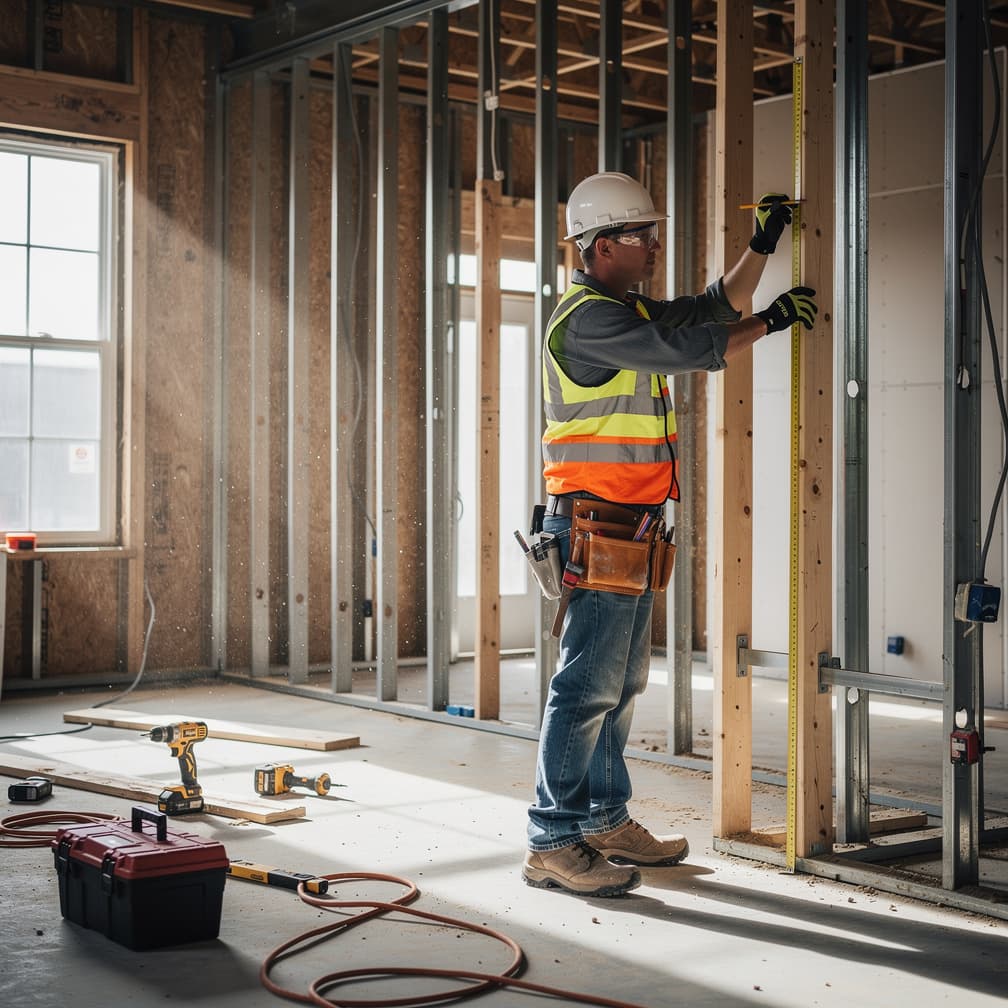

Tool coverage for a remodeling crew commonly runs from $20 to $100 a month, and the spread is mostly about what you haul. Ladders and a chop saw sit at one end. A lift, a dust extractor, and a full finish kit sit at the other, which is why renovation contractor insurance in Garland should be priced against your inventory rather than a guess. Write the list down with serial numbers, because an adjuster asks for it at the worst possible time. Deductibles come off your side of the loss, so a low deductible on cheap gear buys less than it appears to. Then compare what participating carriers in Texas do with the same list.
What Makes Garland Different
Building engineers stand between you and the freight elevator, and they ask for the certificate before the key. If your Garland work runs to condo towers and mixed-use blocks, satisfying that gatekeeper is its own job. The demand is not really about you. It is about the owner's own policy and what that policy requires of everyone inside. Property managers routinely want additional insured status, a waiver of subrogation, and a limit written into the contract. None of that is negotiable at the loading dock on the morning your crew shows up to demo. The buying decision it forces is simple: carry what the toughest building you want to work in demands. Participating carriers in Texas handle those endorsement requests differently, so ask long before you need the document.
Local Risk Factors in Garland
Before you set trusses or stand a wall in Garland, check what the sky is doing, then check what your contract says about the days you lose to it. Both questions cost money and only one of them is insurance. Bracing that is temporary in name stays up for a week, and a week is long enough for a cell to find it. The gap remodelers discover late is that a stalled job is a business problem rather than a claim, since income protection generally depends on physical damage and a lost afternoon is not damage. Build the weather days into the schedule you sign in Texas instead of hoping to make them up later.
What Coverage Does a Renovation Contractor in Garland Need?
General Liability
The owner, the landlord, or the general contractor ahead of you asks for this one by name before your crew opens anything. It is the line generally written for a third party hurt on your jobsite and for damage you cause to somebody else's property while working. Intentional acts sit outside it, your own tools sit outside it, and so does the fee dispute when a scope argument turns ugly.
Example: A homeowner steps around the dust barrier, catches a heel on a pried-up threshold, and breaks a wrist in her own hallway. The medical bills and the letter from her lawyer are what this line may be called on to answer.
Workers Compensation
A framer drops a header on his hand at nine in the morning and the day changes for everyone on site. This line is built around employees hurt at work: lifting injuries, falls from planks, and heat illness in an unconditioned gut. It generally applies to your people rather than to subs carrying their own policies, though an uninsured sub can end up counted as yours at audit. Requirements vary by state.
Example: A helper carrying a cast iron tub down a stair tread that gave way spends the next six weeks off the job. Wage replacement and the medical side are what this coverage is intended to pick up.
Commercial Property
Flood sits outside this one, and so does anything parked on a jobsite you do not own, which catches remodelers out constantly. What it typically attaches to is a fixed location you occupy: a shop, an office, a yard, and the stock and benches inside them. If you run the business out of trucks and a rented storage unit, say so, because the answer may be a different form entirely.
Example: A fire in the shop takes the miter station, the racked lumber, and the paperwork drawer in one night. Rebuilding that room and replacing what stood in it is the sort of loss this policy is meant to address.
Tools & Equipment (Inland Marine)
Tools are the property that never sits still: in the truck, in a locked house overnight, loaned to a sub for a week. This line follows gear that moves rather than gear that lives at one address, and it commonly picks up theft, vandalism, and storm damage away from a shop. Wear, rust, and a blade that finally gave up are ordinary depreciation and usually fall outside it.
Example: Somebody pops the trailer at a Garland jobsite overnight and clears out the nailers, the compressor, and two lifts. Replacing that kit fast enough to keep the crew working is what this coverage can help cover.
Commercial Umbrella
Where the underlying liability limit stops, this one starts, and that is the entire idea. It generally adds height above a policy already in force and may respond once that limit is used up, which means it inherits whatever the form beneath it leaves out. Contractors buy it when a lease demands a limit the base policy cannot reach, never as a patch for a gap.
Example: One demolition afternoon produces an injured guest, a flooded unit below, and separate demands from the building's owner and its manager. Once the base limit runs dry, this layer is designed to sit behind the rest.
How Much Does Renovation Contractor Insurance Cost in Garland?
Renovation Contractor Insurance is a bundle of separate policies, priced separately. The ranges below are typical figures for Garland for each line, except workers compensation, which is rated per $100 of payroll; a quote prices each one against your own operations.
| Coverage | Typical range | What moves your price |
|---|---|---|
| General Liability Insurance | $200 - $650 per month | Industry and risk classification, annual revenue, number of employees |
| Workers Compensation Insurance | $0.75 - $2.74 per $100 of payroll | Employee classification codes, total annual payroll, experience modification rate |
| Commercial Property Insurance | $80 - $270 per month | Building value and construction type, roof age and condition, fire protection class |
| Inland Marine Insurance | $50 - $210 per month | Total insured value of the scheduled property, type and age of the equipment, where it is stored and how far it travels |
| Commercial Umbrella Insurance | $95 - $310 per month | Umbrella limit requested, limits carried on the underlying policies, loss history on those underlying policies |
Prices shown are general estimates, not guaranteed rates or quotes. Your actual premium will depend on the insurer, coverage selected, business details, location, claims history, and other underwriting factors.
What Are the Insurance Requirements for a Renovation Contractor in Garland?
Workers' comp is not mandatory for most private employers here. Texas leaves workers' compensation optional for most private employers. Skipping it leaves injury costs on you, and many clients and general contractors still demand proof of it by contract — check the Texas Department of Insurance's guidance before deciding.
Flood damage is typically excluded from standard policies. Standard commercial property and builders-risk-type policies typically exclude flood damage. Flood exposure varies address by address, so check your premises in FEMA's Flood Map Service Center before deciding; if you sit in a mapped flood zone, a separate policy through the National Flood Insurance Program is the usual starting point.
Where to verify licensing and coverage rules. The Texas Department of Insurance publishes consumer guidance and current insurance requirements for Texas businesses. When a contract or lease demands specific wording, the Texas Department of Insurance's guidance is the authoritative place to check.
Get Your Renovation Contractor Quote in Garland
Compare rates from multiple carriers. Free quotes, no obligation.
Operating in Garland
- Dumpster placement is a negotiation with somebody, and once the container sits on a Garland street, a permit and a certificate can both become part of the arrangement.
- Tools left in a house without doors belong to whoever walks in, and the loss that actually hurts is the week of work that stops, not the saw that left.
- A crew that crosses into Dallas County for a job is still your crew, and the payroll earned there follows them onto the same audit at the end of the term.
- Change orders are where remodels go wrong, because the moment scope moves without paper, the fee argument and the damage argument turn into one argument.
How to Buy: Advice for Garland Owners
Ask what happens after the job closes, because a Garland remodel can generate claims for years afterward. A shower pan weeping into the framing surfaces long after the final walkthrough, and the homeowner remembers your name precisely. General Liability generally includes a completed operations section, and that section is the one nobody reads until it matters. Ask whether it stays in force if you switch carriers, and what becomes of work you finished under the old policy. That question separates a real comparison from a price list. The Texas Department of Insurance publishes consumer guidance on continuous coverage. Keep close-out photos and the signed punch list from every job, then take that record to participating carriers, since a documented process is worth something in a quote.
FAQ
Renovation Contractor Insurance in Garland: FAQ
Because swinging a sledgehammer and hanging cabinets do not carry the same risk, and rating follows the work rather than the job title. A crew doing both, coded as one, either overpays every month or takes a correction at audit. Split your payroll by task honestly and the number you are quoted is the number you keep.
A landlord or property manager can write any limit into the lease, and a tenant build-out often carries a requirement well above what residential work asks for. Declining the job stays open to you; redlining the clause does not. Read it before bidding, because that limit is part of the price of the work.
One is the most that may be available for a single incident. The other is the ceiling for the entire policy year. A remodeler running several bathrooms can generate separate water claims out of separate jobs, and each draws on that annual number. By the last job of the year, the limit a client reads on your certificate might not be the limit still standing behind it.
Generally no. Income protection usually turns on physical damage to property rather than on a discouraging forecast, so a rained-out week normally sits with you. If wind or water actually damages the home while you have it opened up, that is a separate question with a separate answer. Ask what triggers any time-element wording before you agree to buy it.
The building belongs to your client, and their own policy typically stands behind it. Your exposure is the damage you cause to it, which is a liability question rather than a property one. Bigger structural projects sometimes call for a course of construction form bought by whoever owns the risk. Practice varies among participating carriers in Texas, so settle who is buying that before the job starts.
Once a policy is in force the document is routine to request, though carriers differ in how they handle it. Before a policy exists, no document exists either, and that is where contractors lose weeks. The fix is sequencing: bind coverage while you are still negotiating the contract instead of after you sign it. Ask how requests get handled before you pick anyone.
Sources
- 1.Texas Department of Insurance(Texas Department of Insurance publishes consumer guidance for insurance buyers.)
- 2.FEMA / FloodSmart(Flood coverage is typically purchased separately; FEMA administers the National Flood Insurance Program.)


