







































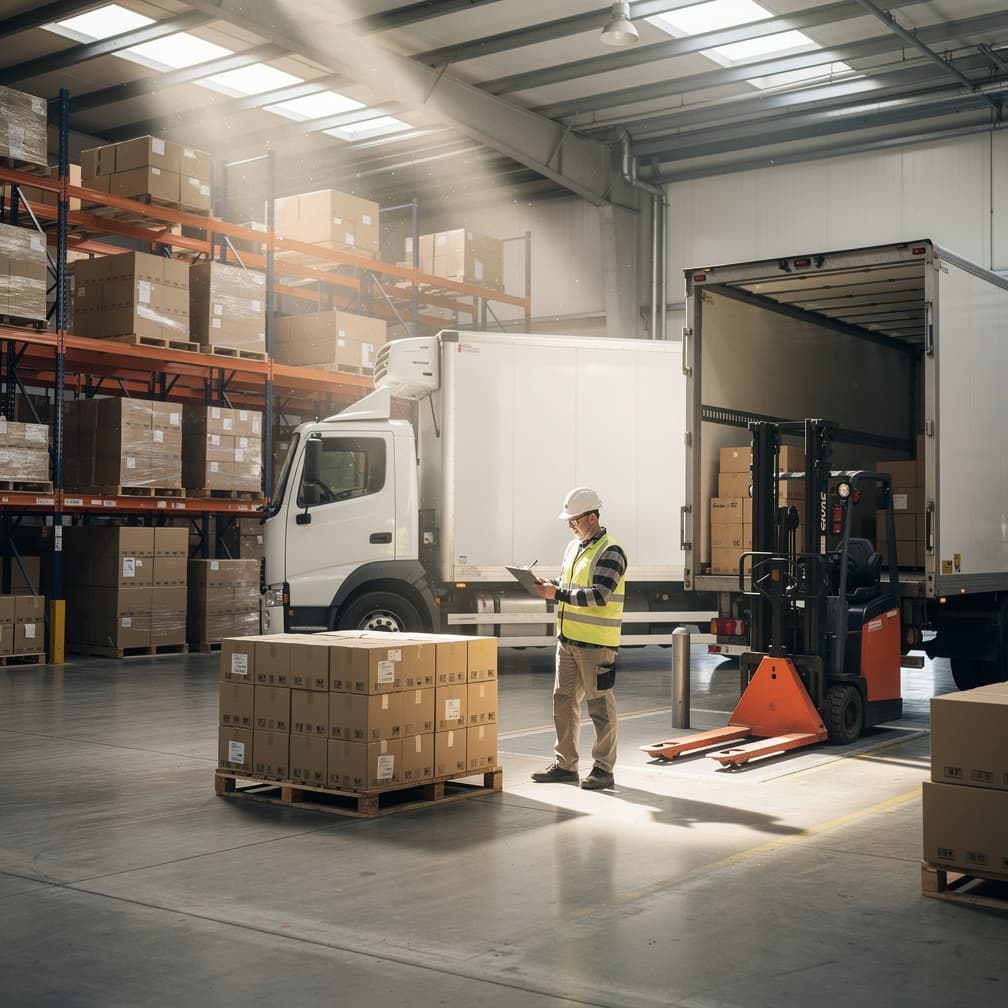

A pallet shifts on a curve and the load arrives crushed, and now two claims are open at once: the freight and the trailer. Trucking company insurance in Garland exists for that kind of morning, when one event splits into damaged goods, bent equipment, and a shipper asking who pays. Most of the monthly cost sits in the truck policy itself, because a single unit and the person driving it carry more exposure than anything else you own. General liability usually answers for the other half of the day: the dock worker your driver clips, the customer property dented at a delivery site. Any customer, broker, or landlord in Texas can ask for proof of coverage before a load moves. What follows lays out what each line does and where the money actually goes.
What Makes Garland Different
Gate guards do not negotiate, and a driver without current proof waits while the delivery window quietly burns. A facility in Garland can turn a trailer away over a missing endorsement that has nothing to do with safety. That is the uncomfortable part: the paperwork gate and the safety gate are not the same gate at all. An endorsement lives on the policy itself, so nobody at a desk can add one at six in the morning. Owners end up keeping a current certificate for each active agreement instead of one generic copy in the cab. The larger the customer, the more likely an additional-insured requirement arrives as a condition of hauling at all. In a crowded freight market, shippers have options, and the paperwork they hand you shows exactly that. Ask what an agreement demands before you quote, because a limit set at signing in Texas is hard to unwind.
Local Risk Factors in Garland
After a severe storm passes, the first hour decides the claim. Photograph the units, the yard, and the trailers before anything gets moved, because an adjuster reading your file in Garland was not standing there. Comprehensive on the truck line may respond to wind and debris damage on tractors and trailers, subject to the deductible. Commercial property answers for the building, and it generally treats flood as a separate purchase even when the water arrived with the same storm. If a driver is hurt during cleanup, that is a workers compensation matter rather than a property one. The Texas Department of Insurance publishes consumer guidance on documenting a storm claim in Texas.
What Coverage Does a Trucking Company in Garland Need?
Commercial Truck
A crash involving one power unit can put the tractor, the trailer, and a stranger's injuries on the same claim file, and this is the line written for that morning. Shippers and brokers commonly require it at named limits before a load is tendered. It generally stops at the vehicle, so the freight inside and any borrowed trailer are usually priced as separate decisions.
Example: A tractor jackknifes on a wet ramp and takes out a guardrail along with its own front axle; both the liability claim and the equipment damage may fall here.
Commercial Auto
Tractors have a line of their own; the pickups, service vans, and the car a dispatcher drives to a customer meeting do not. Rating follows the drivers on your roster, so records weigh as much as the vehicle itself. Personal auto policies typically exclude business use, which is the gap this coverage is intended to close.
Example: Your yard pickup rear-ends a car at a light while running parts across Garland; the other driver's repairs and the injury claim behind them are commonly this line's problem.
General Liability
Almost every shipper agreement and yard lease names it, usually at a set limit with additional-insured wording attached. What it answers for happens on foot rather than at highway speed: a visitor hurt in your yard, a dock plate bent during a delivery, a gate clipped on the way out. Crashes involving your own units sit elsewhere, and so does damage to your own property.
Example: A driver backing into a bay takes out a bollard and part of a customer's dock door, and the repair plus the claim behind it typically land under general liability.
Workers Compensation
Payroll is the rating base here, not trucks. Drivers, dock staff, and yard crew are the exposure, and how each person is classified decides the rate, so a misclassification tends to surface at audit rather than at signing. Requirements vary by state, and shippers or landlords can demand proof regardless of what any threshold says.
Example: A dock hand tears a shoulder wrestling a pallet jack in a customer's warehouse; the medical bills and the lost wages that follow are what this coverage is meant to absorb.
Tools & Equipment (Inland Marine)
A truck policy is aimed at the vehicle, not at what rides on or in it, and that gap is where this line lives: tools, straps, mobile equipment, and contractors equipment moving between pickup and delivery. Terms usually turn on where an item was when it went missing, so read the transit wording closely.
Example: A locked toolbox is cut off a deck overnight while a trailer sits staged outside Garland; replacement cost could come back to you, subject to the deductible you chose.
How Much Does Trucking Company Insurance Cost in Garland?
Trucking Company Insurance is a bundle of separate policies, priced separately. The ranges below are typical figures for Garland for each line, except workers compensation, which is rated per $100 of payroll; a quote prices each one against your own operations.
| Coverage | Typical range | What moves your price |
|---|---|---|
| Commercial Truck Insurance | $1,100 - $3,600 per month | Radius of operation, commodities hauled and cargo value, number and value of power units |
| Commercial Auto Insurance | $1,050 - $3,200 per month | Fleet size and vehicle types, driver records and experience, coverage limits and deductibles |
| General Liability Insurance | $95 - $350 per month | Industry and risk classification, annual revenue, number of employees |
| Workers Compensation Insurance | $0.75 - $2.74 per $100 of payroll | Employee classification codes, total annual payroll, experience modification rate |
| Inland Marine Insurance | $140 - $675 per month | Total insured value of the scheduled property, type and age of the equipment, where it is stored and how far it travels |
Prices shown are general estimates, not guaranteed rates or quotes. Your actual premium will depend on the insurer, coverage selected, business details, location, claims history, and other underwriting factors.
What Are the Insurance Requirements for a Trucking Company in Garland?
Workers' comp is not mandatory for most private employers here. Texas leaves workers' compensation optional for most private employers. Skipping it leaves injury costs on you, and many clients and landlords still demand proof of it by contract — check the Texas Department of Insurance's guidance before deciding.
State auto liability minimums apply to business vehicles. Texas's minimum auto liability limits are $30,000/$60,000/$25,000 (bodily injury per person / per accident / property damage). Contracts and lenders often require more than the state floor.
Where to verify licensing and coverage rules. The Texas Department of Insurance publishes consumer guidance and current insurance requirements for Texas businesses. When a contract or lease demands specific wording, the Texas Department of Insurance's guidance is the authoritative place to check.
Get Your Trucking Company Quote in Garland
Compare rates from multiple carriers. Free quotes, no obligation.
Operating in Garland
- A tractor sitting in a shop is not earning, and a long tow from a lane outside Dallas County adds days that no line on a policy is written to replace.
- Customer sites can require an additional-insured endorsement your certificate cannot create; the endorsement lives on the policy, and the form only reports what is already there.
- Audits arrive after the year is over. Misclassifying a dock hand as a driver is a clerical shortcut that gets repriced at the end, upward.
- Texas rules on who counts as an employee shape your workers compensation bill more than the number of trucks in the yard does, and leased-on drivers are where owners get it wrong.
How to Buy: Advice for Garland Owners
Look at what rides in the trailer and on the truck, not only at the truck itself. Commercial truck is priced around the tractor and the highway, and it is not the line that answers when tools, mobile property, or equipment in transit go missing between pickup and delivery. Inland marine is meant for those items, and it tends to be one of the smaller numbers on the page. If you pull borrowed or interchanged trailers, ask specifically about trailer interchange terms, since that coverage is commonly an add-on rather than something already included. General liability sits between them and answers for injuries and property damage your operation causes at a customer's site. A load picked up in Garland and dropped three states away can involve every one of those lines in a single week. The Texas Department of Insurance publishes consumer guidance on comparing commercial coverage options. Comparing participating carriers only works when each one is pricing the same operation.
FAQ
Trucking Company Insurance in Garland: FAQ
Nothing good, and it is rarely only a few days of exposure. A gap shows up on your loss runs and on the certificate a shipper checks, and it can end an agreement without any claim being filed. A guard at a gate can turn your driver away over a certificate that expired at midnight. Coverage does not reach back across a gap, so a loss inside it stays yours.
If losing them would stop your week, it is worth pricing. Inland marine is the line meant for tools, mobile property, and equipment in transit, and it is generally among the smaller items on a trucking program. A truck policy is aimed at the vehicle itself, so gear in the cab or strapped to a deck often sits outside it. Ask what a theft from a parked unit would actually trigger before you decide to skip it.
Both, and they do different jobs. Per-occurrence caps what a policy might pay for a single loss, while the aggregate caps the total for the policy year. Three claims in one bad quarter can eat an aggregate and leave you thin for the rest of the term even though each sat under the per-occurrence number. Agreements in Texas sometimes name only one of the two, so read which number your customer actually wants.
A vehicle list with values, a driver roster with records, payroll broken out by role, annual mileage, the commodities you haul, and loss runs from prior carriers. Underwriters read the loss runs first, so pull them before you start calling. Missing details do not make a quote smaller; they make it wrong, and corrections after binding rarely go your way. A comparison only means something when every carrier is pricing the same file.
Usually not under a standard property or physical damage form. Flood sits outside most standard policies and is typically priced as its own decision, which surprises owners whose yard has never taken water. Wind and hail are treated differently again. If a lot in Garland sits low, ask specifically which peril is inside the form and which is an add-on, rather than assuming storm damage is one category.
Almost never. Insurance is generally built around damage and liability, not around missed delivery windows or the revenue behind them. A closed lane, a breakdown, or a driver calling out are business problems rather than claims. What may respond is the damage itself: a bent unit, an injured person, ruined goods. A shipper can hold you to the contract regardless, which is why the agreement matters as much as the policy.
Sources
- 1.Texas Department of Insurance(Texas Department of Insurance publishes consumer guidance for insurance buyers.)


