







































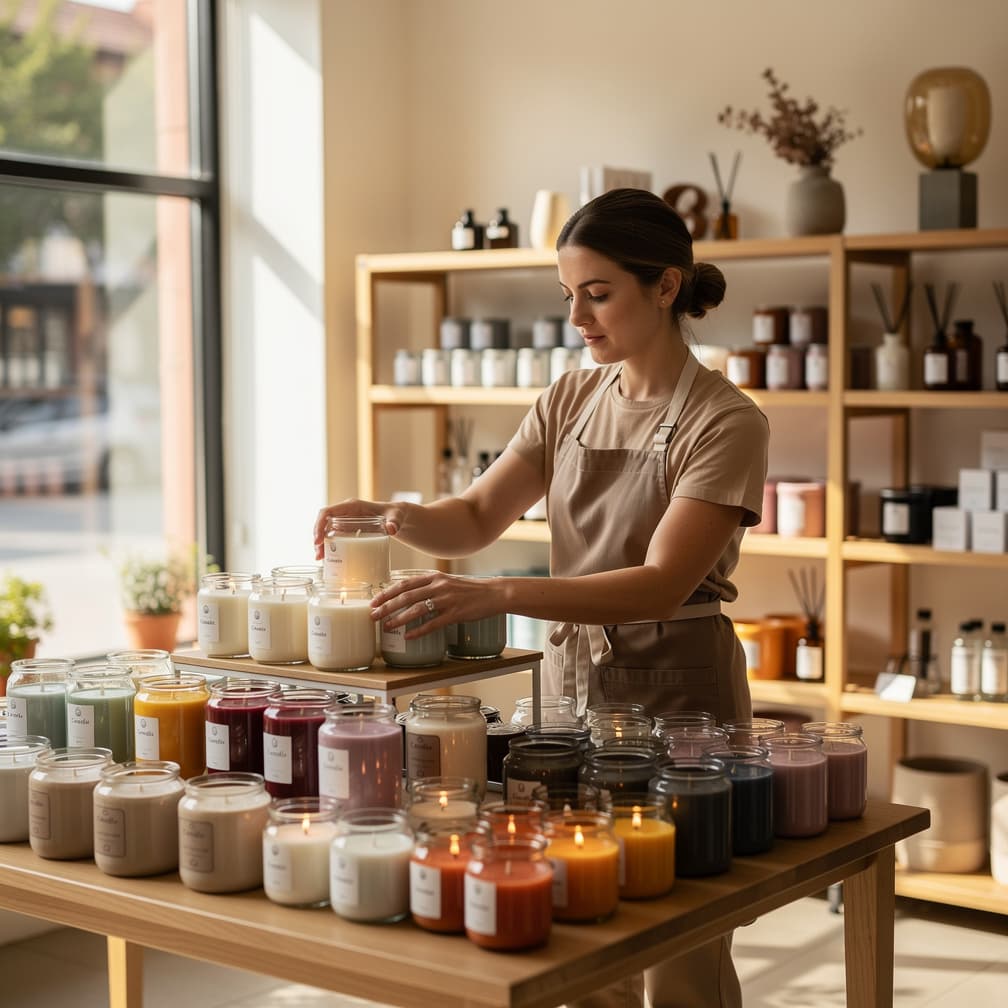

Wax spills near a display table, a customer steps in it, and the medical bill arrives with your name attached. Candle store insurance in Houston exists for that ordinary afternoon, and for the fire that starts in a stockroom stacked with cartons and shrink wrap. Retail looks tame from the sidewalk. Inside, you have burning testers, hot glass, fragrance oils, and shoppers moving through narrow aisles with strollers and shopping bags. A landlord in Houston can hold your keys until proof of coverage is on file, so the policy usually arrives before the first sale does. The certificate is the easy part. Whether the limits behind it would absorb a fire that takes the sales floor and the inventory in one night is the question worth an hour of your time.
What Makes Houston Different
The landlord signs your lease, and the certificate of insurance is what gets checked before the keys move. In a large market, a property manager can run storefronts across Texas from a single compliance checklist. That checklist rarely knows what a candle store is, so it asks for generic retail limits and moves on. You can meet the checklist and still be thin for the one room where your fuel is stacked. A landlord in Houston can also demand renewal proof the week your term rolls over, without warning. Keep a current copy where staff can reach it, because a lapse gets noticed by the leasing office first. The requirement is a floor, not advice, and nobody at that office is pricing your risk. Price the stockroom first and satisfy the paperwork second, because reversing that order is how shops end up short.
Local Risk Factors in Houston
A week of canceled foot traffic is the part of a hurricane nobody budgets for. Evacuation orders empty a Houston shopping district, staff leave town, and deliveries stop, all before a single shingle moves. Reopening then depends on power, on your point-of-sale system surviving the surges that follow restoration, and on whether your supplier's warehouse fared better than you did. Business income terms usually turn on physical damage to your own premises, so a shop that closes and reopens undamaged may find the lost week is simply lost. Ask how a policy treats a closure that was ordered rather than caused, and ask before the season, because carriers in Texas generally stop binding once a storm has a name.
What Coverage Does a Candle Store in Houston Need?
General Liability
A shopper turns quickly near a seasonal table, catches a display corner, and lands on the floor: that claim is what General Liability is generally written to answer. It can help cover third-party injury, damage you cause to someone else's property, and the defense costs that usually outrun both. Your own stock and fixtures sit outside it entirely.
Example: A customer's child pulls a jar off a shelf and cuts a hand on the glass in Houston; general liability may respond to the medical claim and the letter that follows it.
Commercial Property
Lenders and landlords ask about this line first, because it is the one answering for the building, the fixtures, and the stock inside them. It typically responds to fire, storm damage, vandalism, and theft, subject to your deductible and to how the inventory was valued. Flood and gradual deterioration usually fall outside it.
Example: A stockroom fire ruins cartons of finished candles and the shelving holding them; commercial property could help pay to replace both, once the valuation is settled.
Workers Compensation
Injuries to your own staff are not a liability claim; they run through Workers Compensation instead, which most states require once you have employees. It can help cover medical treatment and a share of lost wages after a burn, a lift, or a fall behind the counter. Requirements and thresholds vary, and the Texas Department of Insurance publishes the current requirements for employers.
Example: A part-time employee tips a wax melter and scalds a forearm while restocking testers; workers compensation is intended to handle the treatment and the time off.
Business Owners Policy
Buying liability and property separately works fine; a Business Owners Policy puts them in one contract instead, which is why it suits a single-location retail shop. It often adds business income terms for a closure that follows a covered loss. Sublimits inside a package can sit below what a lease demands, so check the numbers rather than the label.
Example: Smoke from a neighboring unit closes a Houston shop for ten days and taints the stock; a business owners policy might address the ruined inventory and the missing sales together.
How Much Does Candle Store Insurance Cost in Houston?
Candle Store Insurance is a bundle of separate policies, priced separately. The ranges below are typical figures for Houston for each line, except workers compensation, which is rated per $100 of payroll; a quote prices each one against your own operations.
| Coverage | Typical range | What moves your price |
|---|---|---|
| General Liability Insurance | $50 - $150 per month | Industry and risk classification, annual revenue, number of employees |
| Commercial Property Insurance | $95 - $310 per month | Building value and construction type, roof age and condition, fire protection class |
| Workers Compensation Insurance | $0.75 - $2.74 per $100 of payroll | Employee classification codes, total annual payroll, experience modification rate |
| Business Owners Policy Insurance | $95 - $290 per month | Annual revenue and industry class, building and contents values, square footage and building age |
Prices shown are general estimates, not guaranteed rates or quotes. Your actual premium will depend on the insurer, coverage selected, business details, location, claims history, and other underwriting factors. Learn about our pricing methodology.
What Are the Insurance Requirements for a Candle Store in Houston?
Workers' comp is not mandatory for most private employers here. Texas leaves workers' compensation optional for most private employers. Skipping it leaves injury costs on you, and many clients and landlords still demand proof of it by contract — check the Texas Department of Insurance's guidance before deciding.
Flood damage is typically excluded from standard policies. Standard commercial property and builders-risk-type policies typically exclude flood. Given Houston's coastal flood exposure, a separate flood policy is worth pricing; FEMA's National Flood Insurance Program is the usual starting point.
Where to verify licensing and coverage rules. The Texas Department of Insurance publishes consumer guidance and current insurance requirements for Texas businesses. When a contract or lease demands specific wording, the Texas Department of Insurance's guidance is the authoritative place to check.
Get Your Candle Store Quote in Houston
Compare rates from multiple carriers. Free quotes, no obligation.
Operating in Houston
- Seasonal promotional tables narrow your aisles exactly when foot traffic peaks, which is precisely when a slip claim is most likely to start.
- A market organizer in Houston can require additional insured status before assigning a booth, and reissuing a certificate takes days you may not have.
- Stock value swings hard across the year, and a property limit set at your quietest month leaves the gift season underinsured.
- Fragrance oils, wax, and stacked cartons sitting together are a fire load that an underwriter reads differently from ordinary retail shelving.
How to Buy: Advice for Houston Owners
Ask about the neighbors, because your policy has an opinion about them. A candle shop in Houston shares walls, and a fire two doors down can put smoke through every jar you own. Ask whether smoke without flame gets treated the same as your own fire, and ask what happens if an authority closes the building while someone else's damage gets repaired. Commercial Property often carries wording for that, sometimes with a sublimit small enough to matter. Then ask the reverse: if your stockroom is the origin, General Liability and the property side both get involved, and your landlord's insurer may come looking for recovery. That is why waivers of subrogation show up in leases at all. Take those questions to participating carriers in Texas and compare the answers, not merely the premiums.
FAQ
Candle Store Insurance in Houston: FAQ
Business income terms address a closure that follows a covered loss, and they usually live inside a property form or a package rather than getting bought alone. They typically run on a period of restoration rather than on a calendar guess, and they do nothing if the cause of the closure was never covered. A slow month or a road project will not trigger anything.
Per-occurrence caps what a policy may pay for one claim; aggregate caps the total across the policy year. A shop with one bad slip and one product complaint in the same year can spend the aggregate faster than it looks on paper. Leases name both numbers and readers skim the second one. If a busy season empties it, the rest of the year runs on whatever is left.
Generally not. Standard commercial property forms typically exclude flood, and rising water in a stockroom is exactly the loss owners assume sits inside the policy. Flood gets priced and bought as its own decision, and a waiting period usually applies once you do. A pipe that bursts inside the building is a different question and often falls on the property side instead.
Request the endorsement, because the status is never automatic. Additional insured is a piece of policy wording rather than a courtesy: it has to be asked for, issued, and then reflected on the certificate you hand over. The form matters too, since some extend only to claims arising out of your operations. A landlord in Houston can hold occupancy until that paperwork matches the lease exactly.
The deductible comes off your side of every property loss, which means small losses are yours by design. A cracked display case or one ruined carton rarely clears it. Raising the deductible lowers the premium and moves more of the ordinary breakage onto you. Pick a number you could actually write a check for in a bad week, not the one that makes a quote look attractive.
Often yes, if selling off-site fits how the policy describes your operations, but do not assume it. Some forms limit coverage to the described premises, and an organizer running a market in Houston may demand additional insured status before assigning you a table. Tell a carrier about off-site selling at quote time rather than after a claim. Misdescribed operations are how coverage arguments start.
Sources
- 1.Texas Department of Insurance(Texas Department of Insurance publishes consumer guidance for insurance buyers.)
- 2.FEMA / FloodSmart(Flood coverage is typically purchased separately; FEMA administers the National Flood Insurance Program.)


