







































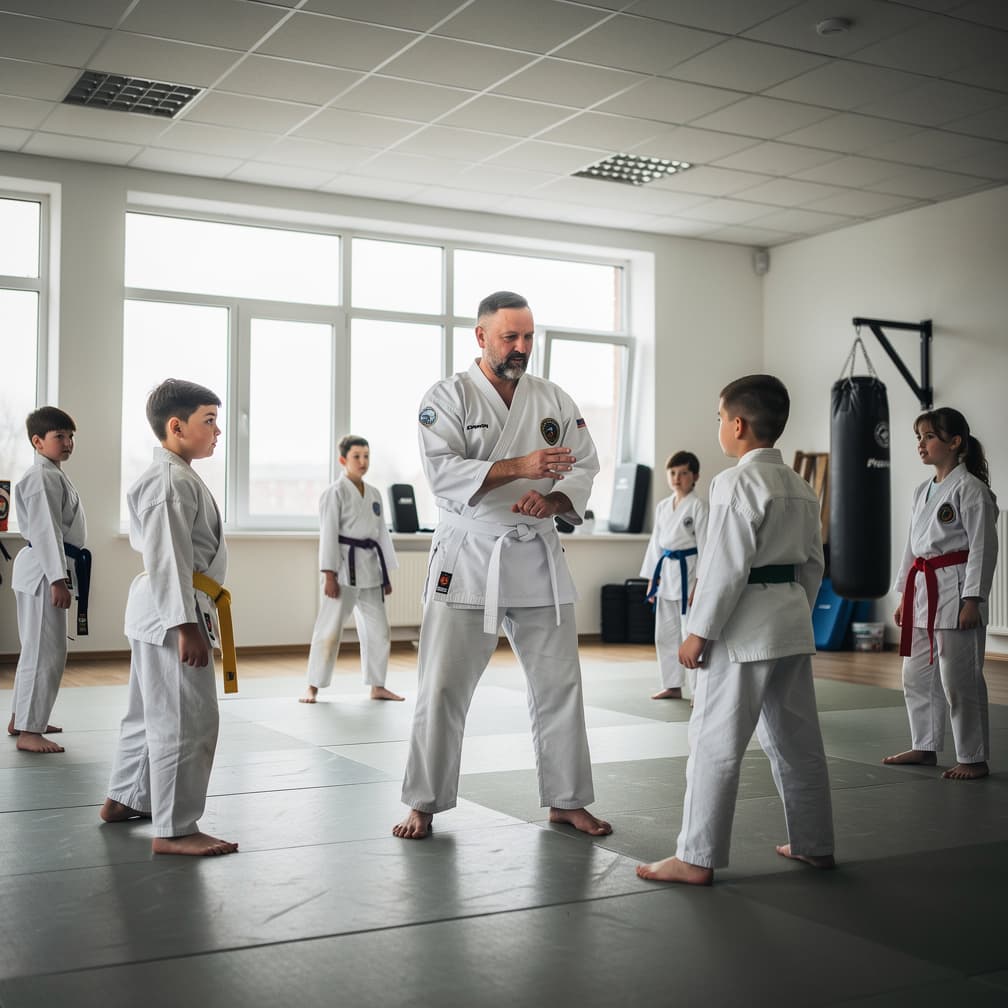

As a martial arts studio in Houston, your certificate is a business document before it is an insurance document, and the list of parties who want to read it can grow fast. Martial arts studio insurance in Houston starts there: who has to be named, at what limits, and on whose form. After that come the exposures that actually generate claims, which are contact, floors, and staff. A hard round produces an injury; a wet entry produces a fall; a cleaner working alone at closing produces a workplace injury nobody planned for. Deductibles come off your side of every one of those. Size the limits to the worst realistic night, and let price decide only between two quotes that are otherwise identical.
What Makes Houston Different
About 260 martial arts studios operate around Houston, enough that carriers price this class from real local files. That works in your favor at quoting and against you the moment a claim gets compared to peers. Adjusters who have handled a sparring injury before will ask what your waiver said and who supervised. They will ask whether the pairing was reasonable, whether a coach was on the mat, and what training that coach had. A dense market also means instructors move between schools, taking habits and sometimes disputes along with them. Your application should describe supervision honestly, because that description becomes the story your defense has to live with. Nothing here is about buying more; it is about buying against an accurate picture of the room. Write the picture down once, keep it current, and reuse it every time you shop the renewal.
Local Risk Factors in Houston
Decide now what you would do with two weeks of no classes and a wet floor, because that is the realistic version of a hurricane for a studio. The decisions are limits, deductibles, and how fast mats can be replaced, and none of them can be made during a warning. A Houston studio that has photographed and priced its equipment has an argument at the claim; one that has not is negotiating from memory. Commercial Property may respond to wind and to what wind lets in, though rising water is usually handled somewhere else entirely. The Texas Department of Insurance publishes consumer guidance on storm coverage, and it reads faster than a policy form.
What Coverage Does a Martial Arts Studio in Houston Need?
General Liability
Landlords, host gyms, and event organizers ask about this line by name before they hand over keys or floor time. It generally sits behind third-party injury and property damage claims tied to your studio: a student hurt during a live round, a parent who slips near the entry, a bag stand that tips onto a child. Damage to your own mats and mirrors is a property question instead.
Example: A parent walks in from a wet lot, goes down on the entry tile, and breaks a wrist while class runs behind her; general liability limits are typically what the resulting claim gets paid from.
Professional Liability
Where General Liability answers for the fall in the lobby, this line answers for the coaching itself. Allegations that an instructor paired a beginner against an advanced student, pushed a technique past someone's level, or supervised a round badly all land here. It typically responds to claims about instruction, advice, and supervision rather than to a slip on your floor.
Example: A student is told to spar up a level, tears a knee, and the family's demand letter blames the coach's judgment rather than the mats; professional liability is generally the line that answers.
Commercial Property
Wear and tear on mats is excluded, and so is rising water from outside the building, which is worth knowing before you assume the room is handled. What this line generally covers instead is sudden loss to what you own: mats, mirrors, hanging bags, racks, pads, the sound system, and whatever tenant improvements your Houston lease calls yours.
Example: A rooftop unit lets go over a weekend and drips onto forty mat panels; commercial property may pick up the replacement, subject to the deductible you chose at binding.
Workers Compensation
An instructor tears an achilles demonstrating a throw and a cleaner slips on a wet floor at closing. Both are employees hurt at work, and this is the line built around that moment. It is rated on payroll, so how you classify coaches matters as much as how many of them you have. Student injuries are a liability question, not this one.
Example: A coach lands badly during a demonstration in Houston and needs surgery plus three months off the mats; workers compensation can typically take on the medical bills and part of the lost wages.
How Much Does Martial Arts Studio Insurance Cost in Houston?
Martial Arts Studio Insurance is a bundle of separate policies, priced separately. The ranges below are typical figures for Houston for each line, except workers compensation, which is rated per $100 of payroll; a quote prices each one against your own operations.
| Coverage | Typical range | What moves your price |
|---|---|---|
| General Liability Insurance | $170 - $525 per month | Industry and risk classification, annual revenue, number of employees |
| Professional Liability Insurance | $75 - $260 per month | The services you actually perform, annual revenue or billed fees, limit and retention selected |
| Commercial Property Insurance | $75 - $280 per month | Building value and construction type, roof age and condition, fire protection class |
| Workers Compensation Insurance | $0.75 - $2.74 per $100 of payroll | Employee classification codes, total annual payroll, experience modification rate |
Prices shown are general estimates, not guaranteed rates or quotes. Your actual premium will depend on the insurer, coverage selected, business details, location, claims history, and other underwriting factors. Learn about our pricing methodology.
What Are the Insurance Requirements for a Martial Arts Studio in Houston?
Workers' comp is not mandatory for most private employers here. Texas leaves workers' compensation optional for most private employers. Skipping it leaves injury costs on you, and many clients and landlords still demand proof of it by contract — check the Texas Department of Insurance's guidance before deciding.
Flood damage is typically excluded from standard policies. Standard commercial property and builders-risk-type policies typically exclude flood. Given Houston's coastal flood exposure, a separate flood policy is worth pricing; FEMA's National Flood Insurance Program is the usual starting point.
Where to verify licensing and coverage rules. The Texas Department of Insurance publishes consumer guidance and current insurance requirements for Texas businesses. When a contract or lease demands specific wording, the Texas Department of Insurance's guidance is the authoritative place to check.
Get Your Martial Arts Studio Quote in Houston
Compare rates from multiple carriers. Free quotes, no obligation.
Operating in Houston
- Cleaning staff work alone after closing, which is when a fall on a wet floor happens with nobody there to see it or write it down.
- A landlord in Houston can require a limit chosen years ago for a retail tenant, and nothing about that number was picked with live sparring in mind.
- A single evening class can put twenty people on the mats at once, so one bad pairing produces one claim while a bad protocol produces a pattern.
- Hosting a seminar in a rented gym moves your exposure onto somebody else's floor, and their insurance requirements arrive with the booking rather than after it.
How to Buy: Advice for Houston Owners
Waivers are worth doing well and worth not overestimating. A parent signs on behalf of a child, and how far that signature reaches is a question answered differently from place to place. Use current forms, get them signed before the first class rather than during it, and keep them where you can find them under pressure. General Liability limits, not the waiver, are what stand behind a defense when the signature gets challenged. Professional Liability sits behind the separate allegation that the instruction itself was negligent. Rules on all of this vary by state, and checking the Texas Department of Insurance's guidance before deciding is time well spent. With the paperwork and the limits settled, comparing quotes from participating carriers on CPK for your Houston studio is the last step, not the first.
FAQ
Martial Arts Studio Insurance in Houston: FAQ
Communicable-condition claims get handled unevenly, and many liability forms limit or exclude them outright. Read the wording rather than assuming, because a grappling room is precisely where that question gets asked. Cleaning logs, a mat protocol, and a clear rule on skin checks matter more here than any limit you buy. Ask the underwriter directly how the form treats it before you bind.
Price follows payroll, the size of your training floor, your class mix, and your claims history. A school running full-contact adult rounds four nights a week rates above one running children's forms. The value of mats, mirrors, bags, and sound equipment moves the property side separately. Limits and deductibles then swing the number either way. Compare quotes at identical limits for the same Houston address, or you are weighing two different products.
A waiver is a defense, and defenses still get litigated. A parent who signed on behalf of a child can challenge how far that signature reaches, and answering the challenge costs money either way. General Liability limits are generally what stand behind defense costs and any settlement. Keep current forms, signed before the first class rather than during it, and treat them as one layer instead of the whole answer.
An injury during a live round is the classic General Liability scenario: a third party gets hurt on your Houston premises during your activity, and the family brings a claim. If the allegation shifts to how the class was taught or how the pairing was made, Professional Liability generally sits behind that instead. The two often get argued together. Which one answers depends on what the demand letter actually alleges.
Naming someone as an additional insured can extend your policy's defense to them for claims arising out of your operations. A landlord asks because an injury on your mats can name the building owner too. The certificate is only evidence; the endorsement is what actually adds them. Ask whether yours is blanket or charged per request, and pull the wording from the lease before you buy anything.
Usually, though it belongs on the application. Drop-in adults who train hard without a relationship to the school are a different exposure than enrolled students, and underwriters price it that way. Describe how you check waivers, whether a coach supervises, and whether visitors spar. A quote built on a description that leaves out open mat can be argued at the claim, which is the wrong moment for that argument.
Sources
- 1.U.S. Census Bureau, County Business Patterns (2023), Harris County(Harris County has about 260 businesses in this trade's category (NAICS group 611620).)
- 2.Texas Department of Insurance(Texas Department of Insurance publishes consumer guidance for insurance buyers.)
- 3.FEMA / FloodSmart(Flood coverage is typically purchased separately; FEMA administers the National Flood Insurance Program.)


