







































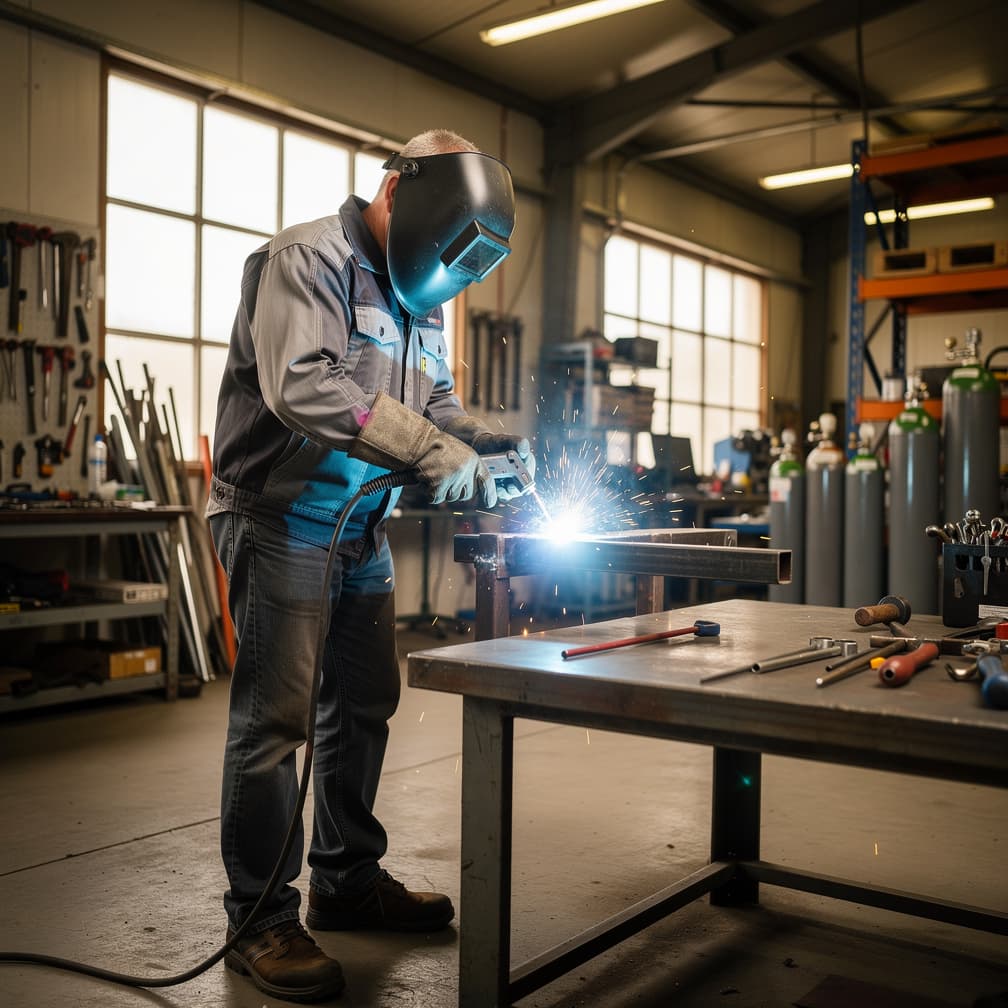

Two welding businesses with identical revenue can be quoted very differently, and the split usually comes down to payroll, class code, and loss runs. Welding business insurance in Killeen is built from those three inputs long before anyone asks what you weld. Inland Marine runs from $20 a month for a modest tool list, and it rises with the schedule of machines you want named. Every quote wants an equipment list with serial numbers, so build it once and keep it current instead of guessing at replacement cost. Raising a limit is often cheaper than owners expect; dropping a deductible almost never is. If a contract in Killeen demands a certificate with specific wording, that wording changes the quote, so bring the contract to the comparison. The published ranges below are a starting frame, never the answer.
What Makes Killeen Different
Rough weather in a thin market means longer waits for everything: parts, adjusters, rentals, and the electrician you need. A stalled week is survivable; a stalled month with equipment out of service is a different conversation. Welding work often follows the storm, since repairs to gates, rails, and structures show up in the aftermath. Rush repair work is good money and higher risk, because you are cutting on damaged structures you did not build. Ask how your liability terms treat work performed on property that was already compromised before you arrived. If a Killeen customer wants a fast fix on a structure with unknown history, document its condition first. Photographs taken before the first cut cost nothing and settle arguments that otherwise run for months. Weather across Texas sets the calendar for that work, though your documentation sets the outcome.
Local Risk Factors in Killeen
A cancelled week after severe storms is delayed work rather than lost work, and it returns compressed, which is exactly when fires start. Crews rush, the fire watch gets trimmed, and hot work happens next to wet insulation in buildings nobody has inspected. That is a liability exposure, not a weather one, and it belongs in how you plan the recovery. Debris changes a site as well: cutting near damaged structures with unknown history is a different job than the one you bid. Photograph the condition before your first cut, since a claim over a Killeen structure you touched starts with who damaged what. General Liability may answer for the third-party damage, though only once everyone in Bell County finishes arguing about cause.
What Coverage Does a Welding Business in Killeen Need?
General Liability
General contractors, landlords, and plant managers ask for this one by name before hot work starts. It is the line generally meant for third-party trouble: a fire in a building you do not own, a visitor hurt at the shop door, a customer's wall scorched during an install. What it typically excludes is the cost of redoing your own defective weld.
Example: A spark drops behind a wall panel during a handrail install and the framing smolders until an alarm trips at midnight; the repair bill and the owner's claim may fall to General Liability.
Workers Compensation
Burns, arc flash to the eyes, crushed fingers, and heat illness are the injuries a welding payroll produces, and this coverage is intended for the medical bills and lost wages that follow. Pricing runs off payroll by class code rather than revenue. It does nothing for damage to a customer's property, and requirements vary by state.
Example: A helper lifts stock that came off the table minutes earlier and burns his hand through the glove; the treatment and the missed shifts are what Workers Compensation is typically there for.
Commercial Property
Your own bay is the blind spot: a landlord's policy is written for the building, and your benches, machines, stock, and installed improvements sit outside it. This line is intended for those, along with finished work waiting on pickup. Flood is typically excluded and priced separately, and reported values drift as the yard fills.
Example: A storm peels panels off the shop roof and rain soaks two welders and a rack of stock overnight; Commercial Property can help cover the building and the contents, subject to the deductible.
Tools & Equipment (Inland Marine)
Equipment refuses to stay put in this trade, so a policy tied to one address can leave the truck out. This coverage follows machines, leads, and hoods between the shop, the road, and a temporary site, and theft is the claim welding businesses actually file. Terms often differ for gear in transit versus gear left overnight, and mechanical breakdown is usually excluded.
Example: A trailer is cut open at a Killeen job site overnight and two machines are gone before the crew arrives; Inland Marine terms usually decide whether that loss gets paid or absorbed.
How Much Does Welding Business Insurance Cost in Killeen?
Welding Business Insurance is a bundle of separate policies, priced separately. The ranges below are typical figures for Killeen for each line, except workers compensation, which is rated per $100 of payroll; a quote prices each one against your own operations.
| Coverage | Typical range | What moves your price |
|---|---|---|
| General Liability Insurance | $160 - $480 per month | Industry and risk classification, annual revenue, number of employees |
| Workers Compensation Insurance | $0.75 - $2.74 per $100 of payroll | Employee classification codes, total annual payroll, experience modification rate |
| Commercial Property Insurance | $110 - $370 per month | Building value and construction type, roof age and condition, fire protection class |
| Inland Marine Insurance | $45 - $180 per month | Total insured value of the scheduled property, type and age of the equipment, where it is stored and how far it travels |
Prices shown are general estimates, not guaranteed rates or quotes. Your actual premium will depend on the insurer, coverage selected, business details, location, claims history, and other underwriting factors.
What Are the Insurance Requirements for a Welding Business in Killeen?
Workers' comp is not mandatory for most private employers here. Texas leaves workers' compensation optional for most private employers. Skipping it leaves injury costs on you, and many clients and landlords still demand proof of it by contract — check the Texas Department of Insurance's guidance before deciding.
Flood damage is typically excluded from standard policies. Standard commercial property and builders-risk-type policies typically exclude flood damage. Flood exposure varies address by address, so check your premises in FEMA's Flood Map Service Center before deciding; if you sit in a mapped flood zone, a separate policy through the National Flood Insurance Program is the usual starting point.
Where to verify licensing and coverage rules. The Texas Department of Insurance publishes consumer guidance and current insurance requirements for Texas businesses. When a contract or lease demands specific wording, the Texas Department of Insurance's guidance is the authoritative place to check.
Get Your Welding Business Quote in Killeen
Compare rates from multiple carriers. Free quotes, no obligation.
Operating in Killeen
- Cylinders, leads, and hoods walk off a job trailer overnight, and the theft that hurts is rarely the expensive machine; it is the one item that stalls tomorrow's shift.
- Fire watch is the last hour of a welding day and the first thing dropped when a schedule slips, which is exactly why claim files ask about it.
- A property manager in Killeen can require the certificate to name the ownership entity and the management company separately, and a certificate naming only one of them gets bounced.
- Grinding sparks travel farther than owners expect, and a smolder inside a wall cavity can announce itself hours after the truck has left a Killeen site.
How to Buy: Advice for Killeen Owners
Certificates cause more lost work than claims do, so build the process before you need it. Know who issues yours, how a request gets turned around, and what wording your policy can actually support. Additional-insured status, primary and non-contributory language, and waivers of subrogation are endorsements, and a certificate without them is decoration. Ask whether those endorsements come included or by request, because the answer changes both the price and the wait. General Liability is the line those requests usually name, though a Bell County customer with people on your site may raise Workers Compensation too. Keep a running list of every certificate holder and a reminder thirty days ahead of renewal. Then compare quotes from participating carriers on how they handle those endorsements, since paperwork you cannot produce is coverage you cannot use. Check the Texas Department of Insurance's guidance before deciding what to keep.
FAQ
Welding Business Insurance in Killeen: FAQ
Fire damage to someone else's property from your work is the classic General Liability claim, and the policy is generally meant to answer for the resulting third-party damage and the lawsuit behind it. What it typically will not do is pay to redo your own faulty weld. Intentional acts and work done without a required permit can create problems at claim time, so log the permit and the fire watch every time.
Inland Marine is the line built for property that moves, and theft from a truck or a job trailer generally sits inside what it is intended to handle. Read how the policy treats gear left overnight at a temporary site, because those terms can differ from a theft at your own shop. Deductibles matter here more than anywhere: a retention above the value of a stolen grinder means you carry that loss yourself.
An additional insured is a party added to your policy by endorsement so your coverage can answer when a claim names them alongside you. Owners and general contractors ask for it because they would rather your insurer handle a fire that started at your station than their own. A certificate listing them proves little on its own; the endorsement behind it does the work. Ask which endorsement form a quote includes before you accept it.
Generally no. Policies commonly exclude the cost of repairing your own defective work, treating it as a business expense rather than an insurable accident. What can differ is the damage that failed weld causes to other property or to people, which is usually where liability coverage enters. That line surprises owners, so read the your-work exclusion before assuming a cracked joint falls inside the policy.
Keep a current certificate on file and a list of who holds it. A new site usually wants the certificate holder named, the additional-insured endorsement attached, and specific limits shown. Send the contract's insurance exhibit to whoever issues the paperwork instead of describing it over the phone, since wording gets rejected over small details. A general contractor in Bell County can hold your crew at the gate over a certificate that reads wrong, so start the request well before mobilization.
Per-occurrence is the most a policy may pay for one claim; aggregate is the ceiling for the whole policy year. A welding shop with a single fire rarely notices the difference. A shop with a fire, a slip claim at the shop door, and a damaged customer structure in one year can find the annual number gone before renewal. Every customer holding your certificate shares that same aggregate, which is why the yearly figure deserves a look.
Sources
- 1.Texas Department of Insurance(Texas Department of Insurance publishes consumer guidance for insurance buyers.)
- 2.FEMA / FloodSmart(Flood coverage is typically purchased separately; FEMA administers the National Flood Insurance Program.)


