







































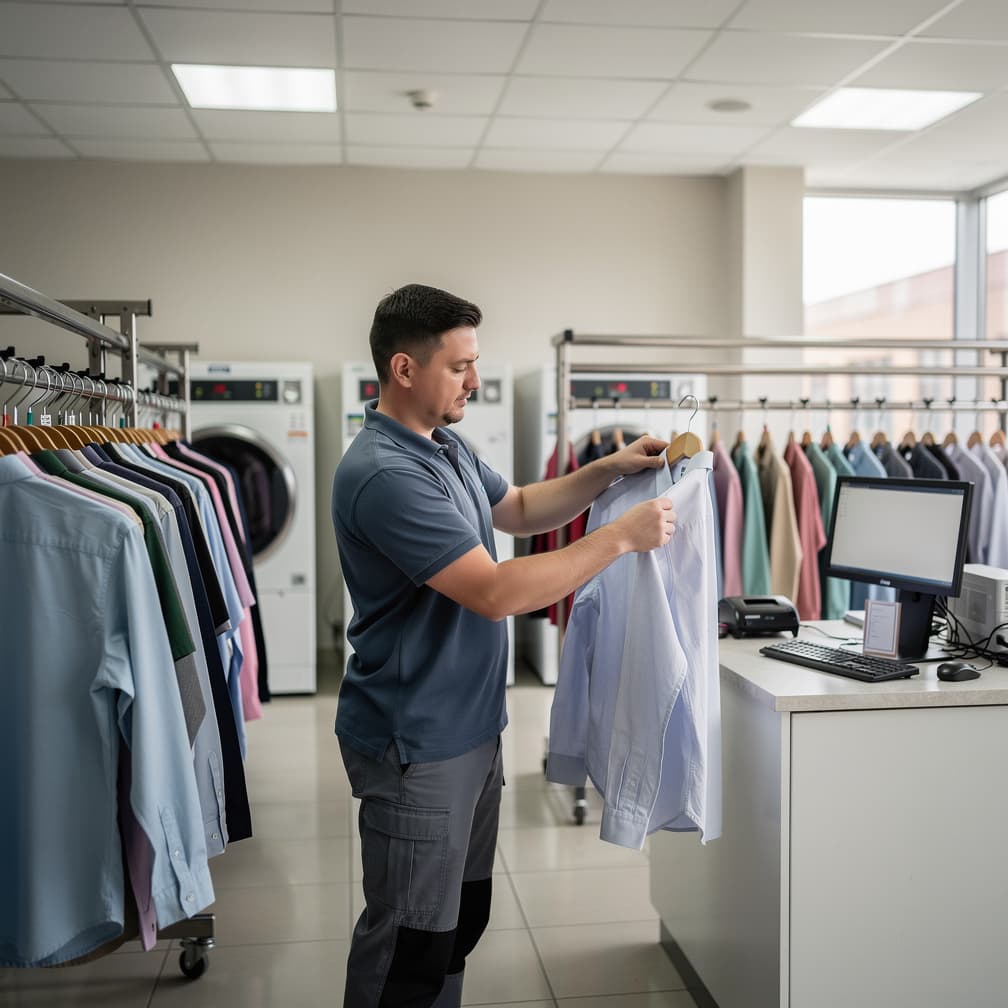

Two things set your price in a thin market: what your equipment costs to replace, and how long you sit dark waiting for somebody to fix it. Neither is a local secret, and both get worse the farther you are from a parts distributor. Dry cleaning and laundry insurance in Lubbock opens at general liability rates starting at $35 a month and gets serious once property limits and lost income come into the conversation. A shop with one boiler and one dry side has no redundancy, so the closure, not the repair invoice, is the real loss. Ask participating carriers in Texas how their forms treat a machine breakdown and the income that stops with it. Compare the quotes on that answer.
What Makes Lubbock Different
One employer with a uniform program can be a third of a small Lubbock plant's weekly volume. That account will send you its insurance requirements, and those requirements will govern your whole policy. Limits written for one contract end up applying to every shirt you touch afterward, forever. Losing the account over a wording gap is a bigger loss than any single garment claim. In a thin market there is no second account sitting there quietly waiting to replace it. So the decision is less about price and more about which forms a carrier in Texas will endorse. Ask that question before the renewal, because mid-term changes move slower than most owners expect. The requirement letter, not the quote, is the document that should be shaping your coverage.
Local Risk Factors in Lubbock
A blown-out window in a storm week is a small repair and an enormous cleanup, because glass and grit get into everything a laundry touches. Rewashing a plant's entire workload is not a repair invoice, it is a fortnight. Where the damage is sudden and physical, a business owners policy may help cover both the building side and the interruption that follows, subject to how the form defines the period of restoration. That definition is the thing to read twice. Ask a participating carrier in Texas what starts and stops that clock for a plant in Lubbock County.
What Coverage Does a Dry Cleaning & Laundry in Lubbock Need?
General Liability
Landlords, linen accounts, and property managers name this line on nearly every certificate they ask for. It could help cover a customer hurt at your counter and damage you cause to somebody else's property. Garments in your care are handled under separate care, custody, and control terms with their own sublimit, and chemical release from solvent is often narrowed by endorsement.
Example: A customer steps off a wet tile near the pressing counter and fractures a wrist. The medical bills and the demand letter that follows are the kind of claim this line is intended to answer.
Commercial Property
Presses, boilers, tumblers, racks, and the building shell itself sit behind this line. It may help with sudden physical damage from fire, theft, vandalism, or a storm at your address. Property belonging to customers is usually available only under a smaller separate amount, and flood is typically excluded and priced through a policy of its own.
Example: A dryer fire spreads out of a lint-packed duct and takes out two machines and part of a wall. Repair and replacement costs may fall to this coverage, subject to your deductible.
Business Owners Policy
Rather than buying property and liability separately, many small plants fold both into one form here. It commonly bundles contents or building, the liability limit an account demands, and an income provision for a covered shutdown. The bundled sublimits are the part to read, especially the amount available for customer goods in a Lubbock shop.
Example: A burst supply line soaks a rack of finished orders and shuts the plant for a week. Both the damage and the income that stopped with it could be picked up under a single form here.
Workers Compensation
Burns at a press, strains from lifting wet linen, and hands caught in machinery are the injuries this trade actually produces. State rules decide when it is required and thresholds vary. The Texas Department of Insurance publishes the current requirements for Texas. Rates run per hundred dollars of payroll, and job classification moves them considerably.
Example: A presser burns a forearm on a hot head during a rush and needs stitches plus two weeks away. Medical costs and a share of lost wages are generally handled through this line.
How Much Does Dry Cleaning & Laundry Insurance Cost in Lubbock?
Dry Cleaning & Laundry Insurance is a bundle of separate policies, priced separately. The ranges below are typical figures for Lubbock for each line, except workers compensation, which is rated per $100 of payroll; a quote prices each one against your own operations.
| Coverage | Typical range | What moves your price |
|---|---|---|
| General Liability Insurance | $65 - $180 per month | Industry and risk classification, annual revenue, number of employees |
| Commercial Property Insurance | $140 - $430 per month | Building value and construction type, roof age and condition, fire protection class |
| Business Owners Policy Insurance | $160 - $470 per month | Annual revenue and industry class, building and contents values, square footage and building age |
| Workers Compensation Insurance | $0.75 - $2.74 per $100 of payroll | Employee classification codes, total annual payroll, experience modification rate |
Prices shown are general estimates, not guaranteed rates or quotes. Your actual premium will depend on the insurer, coverage selected, business details, location, claims history, and other underwriting factors.
What Are the Insurance Requirements for a Dry Cleaning & Laundry in Lubbock?
Workers' comp is not mandatory for most private employers here. Texas leaves workers' compensation optional for most private employers. Skipping it leaves injury costs on you, and many clients and landlords still demand proof of it by contract — check the Texas Department of Insurance's guidance before deciding.
Flood damage is typically excluded from standard policies. Standard commercial property and builders-risk-type policies typically exclude flood damage. Flood exposure varies address by address, so check your premises in FEMA's Flood Map Service Center before deciding; if you sit in a mapped flood zone, a separate policy through the National Flood Insurance Program is the usual starting point.
Where to verify licensing and coverage rules. The Texas Department of Insurance publishes consumer guidance and current insurance requirements for Texas businesses. When a contract or lease demands specific wording, the Texas Department of Insurance's guidance is the authoritative place to check.
Get Your Dry Cleaning & Laundry Quote in Lubbock
Compare rates from multiple carriers. Free quotes, no obligation.
Operating in Lubbock
- The building you rent was probably never designed for the water, heat, and load a laundry puts through it. A landlord in Lubbock can still hold you responsible for damage to the premises under the lease you signed.
- Alterations and repairs done in-house look like a service and behave like a professional exposure. A ruined hem is a different argument than a scorched sleeve, and not every form treats the two the same way.
- Bagged orders sitting in a car, a locker, or a hallway are still in your care until the customer takes them. Where the handoff happens decides who owns the loss when something goes missing.
- Payroll changes every season, and a policy does not notice until the audit does. Updating wage figures mid-term with a participating carrier in Texas is cheaper than arguing about them after the fact.
How to Buy: Advice for Lubbock Owners
Renewal is where money leaks in this trade, quietly and every single year. Your payroll changed, your rack value changed, and your machine list changed, but the policy renewed on last year's numbers anyway. Workers Compensation trues up at audit whether you updated it or not, and Commercial Property simply responds to the limit you left sitting there. Put a reminder a month ahead of the date your Lubbock policy expires, and update all three numbers before anything renews. Re-shop it properly while you are in there. The participating carrier that priced you best two years ago may not be the one pricing you best now, and CPK exists to line them up in Texas again.
FAQ
Dry Cleaning & Laundry Insurance in Lubbock: FAQ
Expect to supply payroll broken out by job, annual revenue, square footage, building construction and age, a machine list with model years and replacement values, your solvent type, and any limits an account has demanded of you. An honest rack value helps more than owners expect it to. Incomplete answers get priced defensively, and a defensive price is not a comparable one. Assemble it once so every participating carrier sees the same business.
Standard commercial property forms typically exclude flood, and that exclusion sits there regardless of how the water arrived. Flood is generally handled through a separate policy priced on its own terms. A burst supply line inside your own building is a different question and is often treated as water damage rather than as flood. If a Lubbock location sits anywhere near a mapped flood zone, ask about the separate policy early rather than late.
Your own property and other people's property are two different limits, and owners regularly discover that at the worst possible moment. Commercial property forms may include a modest amount for property of others, and that amount is frequently smaller than a full rack on a busy week. Count what hangs overnight before you set the limit. Then ask a participating carrier how their form values customer goods, at replacement or at the cleaning charges.
It can, and it commonly will. Commercial accounts arrive with a requirements document naming limits, additional-insured status, waiver of subrogation, and often a notice-of-cancellation period. Those are form questions rather than price questions, and a policy that cannot be endorsed to match simply loses the account. If an account in Lubbock sends its requirements early, price to that spec instead of to a generic quote.
It depends on how the form counts an occurrence, and that is where your per-occurrence limit and your annual aggregate pull apart. The per-occurrence number is what a single event may draw down. The aggregate is what the entire policy term may draw before nothing is left. A contaminated tank touching dozens of customers' orders on one afternoon is precisely the scenario that tests both. Ask a participating carrier how they would count it before you rely on either figure.
A business owners policy bundles property and liability into one form and often prices better than buying the pieces separately for a small plant. It is not automatically the right answer, because the bundled limits and sublimits may not suit a shop holding a great deal of customer property. Quote both shapes on the same facts and compare the sublimits rather than the headline premium. Participating carriers in Texas differ considerably on where they set those.
Sources
- 1.Texas Department of Insurance(Texas Department of Insurance publishes consumer guidance for insurance buyers.)
- 2.FEMA / FloodSmart(Flood coverage is typically purchased separately; FEMA administers the National Flood Insurance Program.)


