







































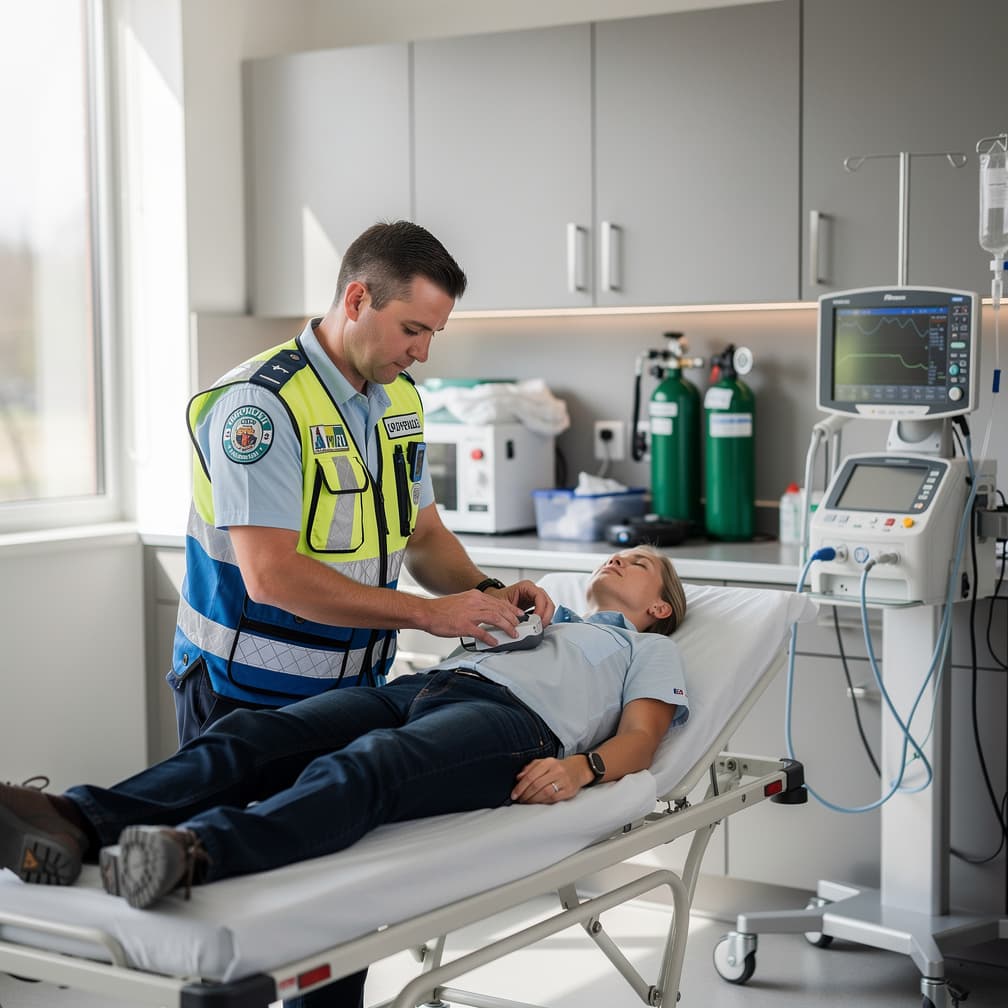

As an ambulance service in Pasadena, the people who can sue you are rarely your customers in the ordinary sense. A patient, a family, a receiving facility, a driver you never met, and a property owner at a scene can all become claimants out of one shift. Ambulance service insurance in Pasadena has to answer to all of them, and the lines that respond are not interchangeable. Defense costs begin with the letter rather than the verdict, which is why limits get bought above the level that feels comfortable. Your premium tracks the boring inputs: payroll, mileage, unit count, driver records, and the years since your last serious loss. Read the ranges below, then price the limit your contracts actually demand.
What Makes Pasadena Different
Additional-insured wording is where ambulance agreements quietly get expensive. A facility template may ask you to name the entity, its parent, its subsidiaries, and its managers, all on a primary and non-contributory basis. Every one of those words is an endorsement request, and endorsements are underwritten rather than printed on demand. A carrier that will not attach the wording leaves you holding an agreement you cannot satisfy. Waiver-of-subrogation language usually shows up in the same paragraph, and it reaches your work injury line as well as your liability. Read the insurance exhibit before the fee schedule, because the exhibit is the part your policy has to answer for. If a Pasadena agreement carries unusual wording, put it in front of every carrier at quote time. Participating carriers in Texas differ on what they will endorse, and that difference is the real comparison.
Local Risk Factors in Pasadena
Hurricane conditions invert the normal rules for an ambulance operator: everyone else is told to stay off the roads, and your units are the reason the roads stay open. Evacuation transfers out of care facilities compress days of work into hours, with crews driving loaded trucks into wind that would ground anything else. Damage in that stretch is rarely subtle, since flying debris and a fallen limb treat a parked unit and a moving one the same way. Comprehensive terms on a Commercial Auto policy may respond to wind and falling-object damage on a listed truck, per-unit deductible and all. Facility closures afterward cancel the scheduled work that pays your overhead, and that lost billing is not a claim anywhere. Ask a carrier writing in Texas how a Pasadena storm deductible would apply across several units at once.
What Coverage Does an Ambulance Service in Pasadena Need?
Commercial Auto
Lenders, lessors, and facility contracts want proof of this one before a unit turns a wheel, and it is the heaviest line on most ambulance bills. Listed trucks, the drivers on your roster, and the damage you do to other vehicles or property sit here. Mechanical breakdown, wear, and any unit missing from the schedule are typically outside it.
Example: A unit backing out of a bay clips a visitor's parked car, and the bent bumper is the cheap part next to the injury claim that follows; the fleet line could respond to both.
Professional Liability
The medical judgment your crew exercises is exactly what a General Liability form carves out, and this is the line written to pick it up. Allegations about assessment, monitoring, a transport decision, or a handoff at a receiving facility belong here, together with the defense costs that begin on the demand letter. Deliberate acts and billing disputes typically fall outside it.
Example: A family disputes how a patient was monitored across a long transfer and sends a demand letter more than a year later; this line is generally what funds the defense, verdict or no verdict.
General Liability
Somebody who is neither your patient nor your employee gets hurt, or has property damaged, because of how your operation runs: a visitor at your bay, a bystander at a scene, a doorframe your stretcher takes out. That is this line's territory. The care your crew delivered is usually excluded here and belongs to the professional side instead.
Example: A gurney wheel catches a glass door on the way out of a lobby and the property manager sends you the repair invoice; this line can help cover it.
Workers Compensation
Lifting is the whole job, so backs, shoulders, and knees are what your claim history ends up looking like. Medical care and lost wages for a crew member hurt on shift run through this line regardless of fault. It is rated per $100 of payroll and audited against actuals, which is why job classification matters. Requirements vary by state.
Example: A medic tears a shoulder easing a loaded stretcher down an icy ramp and misses weeks of shifts; the work injury line typically picks up the treatment and part of the lost wages.
Commercial Umbrella
Where the fleet and professional limits stop, this layer is what continues. Ambulance claims are severity-shaped: a scene with several claimants, or a care allegation with a defense that runs for years, can exhaust a base limit on its own. A contract may also demand a total limit your underlying lines cannot reach. It follows the wording beneath it, so a gap below stays a gap above.
Example: A multi-vehicle scene in Pasadena produces three claimants and a demand well past the underlying limit; the layer above it might be what stands between that number and your balance sheet.
How Much Does Ambulance Service Insurance Cost in Pasadena?
Ambulance Service Insurance is a bundle of separate policies, priced separately. The ranges below are typical figures for Pasadena for each line, except workers compensation, which is rated per $100 of payroll; a quote prices each one against your own operations.
| Coverage | Typical range | What moves your price |
|---|---|---|
| Commercial Auto Insurance | $1,700 - $5,600 per month | Fleet size and vehicle types, driver records and experience, coverage limits and deductibles |
| Professional Liability Insurance | $420 - $1,850 per month | The services you actually perform, annual revenue or billed fees, limit and retention selected |
| General Liability Insurance | $190 - $700 per month | Industry and risk classification, annual revenue, number of employees |
| Workers Compensation Insurance | $0.75 - $2.74 per $100 of payroll | Employee classification codes, total annual payroll, experience modification rate |
| Commercial Umbrella Insurance | $320 - $1,425 per month | Umbrella limit requested, limits carried on the underlying policies, loss history on those underlying policies |
Prices shown are general estimates, not guaranteed rates or quotes. Your actual premium will depend on the insurer, coverage selected, business details, location, claims history, and other underwriting factors.
What Are the Insurance Requirements for an Ambulance Service in Pasadena?
Workers' comp is not mandatory for most private employers here. Texas leaves workers' compensation optional for most private employers. Skipping it leaves injury costs on you, and many clients and landlords still demand proof of it by contract — check the Texas Department of Insurance's guidance before deciding.
State auto liability minimums apply to business vehicles. Texas's minimum auto liability limits are $30,000/$60,000/$25,000 (bodily injury per person / per accident / property damage). Contracts and lenders often require more than the state floor.
Where to verify licensing and coverage rules. The Texas Department of Insurance publishes consumer guidance and current insurance requirements for Texas businesses. When a contract or lease demands specific wording, the Texas Department of Insurance's guidance is the authoritative place to check.
Get Your Ambulance Service Quote in Pasadena
Compare rates from multiple carriers. Free quotes, no obligation.
Operating in Pasadena
- Mutual aid puts your crew on scenes you did not choose and did not price. The other agency's paperwork answers for its own people, never for what your medic did on arrival.
- A garage lease in Pasadena can require you to name the property owner on your policy, and the endorsement is usually the slowest part of moving your units into a new bay.
- Sharps and exposure incidents are routine enough to have their own binder, and each one can open a work injury claim that stays on your record for years afterward.
- Billing companies and clearinghouses touch your patient records, and a contract with one can push data obligations onto you that nobody asked your policy about.
How to Buy: Advice for Pasadena Owners
Two quotes with the same limit can be two different policies. Read what the forms exclude before you read what they cost, because exclusions are where ambulance work gets carved out quietly. Look at the professional services wording first, since a General Liability form typically excludes the medical judgment that Professional Liability is meant to pick up. Where both lines sit with one carrier, that seam is easier to manage than when they are split across two. On the fleet side, look for radius limits, driver requirements, and anything conditioning coverage on how a unit was being operated at the time. Then read the definition of who counts as an insured, because volunteers and contract medics are frequently outside it. The Texas Department of Insurance publishes consumer guidance on reading policy exclusions. Compare quotes from participating carriers serving Pasadena on the exclusions and the price conversation gets much shorter.
FAQ
Ambulance Service Insurance in Pasadena: FAQ
Probably not in the way owners hope. An injury tied to care, handling, or clinical judgment generally reads as a professional exposure, and General Liability forms commonly exclude it. That same form may well answer if a visitor slips at your bay or a stretcher takes out a doorframe. Where a claim sits on the seam between the two, holding both lines with one carrier makes the argument considerably shorter.
A certificate is a snapshot, never the policy itself. It reports what limits were in force the day it printed and changes nothing about your coverage. A Pasadena facility, a lender, or an event organizer uses it as a pass-fail check before a route starts. The endorsements behind it carry the real weight, so keep those alongside it. A certificate naming an entity that has since been renamed or acquired can fail a compliance check while the policy underneath is perfectly sound.
Because this exposure is severity-shaped. A multi-vehicle scene with several claimants, or a care allegation that arrives at a demand far above a base limit, is not a freak event in this work. A Commercial Umbrella sits above the underlying lines and can lift the ceiling once they are exhausted. Contracts sometimes force the question anyway, since a counterparty in Texas can insist on a total limit your base policy cannot reach alone.
Not automatically, and this is where operators get caught. The definition of who counts as an insured, and who counts as an employee for work injury purposes, is written into each form and moves between carriers. A contract medic riding your unit can fall outside both. Ask in writing before the shift, and ask again if you switch carriers, since two Texas policies with identical limits may define this differently.
Wear, tear, and mechanical breakdown on your units are maintenance rather than claims. Intentional acts and incidents you already knew about are typically excluded. A patient's belongings lost during a transport are usually their own argument. Employee injuries belong to the work injury line instead of the liability one. And the revenue you lose while a truck is down is a separate conversation, if the wording addresses it at all.
There is no single figure, because the price gets assembled from your payroll, your mileage, your unit count, your driver records, and your loss history. Two operators on the same street can be quoted very differently on the strength of one old file. The cost table on this page shows the published ranges by line. The practical move is to fix the limit demanded by the agreements you hold in Harris County, then compare what participating carriers charge to reach it.
Sources
- 1.Texas Department of Insurance(Texas Department of Insurance publishes consumer guidance for insurance buyers.)


