







































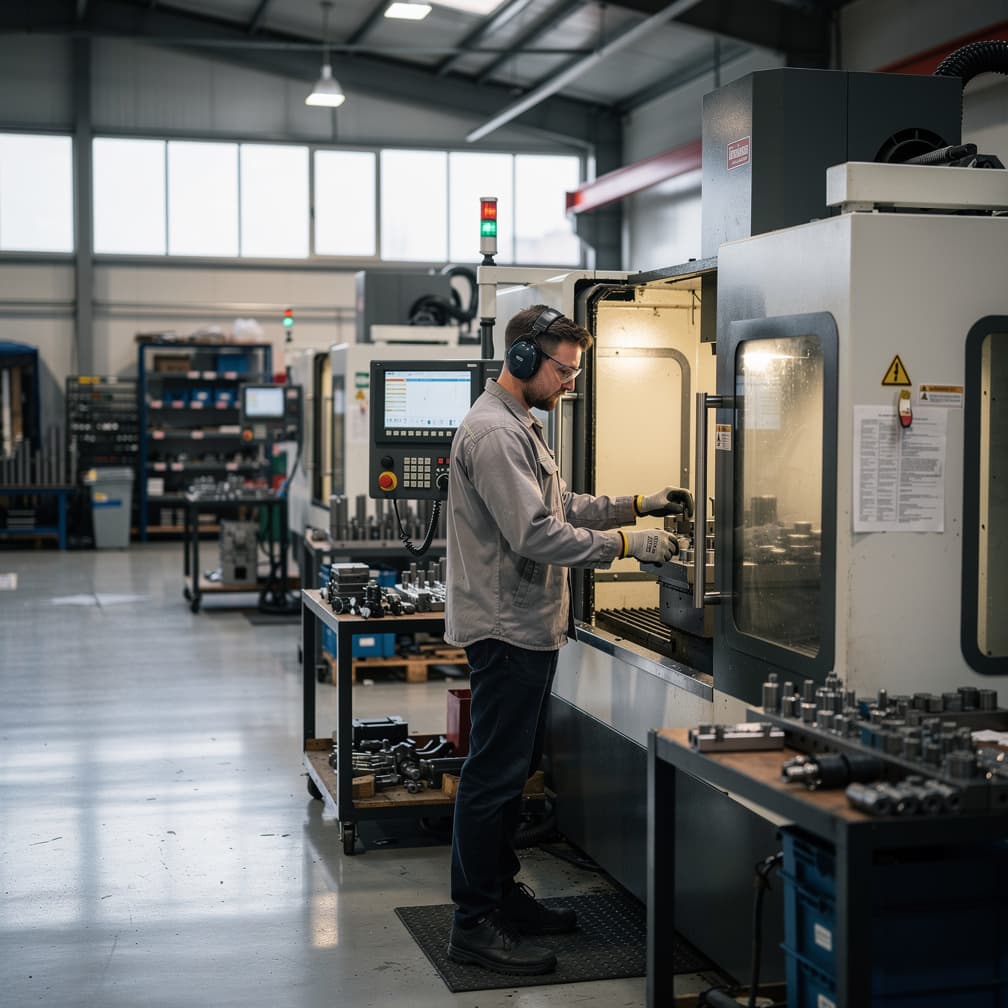

Premiums for a shop move on inputs you can name out loud: payroll, sales, the value of the machines bolted to your floor, and whether a claim has been paid in the last few years. Add an umbrella because a purchase order demands one and the bill changes again. Participating carriers in Texas weight all of that their own way, which is how one shop ends up with three quotes that look nothing alike. Machine shop insurance in Pearland is worth pricing on identical inputs across every submission, or you are comparing arithmetic instead of carriers. Ask each quote to show the limit, the deductible, and the payroll it assumed. Shops that skip that step find the difference at audit, when the carrier trues up what actually ran through the books.
What Makes Pearland Different
Building costs drive the property side harder than the machines do, and rebuild pricing stays stubbornly local. Where labor and materials run cheap, a shop in Pearland can insure the same square footage for less than a metro shop would pay. That works against you at claim time when the limit was set off a tax assessment instead of a real rebuild estimate. Underinsured buildings are the quiet default in low-cost markets, because the low number looks reasonable right up until the fire. Coinsurance language can then cut what a claim pays even when the loss is smaller than the limit. Get an actual replacement figure for the structure and for the equipment sitting inside it, then set the limit from that. Participating carriers in Texas accept different valuation methods, so ask which one your quote used. A low premium bought against a wrong number is not a saving.
Local Risk Factors in Pearland
Hurricane wind finds the roof and the roll-up doors first, and a shop with a hole in either one has a floor full of wet machines by morning. Debris, pressure changes, and a week without power add up to a production stop that outlasts the storm itself. Commercial Property may respond to the wind damage, though named-storm deductibles in coastal parts of Texas are often a percentage of the building value rather than a flat figure. That one detail can move your out-of-pocket number by an order of magnitude. Ask which deductible applies when the storm has a name, because a shop in Pearland that reads it afterward reads it too late.
What Coverage Does a Machine Shop in Pearland Need?
General Liability
Buyers, landlords, and staffing agencies all ask for this one by name before work starts. It generally answers third-party claims: a delivery driver hurt in your aisle, a customer's property damaged, or a machined part that fails in service and takes something with it. Injuries to your own crew sit elsewhere, and it has nothing to say about your machines.
Example: A quality inspector walks your aisle, catches a foot on a coolant hose, and breaks a wrist. The medical bills and the suit behind them are the sort of third-party claim this line is meant to take on.
Commercial Property
Fire, storm, vandalism, and theft are the causes of loss it usually names, applied to the building, the machines bolted inside it, and the material sitting between operations. Wear, rust, and mechanical breakdown generally fall outside, and so does flood. The limit matters more than the premium here, since a limit set off a tax assessment rarely rebuilds a shop.
Example: A fire starting in a chip pan closes the shop for two months. Rebuilding the structure and replacing the machines standing under it is the loss this coverage is generally written to meet.
Workers Compensation
Hands, eyes, and backs work close to moving steel every hour of a shift, and this is the line built for the moment one of them loses. It typically handles medical treatment and part of the lost wages for your own employees. Rules on who has to carry it vary across Texas, and buyers demand proof regardless. Cost tracks payroll rather than headcount.
Example: A machinist reaches in to clear a chip nest and the hand takes stitches and six weeks off the floor. Treatment and a share of the missing pay are what this coverage typically picks up.
Tools & Equipment (Inland Marine)
Commercial Property stops at an address, and this line follows the things that will not. Gauges, fixtures, indicators, and a job box parked at a customer's plant can be covered in transit or off site, depending on how they were scheduled. It is rated from the list you hand over, which is why a stale schedule is the usual reason a claim disappoints.
Example: A tote of fixtures and a micrometer set vanish from a customer's dock overnight in Pearland. Scheduled tooling is exactly what this line is intended to answer for.
Commercial Umbrella
Purchase orders ask for limits no small shop would pick on its own, and this is how those numbers get met. It sits above the underlying liability limits and generally comes into play only once they are used up. It typically raises the ceiling rather than widening what the form addresses, so a gap in the base stays a gap above it too.
Example: A part fails inside a customer's assembly and the claim runs past the underlying limit before the lawyers have finished arguing. The layer above is what would be left to respond.
How Much Does Machine Shop Insurance Cost in Pearland?
Machine Shop Insurance is a bundle of separate policies, priced separately. The ranges below are typical figures for Pearland for each line, except workers compensation, which is rated per $100 of payroll; a quote prices each one against your own operations.
| Coverage | Typical range | What moves your price |
|---|---|---|
| General Liability Insurance | $120 - $400 per month | Industry and risk classification, annual revenue, number of employees |
| Commercial Property Insurance | $230 - $750 per month | Building value and construction type, roof age and condition, fire protection class |
| Workers Compensation Insurance | $0.75 - $2.74 per $100 of payroll | Employee classification codes, total annual payroll, experience modification rate |
| Inland Marine Insurance | $45 - $200 per month | Total insured value of the scheduled property, type and age of the equipment, where it is stored and how far it travels |
| Commercial Umbrella Insurance | $80 - $280 per month | Umbrella limit requested, limits carried on the underlying policies, loss history on those underlying policies |
Prices shown are general estimates, not guaranteed rates or quotes. Your actual premium will depend on the insurer, coverage selected, business details, location, claims history, and other underwriting factors.
What Are the Insurance Requirements for a Machine Shop in Pearland?
Workers' comp is not mandatory for most private employers here. Texas leaves workers' compensation optional for most private employers. Skipping it leaves injury costs on you, and many clients and landlords still demand proof of it by contract — check the Texas Department of Insurance's guidance before deciding.
Flood damage is typically excluded from standard policies. Standard commercial property and builders-risk-type policies typically exclude flood. Given Pearland's coastal flood exposure, a separate flood policy is worth pricing; FEMA's National Flood Insurance Program is the usual starting point.
Where to verify licensing and coverage rules. The Texas Department of Insurance publishes consumer guidance and current insurance requirements for Texas businesses. When a contract or lease demands specific wording, the Texas Department of Insurance's guidance is the authoritative place to check.
Get Your Machine Shop Quote in Pearland
Compare rates from multiple carriers. Free quotes, no obligation.
Operating in Pearland
- A tool crib bleeds value quietly: an indicator here, a set of end mills there, until an inventory shows a machine's worth of tooling gone. A theft claim in Pearland needs a list that existed before the loss.
- Parts leave for heat treat or plating and come back a week later. While they sit on somebody else's dock they are still your problem, and still your customer's due date.
- One machine usually carries a third of the schedule, and losing it does not damage the building at all. Downtime is the loss no adjuster ever photographs.
- A landlord in Brazoria County can hold the keys until a certificate names both them and their lender, which puts your move-in date inside a carrier's turnaround rather than your own.
How to Buy: Advice for Pearland Owners
Write down every party who can demand paper from you, then buy once to satisfy the strictest one. The list usually runs to a landlord, two or three buyers, a staffing agency, and sometimes a lender somewhere in Brazoria County. Their demands overlap, and the tallest one governs, so carrying separate policies to please each is a way to pay twice for one limit. General Liability naming and Commercial Umbrella limits are where those demands normally collide. Sort the naming and the limit before your renewal rather than the week a purchase order lands. Check the Texas Department of Insurance's guidance before deciding what a certificate has to show. Then run one spec past participating carriers and take the best price on identical terms.
FAQ
Machine Shop Insurance in Pearland: FAQ
No, and that is deliberate. Wear, gradual deterioration, and rust are maintenance rather than sudden accidental events, so forms exclude them regardless of how expensive the repair gets. The distinction matters after water damage, since corrosion creeping across ways and tables over weeks reads differently from the storm that let the water in. Document the event and the date, because the timeline is what gets argued.
Often yes, and the contract usually says so in language nobody reads twice. Castings, forgings, and bar stock owned by somebody else still burn or walk out the same as yours, and their value can exceed the machine beside them. Property of others is handled by specific wording rather than assumed, so a shop in Pearland should confirm the form addresses it before a break-in makes the question urgent.
It depends on the staffing agreement, which decides whose employee they are for insurance purposes. The agency generally carries workers compensation on its own people, though the contract may push some of that risk back to you along with an endorsement requirement. Read it the way you read a purchase order in Texas, then confirm the arrangement once a year rather than assuming it survived the last renewal.
No policy makes a purchase order valid. What happens instead is that the buyer's terms demand proof, and their purchasing system holds the order until a certificate matching those terms lands on file. The usual asks are a stated General Liability limit, additional insured status, and evidence of workers compensation. Read that insurance exhibit before you quote the parts, since the terms carry a cost that belongs in your price.
Payroll, receipts, the value of your equipment, and your claim history do most of the work. What your parts go into matters too, because a shop cutting shelf brackets is not rated like one cutting parts that fly. Building rebuild costs and the limits your contracts demand push the number around as well. A quote for a shop in Pearland is assembled from those inputs, so accurate ones are the only lever you fully control.
That is the completed operations question, and it is the exposure owners underestimate. A part installed and running is out of your hands, but a claim over what it damaged still names the shop that cut it. General Liability with completed operations wording is generally the line that responds, subject to the form and the limit. Participating carriers in Texas attach different completed operations wording, so ask which form sits on your quote.
Sources
- 1.Texas Department of Insurance(Texas Department of Insurance publishes consumer guidance for insurance buyers.)
- 2.FEMA / FloodSmart(Flood coverage is typically purchased separately; FEMA administers the National Flood Insurance Program.)


