







































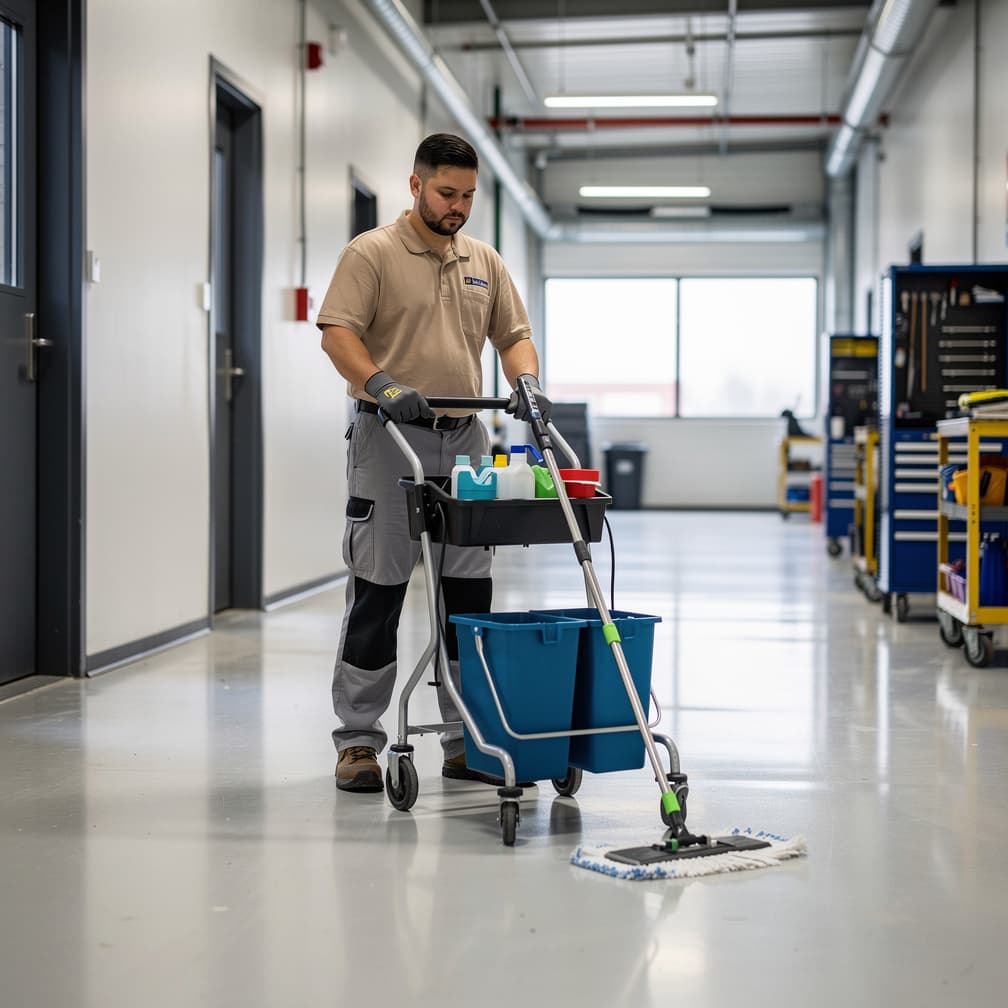

About 29,500 businesses operate in Collin County, and every one that hires a cleaner writes some kind of insurance requirement into the deal. That is the practical reason janitorial service insurance in Plano is less optional than its price tag suggests. Big markets run on paperwork: additional insured wording, waivers of subrogation, minimum limits, notice of cancellation. Each of those phrases is a request to change your policy, and some carriers charge for the change. The certificate itself is the easy part. The harder part is whether the endorsements your contract demands exist on the form a carrier actually quoted you. Read the contract clause before you read the premium, because the clause decides which quotes are even eligible. What follows explains each requirement in plain terms.
What Makes Plano Different
Payroll is the meter behind workers compensation, and cleaning is a payroll-heavy trade by nature. Add night shifts, add hours; add hours, add premium, whatever the square footage happens to say. Dense counties push crews toward more buildings per night, and that shows up in the rating basis. One large downtown contract in Plano can double the headcount you report at your next audit. Classification matters too, because floor stripping and high work rate differently from light office cleaning. Describe the actual job mix to a carrier in Texas, since an audit corrects optimism anyway. Claims history is the other lever, and one open injury file can follow you for years. Fix the safety story first; the price argument gets much easier once the losses stop.
Local Risk Factors in Plano
A canceled week of nights costs you the revenue and none of the cost, since crews still expect their hours. Storm disruption reaches a cleaning company through its clients' doors far more often than through its own roof. Then the calls return at once, everyone in Plano wants their building first, and overtime becomes the only answer on the table. Rushed crews damage things: a cart through a glass panel, a machine over a cable, a finish burned by too much speed. General Liability may respond to that damage, though the claim still lands on your record and shapes what participating carriers in Texas offer next term. Build the surge into your numbers rather than hoping it stays theoretical.
What Coverage Does a Janitorial Service in Plano Need?
General Liability
Landlords, property managers, and facility directors ask for this one by name before your crew gets access to a building. It is aimed at bodily injury and property damage your cleaning operations cause to other people: a visitor down on a wet floor, a client's glass panel cracked by a cart. Damage to the surface you were working on, and theft by an employee, typically sit outside it.
Example: A cleaner mops a lobby, a delivery driver walks through before the floor dries, and a wrecked knee becomes a demand letter; general liability may respond to the claim and the defense.
Commercial Property
Flood typically sits outside the standard form, which matters when your machines live at floor level. What the form does address is the fleet and supply side of the business: buffers, extractors, vacuums, ladders, and stock at the address you declare. Equipment kept in client closets or a vehicle usually falls under a much smaller limit, so ask where that line sits before you buy.
Example: A break-in at your storage unit clears out two scrubbers and a pallet of supplies overnight; commercial property can help cover replacement, though the values you declared decide the size of the check.
Workers Compensation
A cleaner slips off a step stool while changing a light diffuser and cannot work for weeks. This is the line built for that: medical costs and lost wages for your own employees, quoted against payroll rather than as a flat monthly figure. Requirements vary by state, and client contracts frequently ask for proof of it whatever the state rules happen to say.
Example: Two crew members walk a ride-on scrubber down a loading dock ramp and one wrenches a shoulder badly; workers compensation is generally where the medical bills and the lost time end up.
Business Owners Policy
Where general liability and commercial property are two contracts, this is one: a package built for smaller cleaning operations, with a single bill and a single certificate. Property caps and eligibility rules are the trade-off, and the aggregate limit is shared across everything inside. Read what the package does with equipment away from your premises before assuming it matches a standalone form.
Example: A fire in the supply room wrecks machines and injures a tenant in the Plano unit next door; a business owners policy can help with both halves, subject to the limits inside the package.
How Much Does Janitorial Service Insurance Cost in Plano?
Janitorial Service Insurance is a bundle of separate policies, priced separately. The ranges below are typical figures for Plano for each line, except workers compensation, which is rated per $100 of payroll; a quote prices each one against your own operations.
| Coverage | Typical range | What moves your price |
|---|---|---|
| General Liability Insurance | $65 - $180 per month | Industry and risk classification, annual revenue, number of employees |
| Commercial Property Insurance | $55 - $190 per month | Building value and construction type, roof age and condition, fire protection class |
| Workers Compensation Insurance | $0.75 - $2.74 per $100 of payroll | Employee classification codes, total annual payroll, experience modification rate |
| Business Owners Policy Insurance | $95 - $250 per month | Annual revenue and industry class, building and contents values, square footage and building age |
Prices shown are general estimates, not guaranteed rates or quotes. Your actual premium will depend on the insurer, coverage selected, business details, location, claims history, and other underwriting factors.
What Are the Insurance Requirements for a Janitorial Service in Plano?
Workers' comp is not mandatory for most private employers here. Texas leaves workers' compensation optional for most private employers. Skipping it leaves injury costs on you, and many clients and landlords still demand proof of it by contract — check the Texas Department of Insurance's guidance before deciding.
Flood damage is typically excluded from standard policies. Standard commercial property and builders-risk-type policies typically exclude flood damage. Flood exposure varies address by address, so check your premises in FEMA's Flood Map Service Center before deciding; if you sit in a mapped flood zone, a separate policy through the National Flood Insurance Program is the usual starting point.
Where to verify licensing and coverage rules. The Texas Department of Insurance publishes consumer guidance and current insurance requirements for Texas businesses. When a contract or lease demands specific wording, the Texas Department of Insurance's guidance is the authoritative place to check.
Get Your Janitorial Service Quote in Plano
Compare rates from multiple carriers. Free quotes, no obligation.
Operating in Plano
- The first post-construction job you accept is a different insurance class from the offices you already clean, and a carrier may decline to follow you there without notice.
- In Collin County, losing one anchor building to a claim dispute can take a large share of your schedule with it, and a replacement account takes months rather than weeks to find.
- Badge access dies the day your certificate expires, and nobody at the building calls to warn you. Your crew shows up, the door stays shut, and the client logs a missed service against your name.
- Cleaning happens after hours, so when something goes missing from a Plano suite your crew is the only name on the access log. That log is the first document a client's insurer asks to see.
How to Buy: Advice for Plano Owners
Theft accusations deserve their own line on your checklist, because standard liability wording may not answer them. Money and valuables taken by an employee usually fall outside General Liability, which is aimed at bodily injury and property damage. Ask a carrier plainly how a missing wallet claim from a client would be handled, and get that answer in writing. Some markets address it through a separate crime or employee dishonesty endorsement, and availability varies. A Business Owners Policy may offer that endorsement as an add-on, though the limits are often modest. Meanwhile, control the exposure operationally: key logs, paired crews, cameras in your own storage. The Texas Department of Insurance publishes consumer guidance on comparing commercial policy exclusions. When you ask participating carriers in Texas for quotes, put the same dishonesty question to each and see who answers clearly.
FAQ
Janitorial Service Insurance in Plano: FAQ
Rating follows exposure more than income. Adding hours, adding staff, or taking on riskier work moves the number even when the revenue line does not. Workers compensation is metered on payroll, so a shift added partway through a term shows up at audit. Participating carriers in Texas also weigh claims history differently, which is why a renewal quote can move without anything else moving.
Flood is the honest gap here. Standard commercial property forms typically exclude flood, and it gets priced as a separate decision rather than an add-on you assume you already hold. Water from a burst pipe inside the building is usually treated differently from rising water outside it, and that distinction matters more than owners expect. Read the water section of the form before a storm in Plano reads it for you.
Not automatically, and this catches cleaning contractors more than most trades. Your revenue depends on somebody else's building staying open, while a policy that responds to interruption generally keys off damage to property you have an interest in. If a client shuts for repairs, the loss may sit with you. Ask specifically how a policy treats income tied to another party's premises.
Ask before you bid. Carriers classify cleaning by what you clean, and medical suites, food plants, and post-construction sites can rate differently or be declined outright by a carrier that wrote you for light office work. Winning a contract your policy will not certify is worse than losing it. Confirm the class first, then get the mix you intend to sell quoted properly.
Per-occurrence is the ceiling for one claim; the aggregate is the ceiling for everything inside the policy term. Cleaning produces frequent small claims, and a run of scratched surfaces and slip disputes can eat an aggregate quietly. Once it is gone, the certificate you hand your next Plano client promises less than it appears to. Watch both numbers, and ask what defense costs do to them.
Yes, and you should hold their certificates before their first shift. An uninsured sub can end up as your claim, and a workers compensation audit may treat their payroll as yours when the paperwork is missing. Liability wording can also exclude work you did not perform directly. Collect the certificates, check their limits against your own contract, and keep them current.
Sources
- 1.U.S. Census Bureau, County Business Patterns (2022), Collin County(Collin County has about 29,500 business establishments.)
- 2.Texas Department of Insurance(Texas Department of Insurance publishes consumer guidance for insurance buyers.)
- 3.FEMA / FloodSmart(Flood coverage is typically purchased separately; FEMA administers the National Flood Insurance Program.)


