







































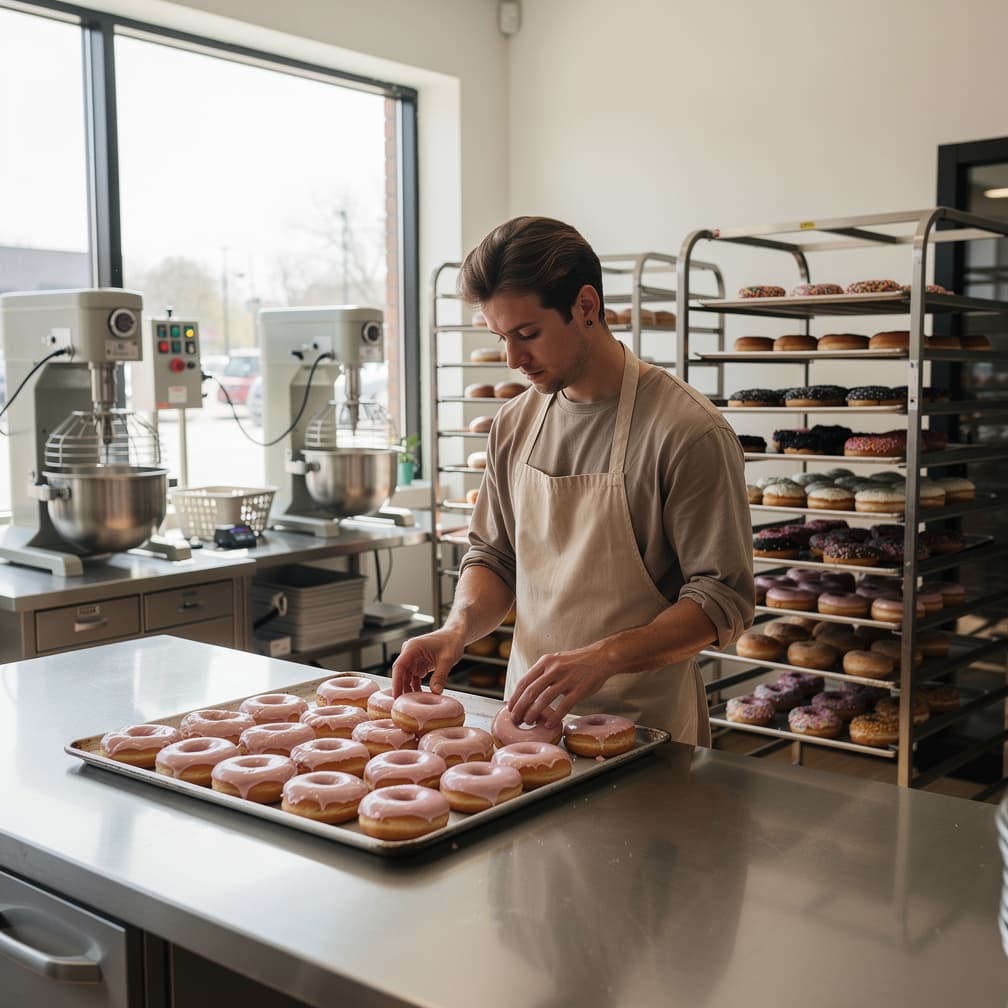

Premiums for a counter-service bakery start around $35 a month at the low end, and the spread above that is driven by payroll, fryer count, and claims history rather than by luck. Price is still the wrong place to begin, because the thinnest form on the table is often the one missing the part you need. Donut shop insurance in Sealy gets priced off what a carrier can see: square footage, equipment values, seating, hours, and how many people are on the clock. A shop with three bakers and a proofer prices differently than a two-person window. Quotes in Texas can move a long way for the same submission, since each participating carrier reads the risk its own way. Work through the sections below and a quote stops being a mystery number on a page.
What Makes Sealy Different
Bad weather in a thin market means the whole town stays home, and your block with it. A shop that bakes to a schedule cannot un-bake three hundred donuts when nobody drives in. That waste is real money, and it is rarely what an insurance form is built to answer. Spoilage tends to need a triggering event, like equipment failure or a covered loss, not slow sales. Knowing that in advance changes what you buy and what you simply plan around. Ask what triggers the lost income section of a Texas policy, and get the answer in writing. A shop in Sealy with one delivery road in and out has a thinner margin for surprises. Plan a cash reserve, buy the endorsement, or accept the exposure, but make it a choice.
Local Risk Factors in Sealy
A shattered storefront window before dawn means the bake is finished and the shop still cannot open. Glass, boarding, and a security problem come first, and every hour of that is an hour the morning rush spends somewhere else. Severe storms also cut power long enough to warm a walk-in, and spoiled stock generally needs a triggering event before anything responds to it. Ask what your form calls a covered cause of loss and what it calls maintenance. For a shop in Austin County, board-up costs, temporary repairs, and the lost mornings while glass is on order are three separate questions in Texas, and a quote that answers all three beats a cheaper one that answers none.
What Coverage Does a Donut Shop in Sealy Need?
General Liability
Landlords, wholesale buyers, and permit desks all ask for this one by name, and it is the line that faces the far side of your counter. It can help cover bodily injury and property damage claims a third party brings against the shop, along with legal defense, subject to your limits. Injuries to your own staff belong somewhere else entirely.
Example: A customer carrying a coffee and a dozen box slips on glaze near the counter and fractures a wrist. The demand letter shows up four months later, and General Liability may pick up defense and settlement inside your limit.
Commercial Property
Rising water, ordinary wear, and a compressor that simply died are the usual exclusions; most of what else can wreck the shop is what this line exists for. Fryers, cases, fixtures, the fit-out you paid for, and the stock in the back can all be scheduled on it, valued at replacement cost or at depreciated value. That choice matters more than the premium does.
Example: A grease fire in the hood takes out the exhaust system, the fryer bank, and the ceiling over the production line. Commercial Property is the line built to answer for the rebuild and the ruined equipment, subject to your deductible and valuation basis.
Workers Compensation
A baker pulls a tray from the oven and catches the hot rack instead, and by mid-shift you are paying for an urgent care visit and an hour nobody worked. This is the line built for injuries on the clock, rated on payroll rather than on how careful the crew is. It generally addresses medical treatment and part of lost wages, and rules on who must carry it vary by state.
Example: Hot oil splashes when a basket goes in too fast, and a new hire spends the week at a burn clinic instead of on the line. Workers Compensation can carry the treatment and a share of the wages while the arm heals.
Business Owners Policy
Buying the liability side and the property side separately works fine; a Business Owners Policy stacks them into one form, with one renewal and one conversation. For a shop in Sealy it is the usual starting point. The trade-off is sublimits: cash, signage, and spoiled stock often sit under quiet caps, and mechanical breakdown may have to be added on.
Example: A break-in empties the register, cracks the storefront glass, and wrecks the display case in one night. The package may answer for the glass and the fixtures under a single claim number, while the cash tends to sit under its own small cap.
How Much Does Donut Shop Insurance Cost in Sealy?
Donut Shop Insurance is a bundle of separate policies, priced separately. The ranges below are typical figures for Sealy for each line, except workers compensation, which is rated per $100 of payroll; a quote prices each one against your own operations.
| Coverage | Typical range | What moves your price |
|---|---|---|
| General Liability Insurance | $60 - $170 per month | Industry and risk classification, annual revenue, number of employees |
| Commercial Property Insurance | $110 - $330 per month | Building value and construction type, roof age and condition, fire protection class |
| Workers Compensation Insurance | $0.75 - $2.74 per $100 of payroll | Employee classification codes, total annual payroll, experience modification rate |
| Business Owners Policy Insurance | $140 - $340 per month | Annual revenue and industry class, building and contents values, square footage and building age |
Prices shown are general estimates, not guaranteed rates or quotes. Your actual premium will depend on the insurer, coverage selected, business details, location, claims history, and other underwriting factors. Learn about our pricing methodology.
What Are the Insurance Requirements for a Donut Shop in Sealy?
Workers' comp is not mandatory for most private employers here. Texas leaves workers' compensation optional for most private employers. Skipping it leaves injury costs on you, and many clients and landlords still demand proof of it by contract — check the Texas Department of Insurance's guidance before deciding.
Flood damage is typically excluded from standard policies. Standard commercial property and builders-risk-type policies typically exclude flood damage. Flood exposure varies address by address, so check your premises in FEMA's Flood Map Service Center before deciding; if you sit in a mapped flood zone, a separate policy through the National Flood Insurance Program is the usual starting point.
Where to verify licensing and coverage rules. The Texas Department of Insurance publishes consumer guidance and current insurance requirements for Texas businesses. When a contract or lease demands specific wording, the Texas Department of Insurance's guidance is the authoritative place to check.
Get Your Donut Shop Quote in Sealy
Compare rates from multiple carriers. Free quotes, no obligation.
Operating in Sealy
- The morning rush is eighty people through one door in ninety minutes, and each of them walks past a counter, a beverage station, and a floor somebody just mopped. That traffic, not the recipe, is what a liability quote in Sealy prices.
- The bake starts hours before the doors open, which means someone is alone in a hot kitchen with the fryers running and nobody nearby if a tray slips. A pre-dawn injury with no witness is the claim most shops never plan for.
- Grease from the fryers coats the hood, the ducts, and eventually the rooftop unit, and a skipped cleaning is the first detail an adjuster looks for after a kitchen fire. Keep the service receipts, because a carrier in Texas can ask for them.
- Glaze, powdered sugar, and spilled coffee turn the floor near the counter into a liability surface by mid-morning, and a customer who goes down there rarely mentions it until a lawyer does.
How to Buy: Advice for Sealy Owners
Your claims history is the one input on a quote that you write yourself, and it takes three years to say anything good. Fryer discipline, floor mats, a wet-floor routine, and a filter schedule are cheap next to a single burn claim. Document the routine, because an underwriter reading your file wants evidence rather than adjectives. General Liability pricing leans on that history, and so does Workers Compensation once the payroll is set. Small claims paid out of pocket sometimes cost less over five years than the renewal they trigger, though that math depends on your deductible and the size of the loss. Ask what a single claim tends to do to a renewal in Texas before you file one. The Texas Department of Insurance publishes consumer guidance on the claims process. When renewal comes, put the improved file in front of participating carriers and let them bid on it.
FAQ
Donut Shop Insurance in Sealy: FAQ
At renewal, and with fresh numbers rather than last year's. Equipment values, payroll, and sales all move, and a policy priced on stale inputs is either overpaying or underinsured. Carriers in Texas also change their appetite for food risks year to year, so a market that was expensive once may not be now. Comparing quotes from participating carriers with an updated sheet takes an hour and can pay for itself.
Cash is the usual surprise, because money tends to sit under a small sublimit rather than the full property limit. Employee theft is a separate question and often needs a crime form. The broken glass, the emptied case, and the damaged fixtures are the parts a property policy is normally built for, subject to your deductible. Ask for those sublimits in writing before you compare prices in Sealy.
Because the price is the last thing built. One may carry replacement cost on your equipment and the other actual cash value, which ages every fryer you own. One may hold a real cash sublimit and the other a token one. Valuation basis, sublimits, exclusions, and the aggregate do the real work. Compare those four across quotes in Texas and the identical prices stop being identical.
Most commercial leases ask for proof of coverage before occupancy, and the landlord usually wants to be listed as an additional insured. That listing is an endorsement, not a line on a certificate, so ask your carrier to issue it. Buy to the wording in the lease rather than to a round number you picked, because a policy that misses the clause has to be rewritten during your build-out.
The urgent care visit is the small half of that bill. A customer fall that turns into a demand letter brings legal defense, lost time, and a settlement negotiated by someone who does this for a living. General Liability is the line meant for that scenario, subject to your per-occurrence limit and your aggregate. The number you picked when you bought is the number you have when the letter arrives.
Payroll, sales volume, equipment values, seating, hours, and claims history do most of the work. A shop with three bakers and a full production line prices differently than a two-person window with a case and a brewer. Loss history counts over three to five years, so a quiet stretch is worth real money at renewal. None of it depends on the name over the door.
Sources
- 1.Texas Department of Insurance(Texas Department of Insurance publishes consumer guidance for insurance buyers.)
- 2.FEMA / FloodSmart(Flood coverage is typically purchased separately; FEMA administers the National Flood Insurance Program.)


