







































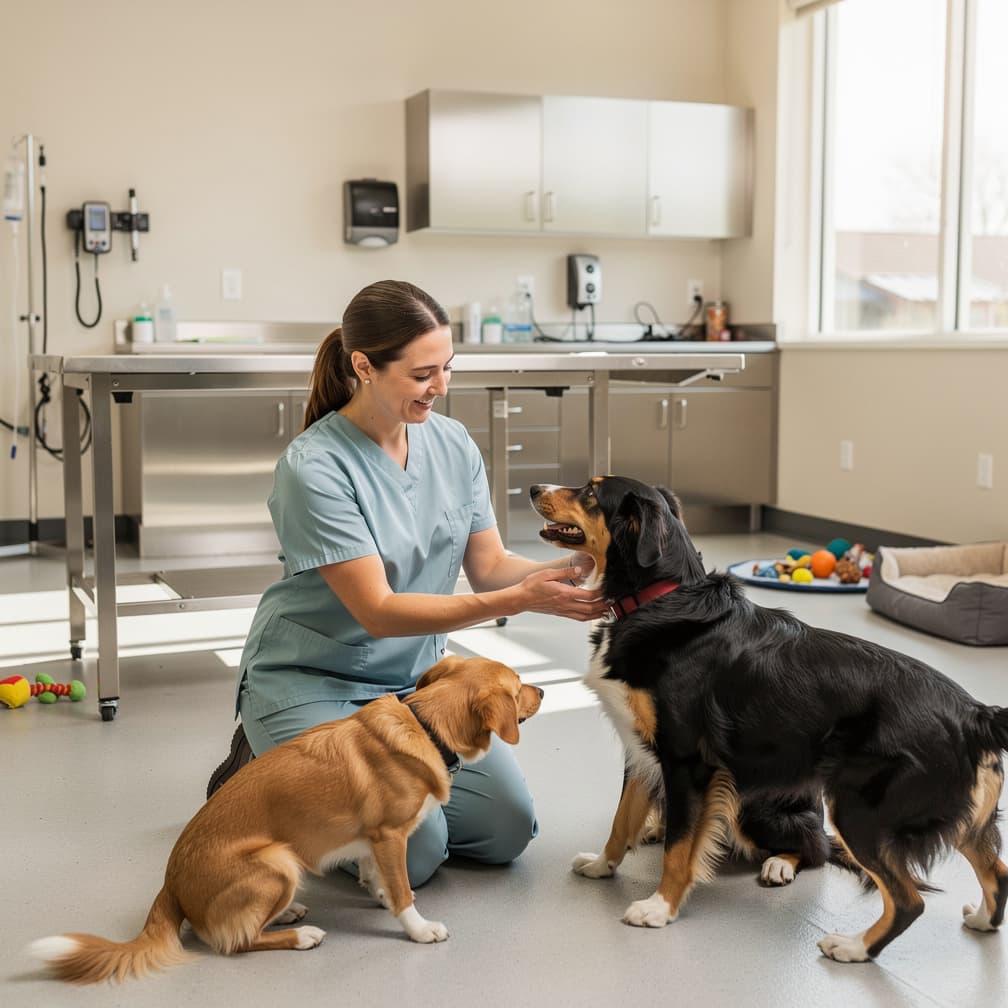

A scuffle in a play group can end with stitches for one dog and a demand letter from its owner. Doggy daycare insurance in Sugar Land exists for that hour: the bite claim, the parent who slips on a freshly mopped check-in floor, the dryer that quits with forty towels waiting. Group play is the product and the exposure at once, because dogs read each other faster than any handler can step between them. A landlord can ask for proof of coverage before a Sugar Land lease is signed, and the certificate is the easy part of that request. Whether the limits behind it match what a serious injury claim actually costs is the harder question. The sections below walk through what facilities carry, what pushes the price up, and where the honest gaps sit.
What Makes Sugar Land Different
Additional insured wording is the request that trips up more facilities than any other clause. It means your landlord gets protection under your policy for claims arising from your operation. It does not give them their own limit, and it does not extend the limit you bought. Two parties sharing one aggregate is exactly what it sounds like when a big claim lands. If a lease in Sugar Land names three entities as additional insureds, the math gets tighter still. Ask participating carriers in Texas what the aggregate looks like once those parties are added. The certificate will not tell you, because a certificate only reports, it never grants coverage. Read the endorsement itself, or ask for a copy, before you sign anything at all.
Local Risk Factors in Sugar Land
Hurricane warnings force a decision no other closure does: dogs are already in your building, and someone has to stay with them or move them. Evacuating a kennel is a logistics problem with no good version, and the days after are worse, since power, water, and a working washer decide whether you reopen at all. Roof damage, a downed fence, and a ruined food supply tend to arrive together. Commercial property may respond to wind damage to the structure and contents, though named storm deductibles in Texas are often a percentage of the building value rather than a flat amount. Read that line before Sugar Land is anywhere near a forecast cone. It is the number that decides how much of the repair is yours.
What Coverage Does a Doggy Daycare in Sugar Land Need?
General Liability
Landlords, lenders, and corporate clients ask for this line by name before you open, and it is generally the one aimed at claims from the people and dogs who are not yours: a parent who falls in the lobby, a passerby hurt by an escaped boarder. Injuries to your own staff belong on a payroll policy instead, and animals in your custody are often limited by separate wording worth reading.
Example: Two boarders tangle over a toy during afternoon play and one needs surgery; the owner's demand and an attorney's letter arrive together, and general liability can help cover the defense.
Commercial Property
Wear and tear on your dryers is your own problem; a fire that starts in one is a different question. This line generally addresses sudden accidental damage to your building, improvements, crates, gates, play structures, laundry equipment, and the office computer. Standard forms typically exclude flood and gradual breakdown, and the income you lose while the doors are shut is usually a separate part of the quote.
Example: A storm peels back a section of roof over the play room in Sugar Land, soaking bedding and shorting the ventilation; commercial property might respond to the repairs and the ruined contents.
Professional Liability
Judgment is a product a daycare sells: which dogs play together, which medication gets given, whether a temperament test happens on a busy morning. When an owner argues that a decision, rather than an accident, hurt their dog, this is the line built for that argument. It typically does nothing for a customer who slips in your lobby, which sits with your liability policy instead.
Example: You pair a nervous rescue with a rough play group after a rushed intake and the dog is injured; the owner's claim about that call is what professional liability is meant to reach.
Workers Compensation
Client claims and staff claims are different animals, and this is the staff side. Handlers get bitten separating dogs, wrench shoulders lifting a big boarder into a tub, and slip on hosed floors, and this line generally addresses their medical care and lost wages. Requirements for employees vary by state, and rating runs on payroll rather than on headcount.
Example: A handler's hand is bitten breaking up a scuffle and the repair costs weeks of restricted duty; workers compensation could take on the medical bills and part of the missed pay.
How Much Does Doggy Daycare Insurance Cost in Sugar Land?
Doggy Daycare Insurance is a bundle of separate policies, priced separately. The ranges below are typical figures for Sugar Land for each line, except workers compensation, which is rated per $100 of payroll; a quote prices each one against your own operations.
| Coverage | Typical range | What moves your price |
|---|---|---|
| General Liability Insurance | $130 - $450 per month | Industry and risk classification, annual revenue, number of employees |
| Commercial Property Insurance | $100 - $340 per month | Building value and construction type, roof age and condition, fire protection class |
| Professional Liability Insurance | $60 - $200 per month | The services you actually perform, annual revenue or billed fees, limit and retention selected |
| Workers Compensation Insurance | $0.75 - $2.74 per $100 of payroll | Employee classification codes, total annual payroll, experience modification rate |
Prices shown are general estimates, not guaranteed rates or quotes. Your actual premium will depend on the insurer, coverage selected, business details, location, claims history, and other underwriting factors.
What Are the Insurance Requirements for a Doggy Daycare in Sugar Land?
Workers' comp is not mandatory for most private employers here. Texas leaves workers' compensation optional for most private employers. Skipping it leaves injury costs on you, and many clients and landlords still demand proof of it by contract — check the Texas Department of Insurance's guidance before deciding.
Flood damage is typically excluded from standard policies. Standard commercial property and builders-risk-type policies typically exclude flood damage. Flood exposure varies address by address, so check your premises in FEMA's Flood Map Service Center before deciding; if you sit in a mapped flood zone, a separate policy through the National Flood Insurance Program is the usual starting point.
Where to verify licensing and coverage rules. The Texas Department of Insurance publishes consumer guidance and current insurance requirements for Texas businesses. When a contract or lease demands specific wording, the Texas Department of Insurance's guidance is the authoritative place to check.
Get Your Doggy Daycare Quote in Sugar Land
Compare rates from multiple carriers. Free quotes, no obligation.
Operating in Sugar Land
- About 46 doggy daycares operate in Fort Bend County, so when yours closes for repairs your clients have somewhere else to go and a reason to stay there.
- Intake paperwork signed at the counter is the record of what you promised, and it is the first document anyone asks for after an incident.
- A permit office can require proof of coverage before an animal facility license is issued in Sugar Land, and rules vary by state and city, so confirm yours before signing a lease.
- Overnight boarding adds hours when nobody is watching the room, and participating carriers in Texas treat unstaffed hours differently from a supervised afternoon.
How to Buy: Advice for Sugar Land Owners
Start with the lease on your Sugar Land building, because it is the document with a deadline. Pull the insurance exhibit and read the limit it demands, the entities it names, and any wording about additional insured status. Hand that page to whoever is quoting you before they build the general liability piece, since retrofitting endorsements after binding wastes a week. Then walk your own building with a notepad: crates, gates, dryers, the washer, the computer with your client records on it. That list is what a commercial property quote gets built from, and owners routinely understate it by half. Payroll totals and your dog to handler ratio come next, because workers compensation is rated on the first and appetite turns on the second. The Texas Department of Insurance publishes consumer guidance on what a business policy is required to disclose. With that packet ready, CPK lets you compare quotes from participating carriers on identical information.
FAQ
Doggy Daycare Insurance in Sugar Land: FAQ
Cost turns on payroll, how many dogs you take per day, your square footage, the services you add like grooming or boarding, and your claims history. Facilities with written handling protocols and a clean loss run tend to be quoted differently from those without one. The cost table on this page shows published ranges by coverage, and participating carriers in Texas read the same submission differently.
General liability is generally the line aimed at third-party bodily injury and property damage, and a client's dog injured in your care is often treated as property rather than as a person. Some policies handle animals in your care under separate wording, and the details differ between carriers. Ask specifically how a dog in your custody is treated before you assume anything. That single question separates otherwise identical quotes.
An escape usually turns into a claim from the dog's owner, and sometimes from a driver or a neighbor as well. Liability wording may respond depending on how the policy treats animals in your care, custody, and control. That phrase is the one to look for, since many standard forms limit or exclude it. Read the endorsement, not the summary, before you decide how your own policy treats it.
It extends certain protection under your policy to another party for claims arising out of your operation. Landlords ask for it so a claim from your play yard does not start with their own insurer. It does not give them a separate limit; they share yours. Adding several parties tightens the same aggregate, which is worth knowing before you agree to a list of them.
Yes, and that is what the aggregate limit means. Per-occurrence is the most a policy may pay for one incident, like a single fight that injures two dogs. The aggregate is a yearly ceiling that every bite, fall, and escape claim draws from together. A rough season at a busy facility can erode it even when no single claim looked large. Ask what the aggregate resets to and when, because that date matters more than owners expect.
Standard commercial property forms typically exclude flood, meaning water that rises from the ground outside. A burst supply line inside the building is a different question and is often treated apart from flood. Flood gets priced as its own decision, and a yard that pools every heavy rain is worth mentioning to whoever quotes you. Check what the form says about surface water before assuming either way.
Sources
- 1.U.S. Census Bureau, County Business Patterns (2022), Fort Bend County(Fort Bend County has about 46 businesses in this trade's category (NAICS group 812910).)
- 2.Texas Department of Insurance(Texas Department of Insurance publishes consumer guidance for insurance buyers.)
- 3.FEMA / FloodSmart(Flood coverage is typically purchased separately; FEMA administers the National Flood Insurance Program.)


