







































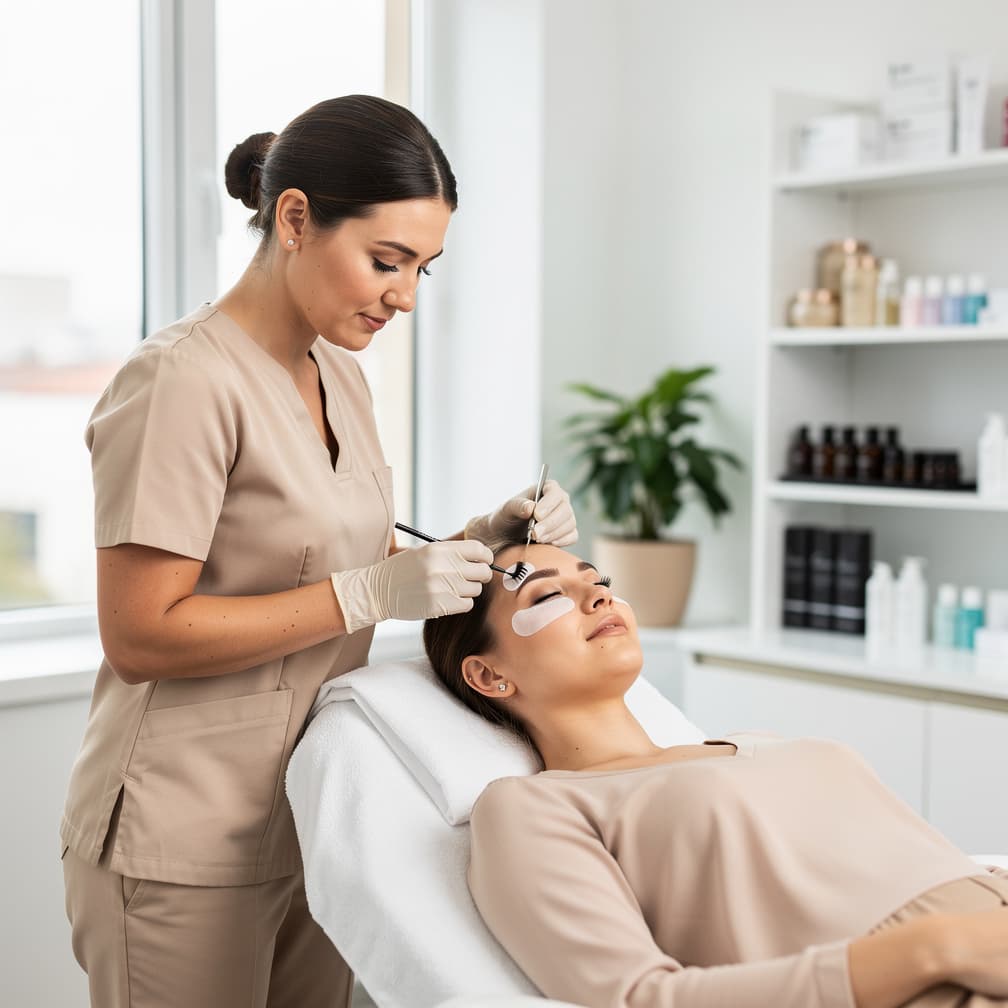

As a lash technician in Sugar Land, you carry the liability of a medical-adjacent service with the paperwork of a small retail tenant. Clients lie down, close their eyes, and hand you two hours of trust a blink away from the cornea. When something goes wrong, the complaint is rarely about technique in the abstract; it is about a specific lid, a specific reaction, a specific set of aftercare instructions. Lash technician insurance in Sugar Land sits under that, and under the tablet, tiles, and adhesive stock a break-in can clear out in one visit. Rules on licensing and scope vary from state to state, so what an artist across a border does proves nothing about your own file. Start with the ranges below, then look hard at limits.
What Makes Sugar Land Different
A storm week that closes roads empties a lash book faster than any competitor ever will. Cancellations are not an insurance event by themselves, which surprises artists the first time it happens. What can be a claim is the damage: water through a ceiling, a soaked lash bed, ruined stock. Adhesive is fussy about temperature and humidity, so an outage can spoil inventory without a drop of water. A suite in Sugar Land that loses power for two days may lose its stock and its bookings. Ask whether a policy contemplates spoiled supplies or only physical damage to them, because those differ. Ask what happens to income while the room sits unusable, since that is a separate question. Both answers belong in the comparison before you choose a Sugar Land quote on price alone.
Local Risk Factors in Sugar Land
A shattered window in a shared building can ruin every lash tray in the room even if the storm never touched your suite directly. Humidity does the quieter damage: adhesive that sat for days without climate control may not behave the same way afterward, and a set that pops early after a storm week is still your problem to fix. A business owners policy may respond to the physical damage and, where the wording includes it, to some of the income lost while the building is unusable. That income piece is the one most owners never ask about. Ask what triggers it, since many forms want direct physical damage rather than a closed road, and a Sugar Land suite can be perfectly intact and still unreachable inside Fort Bend County.
What Coverage Does a Lash Technician in Sugar Land Need?
Professional Liability
The allegation that the service itself caused harm is what this line exists for: an adhesive reaction, damage to natural lashes, an injury during a removal, an argument over what your aftercare instructions actually said. It typically answers for defense costs alongside any settlement, subject to your limit. Someone tripping over a cord is generally a General Liability question instead.
Example: A client comes back four days after a full set with swollen lids and a bill from an urgent care clinic, saying the adhesive did it; a professional liability policy may pick up the defense and any settlement inside your limit.
General Liability
Landlords, suite operators, and event venues ask for this one by name, and they usually want to be listed on the certificate before you unpack. The form is built around third-party bodily injury and property damage in your space: a client who trips, a bag knocked into a mirror, a burn from a spilled drink. Claims about the lash work itself typically fall outside it.
Example: A client stands up from the lash bed, catches a foot on a power cord, and breaks a wrist on the way down; general liability is generally the line that fields the injury claim and the defense behind it.
Commercial Property
Flood is typically excluded here, and that catches owners out every season. What the form is built around is the physical stuff of a lash room: the bed, the lights, the magnification, the adhesive and trays, the retail stock, and the improvements you made to a rented suite. Theft, fire, vandalism, and storm damage are usually the named perils; a kit that lives in a vehicle often needs its own wording.
Example: Someone forces the suite door overnight and clears the room of trays, tweezers, and a ring light; commercial property could fund the replacements once the deductible comes off the top.
Business Owners Policy
Buying the liability piece and the property piece separately works fine; bundling them into one package is often cheaper and always simpler at renewal. That package is what a Business Owners Policy is, and for a one-room lash suite in Sugar Land it is a common starting point. The professional side, meaning the allegation about the lash service, usually needs its own line or an endorsement.
Example: A pipe upstairs lets go and soaks a rented lash suite, closing it for two weeks; a business owners policy might address the damaged contents and, depending on the wording, part of the income lost while the room dries.
How Much Does Lash Technician Insurance Cost in Sugar Land?
Lash Technician Insurance is a bundle of separate policies, priced separately. The ranges below are typical figures for Sugar Land for each line; a quote prices each one against your own operations.
| Coverage | Typical range | What moves your price |
|---|---|---|
| Professional Liability Insurance | $35 - $110 per month | The services you actually perform, annual revenue or billed fees, limit and retention selected |
| General Liability Insurance | $30 - $95 per month | Industry and risk classification, annual revenue, number of employees |
| Commercial Property Insurance | $30 - $110 per month | Building value and construction type, roof age and condition, fire protection class |
| Business Owners Policy Insurance | $60 - $190 per month | Annual revenue and industry class, building and contents values, square footage and building age |
Prices shown are general estimates, not guaranteed rates or quotes. Your actual premium will depend on the insurer, coverage selected, business details, location, claims history, and other underwriting factors.
What Are the Insurance Requirements for a Lash Technician in Sugar Land?
Workers' comp is not mandatory for most private employers here. Texas leaves workers' compensation optional for most private employers. Skipping it leaves injury costs on you, and many clients and landlords still demand proof of it by contract — check the Texas Department of Insurance's guidance before deciding.
Flood damage is typically excluded from standard policies. Standard commercial property and builders-risk-type policies typically exclude flood damage. Flood exposure varies address by address, so check your premises in FEMA's Flood Map Service Center before deciding; if you sit in a mapped flood zone, a separate policy through the National Flood Insurance Program is the usual starting point.
Where to verify licensing and coverage rules. The Texas Department of Insurance publishes consumer guidance and current insurance requirements for Texas businesses. When a contract or lease demands specific wording, the Texas Department of Insurance's guidance is the authoritative place to check.
Get Your Lash Technician Quote in Sugar Land
Compare rates from multiple carriers. Free quotes, no obligation.
Operating in Sugar Land
- Reaction claims usually arrive by text message, days after the client walked out happy, and the first reply you send becomes part of the file whether you meant it to or not.
- A shared building in Sugar Land means someone else's fire, leak, or forced door can close your room, and the days you cannot open are gone whether or not the damage was yours.
- Patch test notes and a signed aftercare sheet sit in a drawer doing nothing until the week they are the only evidence the client was told what to do with a new set.
- Adhesive is a chemical stored in a small room with a client's face inches from it, and its shelf life, its fumes, and its storage temperature are all things a claim can eventually turn on.
How to Buy: Advice for Sugar Land Owners
If a host asks for proof before a bridal booking, treat that as the easy version of the problem. The hard version is a client at that booking who says a tool scratched her eye while she lay on a hotel bed. Off-site work carries your exposure with it and can leave parts of your coverage behind, which is worth confirming rather than assuming. Ask whether a General Liability form follows you to a temporary location and what it says about damage to the space you borrowed. Professional Liability generally follows the service wherever the service happens, though reading it beats trusting that. Check the Texas Department of Insurance's guidance before deciding what a certificate for an event actually promises. Then compare participating carriers in Sugar Land on the off-site answer.
FAQ
Lash Technician Insurance in Sugar Land: FAQ
Two numbers sit on a liability policy. The per-occurrence limit is the most it may pay for one client's claim; the aggregate is the ceiling for everything inside the policy year. A bad batch of adhesive is not one claim if six clients react to it, and six small files can eat an aggregate that looked generous when one file was all you pictured.
That is the classic third-party bodily injury claim, and General Liability is generally the line written for it, including the defense costs that arrive long before anyone decides who was at fault. Whether it responds depends on your limit and the policy's terms, not on how obvious the fault looks. The claim can start weeks later with a call from a lawyer rather than at the moment of the fall.
A patch test is not a coverage condition, but it is evidence. When a reaction claim arrives, the argument turns on what you knew, what you told the client, and what she agreed to. Notes, a signed aftercare sheet, and photos of the finished set are what an adjuster asks for first. None of it prevents a claim; it changes how quickly the file closes.
A gap costs more than the week itself, because the next application asks about it. Claims-made wording makes it worse, since a lapse can break the continuity date the policy relies on. A landlord who checks certificates can notice the gap too and hold you to the lease clause. Renewal reminders are a great deal cheaper than reinstatement conversations.
Policies are written with a territory and often a described location, so a technician taking appointments outside Sugar Land should confirm both. The liability side commonly follows the work anywhere inside the policy territory. The property side is more literal, since it attaches to a place, and a kit that lives in the trunk between appointments is the piece most likely to fall outside the wording.
Standard property forms typically exclude flood, so rising water is priced as a separate decision through the National Flood Insurance Program or a private market. A burst pipe inside the room and a foot of water coming under the door are different perils with different answers, even though both leave you mopping. Check what your form says about flood well before the season you would need it.
Sources
- 1.Texas Department of Insurance(Texas Department of Insurance publishes consumer guidance for insurance buyers.)
- 2.FEMA / FloodSmart(Flood coverage is typically purchased separately; FEMA administers the National Flood Insurance Program.)


