







































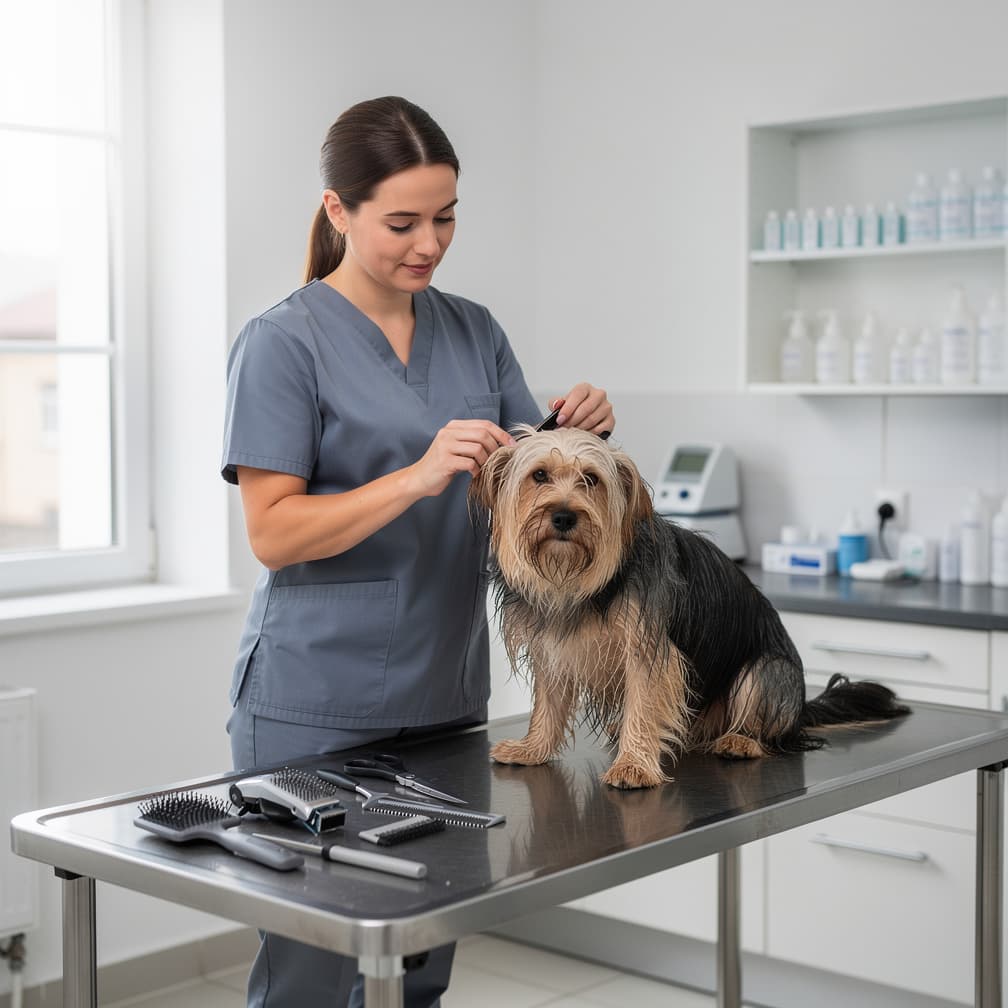

General liability for a grooming shop typically runs from $35 a month, which is roughly what you lose to one canceled weekend block. Price is the wrong place to start, though, and pet grooming insurance in Sugar Land gets easier to buy once you know what drives the number. Carriers ask about payroll, about how many animals pass through the door, about whether you handle reactive dogs, and about your claims history. A shop with a bather on payroll prices differently from a solo groomer with a single table. The building matters too, since equipment and product on the shelf raise what a fire or a burst pipe would cost. Get those facts on paper before you compare quotes across Texas, or you are comparing guesses.
What Makes Sugar Land Different
Referral networks are the quiet infrastructure of grooming, and a big market has far more of them than a small one. Veterinary clinics, boarding kennels, and pet retailers send work to groomers they trust, and trust here means paperwork. Fort Bend County has about 17,500 businesses, so a referral partner has other groomers to call the day your certificate expires. That is the practical reason a lapse costs more than whatever the reinstatement fee turns out to be. Keep the certificate current with every referring partner, not only with the landlord who demanded it. Ask your carrier how a renewal gap is handled and whether coverage stays continuous by default. A single missed payment can turn a referral relationship into a phone call you never get. The policy is a relationship asset in Sugar Land as much as a financial one.
Local Risk Factors in Sugar Land
Hurricane season closes a grooming shop long before any wind arrives, because clients cancel the moment an evacuation notice is in the air. Boarding kennels fill, owners leave town with their dogs, and a week of bookings vanishes on a forecast. Then comes the physical side: roof damage over the drying room, a surge that reaches the tubs, product ruined by heat once the power quits. Commercial Property may respond to wind damage in Sugar Land, but the water that arrives with a storm is a different conversation, since standard forms typically exclude flood and treat surge as flood. Windstorm deductibles are also often a percentage of the building value rather than a flat amount, which changes what a small claim is worth. Read those two clauses in Texas before the season starts.
What Coverage Does a Pet Grooming in Sugar Land Need?
General Liability
Landlords, host clinics, and corporate accounts ask for this one by name. It is the line typically aimed at people rather than pets: the client who slips on a wet floor at pickup, the person bitten in your waiting area, the damage you cause to somebody else's property. Injury to an animal in your care is often excluded and usually needs separate wording, so ask.
Example: A client leans over the desk to sign, slips on water tracked from the tub room, and lands hard; General Liability can help cover the medical bills and the claim that follows.
Professional Liability
Nobody was hurt and the owner is still furious: the coat came off too short, the shave down was never authorized, a sore is blamed on your blade. Those complaints are about the service rather than an injury, and General Liability generally leaves them alone. Professional Liability is the line meant for that argument, and it often funds the defense even when a claim goes nowhere.
Example: An owner books a full groom before a show, returns to a coat clipped shorter than agreed, and demands compensation; Professional Liability might answer the claim and the lawyer's bill.
Commercial Property
Tubs, hydraulic tables, high-velocity dryers, clipper sets, and the product on the shelf are the money in a grooming shop, and they all sit in one room. This line is intended for that room: fire, theft, vandalism, and sudden water from inside the building. Flood is typically excluded and bought separately, and wear on an aging dryer motor is treated as maintenance.
Example: A break-in overnight empties the clipper drawer and takes both dryers from a salon in Sugar Land; Commercial Property could respond up to the values you scheduled, which is why the inventory matters.
Workers Compensation
A bite to a client and a bite to your bather travel down different roads. This is the employee road: medical care and lost wages when a groomer is hurt lifting a ninety-pound dog, scratched on the table, or injured on a wet floor at work. Rules on who must carry it vary by state and headcount. Rating runs per hundred dollars of payroll rather than as a flat monthly figure.
Example: A bather reaches into a tub, takes a bite that needs stitches, and misses a week of shifts; Workers Compensation is generally intended to handle the medical care and the lost wages.
How Much Does Pet Grooming Insurance Cost in Sugar Land?
Pet Grooming Insurance is a bundle of separate policies, priced separately. The ranges below are typical figures for Sugar Land for each line, except workers compensation, which is rated per $100 of payroll; a quote prices each one against your own operations.
| Coverage | Typical range | What moves your price |
|---|---|---|
| General Liability Insurance | $50 - $160 per month | Industry and risk classification, annual revenue, number of employees |
| Professional Liability Insurance | $40 - $130 per month | The services you actually perform, annual revenue or billed fees, limit and retention selected |
| Commercial Property Insurance | $80 - $250 per month | Building value and construction type, roof age and condition, fire protection class |
| Workers Compensation Insurance | $0.75 - $2.74 per $100 of payroll | Employee classification codes, total annual payroll, experience modification rate |
Prices shown are general estimates, not guaranteed rates or quotes. Your actual premium will depend on the insurer, coverage selected, business details, location, claims history, and other underwriting factors.
What Are the Insurance Requirements for a Pet Grooming in Sugar Land?
Workers' comp is not mandatory for most private employers here. Texas leaves workers' compensation optional for most private employers. Skipping it leaves injury costs on you, and many clients and landlords still demand proof of it by contract — check the Texas Department of Insurance's guidance before deciding.
Flood damage is typically excluded from standard policies. Standard commercial property and builders-risk-type policies typically exclude flood damage. Flood exposure varies address by address, so check your premises in FEMA's Flood Map Service Center before deciding; if you sit in a mapped flood zone, a separate policy through the National Flood Insurance Program is the usual starting point.
Where to verify licensing and coverage rules. The Texas Department of Insurance publishes consumer guidance and current insurance requirements for Texas businesses. When a contract or lease demands specific wording, the Texas Department of Insurance's guidance is the authoritative place to check.
Get Your Pet Grooming Quote in Sugar Land
Compare rates from multiple carriers. Free quotes, no obligation.
Operating in Sugar Land
- A shave down the owner did not expect is a service complaint rather than an injury, and it travels down a different road inside your policy than a bite does.
- Product on the shelf is inventory, and a burst pipe over a retail wall can take every bottle of shampoo and conditioner you own in one night.
- Clients in a sparse market near Sugar Land will wait a few days for a slot and then drive to the next town, which is why a closed week costs more than the repair bill.
- Your lease probably makes the tenant responsible for the plumbing you installed for the tubs, which means that build-out belongs on your property schedule and not the landlord's.
How to Buy: Advice for Sugar Land Owners
A bite is the claim that reprices a grooming shop, so start your shopping there. The severity is not the dog; it is the medical bill, the lost wages of the person bitten, and the attorney who calls afterward. Ask each quote how a bite to a client is handled, how a bite to your own employee is handled, and whether the two answers ever collide. General Liability sits on the client side of that line. Workers Compensation sits on the employee side, rated against your payroll. A shop with no employees has one of those conversations; a shop with three has both. Check the Texas Department of Insurance's guidance on employer coverage requirements before you assume which applies to you in Texas. Then compare quotes from participating carriers through CPK with your real headcount on the form.
FAQ
Pet Grooming Insurance in Sugar Land: FAQ
Per occurrence is the most a policy may pay for one incident, such as a single client's fall at your front desk. The aggregate is the ceiling across the whole policy year, no matter how many incidents there were. A grooming floor with dogs and owners moving through it all day has more chances to reach that second number than a quiet office does. Leases usually name both figures, so read them separately.
Location moves premiums through the things attached to it: the limits a lease demands, the value of the space and the build-out, weather exposure at the building, and local claim costs when someone is hurt. Two identical shops in different parts of Texas can price differently for those reasons alone. Ask each quote what it assumed about your address and your limits before you compare monthly figures.
You can be named in a claim regardless of fault, which is why defense costs matter as much as any payout. A pre-existing sore or a heart condition discovered on the table becomes an argument, and arguments cost money before anyone decides who was right. Intake photographs and a signed condition note are what cut that argument short. Ask whether defense sits inside or outside your limit.
Hold four things fixed: the limits, the deductible, your payroll figure, and your equipment values. Then read what actually differs, which is usually the animal-injury wording, whether defense erodes the limit, and what is excluded. CPK lets you compare quotes from participating carriers in Sugar Land on the same inputs rather than on headline numbers. The differences in wording are the decision; the monthly figure is the last step.
Most commercial landlords ask for proof of coverage before they hand over keys, and the lease usually names a minimum limit and asks to be added as an additional insured. That request is contractual rather than legal, so the numbers vary from building to building. Get the clause in writing, then buy to it. A policy that cannot produce the certificate the lease describes will not get you the space.
Price moves on a handful of inputs: payroll if you have employees, annual revenue, the value of your equipment, the limits you choose, and your claims history. A solo groomer with one table prices differently from a three-station shop with a lease. Published ranges are statewide starting points, and a quote for your own shop in Texas may land anywhere across them. Bring accurate figures, because an estimate corrected later reprices the whole year.
Sources
- 1.U.S. Census Bureau, County Business Patterns (2022), Fort Bend County(Fort Bend County has about 17,500 business establishments.)
- 2.Texas Department of Insurance(Texas Department of Insurance publishes consumer guidance for insurance buyers.)
- 3.FEMA / FloodSmart(Flood coverage is typically purchased separately; FEMA administers the National Flood Insurance Program.)


