







































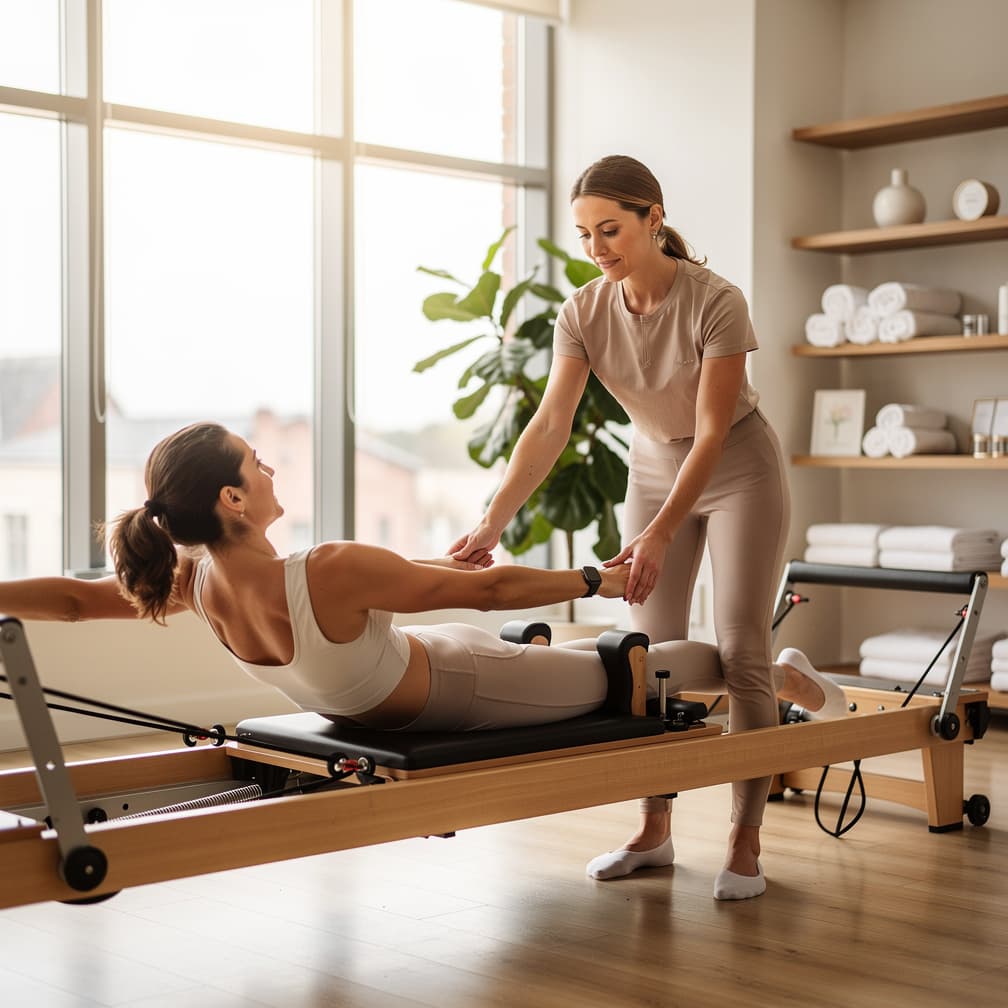

As a pilates studio in Sugar Land you probably run on class packs, memberships, and a booking app, and none of that changes the two questions a carrier asks: who gets hurt, and what breaks. Bodies get hurt on the floor and at the reception desk. Machines break, get stolen, or drown when a pipe upstairs lets go. Pilates studio insurance in Sugar Land answers both questions, priced from your floor area, your class volume, your instructor count, and your claim history. The waiver you collect at intake is useful evidence and it is not a shield: people still file, and defending a claim costs money before anyone decides who was right. What follows breaks each line down, shows the published ranges, and flags where the honest gaps sit.
What Makes Sugar Land Different
Wind lifts a roof, and the room underneath becomes a water problem within the hour. Sprung floors do not dry, sound systems do not recover, and springs rust where nobody looks. Photographs of your room taken while everything is fine are the least expensive claim tool you own. Serial numbers, purchase dates, and the buildout invoices belong in the same folder, stored somewhere off the premises. Commercial property can help cover storm damage to the room and its contents, subject to the limit and deductible you picked. What such a form typically will not touch is water arriving as flood, which is priced as its own decision. Knowing which bucket a loss falls into is the difference between a claim and an argument in Sugar Land. Ask which one your quote in Texas is actually written for.
Local Risk Factors in Sugar Land
Glass goes first, and a studio's front wall is usually glass. Wind takes the storefront, rain comes through the hole and finds the sprung floor, and the mirrors inside can come down with the pressure change. What follows is a queue: every business on the block wants the same contractor, and the apparatus you need is on a truck behind a thousand others. A policy may pay for machines and still not shorten that queue, which is why your closure plan matters as much as your limit. Ask what a quote in Texas says about a named storm deductible, and ask again if the Sugar Land address sits near the coast.
What Coverage Does a Pilates Studio in Sugar Land Need?
General Liability
A student crossing the floor to a reformer slips and lands hard: that third-party injury is the claim General Liability is meant for. It can also help with damage you do to the space you rent, and with the legal defense that follows a suit. What it typically leaves alone is any argument about your instruction itself.
Example: A client hurries toward the changing room, catches a mat edge near the water station, and breaks a wrist; the medical bills and the suit behind them are what this line is meant to answer.
Professional Liability
Instruction is the product, and Professional Liability is the line written for claims about it: a cue, a hands-on correction, a spring setting, a program built for someone returning from injury. It generally responds to allegations that your teaching caused harm, subject to the terms, and it usually has nothing to say about a wet floor.
Example: A client back from physical therapy follows the progression you built and blames the added load for a re-injury weeks later; defending that argument is where this coverage typically earns its place.
Commercial Property
Flood is excluded on the standard form, and wear on springs and straps counts as maintenance, so start from what Commercial Property is not. What it is: reformers, towers, mirrors, the sound system, retail stock, and the buildout you paid for, against causes like fire, theft, storm damage, and vandalism, subject to your limit and deductible.
Example: Fire in the unit next door pushes smoke through a studio in Sugar Land, and every strap, mat, and cushion has to go; a property claim is generally how the room gets refitted.
Business Owners Policy
Two forms in one envelope. A Business Owners Policy bundles the property side and the liability side, which suits a single-room studio with a landlord to satisfy and apparatus to insure. It often prices below the parts bought separately, and it commonly leaves instruction claims outside, so read the exclusions before treating it as the whole answer.
Example: A pipe lets go over a weekend and a student falls the week after in Sugar Land; one form, one deductible schedule, and one carrier fielding both calls is the practical draw, subject to the limits inside it.
How Much Does Pilates Studio Insurance Cost in Sugar Land?
Pilates Studio Insurance is a bundle of separate policies, priced separately. The ranges below are typical figures for Sugar Land for each line; a quote prices each one against your own operations.
| Coverage | Typical range | What moves your price |
|---|---|---|
| General Liability Insurance | $50 - $160 per month | Industry and risk classification, annual revenue, number of employees |
| Professional Liability Insurance | $40 - $140 per month | The services you actually perform, annual revenue or billed fees, limit and retention selected |
| Commercial Property Insurance | $70 - $230 per month | Building value and construction type, roof age and condition, fire protection class |
| Business Owners Policy Insurance | $100 - $300 per month | Annual revenue and industry class, building and contents values, square footage and building age |
Prices shown are general estimates, not guaranteed rates or quotes. Your actual premium will depend on the insurer, coverage selected, business details, location, claims history, and other underwriting factors.
What Are the Insurance Requirements for a Pilates Studio in Sugar Land?
Workers' comp is not mandatory for most private employers here. Texas leaves workers' compensation optional for most private employers. Skipping it leaves injury costs on you, and many clients and landlords still demand proof of it by contract — check the Texas Department of Insurance's guidance before deciding.
Flood damage is typically excluded from standard policies. Standard commercial property and builders-risk-type policies typically exclude flood damage. Flood exposure varies address by address, so check your premises in FEMA's Flood Map Service Center before deciding; if you sit in a mapped flood zone, a separate policy through the National Flood Insurance Program is the usual starting point.
Where to verify licensing and coverage rules. The Texas Department of Insurance publishes consumer guidance and current insurance requirements for Texas businesses. When a contract or lease demands specific wording, the Texas Department of Insurance's guidance is the authoritative place to check.
Get Your Pilates Studio Quote in Sugar Land
Compare rates from multiple carriers. Free quotes, no obligation.
Operating in Sugar Land
- Water is the equipment risk that matters. A leak from the unit above finds the sprung floor, soaks the wood, and rusts springs in places nobody looks at until one fails.
- Teacher training turns your instruction into somebody else's practice, and your name travels into rooms you will never see. Carriers in Texas ask about it, and the answer belongs on the application.
- Renting your floor to a guest teacher makes you the party asking for a certificate. If their client falls in your room in Sugar Land, your name is still the one on the building.
- Floor-to-ceiling mirrors are a large share of a buildout's value and a real hazard when something hits one. Both facts belong in a property limit, and neither is obvious from your revenue.
How to Buy: Advice for Sugar Land Owners
Limits deserve more thought than the premium does. Ask two questions of any General Liability quote: what one student's fall can draw, and what the whole policy year can draw. Then ask where defense costs sit, because a form that pays the lawyer out of the limit shrinks what is left for the claimant. On Commercial Property, run the deductible against a realistic small loss in your Sugar Land room: one carriage, one mirror wall, one section of floor. A deductible that saves a little each month can swallow the only claim you were ever going to file. The Texas Department of Insurance publishes consumer guidance on limits and deductibles for small businesses in Texas. Once you know the numbers you want, compare quotes from participating carriers holding those numbers fixed, which is the only way the comparison means anything.
FAQ
Pilates Studio Insurance in Sugar Land: FAQ
It is a sensible starting point, since a Business Owners Policy typically packages property and liability on one form at limits a landlord can accept. What it usually leaves out is the instruction claim, which is where Professional Liability comes in. Read the exclusions before you take the convenience, and check that the property limit inside the bundle reflects the apparatus you actually own rather than a default figure.
Wear and tear on springs, straps, and upholstery is maintenance, and maintenance generally sits outside a property form. Flood is normally excluded and priced separately. Damage you cause on purpose is never covered anywhere. Money lost because a class was canceled with no physical damage behind it usually falls outside the form as well. Ask what the form treats as a covered cause of loss before you assume.
Directly, and often unhappily. A single carriage repair or one mirror replacement is real money and still small next to a fire, so a high deductible can swallow the entire claim. That is the trade you are making: a lower monthly figure in exchange for carrying small losses yourself. Run the deductible against the losses you are most likely to have rather than the one you are least likely to have.
It can. Training people to teach is instruction with a longer tail, because your graduates carry what you taught them into rooms you will never see. Carriers ask about it, and it belongs on the application whether or not they ask. Programming for prenatal clients or people arriving out of physical therapy raises similar questions. Telling a carrier in Texas early costs less than explaining it once a claim arrives.
That depends on the carrier and the wording, so nobody honest promises a timeframe. A plain certificate is quick. One needing an additional insured endorsement, primary and non-contributory wording, or a waiver of subrogation has to be underwritten first. Start the request when the Sugar Land lease is signed rather than the week you open. A lapse can put a hold on the door in a building that tracks expiry dates automatically.
A certificate of insurance naming them, usually with additional insured status, named limits, and a live expiry date. Some leases also ask for primary and non-contributory wording, a waiver of subrogation, and a property figure for the improvements you install. Certificate wording is not negotiable at the certificate stage, so send the lease exhibit to a carrier while you are still quoting. A close-enough certificate gets rejected, and your opening date in Sugar Land moves with it.
Sources
- 1.Texas Department of Insurance(Texas Department of Insurance publishes consumer guidance for insurance buyers.)
- 2.FEMA / FloodSmart(Flood coverage is typically purchased separately; FEMA administers the National Flood Insurance Program.)


