







































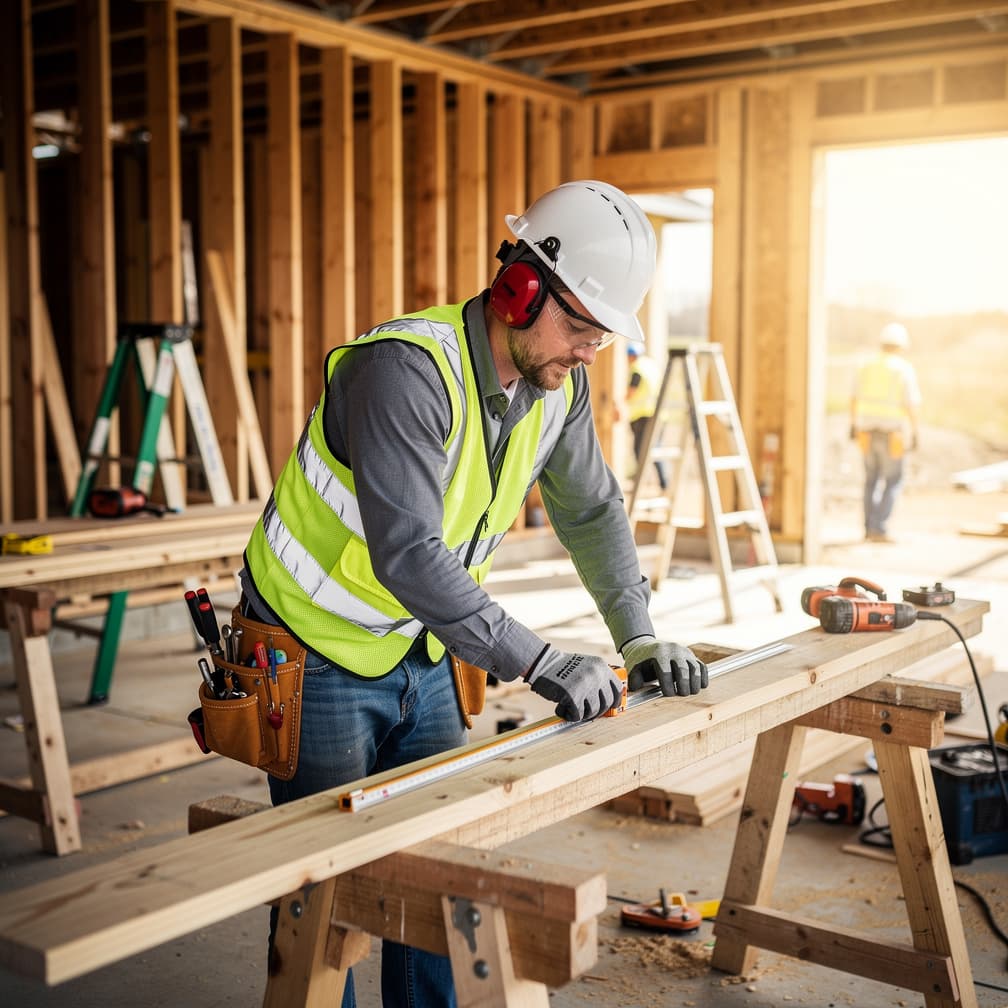

Every one of the about 19 carpenters in Smith County answers the same question on a quote form: how many people are on the payroll. The number of shops around you barely moves your price, while the size of your crew moves it a lot. Carpenter insurance in Tyler gets sold as a local product, and location does matter, but payroll, tools, and vehicles do the heavy lifting. That is good news, because those are things you control and can document. Keep a current tool list and a clean payroll record and the quotes come back tighter. Skip that and every carrier fills the gaps with assumptions that favor the carrier. The breakdown below shows where each coverage sits, so you can compare quotes on facts instead of estimates.
What Makes Tyler Different
A landlord fitting out a small storefront can demand proof of coverage before a single stud moves. With fewer commercial owners across Smith County, one repeat client's requirements can end up shaping your whole policy. That cuts both ways: a single demanding contract sets a limit you then carry on every other job. It also means a lapse is visible, since the person who asked last time is the person asking again. Keep the certificate live between jobs even when nothing is booked, because gaps get noticed quickly. Reissuing a certificate is routine work for a carrier, so asking early costs you nothing at all. The Texas Department of Insurance publishes consumer guidance on how coverage gets documented for small contractors. Then the question becomes limits rather than existence, and that is a much better argument to be having.
Local Risk Factors in Tyler
Tornado and severe storm risk is a same-day problem: work runs normally in the morning and a site is unusable by afternoon. For a carpenter the damage is rarely to a building you own, since most of your value sits in a truck, a trailer, and material staged at somebody else's address. Commercial Property may respond to sudden physical damage to what you own, subject to the form and to where the property was when it happened. That last clause carries the weight, because gear in a client's garage and gear in your own bay are not always treated alike. Ask a participating carrier in Texas how the location question works before Tyler weather makes it academic.
What Coverage Does a Carpenter in Tyler Need?
General Liability
The certificate a general contractor asks for is usually asking about this line. General Liability is meant for the harm your work does to other people and their property: a visitor who goes down on sawdust, a stone counter cracked during an install, a fixture caught by a ladder. Damage to your own workmanship is handled differently, and that split catches carpenters out.
Example: A router skates off its rail and gouges a client's counter three days before the kitchen is due; General Liability may answer for the replacement and for the argument that follows it.
Commercial Property
Flood typically sits outside this form, which owners discover at the worst moment. Commercial Property is where a shop, a bench, stock, and the tools that sleep there overnight get raised after a fire, a storm, or a break-in. What it says about equipment away from your premises deserves a direct question rather than an assumption.
Example: A break-in at a rented bay in Tyler clears out the nailers, the track saw, and a planer bought last spring; Commercial Property could take up the replacement, depending on the schedule you filed.
Workers Compensation
A helper puts a nail through his hand at ten in the morning, and the rest of the day turns into medical bills, lost wages, and forms. Workers Compensation is the line intended for exactly that, and general contractors commonly want proof of it before your crew is allowed through the gate. Whether it reaches you as the owner depends on how the business is structured.
Example: A framer steps off a bench wrong and misses six weeks of work; Workers Compensation might pick up the medical costs and a share of the wages while the claim runs its course.
Commercial Auto
Personal auto policies commonly exclude business use, so the pickup hauling trim to a job can sit in a gap you learn about from the roadside. Commercial Auto is written for vehicles doing work, and carriers rate radius, cargo, and everyone who takes the wheel. The tools in the bed are a separate question from the truck around them.
Example: A loaded trailer jackknifes on a wet ramp and takes the tailgate with it; Commercial Auto is generally the line raised for the vehicle, with the cargo inside treated on its own terms.
How Much Does Carpenter Insurance Cost in Tyler?
Carpenter Insurance is a bundle of separate policies, priced separately. The ranges below are typical figures for Tyler for each line, except workers compensation, which is rated per $100 of payroll; a quote prices each one against your own operations.
| Coverage | Typical range | What moves your price |
|---|---|---|
| General Liability Insurance | $110 - $330 per month | Industry and risk classification, annual revenue, number of employees |
| Commercial Property Insurance | $75 - $250 per month | Building value and construction type, roof age and condition, fire protection class |
| Workers Compensation Insurance | $0.75 - $2.74 per $100 of payroll | Employee classification codes, total annual payroll, experience modification rate |
| Commercial Auto Insurance | $190 - $525 per month | Fleet size and vehicle types, driver records and experience, coverage limits and deductibles |
Prices shown are general estimates, not guaranteed rates or quotes. Your actual premium will depend on the insurer, coverage selected, business details, location, claims history, and other underwriting factors.
What Are the Insurance Requirements for a Carpenter in Tyler?
Workers' comp is not mandatory for most private employers here. Texas leaves workers' compensation optional for most private employers. Skipping it leaves injury costs on you, and many clients and general contractors still demand proof of it by contract — check the Texas Department of Insurance's guidance before deciding.
State auto liability minimums apply to business vehicles. Texas's minimum auto liability limits are $30,000/$60,000/$25,000 (bodily injury per person / per accident / property damage). Contracts and lenders often require more than the state floor.
Flood damage is typically excluded from standard policies. Standard commercial property and builders-risk-type policies typically exclude flood damage. Flood exposure varies address by address, so check your premises in FEMA's Flood Map Service Center before deciding; if you sit in a mapped flood zone, a separate policy through the National Flood Insurance Program is the usual starting point.
Where to verify licensing and coverage rules. The Texas Department of Insurance publishes consumer guidance and current insurance requirements for Texas businesses. When a contract or lease demands specific wording, the Texas Department of Insurance's guidance is the authoritative place to check.
Get Your Carpenter Quote in Tyler
Compare rates from multiple carriers. Free quotes, no obligation.
Operating in Tyler
- Photographs of the site condition on day one settle arguments on day thirty, because a scratch nobody noticed at the start becomes your scratch by default once someone spots it.
- Replacement tools can take a week to source when the nearest supplier sits a long drive from Tyler, and the job you promised does not pause while you go find them.
- The insurance exhibit in a subcontract is usually two pages nobody reads, and it is the only part of the agreement that decides what your policy actually has to say.
- A cabinet install that goes wrong rarely damages the cabinet; it damages the wall, the floor, or the countertop beside it, and all three belong to somebody else.
How to Buy: Advice for Tyler Owners
Gather four things before you shop: payroll by role, annual revenue, a vehicle list with drivers, and a tool inventory with values. Those four answers price most of your policy, and guessing at any of them produces a number you cannot lean on. Payroll drives Workers Compensation directly, so an estimate that drifts gets corrected at audit, usually in the direction you did not want. The vehicle list drives Commercial Auto, and the radius questions on it are priced, not decorative. Spend an hour building the folder and it serves every renewal after this one. The Texas Department of Insurance publishes consumer guidance on how business coverage is rated for small employers. With the folder in hand you can send one accurate submission to participating carriers in Texas and compare like for like.
FAQ
Carpenter Insurance in Tyler: FAQ
One policy serves every job, which is exactly why the strictest contract you sign ends up setting the requirements for all the others. You cannot buy coverage per project, so buying to one client's minimum can leave the next agreement unsatisfied. Pull the toughest insurance exhibit in your files and treat that as your specification, rather than the easiest one.
Most general contractors require proof before your crew sets foot on a Tyler site, and the requirement usually comes from their own contract with the owner further up the chain. General Liability is the line they ask about most, though plenty of agreements also want proof of workers coverage for anyone you bring with you. The certificate is what satisfies them. The limits sitting behind it are what actually matter to you.
Payroll drives it harder than anything else, followed by your vehicles, your tool values, the limits you choose, and your claims history. A solo finish carpenter with hand tools prices out very differently from a crew framing additions out of a loaded trailer. Location plays a part, but a Tyler address is the part you cannot change. Bring accurate figures and the quotes come back tighter.
General Liability might respond to damage your work causes to property belonging to someone else, subject to how the policy is written. The wrinkle is that damage to your own work is handled separately, so a floor you installed and a floor you merely worked beside can produce different answers. Ask that question directly rather than assuming it falls one way or the other.
It depends on where the tools were and what the policy says about property away from your premises. Commercial Property is the usual home for equipment questions, though gear in a vehicle, in a trailer, or left on an open Tyler site can sit on quite different footings. Keep an inventory with models, serials, and values, because proving what you owned is harder than owning it.
Personal auto policies commonly exclude business use, so a pickup hauling material to a job can fall into a gap you only discover after a collision. Commercial Auto is built for vehicles doing work, and participating carriers in Texas price radius, cargo, and drivers when they rate it. Put every vehicle that touches the business on the application, including the one you think of as personal.
Sources
- 1.U.S. Census Bureau, County Business Patterns (2022), Smith County(Smith County has about 19 businesses in this trade's category (NAICS group 238350).)
- 2.Texas Department of Insurance(Texas Department of Insurance publishes consumer guidance for insurance buyers.)
- 3.FEMA / FloodSmart(Flood coverage is typically purchased separately; FEMA administers the National Flood Insurance Program.)


