







































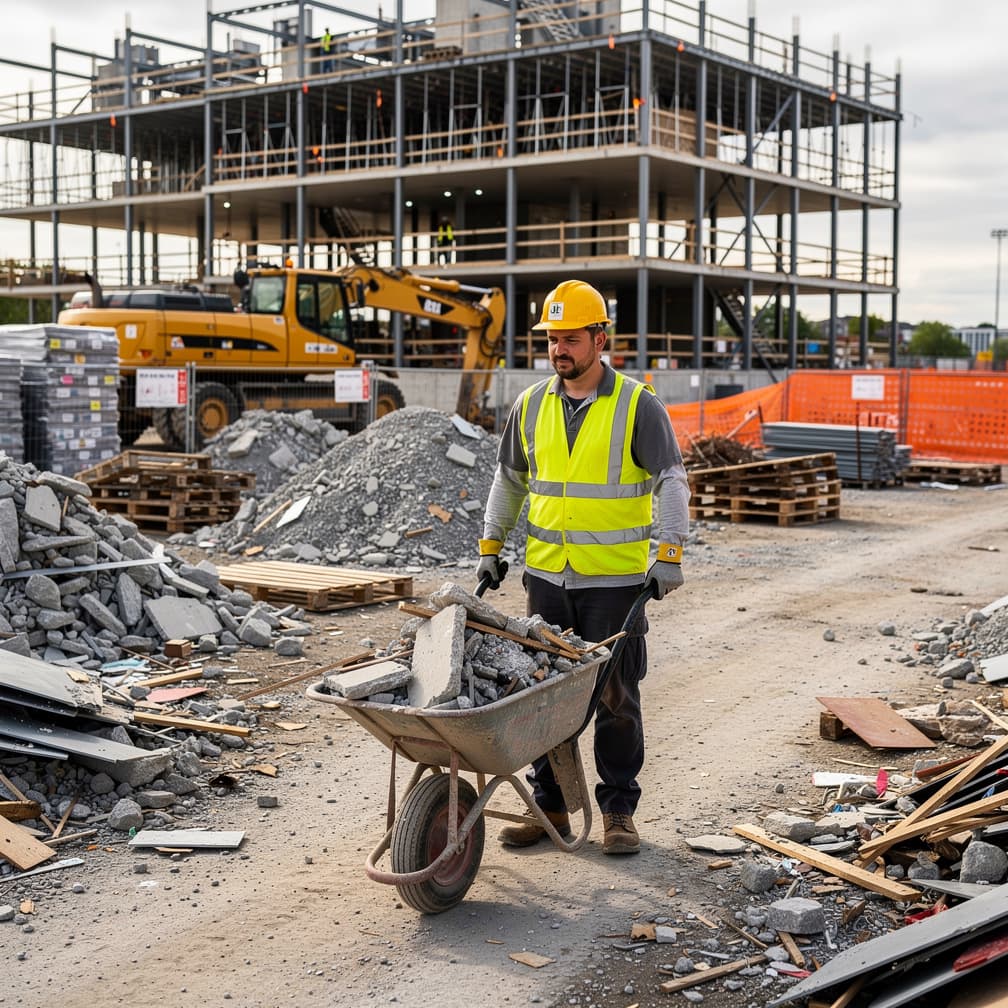

A roll-off box scrapes a driveway on the way down, and the repair conversation starts before you have hauled anything. Debris removal puts heavy steel next to things that dent, crack, and stain, usually with the customer standing right there. That is the plain reason owners shop for debris removal insurance in Tyler: the losses are physical, visible, and immediate. A clipped mirror in a tight alley. A laborer who slips on wet plywood. A nail that finds a tire on the way out. Each of those lands on a different part of your program, and the part you skipped is the part that gets tested. Participating carriers in Texas read the same truck list and the same payroll very differently, which is why a single quote tells you almost nothing about the market.
What Makes Tyler Different
Distance is the cost driver a thin market adds that a dense one never has to price. Every extra mile between the cleanout and the disposal facility is exposure you are quietly paying for. Radius questions on an application are not paperwork; they set the rate and the coverage territory. Understate the radius and a long-haul loss becomes an argument instead of a claim payment. Overstate it and you pay for miles you never run, which is the opposite mistake. Measure your real routes for a month, then answer the question with the number you measured. A hauler working out of Tyler and running clear across Texas is a different risk entirely. Tell participating carriers that plainly, because a surprise at claim time is the expensive version.
Local Risk Factors in Tyler
A downed line across the only road into a job is a full stop, and stops cost crew hours you already paid for. Severe storms scatter work across a wide area, so trucks run longer routes on damaged roads with debris in the lanes, and a tire failure on a loaded trailer at speed is the loss nobody plans for. Commercial Auto is the line most likely to answer for a wreck like that, though what it does for the material riding on the trailer is a separate question worth asking now. Get that answer before the next storm reaches Smith County, and ask participating carriers in Texas to put it in writing.
What Coverage Does a Debris Removal in Tyler Need?
General Liability
Property managers, general contractors, and municipal clerks ask for this one by name before a truck reaches the site. It can help cover third-party injury and property damage arising out of your work: a cracked driveway, a neighbor's fence, a slip at a residential cleanout. Damage to your own loader and injuries to your own crew sit outside it.
Example: Your crew drags a loaded container across a homeowner's driveway in Tyler and cracks the apron in three places. The repair estimate lands a week later, and the policy may take the claim subject to your deductible.
Commercial Auto
Miles are the exposure here. Trucks and trailers running between a demolition job and a disposal facility sit outside what a liability form addresses, and this line is meant to answer for the collision, the injuries, and the damage your vehicle does to others. Rating follows units, gross weight, radius, and driver records. Cargo riding on the trailer usually raises separate questions.
Example: A loaded trailer clips a parked sedan while backing out of a tight alley, and the owner's repair estimate runs to a door and a quarter panel. That claim would typically be handled here.
Workers Compensation
A helper who slips on wet plywood at a cleanout needs medical care, and this is the line built to answer for it. It can pay for treatment and lost wages for injured employees, and it generally limits your exposure to the injury lawsuit that might otherwise follow. Rating runs on payroll by job class, so a driver, a laborer, and an operator price differently. Requirements vary by state.
Example: An operator wrenches a shoulder forcing a frozen pile onto a trailer and misses six weeks of work. Medical bills and a share of the lost wages might be picked up under this line, subject to the state's rules.
Commercial Umbrella
Primary limits are finite, and a loaded truck meeting a passenger car is where a debris hauler finds the edge of them. This line sits above General Liability and Commercial Auto, adding limit once an underlying policy is exhausted. Municipal and demolition contracts frequently demand figures a small program cannot reach alone. It follows the underlying forms, so their exclusions usually carry upward.
Example: An intersection collision with your grapple truck injures two people, and the demands exceed what the vehicle policy holds. The excess layer above it could pick up what remains, depending on how the tower was built.
How Much Does Debris Removal Insurance Cost in Tyler?
Debris Removal Insurance is a bundle of separate policies, priced separately. The ranges below are typical figures for Tyler for each line, except workers compensation, which is rated per $100 of payroll; a quote prices each one against your own operations.
| Coverage | Typical range | What moves your price |
|---|---|---|
| General Liability Insurance | $220 - $700 per month | Industry and risk classification, annual revenue, number of employees |
| Commercial Auto Insurance | $480 - $1,300 per month | Fleet size and vehicle types, driver records and experience, coverage limits and deductibles |
| Workers Compensation Insurance | $0.75 - $2.74 per $100 of payroll | Employee classification codes, total annual payroll, experience modification rate |
| Commercial Umbrella Insurance | $120 - $400 per month | Umbrella limit requested, limits carried on the underlying policies, loss history on those underlying policies |
Prices shown are general estimates, not guaranteed rates or quotes. Your actual premium will depend on the insurer, coverage selected, business details, location, claims history, and other underwriting factors.
What Are the Insurance Requirements for a Debris Removal in Tyler?
Workers' comp is not mandatory for most private employers here. Texas leaves workers' compensation optional for most private employers. Skipping it leaves injury costs on you, and many clients and general contractors still demand proof of it by contract — check the Texas Department of Insurance's guidance before deciding.
State auto liability minimums apply to business vehicles. Texas's minimum auto liability limits are $30,000/$60,000/$25,000 (bodily injury per person / per accident / property damage). Contracts and lenders often require more than the state floor.
Where to verify licensing and coverage rules. The Texas Department of Insurance publishes consumer guidance and current insurance requirements for Texas businesses. When a contract or lease demands specific wording, the Texas Department of Insurance's guidance is the authoritative place to check.
Get Your Debris Removal Quote in Tyler
Compare rates from multiple carriers. Free quotes, no obligation.
Operating in Tyler
- Skid steers back up more than they go forward, and the parked vehicle behind the box in a tight Tyler alley is the thing they find most often.
- The customer standing in the yard watching you load is also the witness describing the accident later, so what your crew says on site ends up in the claim file.
- A municipal pickup contract can demand proof of coverage that stays current for the entire term, and a single lapsed month can end the agreement without any argument.
- Long hauls to a disposal site outside Smith County put your trucks on unfamiliar roads at the end of a long day, which is exactly when severity climbs.
How to Buy: Advice for Tyler Owners
If a municipal pickup contract in Tyler is on your table, treat the insurance exhibit as part of the price. Public agencies tend to require higher limits, specific additional-insured wording, and proof that stays current for the whole term. Those requirements can push a small operation from General Liability alone into a Commercial Umbrella, and that cost belongs in the bid rather than in your margin. Workers Compensation proof is frequently demanded on this kind of work too, even where a very small employer might otherwise skip it. The Texas Department of Insurance publishes the current requirements for workers coverage in Texas, and those rules genuinely vary. Ask participating carriers to quote the exhibit as written, and you will know before you bid whether the contract is worth winning.
FAQ
Debris Removal Insurance in Tyler: FAQ
Because the trucks carry the severity. A debris hauler spends the day between jobsites and disposal facilities, and time on the road is where injuries and large repair bills come from. Commercial Auto pricing follows units, gross weight, radius, and driver records, and one violation on a driver's history can move it. General Liability rides on payroll or revenue and tends to produce smaller, more frequent claims. The order surprises owners; the math does not.
Expect the landlord to ask. A lot where trucks, trailers, and loaded containers sit overnight is a lease like any other, and leases carry insurance exhibits naming required limits and additional-insured status for the landlord. Storing loaded boxes raises its own questions, so read the exhibit before you commit to a term. Having current proof ready removes one reason for a landlord in Tyler to pass on you.
Usually, and the demand comes from the contract rather than from a rule. A property manager typically wants a certificate naming the management company and the owner as additional insureds before a truck touches the property. General Liability is the line most of those requests target. The certificate is a summary; the endorsement is what actually changes your policy, so ask to see it.
Price comes from payroll, the number and weight of your vehicles, how far you haul, the limits your contracts demand, and your claims history. Two haulers with the same trucks can land far apart if one runs a long radius or keeps a driver with violations. Small frequent property damage claims push renewals up more than owners expect. Comparing several participating carriers in Texas on identical limits is the only way to see your own number.
Often, yes, subject to your policy's terms. Damage to a third party's property while you work is the classic claim on that line, and a cracked apron under a loaded box fits the pattern. Two things trip owners up: the deductible, and the fact that damage to your own equipment sits outside it entirely. Photograph the approach before you drop a box, because a documented condition settles most of these arguments.
That depends on what the debris hits and how the claim gets framed. Damage caused by your vehicle in transit generally falls to Commercial Auto, while the material you were paid to remove can raise separate cargo questions your policy might not address at all. Tarping is the control underwriters ask about, so expect the question. If a driver behind you on a Tyler street is injured, the demand can outrun a primary limit quickly.
Sources
- 1.Texas Department of Insurance(Texas Department of Insurance publishes consumer guidance for insurance buyers.)


