







































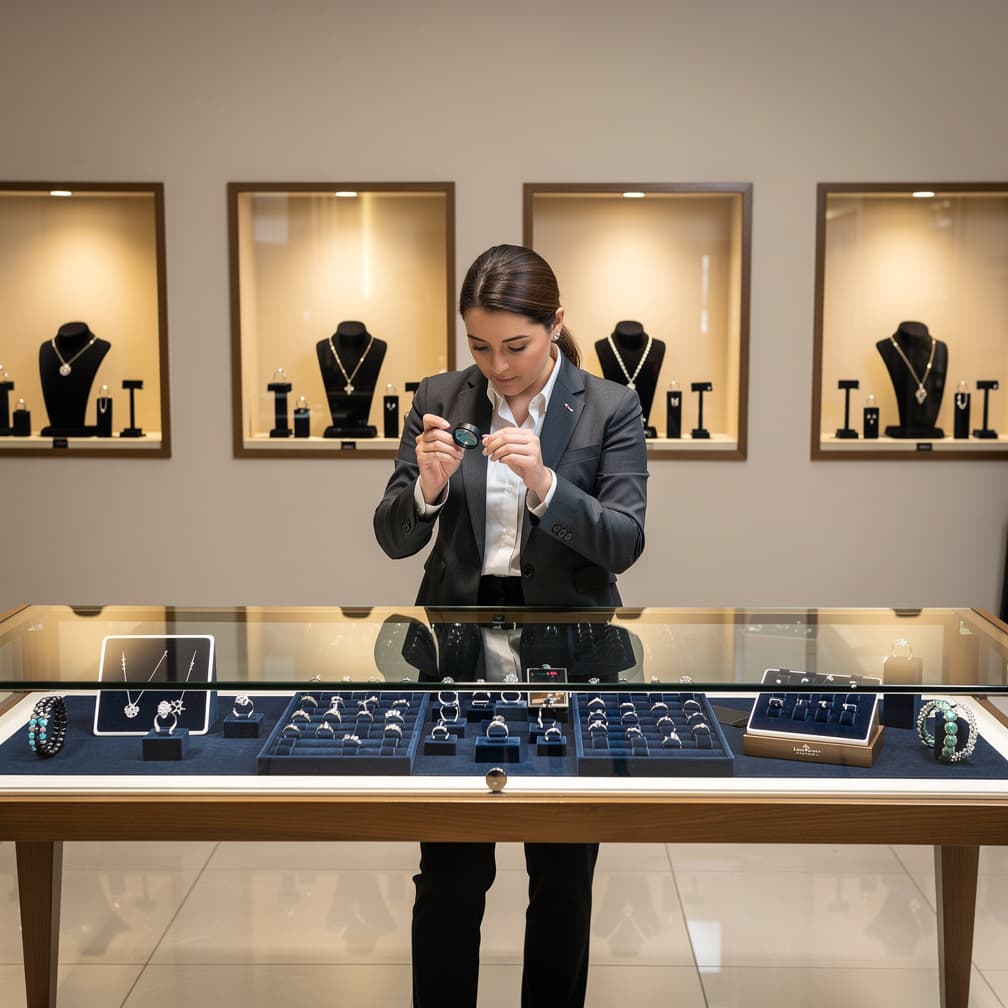

Cost is the first thing owners ask about and the last thing that should decide this. Property cover for a store with showcases and a safe typically ranges between $65 and $290 a month, and where you land depends on stock values, construction, and how the building is protected. Jewelry store insurance in Tyler carries a wrinkle in a thin market that the price sheet never shows: fewer participating carriers write jewelers' stock, and fewer nearby adjusters have valued a diamond claim. That surfaces as slower quotes and slower settlements rather than a bigger number on the page. A store in Smith County can wait longer for both. Read the drivers below before you read the ranges, then compare what each offer actually promises to do.
What Makes Tyler Different
Underwriters working a thin market have less comparable data, so they lean harder on what you document. That cuts both ways: a strong file can price well, and a thin file just gets guessed at. A store in Tyler may see fewer offers, which makes each one worth reading closely rather than fast. Fewer offers also means less price competition, so the negotiation happens over terms instead of dollars. Deductible level, valuation basis, and protective safeguard conditions are all moveable if you ask early enough. Ask what a higher deductible buys before you accept a limit you quietly cannot afford to use. The premium you see is the smallest number in the conversation once a claim actually opens. Bring payroll, values, and protection details to every participating carrier in Texas and let them compete.
Local Risk Factors in Tyler
A closed street keeps customers away long after the debris is gone, and a jewelry store lives on people walking through the door. Reopening depends on the building, the utilities, and a glass contractor fielding calls from every business on the block. Merchandise that survived intact still earns nothing while the store is dark, and that loss is handled separately from the physical damage. Ask a carrier in Texas what triggers income protection and how long it runs. A Tyler store that knows the waiting period before the storm plans around it instead of discovering it.
What Coverage Does a Jewelry Store in Tyler Need?
Commercial Property
Showcases, safes, repair benches, fixtures, and the merchandise inside them are what this line is built around. Fire, storm damage, and building losses that shut a store typically land here, and many leases require it before the keys change hands. Water arriving from outside the building is generally excluded and priced as its own decision.
Example: A sprinkler head lets go over three display cases on a quiet night; commercial property may respond to the ruined stock, the soaked fixtures, and the cleanup that follows.
General Liability
Injuries to your own staff sit elsewhere; this line is aimed at the people who walk through the door. A shopper who slips at the entry, tips a case over, or is hurt at the repair counter is the classic claim, and landlords commonly demand it along with additional-insured status. Damage to your own stock is not what it addresses.
Example: A customer catches a heel on the entry mat and fractures a wrist in Tyler; general liability can help cover the medical bills and the defense costs that follow.
Commercial Crime
Where property cover leans toward the broken case, this line leans toward what left in somebody's pocket. Employee theft, forgery, embezzlement, and fraud tied to cash, inventory, or repair intake are the intended targets, and losses like these often surface months later during a count. Shortages you cannot document usually go nowhere.
Example: A bookkeeper routes supplier payments to a personal account for most of a year; commercial crime is generally the line meant to answer once an audit surfaces it.
Tools & Equipment (Inland Marine)
Merchandise leaves the store more often than owners admit: a trade show, a courier run, a stone at a setter's bench, a piece out on approval. This line generally follows property in transit or away from the premises, where a standard property form may stop at the door. Conditions on how goods travel usually apply.
Example: A tray of finished rings travels to a show and never reaches the table; inland marine can respond, subject to the transit conditions written into the policy.
Workers Compensation
If you have employees, most states require this line, and the thresholds vary. Medical bills and lost wages from work injuries are what it is meant for: a burn at the torch, a repetitive strain injury at the bench, a fall in the stockroom. It is rated against payroll by job class rather than sold at a flat monthly figure.
Example: A bench jeweler burns a hand at the torch and misses six weeks; workers compensation is typically intended to pick up the medical treatment and part of the lost wages.
How Much Does Jewelry Store Insurance Cost in Tyler?
Jewelry Store Insurance is a bundle of separate policies, priced separately. The ranges below are typical figures for Tyler for each line, except workers compensation, which is rated per $100 of payroll; a quote prices each one against your own operations.
| Coverage | Typical range | What moves your price |
|---|---|---|
| Commercial Property Insurance | $330 - $1,250 per month | Building value and construction type, roof age and condition, fire protection class |
| General Liability Insurance | $65 - $240 per month | Industry and risk classification, annual revenue, number of employees |
| Commercial Crime Insurance | $65 - $260 per month | Employees who handle money or inventory, internal controls and separation of duties, funds and securities on hand |
| Inland Marine Insurance | $150 - $675 per month | Total insured value of the scheduled property, type and age of the equipment, where it is stored and how far it travels |
| Workers Compensation Insurance | $0.75 - $2.74 per $100 of payroll | Employee classification codes, total annual payroll, experience modification rate |
Prices shown are general estimates, not guaranteed rates or quotes. Your actual premium will depend on the insurer, coverage selected, business details, location, claims history, and other underwriting factors.
What Are the Insurance Requirements for a Jewelry Store in Tyler?
Workers' comp is not mandatory for most private employers here. Texas leaves workers' compensation optional for most private employers. Skipping it leaves injury costs on you, and many clients and landlords still demand proof of it by contract — check the Texas Department of Insurance's guidance before deciding.
Flood damage is typically excluded from standard policies. Standard commercial property and builders-risk-type policies typically exclude flood damage. Flood exposure varies address by address, so check your premises in FEMA's Flood Map Service Center before deciding; if you sit in a mapped flood zone, a separate policy through the National Flood Insurance Program is the usual starting point.
Where to verify licensing and coverage rules. The Texas Department of Insurance publishes consumer guidance and current insurance requirements for Texas businesses. When a contract or lease demands specific wording, the Texas Department of Insurance's guidance is the authoritative place to check.
Get Your Jewelry Store Quote in Tyler
Compare rates from multiple carriers. Free quotes, no obligation.
Operating in Tyler
- Restoration crews across Smith County get booked out after a wide storm, so your reopening date depends on a queue rather than on how quickly a claim opens.
- Two offers with identical limits can value the same tray at cost or at retail selling price, and that difference only surfaces when somebody has to write the check.
- A property manager in Tyler can hold your keys until the certificate names the right legal entity, so a typo in a company name is enough to push an opening back a week.
- Repair intake is where custody starts, and an envelope with no description and no agreed value turns a missing piece into an argument you cannot win from memory.
How to Buy: Advice for Tyler Owners
Start with the lease behind your Tyler storefront, because the document you already signed usually sets the floor for everything else. It names required limits, additional-insured status, and sometimes a waiver of subrogation, and those three things drive what your General Liability has to look like. Pull the clause, copy the exact wording, and send it with your submission rather than describing it from memory. Then look at what the lease ignores entirely, which is your stock: Commercial Property and Commercial Crime are what answer for merchandise, and no landlord will ask about either one. Rules vary by state, and the Texas Department of Insurance publishes consumer guidance on how commercial policies are structured. Once your requirements are written down, CPK can put quotes from participating carriers next to each other so you compare the same request, not five different ones.
FAQ
Jewelry Store Insurance in Tyler: FAQ
Property belonging to customers sits under different wording than stock you own, and some forms treat it as its own category with a separate limit. Ask directly whether pieces taken in for repair are scheduled and how they get valued. Your intake ticket does the heavy lifting: a description, a photo, and an agreed value turn a dispute into a claim someone can process.
Employee dishonesty is what Commercial Crime is built around, and it often reaches theft of inventory, cash, forgery, and fraudulent transfers. It usually will not respond to shortages you cannot document, so inventory records matter more here than anywhere else. Losses of this kind tend to surface months late, during a count or an audit, so ask how the discovery period works before buying anything in Texas.
Standard property forms typically exclude flood, which means water arriving from outside the building is priced as its own separate decision. That gap catches owners who assume water is water. A burst pipe inside the store is usually a different question with a different answer. Ask a carrier to point at the definition in their wording, because definitions of flood differ and the difference decides whether a claim opens.
Bring inventory values by category with a dated count, purchase invoices and appraisals, your safe rating, alarm certification and monitoring contract, payroll split by role, revenue, and a plain description of past losses. Underwriters price unknowns pessimistically, so a complete file often quotes better than a careful story. Send the same packet to every participating carrier in Texas so the offers differ because of the carriers.
They can. A per-occurrence limit is the ceiling for a single incident, while the aggregate caps the whole policy term. If a shopper is hurt at your repair counter in one season and a second injury follows before renewal, both draw down the same aggregate, and the later claim can find far less room left than the first one did. Ask each carrier what remains after a first payout, not only what the limits read on day one.
Naming them as an additional insured can extend some of your liability protection to them for claims arising out of your operations, so their own policy is not the first one tested. It is a contractual demand rather than a courtesy, and it usually requires an endorsement rather than a certificate alone. Take the exact wording from the lease and hand it to the carrier word for word.
Sources
- 1.Texas Department of Insurance(Texas Department of Insurance publishes consumer guidance for insurance buyers.)
- 2.FEMA / FloodSmart(Flood coverage is typically purchased separately; FEMA administers the National Flood Insurance Program.)


