







































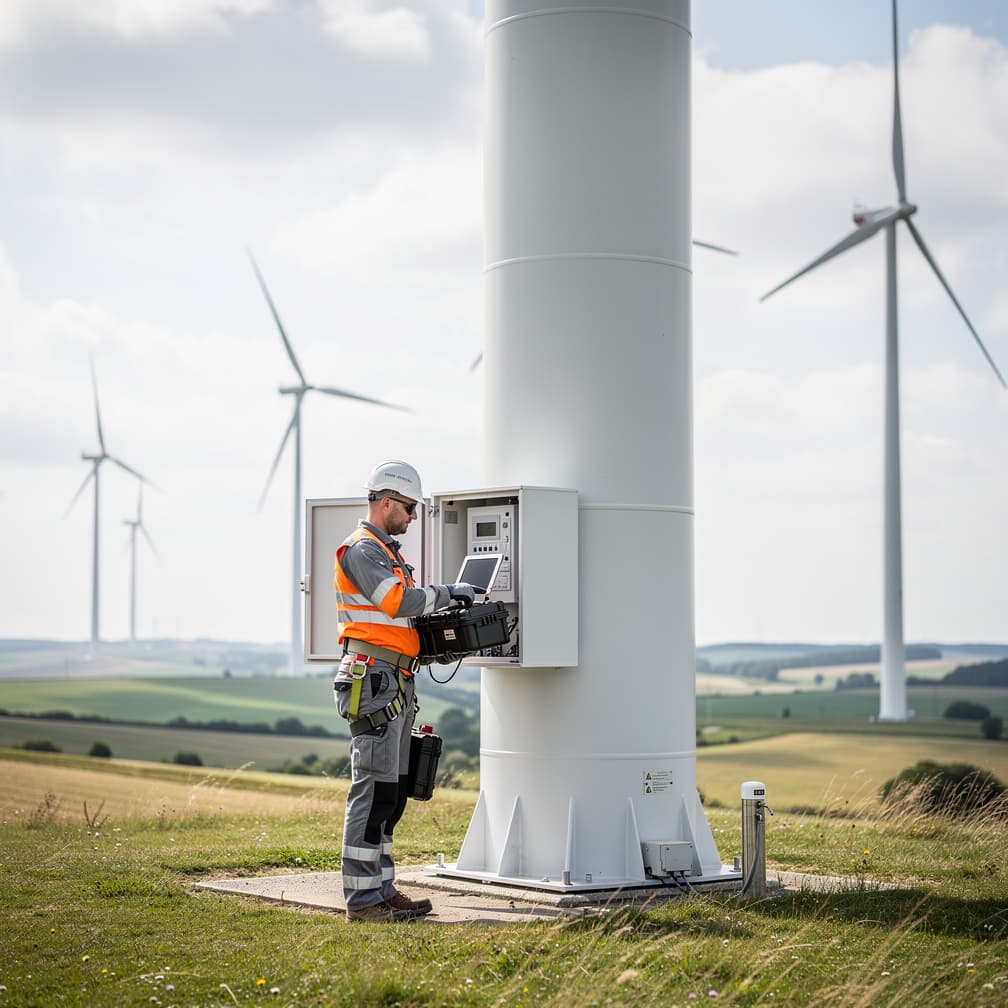

A blade set lands in the laydown yard weeks before the crane arrives, and it sits there while somebody assumes somebody else insured it. Damage during a pick, a dropped tag line, a bolt run that cracks a flange: each one starts a claim against someone, and the contract decides who. That is the sequence wind energy contractor insurance in Provo has to follow, from access road grading through commissioning. No project owner lets a crew climb without proof that the limits are already in force. Your certificate has to match the contract wording, not the other way around. What follows walks the lines a wind job in Utah County leans on, what each one is asked to do, and where the honest gaps sit.
What Makes Provo Different
Payroll drives more of your premium than any other number you will hand an underwriter. Uptower hours and ground hours get classified differently, and the difference between them is not small. Keeping accurate payroll records by classification is the least expensive premium work available to you. Sloppy records default to the highest rate that could apply, and an audit makes that stick. Revenue, vehicle radius, and the value of tools on trailers all move the number too. None of those inputs care whether you operate from Provo or elsewhere in Utah County as much as what you do. Pricing a policy still starts with the same exposure worksheet that gets used everywhere else. Fill that worksheet honestly one time, and every quote you gather afterward becomes genuinely comparable.
Local Risk Factors in Provo
An evacuated laydown yard is an unattended one, and fire is not the only thing that arrives when a parcel empties out. Theft and vandalism climb whenever a site is abandoned in a hurry, and the claim you file afterward may look nothing like the claim you feared. Document what was staged and where before you leave, since a schedule and a photograph together are what turn a loss into a payment. A wind crew working out of Provo can lose a season's tools in one evacuation. General Liability is aimed at what your work does to other people and does not answer for your own property in Utah.
What Coverage Does a Wind Energy Contractor in Provo Need?
General Liability
Project owners and landowners demand it before a crew reaches the gate, and it is the line their contracts name by default. It can help cover bodily injury and property damage your work causes to other people, along with the defense costs that arrive with a complaint. Property in your care, custody, and control is typically excluded, so the component you are lifting sits outside it.
Example: A tag line slips during a pick and a tower section swings into a subcontractor's parked truck. The damage claim and the defense that follows it may fall to this line.
Workers Compensation
Falls, struck-by injuries, and heat illness dominate a wind crew's loss history, and this is the line built for them. It is rated per hundred dollars of payroll, with uptower hours classified apart from ground work. Medical costs and lost wages for an injured employee are what it is intended to address; an injured subcontractor's employee is a separate question. Requirements vary by state.
Example: A technician slips on an iced work platform at hub height and fractures a wrist. The treatment and the wages missed while it heals are generally what this coverage takes on.
Commercial Auto
Service trucks, boom trucks, and trailers run gravel access roads to remote parcels, and a personal auto policy generally excludes that use outright. This line is meant for owned vehicles in business use, rated on vehicle type, radius, and the records of whoever drives. Cargo strapped behind the truck usually sits under a separate form rather than this one.
Example: A loaded trailer slides off a thawing access road outside Provo and takes the pickup with it. Liability for the damage and, subject to your terms, the truck itself can land here.
Tools & Equipment (Inland Marine)
A building policy stops at the yard gate, and a wind contractor's property spends its working life past that gate. This line follows tensioners, torque tools, rigging, and testing gear between remote sites, responding to what your schedule declares at the values you stated. Storage and security conditions apply, and unscheduled items are the ones that turn into arguments.
Example: Someone cuts the fence on a laydown yard overnight and clears out two cases of hydraulic tensioners. Scheduled equipment with serial numbers already on file gives a claim like that somewhere to go.
Commercial Umbrella
When a wind contract demands limits past what your primary carries, this is usually how you reach them. It sits above General Liability and the auto line, extending the ceiling once an underlying limit is exhausted. It follows the terms underneath it, so a gap in the primary form stays a gap: this raises the roof rather than repairing the floor.
Example: One tower accident injures three people, and the settlement plus defense runs past the primary limit. Whatever sits above that limit is the exposure this layer is designed to absorb.
How Much Does Wind Energy Contractor Insurance Cost in Provo?
Wind Energy Contractor Insurance is a bundle of separate policies, priced separately. The ranges below are typical figures for Provo for each line, except workers compensation, which is rated per $100 of payroll; a quote prices each one against your own operations.
| Coverage | Typical range | What moves your price |
|---|---|---|
| General Liability Insurance | $450 - $1,500 per month | Industry and risk classification, annual revenue, number of employees |
| Workers Compensation Insurance | $0.75 - $2.74 per $100 of payroll | Employee classification codes, total annual payroll, experience modification rate |
| Commercial Auto Insurance | $360 - $1,175 per month | Fleet size and vehicle types, driver records and experience, coverage limits and deductibles |
| Inland Marine Insurance | $130 - $650 per month | Total insured value of the scheduled property, type and age of the equipment, where it is stored and how far it travels |
| Commercial Umbrella Insurance | $240 - $925 per month | Umbrella limit requested, limits carried on the underlying policies, loss history on those underlying policies |
Prices shown are general estimates, not guaranteed rates or quotes. Your actual premium will depend on the insurer, coverage selected, business details, location, claims history, and other underwriting factors. Learn about our pricing methodology.
What Are the Insurance Requirements for a Wind Energy Contractor in Provo?
Workers' comp is generally required once you have your first employee. Utah generally requires employers to carry workers' compensation at that point. Common exemptions include sole proprietors, partners, and LLC members. Confirm current thresholds with your state's workers' compensation agency before you hire.
State auto liability minimums apply to business vehicles. Utah's minimum auto liability limits are $30,000/$65,000/$25,000 (bodily injury per person / per accident / property damage). Contracts and lenders often require more than the state floor.
Where to verify licensing and coverage rules. The Utah Insurance Department publishes consumer guidance and current insurance requirements for Utah businesses. When a contract or lease demands specific wording, the Utah Insurance Department's guidance is the authoritative place to check.
Get Your Wind Energy Contractor Quote in Provo
Compare rates from multiple carriers. Free quotes, no obligation.
Operating in Provo
- An incident on a parcel hours from your Provo office reaches you late, and late notice is one of the easiest reasons for a carrier to contest an otherwise legitimate claim.
- Subcontractors on a wind site share your tower, your crane, and your liability. A missing certificate from a sub working in Utah County becomes your problem the moment their employee is injured.
- Commissioning brings a different crowd onto the site: technicians, inspectors, and the owner's representatives, all of them people who can be hurt by your work on a Provo project and who never signed your safety plan.
- A project office in Provo can hold your payment application over one insurance document, and the money stuck behind that document is usually far larger than the premium itself.
How to Buy: Advice for Provo Owners
Start with payroll, because it decides the largest single line on a wind crew's insurance bill. Workers Compensation is rated per hundred dollars of payroll, and uptower classifications carry different rates than ground work. Split your records by the work performed, not by the title on the paycheck, and keep them that way all year. General Liability then gets rated off revenue and operations, so those figures need to be current too. The Utah Insurance Department publishes consumer guidance on how premium audits work and which records they examine. Guessing costs you twice: once when the quote comes in wrong, and again when the audit corrects it. For work in Provo, take the extra hour on the payroll split before you ask anyone for a number. CPK then lets you compare what participating carriers do with the same honest figures.
FAQ
Wind Energy Contractor Insurance in Provo: FAQ
An additional insured is a party added to your liability policy so your coverage can respond to claims arising out of your work on their project. Wind contracts ask for it because the owner wants your policy, rather than theirs, facing a claim your crew caused. The endorsement form sets the scope: ongoing operations and completed operations are separate grants, and a checkbox on a certificate proves neither. Ask for the form number.
Per-occurrence is the ceiling for one event. The aggregate is the ceiling for everything across a policy year. One serious tower injury can consume much of that aggregate early, leaving later projects with far less room than the certificate suggests. A per-project aggregate endorsement can rebuild the limit for each site where a carrier offers one. Ask whether it is available before you take on a third concurrent contract.
Usually, and often for a small charge, but your carrier needs to know before you sign it. The waiver gives up your insurer's right to recover from whoever actually caused your loss, which is a real asset on a site crowded with other trades. Signing one your policy does not permit can put coverage for that very claim at risk. Get the permission in writing and file it with the contract.
Commercial Auto is the line built for owned trucks and trailers in business use, rated on vehicle type, radius, and driver records. Long hauls down gravel access roads outside Provo are exactly the exposure it is meant for. What it typically does not answer for is the cargo strapped behind the truck, since components and equipment usually sit under a different form. Confirm which form owns which object before the load moves.
Every certificate you handed out becomes worthless the moment the underlying policy ends, and nobody calls to warn the parties holding them. A project owner near Provo who discovers the lapse can stop your work that day, and an incident occurring during the gap has nothing behind it. Put renewal on the calendar well ahead of the date, and keep it away from your busiest mobilization window.
Carriers in Utah weight height work, crane involvement, fleet radius, and claims history differently, and some simply do not want this class at any price. A number that comes back unusually light often assumed something you never described. The spread is useful information: read the terms sitting behind each number rather than the number alone, and compare at identical limits and deductibles.
Sources
- 1.Utah Insurance Department(Utah Insurance Department publishes consumer guidance for insurance buyers.)


