Updated July 16, 2026

On-Hook Towing Insurance in Provo
Property values and day-to-day operating costs shape how you set on-hook limits here. With Provo median household income at $62,800, even a mid-value sedan can be worth more than a household's monthly take-home pay, which means a single damage dispute can spiral into a serious financial fight. Low limits that look workable on paper may create a hard claim conversation after a hookup, winch-out, or short storage transfer. Your policy should reflect the vehicles you actually move, the pickup locations you work from, and the frequency of time-sensitive calls, not just a generic towing template.
If your book includes private property work and commercial relocations, ask whether your current deductible is realistic for a claim you would choose to report. Then check that your limit fits the highest-value vehicle you are willing to hook today, not the average one you moved last month. A quote is more useful when you bring your truck schedule, driver list, and your largest recent tow invoices to the review.
On-Hook Towing Insurance Risk Factors in Provo
Provo's top risk factors include Wildfire risk, Drought conditions, Power shutoffs, and Air quality events.
Utah has a moderate climate risk rating. Top hazards: Wildfire (High), Earthquake (High), Drought (Moderate), Winter Storm (Moderate). The state's expected annual loss from natural hazards is $320M, which influences on-hook towing insurance premiums and may affect coverage availability in high-risk areas.
What On-Hook Towing Insurance Covers
In Utah, the useful question is not the basic definition of on-hook coverage. It is where your operation creates the most claim pressure once a vehicle is in your custody during the tow. If your work includes steep grades, winter roadside calls, or recoveries where a disabled vehicle has to be repositioned before transport, you should ask how the policy responds to the exact handling steps your crews use. A wheel-lift account, a flatbed account, and a mixed fleet can produce very different damage scenarios, even if the same truck handles them on different days.
Your review should get specific about loading methods, tie-down procedures, dollies, winching practices, and whether higher-value vehicles show up in dealer work, specialty transport, or post-accident tows. If you subcontract overflow calls, confirm how responsibility is assigned when another operator touches the vehicle. If you store towed units before release, separate the on-hook discussion from garagekeepers or storage-related exposures so there is less confusion after a loss.
Utah weather and terrain can also change the way a routine tow turns into a disputed claim. A buyer should ask whether the policy language is broad enough for the kinds of roads, grades, and roadside conditions the business actually sees, rather than assuming every tow is underwritten the same way. It also helps to review exclusions tied to unattended vehicles, improper securement, mechanical breakdown, or pre-existing damage, because those are often the points that decide whether a claim is paid, limited, or denied. Before binding, ask for sample claim scenarios based on your real dispatch mix and compare the answers side by side.
Coverage Included
Collision on Hook
Covers damage to towed vehicles from collisions during transport.
Comprehensive on Hook
Covers theft, fire, and weather damage to vehicles being towed.
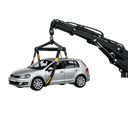
Loading & Unloading
Covers damage during the process of loading and unloading vehicles.
Winching Coverage
Covers damage to vehicles during winching and recovery operations.

Multiple Vehicle
Covers all vehicles on multi-car carriers and rollback flatbeds.
Industries & Insurance Needs in Provo
Utah County business volume changes the demand pattern for towing work. The county has 17,057 business establishments, and its largest establishment shares are professional, scientific, and technical services at 16.6%, construction at 13.5%, and retail trade at 12.2%, so local tow operators often see a mix of employee parking issues, jobsite vehicle moves, service calls, and customer-facing lot enforcement rather than one uniform class of tow. That matters for on-hook buying decisions because the exposure changes with the assignment. A contractor pickup at a jobsite, a retail lot impound, and a transfer for a service business can each bring different vehicle values, pickup conditions, and dispute potential. Instead of asking only for a broad limit, ask your agent to review the assignments that create your highest single-vehicle severity and the contracts that require proof of coverage before work starts. That is usually where underinsurance shows up first.
What Makes Provo Different
Your exposure can shift quickly from routine roadside assistance to private property work or short-notice relocations for commercial clients in a market tied to office users, construction activity, and retail locations in the surrounding county. On-hook losses often start before the tow itself, at the handoff point, with the condition of the vehicle when you arrive, the equipment used to load it, and whether the customer or property representative disputes pre-existing damage.
If your operation serves commercial accounts, make sure your policy setup reflects the jobs that create the most serious custody exposure, not just the most frequent calls. How you document vehicle condition before hookup matters, especially on after-hours pickups and lot enforcement work. Time-stamped photos, dispatch notes, and signed release procedures can protect you at claim time as much as a modest premium increase would.
Our Recommendation for Provo
Start with your maximum realistic vehicle value, then work backward to your on-hook limit and deductible. If you regularly accept calls from commercial properties and retail locations, ask for a quote built around those assignments instead of a generic towing profile. You should also confirm that your current paperwork holds up against the kind of claims that are most likely here. When a dispute arises, the strength of your pre-tow documentation often determines whether a claim is defended or settled.
If you use more than one truck type or rotate drivers between roadside and property work, make sure the policy review reflects that operational split. A lower deductible can make sense if a claim amount would otherwise fall into the range you would hesitate to report. Before renewing, gather your vendor agreements, sample invoices, and a list of your largest recent tows. Having those details ready lets the review focus on your actual custody exposure instead of rough estimates.
Get On-Hook Towing Insurance in Provo
Enter your ZIP code to compare on-hook towing insurance rates from carriers in Provo, UT.
Business insurance starting at $25/mo
FAQ
Frequently Asked Questions
Provo operators should set the limit around the highest-value vehicle they are willing to hook, not the average call. With median household income at $62,800, even one disputed damage claim can be financially serious for the customer and operationally disruptive for your business.
Utah County does change the exposure mix. With 17,057 business establishments, plus strong shares in professional services, construction, and retail, tow companies often handle varied commercial assignments that can raise custody severity and contract-driven proof-of-coverage requirements. That means a single commercial tow can carry more financial risk than several routine roadside calls combined.
Provo private property tows should start with time-stamped photos, dispatch notes, lot authorization, and a clear record of visible pre-existing damage. Those steps help when a claim turns on condition at pickup rather than what happened during transport.
Provo quote reviews work better when you bring your truck schedule, driver list, recent large tow invoices, and any vendor agreements that require specific limits. That lets the policy be reviewed against actual custody exposure instead of a generic towing description.
Many operators carry it for private property impounds because the risk starts once a vehicle is attached, loaded, or moved by your truck. Contract terms and claim expectations can differ by account, so compare your impound work against your other towing services.
Mountain routes and winter weather can make a routine tow more complex by changing loading angles, roadside space, and securement demands. That is why you should ask how the policy handles the exact recovery, winching, and transport steps your drivers use in difficult terrain or weather.
Insurance oversight runs through the Utah Insurance Department, so that is the regulator behind policy forms, licensing questions, and complaint handling. For a buyer, the practical step is to get terms in writing and review exclusions.
Operators sometimes can, but the better question is whether both services are described accurately in underwriting. Scheduled dealer moves and emergency roadside calls create different claim patterns, so ask the carrier to rate the full service mix instead of assuming one description fits both.
Sources
- 1.U.S. Census Bureau, ACS 5-Year Estimates, table B19013(Provo median household income is $62,800, so low on-hook limits may create a hard claim conversation after a loss.)
- 2.U.S. Census Bureau, County Business Patterns, Utah County(Utah County has 17,057 business establishments, so local tow operators often see a mix of commercial assignments rather than one uniform class of tow.; The leading business sectors in Utah County are professional, scientific, and technical services at 16.6%, construction at 13.5%, and retail trade at 12.2%, so assignment types can vary in vehicle value, pickup conditions, and dispute potential.)
Updated July 16, 2026