







































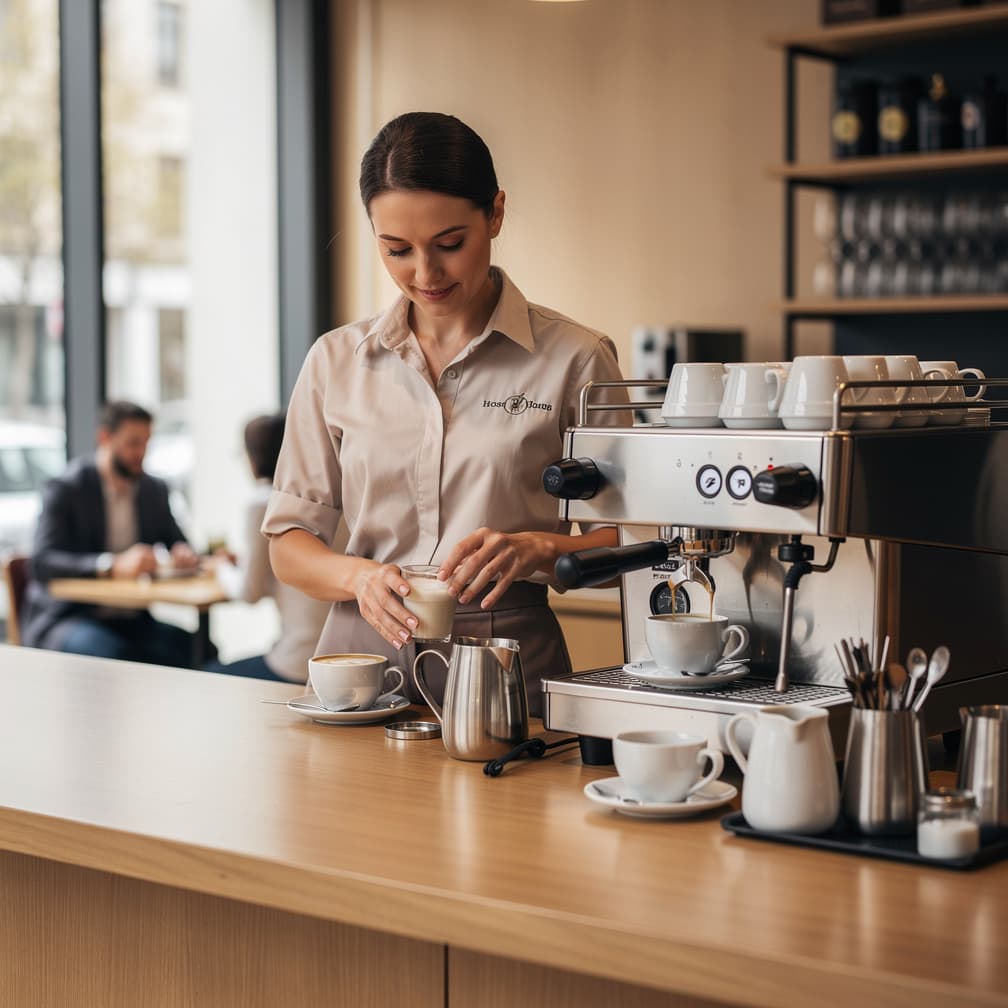

As a coffee shop in Salt Lake City, you run a retail space, a kitchen, and a public seating area at the same time, and each of those roles carries a different exposure. Hot liquid moves across a counter all day. Coffee shop insurance in Salt Lake City has to hold all three at once: the burn, the slip, and the equipment failure that empties your seats. One policy rarely does that neatly, which is why coverage arrives in pieces that have to be checked against each other for gaps. The seams between those pieces are where claims get denied. Look at what each piece leaves out before you look at what the bundle costs, and the comparison gets a lot more honest.
What Makes Salt Lake City Different
Deductibles and limits move a coffee shop's premium as much as anything about the shop itself. Raising a property deductible lowers the bill by moving the first slice of a loss onto you. That trade is fine if you hold cash, and painful if a bad month already drained it. Limits work the other way: buying more costs less per dollar than the first dollar did. A lease in Salt Lake City may set the floor for your liability limit, but nothing sets the ceiling. Busy blocks bring bigger crowds, and bigger crowds raise the ceiling of what one incident costs. A crowded floor and a hot drink can produce a claim that outruns a minimum limit quickly. Price two limits side by side in Utah before deciding the lower one is sensible.
Local Risk Factors in Salt Lake City
Evacuation orders empty a shop as completely as a fire, and they arrive without touching your building. That is the hard part: most policies respond to physical damage, and an empty street behind clear windows is generally not damage. Some forms add civil authority wording that can help when access is blocked because of damage nearby, usually for a limited number of days and on strict conditions. That clause is worth finding now rather than during a claim. A business owners policy sold in Utah can carry it alongside property cover on one form. Whether your Salt Lake City address gets that wording, and how many days it runs, are two questions with real money behind them.
What Coverage Does a Coffee Shop in Salt Lake City Need?
General Liability
Landlords, lenders, and event hosts ask for this one by name before anything gets signed. General Liability is generally meant to respond to customer injuries on your floor, hot-drink burns, damage you cause to a rented space, and the defense costs that follow a demand letter. Staff injuries and your own equipment sit elsewhere.
Example: A customer catches a bag strap on a stool, goes down beside the counter, and leaves with a wrist that swells overnight; general liability can help fund the claim and the lawyer who answers it.
Commercial Property
A grinder, three refrigerated cases, and the buildout you paid for add up faster than most owners guess. Commercial Property may respond to fire, theft, vandalism, and storm damage to your equipment, stock, fixtures, and improvements, subject to what you actually schedule. Flood typically sits outside it, and wear and tear always does.
Example: Overnight someone puts a brick through the storefront in Salt Lake City and takes the register and two sacks of beans; commercial property may pick up the glass, the fixtures, and the stock once the deductible is met.
Business Owners Policy
Buying liability and property apart works; buying them together often costs less. A Business Owners Policy bundles both on one form for a small shop, and it can carry lost income after a covered loss. Packaged forms trim edges, so spoilage, equipment breakdown, and higher limits commonly live in endorsements rather than the base.
Example: A kitchen fire two doors down fills your seating area with smoke and closes you for eleven days; a business owners policy might answer for both the cleanup and the sales you never made.
Workers Compensation
Your staff, rather than your customers, is the subject of this one. Workers Compensation is generally intended to respond to a barista's steam burn, a back strain lifting milk crates, or a fall in the back-of-house, taking in medical care and lost wages. Rules vary by state, and the Utah Insurance Department publishes the current requirements for employers.
Example: A closing shift hits a wet floor behind the espresso bar and a barista lands hard on an elbow; workers compensation is designed to fund the treatment and the shifts missed afterward.
How Much Does Coffee Shop Insurance Cost in Salt Lake City?
Coffee Shop Insurance is a bundle of separate policies, priced separately. The ranges below are typical figures for Salt Lake City for each line, except workers compensation, which is rated per $100 of payroll; a quote prices each one against your own operations.
| Coverage | Typical range | What moves your price |
|---|---|---|
| General Liability Insurance | $50 - $140 per month | Industry and risk classification, annual revenue, number of employees |
| Commercial Property Insurance | $80 - $270 per month | Building value and construction type, roof age and condition, fire protection class |
| Business Owners Policy Insurance | $85 - $250 per month | Annual revenue and industry class, building and contents values, square footage and building age |
| Workers Compensation Insurance | $0.75 - $2.74 per $100 of payroll | Employee classification codes, total annual payroll, experience modification rate |
Prices shown are general estimates, not guaranteed rates or quotes. Your actual premium will depend on the insurer, coverage selected, business details, location, claims history, and other underwriting factors. Learn about our pricing methodology.
What Are the Insurance Requirements for a Coffee Shop in Salt Lake City?
Workers' comp is generally required once you have your first employee. Utah generally requires employers to carry workers' compensation at that point. Common exemptions include sole proprietors, partners, and LLC members. Confirm current thresholds with your state's workers' compensation agency before you hire.
Where to verify licensing and coverage rules. The Utah Insurance Department publishes consumer guidance and current insurance requirements for Utah businesses. When a contract or lease demands specific wording, the Utah Insurance Department's guidance is the authoritative place to check.
Get Your Coffee Shop Quote in Salt Lake City
Compare rates from multiple carriers. Free quotes, no obligation.
Operating in Salt Lake City
- Wet shoes cross your entrance every rainy morning, and the mat you buy is cheaper than the frequency record a single slip claim leaves behind on your file.
- Health inspections, hood service tags, and extinguisher checks are safety paperwork, and they double as underwriting facts a carrier in Utah can ask you to produce after a fire.
- Your espresso machine is the most expensive thing in the room and the easiest thing to leave off an equipment schedule, which is where a property claim quietly shrinks.
- A neighbor's kitchen fire can close your Salt Lake City shop for weeks without touching your equipment, and the argument over whose policy answers runs long after your rent is due.
How to Buy: Advice for Salt Lake City Owners
Improvements and betterments is the phrase to learn before you sign a lease. The counter you built, the plumbing you ran, the electrical you upgraded: you paid for them, they are attached to someone else's building, and after a fire the argument over who insures them gets expensive. Settle it in writing, then make sure Commercial Property schedules your share at what a rebuild would cost today. A Business Owners Policy form can hold the same item, so check the sublimit rather than assuming. A landlord in Salt Lake City insures the shell, not your buildout, and their policy is no backstop for yours. The Utah Insurance Department publishes consumer guidance on tenant property coverage. Bring the buildout figure to participating carriers and compare quotes with that number visible on every one.
FAQ
Coffee Shop Insurance in Salt Lake City: FAQ
It bundles liability and property on one form, which is often cheaper and simpler for a small shop. Packaged forms trim edges, though: spoilage, equipment breakdown, and higher limits commonly live in endorsements rather than the base. If a lease in Salt Lake City demands a limit the package does not reach, you buy the difference separately anyway. Read what it leaves out before you take the discount.
Usually not on its own. Most policies respond when something physically breaks, not when the sidewalk stays empty for a week. If wind takes your awning or water gets in through a broken pane, physical damage becomes the door lost income can walk through. Ask a carrier in Utah what has to break before that clause starts counting, and what an off-site power failure does to it.
You generally do. Improvements and betterments are the things you built into someone else's building, and a landlord's policy usually answers for the shell rather than your buildout. Commercial Property can schedule your share, assuming the figure reflects what a rebuild costs today rather than what you spent at the start. Check the sublimit if the item sits inside a packaged form.
It comes off your side of the loss before anything gets paid. A single pane of storefront glass is often a smaller repair than the deductible you picked, which means the claim exists on paper and nowhere else. Raising a deductible lowers a premium by moving that first slice to you, and the trade only works if the cash is actually there. Ask participating carriers in Utah to price two deductibles side by side.
Not automatically. General Liability does not turn you into the insurer of everything a customer leaves on a table, and property you do not own is treated differently from your own fixtures and stock. Such a claim generally needs negligence on your part, which is a different argument than a theft report. Cameras and a visible notice at the counter move that risk before any coverage does.
Annual sales, square footage, seating count, operating hours, payroll split by role, and the replacement value of your equipment. Bring a current schedule of machines rather than the one from your buildout, since prices moved since then. Also useful: your loss run, the lease exhibit, and any hood service or extinguisher records. Participating carriers in Utah price the shop you describe, so describe it accurately.
Sources
- 1.Utah Insurance Department(Utah Insurance Department publishes consumer guidance for insurance buyers.)


