







































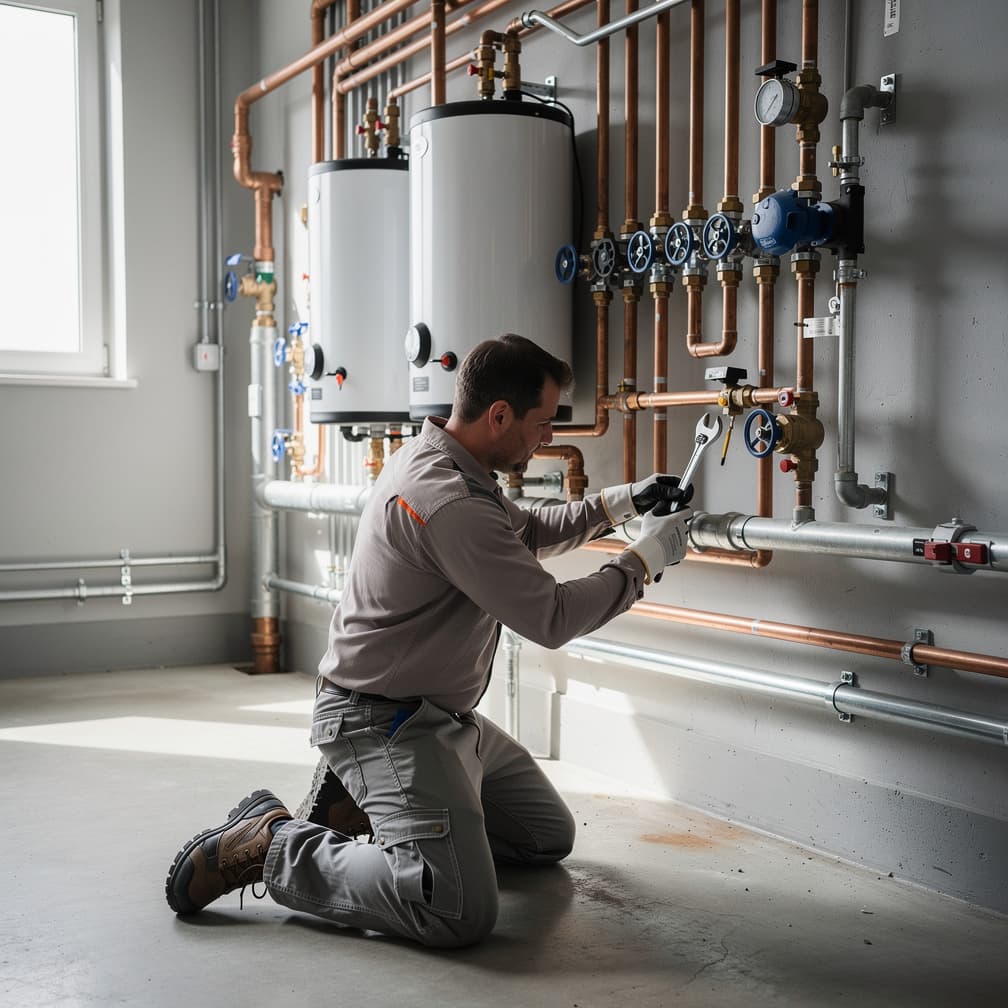

Tools are the smallest line on most plumbing policies and the first one skipped, with Inland Marine often starting near $20 a month for a modest schedule. That is the wrong place to save money when the van is the shop. Plumbing insurance in St. George should be priced around how you actually work: what rides in the truck overnight, how long the drive is, whether a trailer sits at a job for a week. Where suppliers are far apart, a replacement press tool is not on a shelf nearby, so the downtime after a theft runs longer than the claim check suggests. Deductibles come off your side of the loss, which makes the deductible on equipment worth pricing instead of assuming. Ask what the schedule looks like before the truck leaves Washington County. The comparison below starts with the lines, then the ranges.
What Makes St. George Different
Handshake work is common where everyone knows everyone, and handshakes name no limits, no dates, and no holder of the risk. The moment a job crosses into a commercial building, someone hands you three pages that do all three. A hospital, a grain elevator, or a school in St. George runs the same vendor forms a downtown landlord runs. Small shops are not exempt from wording; they are only less used to reading it before starting work. If a form asks for limits you do not carry, the fix is an endorsement, not an optimistic signature. Signing first and calling later is how a plumber ends up personally holding a difference. Requirements shift by state and city, and the Utah Insurance Department publishes the current requirements for proof of coverage. Confirm what a contract demands before your crew is standing in a parking lot in St. George.
Local Risk Factors in St. George
Smoke gets into everything, including a truck full of tools left at a job in St. George for a week. Fire damage to equipment away from the shop is an Inland Marine question, and the schedule decides whether the claim is simple or an argument. Your yard is another exposure, since a trailer, a stock of fittings, and a spare heater can go in one afternoon. Evacuating with a van full of gear is not a scenario most owners plan for, and the plan takes ten minutes to write down. Photographs of Washington County equipment and a current list beat a memory every single time. None of that is glamorous, and it is the difference between a paid claim and a long conversation.
What Coverage Does a Plumbing in St. George Need?
General Liability
Landlords, general contractors, and property managers ask for this one by name before your first day on site. It typically answers third-party claims: warped flooring under a failed connection, a tenant who slips on water in a hallway, a ceiling that lets go two floors below. Redoing your own defective joint generally sits outside it.
Example: A shutoff valve fails overnight after a routine swap and the kitchen below is ruined; General Liability can help cover the restoration bill and the claim that arrives behind it.
Workers Compensation
An apprentice pinned by a water heater on a basement stair is what this line exists for. Medical care and lost wages for an injured employee are typically its job, and general contractors often want proof or a waiver before anyone walks onto a site. Rules differ by state, and a helper paid on a 1099 may still count.
Example: A helper strains his back pulling a cast iron section out of a crawl space and misses six weeks of work; Workers Compensation may pick up the treatment and part of the lost pay.
Commercial Auto
A personal auto policy typically steps back the moment a van is used for the business, and that gap is what this line fills. Vehicles, trailers, and the people driving them are what it rates on, and injury claims from an accident tend to be the largest ones a plumbing shop ever sees. Damage to your own truck is usually a separate choice.
Example: A loaded van rear-ends a car while merging on the way to a call in St. George; Commercial Auto is generally where the other driver's injuries and your truck's repairs both get sorted out.
Tools & Equipment (Inland Marine)
Tools live in a truck, and a policy written on a building does not follow them out there. A hydro jetter, a camera reel, press tools, and the fittings behind the seat are typically scheduled here, with theft from a locked vehicle the claim this trade files most often. Items above a set value usually have to be listed individually.
Example: A trailer is cut loose from a job site overnight with a jetter still strapped down; a scheduled Inland Marine claim could put that equipment back on the road inside a week.
Commercial Umbrella
Where a general contractor's requirement runs past what your base policy carries, this is the less expensive way to reach the number. It sits above liability and auto, coming into play when one loss, a flooded floor or a bad intersection, exhausts the underlying limit. It cannot repair a coverage the policy beneath it never had.
Example: Water from a burst riser reaches four units and a retail tenant, and the demands outrun the base limit; a Commercial Umbrella might absorb what is left once the underlying policy is spent.
How Much Does Plumbing Insurance Cost in St. George?
Plumbing Insurance is a bundle of separate policies, priced separately. The ranges below are typical figures for St. George for each line, except workers compensation, which is rated per $100 of payroll; a quote prices each one against your own operations.
| Coverage | Typical range | What moves your price |
|---|---|---|
| General Liability Insurance | $100 - $320 per month | Industry and risk classification, annual revenue, number of employees |
| Workers Compensation Insurance | $0.75 - $2.74 per $100 of payroll | Employee classification codes, total annual payroll, experience modification rate |
| Commercial Auto Insurance | $200 - $550 per month | Fleet size and vehicle types, driver records and experience, coverage limits and deductibles |
| Inland Marine Insurance | $30 - $100 per month | Total insured value of the scheduled property, type and age of the equipment, where it is stored and how far it travels |
| Commercial Umbrella Insurance | $65 - $200 per month | Umbrella limit requested, limits carried on the underlying policies, loss history on those underlying policies |
Prices shown are general estimates, not guaranteed rates or quotes. Your actual premium will depend on the insurer, coverage selected, business details, location, claims history, and other underwriting factors. Learn about our pricing methodology.
What Are the Insurance Requirements for a Plumbing in St. George?
Workers' comp is generally required once you have your first employee. Utah generally requires employers to carry workers' compensation at that point. Common exemptions include sole proprietors, partners, and LLC members. Confirm current thresholds with your state's workers' compensation agency before you hire.
State auto liability minimums apply to business vehicles. Utah's minimum auto liability limits are $30,000/$65,000/$25,000 (bodily injury per person / per accident / property damage). Contracts and lenders often require more than the state floor.
Where to verify licensing and coverage rules. The Utah Insurance Department publishes consumer guidance and current insurance requirements for Utah businesses. When a contract or lease demands specific wording, the Utah Insurance Department's guidance is the authoritative place to check.
Get Your Plumbing Quote in St. George
Compare rates from multiple carriers. Free quotes, no obligation.
Operating in St. George
- Water finds the path of least resistance downward, so a fourth-floor repair in a St. George building can produce claimants on three floors who never hired you or met you.
- Backflow testing and gas line work carry their own paperwork and their own scrutiny, and a carrier will want to know which of them you actually perform.
- About 139 plumbing shops work across Washington County, so a broken-down van has nowhere to send its calls, and downtime turns into lost revenue rather than a scheduling puzzle.
- Tenants photograph everything now, and a phone video of your helper standing in three inches of water becomes evidence long before an adjuster is ever assigned.
How to Buy: Advice for St. George Owners
The loss that ends plumbing businesses is rarely the one they insured against first. A water heater connection lets go on the third floor and the demand covers four units, the corridor, and a tenant's stock. General Liability typically handles third-party damage like that, and the limit is the only thing between you and the balance. Work out your worst realistic day in St. George, then check whether the number on your certificate clears it. Where the gap is real, Commercial Umbrella is usually the least expensive way to close it. Tools are a rounding error beside a building, so do not let a small equipment premium distract you from a thin liability limit. Check the Utah Insurance Department's guidance before deciding what limits suit the work you take. Then ask participating carriers to quote the limit you need rather than the one you already own.
FAQ
Plumbing Insurance in St. George: FAQ
Property managers, general contractors, landlords, condo boards, and facilities managers at commercial buildings, usually before a work order gets released. A homeowner may never ask at all. The request tends to name limits, an entity to add as additional insured, and a notice term, and the wording has to match exactly. A St. George building can hold your crew at the door over that document.
The per-occurrence figure is the most a policy may pay for one flooded basement; the aggregate is the ceiling across the whole policy year. Two bad water losses in twelve months can exhaust an aggregate and leave every later job standing on nothing. A per-project aggregate keeps one job from draining the limit behind the others, which is why contracts ask for it. Read both numbers on the certificate.
You can be named, and being named costs money whether or not the claim survives. Defense costs are real, and on many forms they erode the same limit a settlement draws on. That is how an old galvanized line failing on its own still lands in your mail six weeks later. Photographs of what you found before starting are the least expensive defense available.
Generally not. Correcting your own defective work is usually treated as a cost of doing business, while the damage that work does to other property is where liability coverage tends to come in. That line decides whether you file or simply go back and fix it. Ask a carrier to show you the exclusion in the form instead of describing it on the phone.
Ask while you are shopping, because the answer differs by carrier and by whether the request needs an endorsement or just a plain certificate. A standard certificate is routine; additional insured wording, a waiver of subrogation, or a limit change takes longer. Renewal is where people get caught, since a lapsed document reads exactly like no coverage. Keep a list of everyone holding yours for St. George work.
A one-person shop gets asked for the same certificate a twenty-van company gets asked for, because a property manager's form does not scale down to fit you. The van, the tools, and the water damage exposure all exist whether or not anyone else is on the payroll. What changes is the price, not the requirement. A Utah sole operator should also ask what happens if a helper starts mid-year.
Sources
- 1.U.S. Census Bureau, County Business Patterns (2022), Washington County(Washington County has about 139 businesses in this trade's category (NAICS group 238220).)
- 2.Utah Insurance Department(Utah Insurance Department publishes consumer guidance for insurance buyers.)


