







































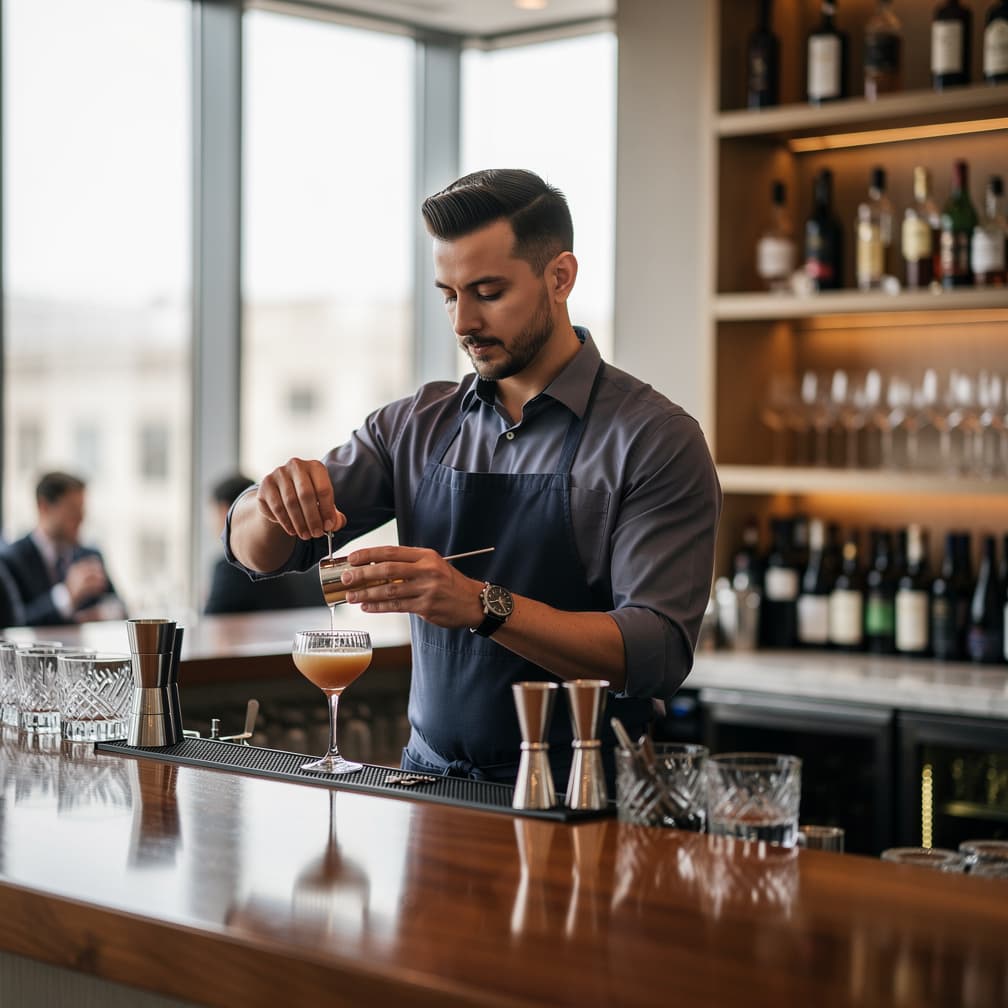

As a bar in Burlington with a patio, you run an outdoor room where alcohol, uneven ground, and gas heaters meet after dark. Patios add exposure that indoor square footage does not, and some underwriters rate them separately or ask hard questions before including them. Steps, string lights, and whatever stands between drinkers and traffic all reach the application. Bar insurance in Burlington should be quoted with that space described honestly, because an area left off the form is an area argued about at claim time. Live music nights, cover charges, and anything that changes who shows up belong on the form too. Describe the busiest version of your week, not the calm one. A quote built on a quieter bar is not your quote.
What Makes Burlington Different
A closed road takes your customers and your delivery truck in a single move. Bars run on same-week deliveries, so a storm that strands a distributor leaves taps dry through the busiest hours. Nothing about that loss is a property claim, because the beer never arrived and the building is fine. Coverage generally follows physical damage, so an empty room caused by weather at somebody else's warehouse usually sits outside the policy. That is a cash-flow problem to solve with a bank line rather than an insurance one. What a policy can address is the damage side: wind on the sign, water through the roof, a limb through the patio. Ask participating carriers in Vermont how the deductible applies to weather losses, since it is sometimes a percentage instead of a flat sum. A bar in Burlington planning for storm weeks should plan for both kinds separately.
Local Risk Factors in Burlington
Before the first hard freeze, decide who checks the building on a closed night. A frozen line in an empty bar can run for hours, and water finds the electrical panel, the cellar stock, and the neighbor's unit downstairs. That last one is a liability claim rather than a property one, which surprises owners who assumed a single policy answers everything. Ask a Vermont quote what it expects of a vacant or closed building, since those conditions can apply after only a few days shut. Then write the winter routine down and hand it to whoever holds the keys to your Burlington room.
What Coverage Does a Bar in Burlington Need?
Liquor Liability
Landlords, licensing offices, and event hosts ask about this line first, and dram shop claims are the reason. Liquor Liability is meant for third-party injury or damage traced back to alcohol you served, including a crash miles from your door. General Liability commonly excludes that exposure, and assault wording is often limited or removed, so read the form.
Example: A regular leaves after a long night, sideswipes a parked car two blocks on, and the driver's lawyer names your bar in the suit. The liquor line is where that defense would likely start.
General Liability
A patron slips near the bar top, a dropped glass opens somebody's foot, or your sign lands on a parked car. General Liability may respond to third-party injury and property damage arising from your premises and operations. It typically does nothing for employee injuries, and it commonly leaves alcohol-related claims to a separate form.
Example: Someone catches a heel on a torn mat by the restroom door and breaks a wrist, then sends a demand covering the surgery and the missed work. A claim like that generally lands here.
Commercial Property
Draft systems, walk-in coolers, the back bar, the sound gear, and the stock behind it are what this line puts a value on. Commercial Property can help cover damage from fire, smoke, theft, or vandalism at your location, subject to how the build-out is valued. Flood typically sits outside it and gets arranged separately.
Example: A fryer flares, the hood catches it late, and smoke coats every bottle on the back bar along with the upholstery. Replacing that stock is generally the route a property claim takes.
Workers Compensation
Employee injuries sit outside your liability form entirely, which is the gap this line exists to close. Workers Compensation might answer medical costs and lost wages when a bartender opens a hand on broken glass or a barback wrecks a back on a keg. It gets rated per hundred dollars of payroll by job class, so the codes matter.
Example: A barback in Burlington carries a keg down cellar stairs, slips on a wet tread, and misses six weeks of shifts. Treatment and lost wages for that injury would typically run through this line.
Commercial Umbrella
When one night exhausts the primary limit, this is the layer sitting above it. Commercial Umbrella can extend limits over General Liability and, where the form allows, over the liquor line, which is the part to confirm rather than assume. It usually requires specific underlying limits stay in force and excludes whatever the primary already excludes.
Example: One brawl puts three patrons in an emergency room, and settlements plus defense costs pass the primary limit before the depositions finish. Anything beyond it could fall to the umbrella.
How Much Does Bar Insurance Cost in Burlington?
Bar Insurance is a bundle of separate policies, priced separately. The ranges below are typical figures for Burlington for each line, except workers compensation, which is rated per $100 of payroll; a quote prices each one against your own operations.
| Coverage | Typical range | What moves your price |
|---|---|---|
| Liquor Liability Insurance | $170 - $625 per month | Share of sales that comes from alcohol, type of venue and how late you serve, server training and service procedures |
| General Liability Insurance | $140 - $460 per month | Industry and risk classification, annual revenue, number of employees |
| Commercial Property Insurance | $180 - $625 per month | Building value and construction type, roof age and condition, fire protection class |
| Workers Compensation Insurance | $0.75 - $2.74 per $100 of payroll | Employee classification codes, total annual payroll, experience modification rate |
| Commercial Umbrella Insurance | $100 - $340 per month | Umbrella limit requested, limits carried on the underlying policies, loss history on those underlying policies |
Prices shown are general estimates, not guaranteed rates or quotes. Your actual premium will depend on the insurer, coverage selected, business details, location, claims history, and other underwriting factors. Learn about our pricing methodology.
What Are the Insurance Requirements for a Bar in Burlington?
Workers' comp is generally required once you have your first employee. Vermont generally requires employers to carry workers' compensation at that point. Common exemptions include sole proprietors, partners, and corporate officers. Confirm current thresholds with your state's workers' compensation agency before you hire.
Flood damage is typically excluded from standard policies. Standard commercial property and builders-risk-type policies typically exclude flood damage. Flood exposure varies address by address, so check your premises in FEMA's Flood Map Service Center before deciding; if you sit in a mapped flood zone, a separate policy through the National Flood Insurance Program is the usual starting point.
Where to verify licensing and coverage rules. The Vermont Department of Financial Regulation publishes consumer guidance and current insurance requirements for Vermont businesses. When a contract or lease demands specific wording, the Vermont Department of Financial Regulation's guidance is the authoritative place to check.
Get Your Bar Quote in Burlington
Compare rates from multiple carriers. Free quotes, no obligation.
Operating in Burlington
- Servers change, and training records do not follow them out the door. A signed refusal-of-service policy for every person who pours is the least expensive evidence a bar in Burlington will ever produce.
- Permits, licenses, and leases renew on different dates, and each one can demand its own proof of coverage. A single missed certificate can stall a permit in Chittenden County long after the policy itself is perfectly fine.
- Two small floor injuries read worse to an underwriter than one large fire, because frequency looks like a habit rather than bad luck. Mats, drains, and a mopping routine somebody signs for are what break the pattern.
- The bar top is the busiest three feet in the building, and most customer injuries happen within a few steps of it. Lighting, spill routines, and the condition of the floor decide how often that lands on your loss run.
How to Buy: Advice for Burlington Owners
Start your renewal ninety days out rather than two weeks out. Pull the loss run yourself and read it before an underwriter does, because errors on it are common and fixing one takes time. A closed claim still showing an open reserve makes your record look worse than it is, and that costs real money at General Liability renewal. Write a short note explaining what changed after each incident: the new camera, the retrained staff, the fixed drain behind the bar. The same note belongs with your Workers Compensation submission, where the modification factor rewards exactly that kind of follow-through. Underwriters price the future, and the only evidence of your future is what you did about your past. Send it to every participating carrier looking at your Burlington bar, then compare their answers against the terms you hold today in Chittenden County.
FAQ
Bar Insurance in Burlington: FAQ
Usually yes, through an additional insured endorsement, and most commercial leases demand it before opening. The wording decides how much it does: blanket endorsements pick up whoever your contract requires, while scheduled ones name specific parties and need updating each time somebody new asks. Some leases also want primary and non-contributory wording plus a waiver of subrogation. Send the insurance exhibit to the underwriter before you sign, since not every carrier agrees to every phrase.
Often not. Commercial Property generally answers physical damage at your building, and a utility failure a mile away is not that. Some forms add utility service interruption or spoiled stock by endorsement, which is where a walk-in full of thawed inventory gets addressed. Ask each quote whether those endorsements are included or optional, and ask how long the waiting period runs before anything starts for a Burlington room.
By the mix, not the label. Late closing hours, a high alcohol share of sales, live entertainment, a dance floor, a cover charge, and a loss run showing repeat floor injuries all push a file toward the harder end of the market. Frequency reads worse than severity, because two small claims from the same cause suggest a habit. What you changed after an incident counts, so document the camera, the training, and the fixed drain.
Earlier than opening, usually. Equipment delivered into a dark room is already exposed, so property coverage tends to be needed when the coolers arrive rather than when the doors do. Payroll starts at the first training shift, which lands weeks before your first paying customer. A landlord can also demand a certificate before handing over keys. Ask each quote what start date it assumes and whether a midterm correction is possible once real numbers exist.
One is the most available for a single event, the other is the total available for the whole term. A brawl involving several patrons is one occurrence, while three separate incidents across a rough stretch draw the aggregate down until it is thin. The aggregate generally resets at renewal rather than after each claim. Ask whether your quote restores it following a large payout, since a bar can have a bad season rather than a bad night.
Not usually. Money and securities are typically handled under their own sublimit rather than the general property limit, and that sublimit is often small. How the cash is stored matters, so a bolted safe, a drop routine, and a monitored alarm can all affect the terms you get. Employee theft is a separate agreement again, because a form written for burglars does not answer for the person holding the keys.
Sources
- 1.Vermont Department of Financial Regulation(Vermont Department of Financial Regulation publishes consumer guidance for insurance buyers.)
- 2.FEMA / FloodSmart(Flood coverage is typically purchased separately; FEMA administers the National Flood Insurance Program.)


