







































Updated July 16, 2026

Garage Keepers Insurance in Burlington
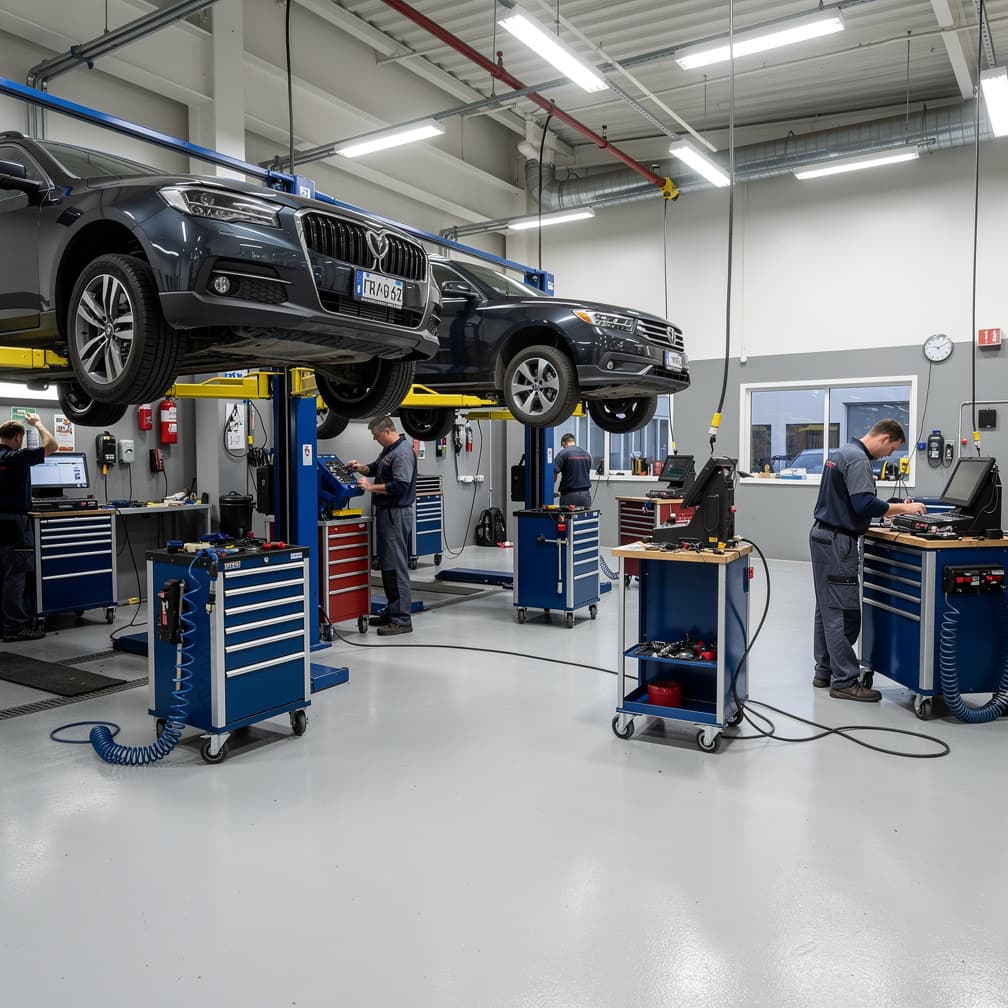
Property managers, commercial landlords, and fleet customers around Burlington often want proof that customer vehicles in your care are addressed before they hand over keys or approve a lease. Satisfying that request usually means showing limits and terms that match how vehicles are actually stored, moved, and released, not just handing over a generic certificate. If you hold cars overnight, stack work orders during winter demand, or rely on side-lot parking while parts are pending, your review should focus on where vehicles sit, who can access them, and how keys are controlled. The local buying decision is less about broad state rules and more about proving your operation can account for customer vehicles from intake to pickup. Before you request quotes, map every place a customer's vehicle can be parked, stored, or transferred.
Garage Keepers Insurance Risk Factors in Burlington
Burlington's top risk factors include Winter storm damage, Ice dam damage, Frozen pipe bursts, and Snow load collapse.
Vermont has a moderate climate risk rating. Top hazards: Winter Storm (High), Flooding (High), Nor'easter (Moderate), Landslide (Low). The state's expected annual loss from natural hazards is $120M, which influences garage keepers insurance premiums and may affect coverage availability in high-risk areas.
What Garage Keepers Insurance Covers
In Vermont, the state difference is less about changing the core exposure and more about how your operation documents control of customer vehicles. When the vehicle arrived, who accepted it, where it was parked, whether it was awaiting parts, whether it was being moved between buildings, and who had the keys at the time of the incident. If your intake process is loose, a routine claim can become harder to sort out.
That is why you should review the full chain of possession, not just the repair order. If customers use an after-hours envelope, key drop, lockbox, text authorization, or unattended pickup, your records should show when responsibility begins and ends. If you run a body shop, mechanical shop, dealership service department, towing yard, or storage operation, note whether vehicles are kept inside, outside, behind fencing, or in overflow areas during busy periods. Those details help determine whether the coverage you request fits your actual storage setup.
You should also look closely at mixed-use situations. Some Vermont businesses service personal vehicles, farm pickups, contractor trucks, trailers, or seasonal vehicles under the same roof. That can change how you think about maximum values on site at one time. A policy review should also address employee access, road-test procedures, sublet work, and whether vehicles are ever left off premises.
Coverage Included

Collision Coverage
Covers damage to customers' vehicles from collisions while in your care.

Comprehensive Coverage
Covers theft, vandalism, fire, and weather damage to customers' vehicles.

Specified Perils
Covers only specifically named perils at a lower premium.

Legal Liability
Covers damage you or your employees directly cause to a customer's vehicle.

Direct Primary
Pays regardless of fault, the broadest garage keepers coverage available.
Industries & Insurance Needs in Burlington
Commercial demand is the local difference worth paying attention to. Chittenden County has 5,676 business establishments, so even a modest garage operation may touch company-owned cars, vans, and service units that need to be dropped off, parked, and released with clear documentation. The county's leading sectors are professional, scientific, and technical services at 13.7%, retail trade at 12.9%, and health care and social assistance at 11.4%, so you are not only dealing with personal vehicles. You may also be handling fleet-adjacent units tied to offices, stores, clinics, and care providers that cannot afford confusion about where a vehicle was kept or when it was ready for pickup. That changes the insurance conversation because underwriters will want your custody process to look disciplined, especially if vehicles stay overnight or move between a service bay and an outside lot. Ask for a quote review that matches your mix of personal and business-owned vehicles.
What Makes Burlington Different
Commercial concentration is what changes the calculus here. In a market tied closely to offices, retail locations, and care providers, the issue is not only how many vehicles you touch, but how often those vehicles belong to organizations that expect documented handoffs and predictable storage practices. A local shop that mainly serves neighborhood drivers can still end up with a meaningful share of company vehicles, loaned units, or employee-driven cars left for service during the workday. That raises the stakes if a vehicle is damaged while parked outside, moved by staff, or held longer than expected. Your review should follow the chain of custody, from intake photos and key tagging to where vehicles wait after hours and who authorizes release. If your current policy was built around a simpler personal-auto mix, it is worth checking whether your limits and terms still fit the way local commercial customers use your shop.
Our Recommendation for Burlington
If customer vehicles are split between a main building, an overflow area, street-adjacent spaces, or a fenced side yard, ask for terms that reflect each location where a loss could happen. Separate how you handle personal vehicles from how you handle business-owned units. A company vehicle often brings tighter expectations around documentation, pickup authority, and downtime, so your intake form and key control procedure should be consistent every time. Burlington's median household income is $68,854. Households at that level tend to have discretionary budget room, so a customer who feels poorly treated after a fender scrape can afford to take the next car somewhere else. That translates into real pressure on your shop to deliver a repair experience that feels organized and accountable when someone leaves a vehicle overnight or for several days. It does not set your premium by itself, but it shapes what customers notice after a loss: condition records, communication, and whether your coverage review anticipated real storage patterns. Before renewing, compare your current limits against your busiest overnight count and ask how outside parking is treated.
Get Garage Keepers Insurance in Burlington
Enter your ZIP code to compare garage keepers insurance rates from carriers in Burlington, VT.
Business insurance starting at $25/mo
FAQ
Frequently Asked Questions
Burlington buyers usually need proof that matches actual custody of customer vehicles, including where units are parked overnight and how they are released. A certificate helps, but local landlords and fleet clients often care just as much about limits, storage locations, and documented key control.
If you use overflow parking, side lots, or street-adjacent spaces, ask how those locations are treated so your policy matches your real after-hours storage pattern. A vehicle parked on a side street overnight can face different risks than one inside a locked bay, and your terms should reflect that distinction.
Chittenden County has 5,676 business establishments. That volume keeps company-owned vehicles cycling through local shops, which means intake records, pickup authority, and overnight storage procedures carry more weight when you request terms built around your actual custody exposure.
Burlington shops should not assume the exposure feels the same, even if both vehicle types come through the same bay. Business-owned units often bring stricter expectations around documentation, authorized release, and downtime, so your quote review should reflect that operating reality.
When a vehicle stays overnight, customers want to see clear condition photos, key tracking, and a documented release process. Those details can matter as much as the certificate itself after a claim, because they signal that your shop takes custody seriously even when no one is watching the lot.
Vermont repair shops should review it separately because business auto and customer-vehicle custody are not the same exposure. If your shop parks, stores, or moves customer vehicles overnight or after hours, the policy should address those handoffs and storage practices.
Vermont regulates insurance through the Vermont Department of Financial Regulation, which maintains a public producer-licensing database and consumer complaint process you can use to verify credentials or file a dispute.
Vermont towing and impound operators usually get better results by listing every storage location, release procedure, and after-hours intake method up front. A quote is more useful when it reflects roadside recovery, yard storage, key control, and any off-site holding areas.
Sources
- 1.U.S. Census Bureau, County Business Patterns, Chittenden County(Chittenden County has 5,676 business establishments, so even a modest garage operation may touch company-owned cars, vans, and service units that need to be dropped off, parked, and released with clear documentation.; The county's leading sectors are professional, scientific, and technical services at 13.7%, retail trade at 12.9%, and health care and social assistance at 11.4%, so you are not only dealing with personal vehicles.)
- 2.U.S. Census Bureau, ACS 5-Year Estimates, table B19013(Burlington's median household income is $68,854, so many households will expect a repair experience that feels organized and accountable when they leave a vehicle overnight or for several days.)
Updated July 16, 2026





