







































Updated July 16, 2026

Waterproofing Contractor Insurance in Vermont
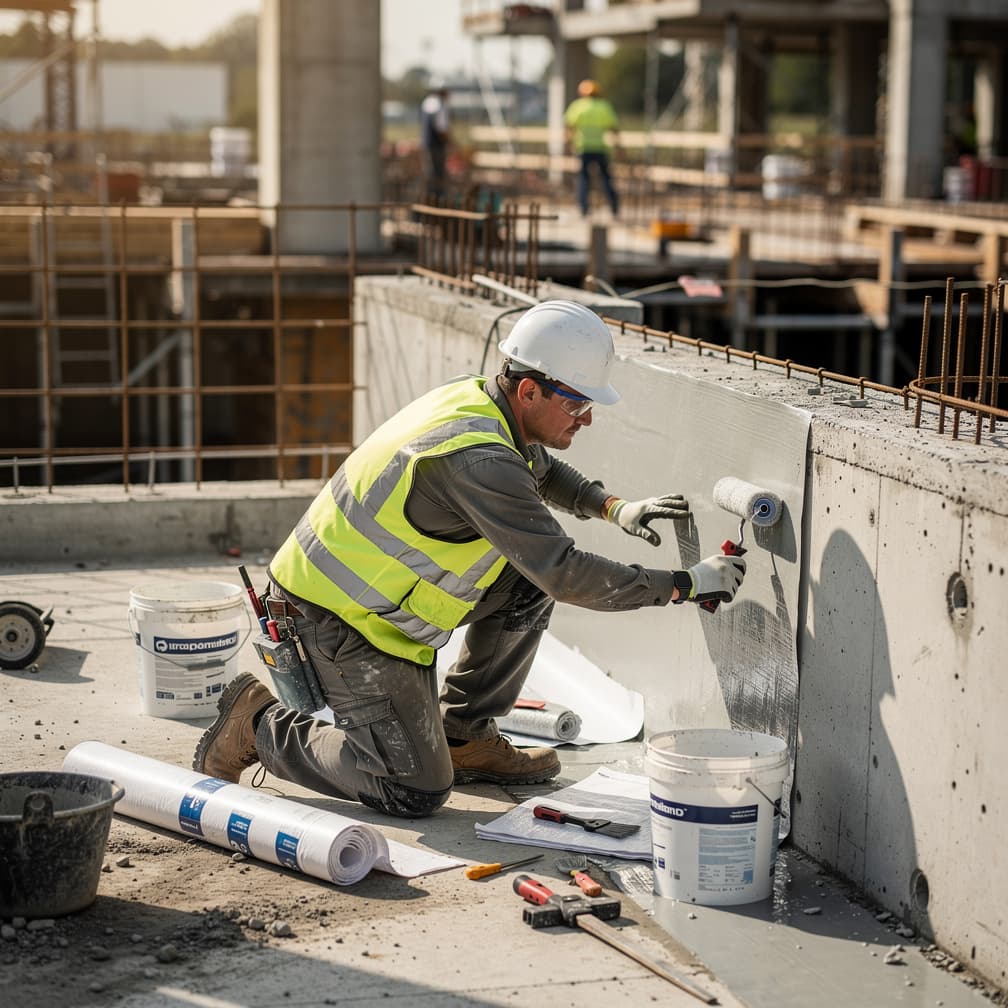
Your work keeps moisture out of places it does not belong, protecting both the building and the people inside. From Montpelier to Burlington and Rutland, your crews face conditions that shift with every season and job site. Winter storms and flooding can make access routes slick and project timing unpredictable.
Most waterproofing contractors start with general liability for third-party claims, then build out from there. Workers compensation, commercial auto, and commercial umbrella each address a different exposure, and the right combination comes down to your project mix, employee count, and vehicle use. Typical premium ranges in Vermont run $177 to $706 per month, which means your actual cost could land anywhere in that band depending on payroll, vehicle use, and whether your work involves specialty materials or higher coverage limits.
Climate Risk Profile
Natural Disaster Risk in Vermont
Understanding climate-related risks helps determine appropriate insurance coverage levels.
Winter Storm
High
Flooding
High
Nor'easter
Moderate
Landslide
Low
Expected Annual Loss from Natural Hazards
$120M
estimated economic loss per year across Vermont
Source: FEMA National Risk Index
Common Risks for Waterproofing Contractor Businesses
- Property damage after failed waterproofing work that leads to repair demands and third-party claims
- Slip and fall incidents while working in basements, crawl spaces, garages, or around wet surfaces
- Chemical exposure from sealants, coatings, adhesives, or specialty materials used on the job
- Claims tied to workmanship defect allegations when a drainage or membrane installation does not perform
- Vehicle accident exposure while moving crews, tools, and materials between job sites
- Certificate and contract problems when municipal insurance certificate requirements or project terms change
Risk Factors for Waterproofing Contractor Businesses in Vermont
- Vermont winter storm conditions can disrupt basement, foundation, and drainage jobs, increasing the chance of third-party claims tied to slip and fall or property damage at active jobsites.
- Flooding conditions in Vermont can affect waterproofing work on membranes, sealants, and sump-related projects, raising the risk of customer injury and legal defense claims if water intrusion leads to a dispute.
- Nor'easter weather in Vermont can create wet, icy, and low-visibility jobsite conditions, which can increase liability exposure during material deliveries, staging, and access to crawl spaces or foundation areas.
- Vermont job locations with steep grades or unstable soil can raise the chance of third-party claims involving property damage, especially where excavation, drainage systems, or exterior waterproofing work is underway.
- Failed waterproofing systems in Vermont can lead to costly water damage claims, making coverage limits and excess liability important when projects involve basements, foundations, and moisture control systems.
How Vermont compares with the national baseline
Uninsured drivers
6.8% vs 11.6% baseline
About 6.8% of Vermont drivers are estimated to be uninsured, below the 11.6% average across states.
Fatal crashes per 100 million miles
1.18 vs 1.33 baseline
Vermont sees about 1.18 fatal crashes per 100 million miles driven, below the national average of 1.33.
Property crime per 100,000 residents
1,310 vs 2,200 baseline
Property crime in Vermont runs below the national average, at 1,310 vs 2,200 incidents per 100,000 residents.
Blue bar: Vermont. Gray line: national baseline.
How Much Does Waterproofing Contractor Insurance Cost in Vermont?
Waterproofing Contractor Insurance is a bundle of separate policies, priced separately. The ranges below are typical figures for Vermont for each line, except workers compensation, which is rated per $100 of payroll; a quote prices each one against your own operations.
| Coverage | Typical range | What moves your price |
|---|---|---|
| General Liability Insurance | $210 - $575 per month | Industry and risk classification, annual revenue, number of employees |
| Workers Compensation Insurance | $0.75 - $2.74 per $100 of payroll | Employee classification codes, total annual payroll, experience modification rate |
| Commercial Auto Insurance | $210 - $575 per month | Fleet size and vehicle types, driver records and experience, coverage limits and deductibles |
| Commercial Umbrella Insurance | $80 - $260 per month | Umbrella limit requested, limits carried on the underlying policies, loss history on those underlying policies |
Prices shown are general estimates, not guaranteed rates or quotes. Your actual premium will depend on the insurer, coverage selected, business details, location, claims history, and other underwriting factors. Learn about our pricing methodology.
Get Your Waterproofing Contractor Insurance Quote in Vermont
Compare rates from multiple carriers. Free quotes, no obligation.
What Vermont Requires for Waterproofing Contractor Insurance
Non-compliance can result in fines, loss of contracts, and personal liability:
- Workers' compensation is required in Vermont for businesses with 1 or more employees, with exemptions for sole proprietors, partners, and corporate officers.
- Vermont commercial auto minimum liability limits are $25,000/$50,000/$10,000, so any quoted policy should be checked against those minimums before a vehicle is added to the business.
- Vermont businesses are often expected to maintain proof of general liability coverage for most commercial leases, so contractors may need a certificate ready before signing or renewing a lease.
- The Vermont Department of Financial Regulation is the state regulatory body to verify when reviewing insurance filings, carrier information, or policy-related compliance questions.
- For quote review, contractors should confirm that the policy reflects the actual mix of residential, commercial, and mixed-use projects, since coverage needs can vary by jobsite location and project type.
| Requirement | What Vermont law says |
|---|---|
| Auto liability minimums | $25,000/$50,000/$10,000 (bodily injury per person / per accident / property damage). These floors apply to personal and business vehicles alike; lenders and contracts often require more. |
| Workers compensation | Generally required once you have your first employee. Some roles are exempt, so confirm current thresholds before you hire. |
| Where to verify | Vermont Department of Financial Regulation publishes current requirements, consumer guides, and license lookups. |
Common Claims for Waterproofing Contractor Businesses in Vermont
A crew is sealing a foundation in Burlington after a snowmelt event when a visitor slips on a wet access path, creating a bodily injury and legal defense claim.
A waterproofing system fails on a basement project in Montpelier after heavy rain, leading to property damage allegations and a dispute over coverage limits.
A contractor hauling materials to a Rutland job site is involved in a vehicle-related loss, making commercial auto coverage and liability limits important.
Preparing for Your Waterproofing Contractor Insurance Quote in Vermont
A list of your project types, including whether you do residential, commercial, or mixed-use work.
Details on employee count, subcontracted labor, and whether workers compensation is needed under Vermont rules.
Information on vehicles used for the business, including trucks, vans, trailers, and any hired auto or non-owned auto exposure.
Any lease, permit, or certificate requirements tied to your job site location, plus your preferred coverage limits and deductible range.
Coverage Considerations in Vermont
- General liability is your starting point because it can help cover third-party claims involving bodily injury, property damage, and legal defense at active job sites.
- Workers compensation matters when your business has 1 or more employees, especially for crews working in confined spaces or on ladders where falls and equipment strikes are real risks.
- Commercial auto should meet Vermont's state minimums and reflect how your trucks, vans, and trailers are used for job site travel and material transport between towns.
- Commercial umbrella can help when a larger lawsuit or catastrophic claim may exceed underlying policies, especially on commercial or multi-unit projects where water damage disputes get expensive fast.
What Happens Without Proper Coverage?
The real exposure in waterproofing is rarely the day of the work; it is the day moisture reappears where the customer believed the problem was solved. A wall that leaks again after crack injection, a deck coating that lets water into occupied space below, a drainage correction that fails in the first hard rain: each invites a claim that reaches past the original scope into damaged finishes, stored property, cleanup, and, on commercial jobs, tenants and property managers pointing responsibility in your direction.
Disputes in this trade are causation fights. Was it your detail, a pre-existing condition, or another trade's penetration? Winning that argument depends on documentation you create before anyone is angry: scope notes, photos of substrate conditions, and clear contract language about what the repair was and was not promised to do. Insurance funds the defense; your records decide how the defense goes.
Growth is the other trigger for attention. Moving from small residential repairs into commercial, multi-unit, or property-manager work raises required limits, adds parties to every dispute, and turns a single intrusion event into a business-interruption conversation. Review the program before that step, not after a contract with higher requirements is already on your desk, and bring recent proposals and subcontract terms into the quote so limits are matched to the work you are trying to win.
Recommended Coverage for Waterproofing Contractor Businesses
Based on the risks and requirements above, waterproofing contractor businesses need these coverage types in Vermont:

General Liability
Essential coverage for every business, protect against third-party bodily injury, property damage, and advertising claims.

Workers Compensation
Help cover your employees' medical expenses and lost wages for work-related injuries and illnesses.

Commercial Auto
Protect your business vehicles and drivers with comprehensive commercial auto coverage.

Commercial Umbrella
Extend your liability limits beyond your primary policies for extra protection against catastrophic claims.
Waterproofing Contractor Insurance by City in Vermont
Insurance needs and pricing for waterproofing contractor businesses can vary across Vermont. Find coverage information for your city:
Insurance Tips for Waterproofing Contractor Owners
Describe whether you perform interior crack injection, exterior excavation waterproofing, drainage correction, or full membrane systems, because each operation changes how an underwriter evaluates property damage exposure.
Review your general liability limits against the largest building, finished space, or multi-unit project you work on, especially where a water intrusion claim could spread beyond the original repair area.
Separate employee duties from subcontracted work during the quote process, and keep certificates and written agreements organized so injury and liability issues are easier to sort out later.
List every business vehicle with its actual use, including hauling pumps, membranes, ladders, debris, or towing equipment, because commercial auto pricing depends on how those vehicles operate in the field.
Ask whether your current structure still fits the jobs you now pursue, particularly if you have moved from small residential waterproofing calls into commercial, mixed-use, or property manager accounts.
Bring sample contracts to your insurance review so you can compare required liability limits, additional insured language, and any umbrella expectations before you commit to a project.
Track claims and near misses by job type, such as basement repairs, garage waterproofing, or deck coating work, because that pattern can help you adjust procedures and present your risk more clearly at renewal.
FAQ
Frequently Asked Questions About Waterproofing Contractor Insurance in Vermont
Start with general liability for third-party claims, then check whether workers compensation applies to your employee count, plus commercial auto if you use business vehicles. Many contractors also review commercial umbrella coverage when project size or coverage limits may need to go higher.
Vermont requires workers compensation for businesses with 1 or more employees, and commercial auto minimum liability limits are set at $25,000/$50,000/$10,000. Some commercial leases may also require proof of general liability coverage before work can begin at a site.
Pricing can vary based on your project mix, employee count, vehicle use, job site conditions, coverage limits, deductible choices, and whether you add umbrella coverage or other endorsements for higher-risk work.
Many Vermont waterproofing contractors review all four because each one addresses a different exposure. General liability handles bodily injury and property damage, workers compensation is required by law, commercial auto covers business vehicles, and umbrella protection adds limits for larger claims.
Compare whether the policy matches the exact work you perform, the limits offered, any exclusions, and whether legal defense is included for third-party claims. It also helps to confirm the policy reflects your actual job site locations and project types in Vermont.
General liability comes first, with workers compensation, commercial auto, and commercial umbrella layered in based on crew size, vehicle use, and contract demands. Residential repair outfits and commercial membrane installers weight the same list differently.
It can respond to third-party property damage claims and legal defense, within policy terms and depending on how the loss is alleged. Water intrusion disputes tend to involve workmanship allegations, so walk through claim scenarios carefully before choosing limits.
Vans and trucks in this trade haul crews, pumps, membranes, and drainage materials all week, which is business use that personal policies are not designed for. Match the coverage to the drivers, vehicles, and loads actually moving between your sites.
Updated July 16, 2026