







































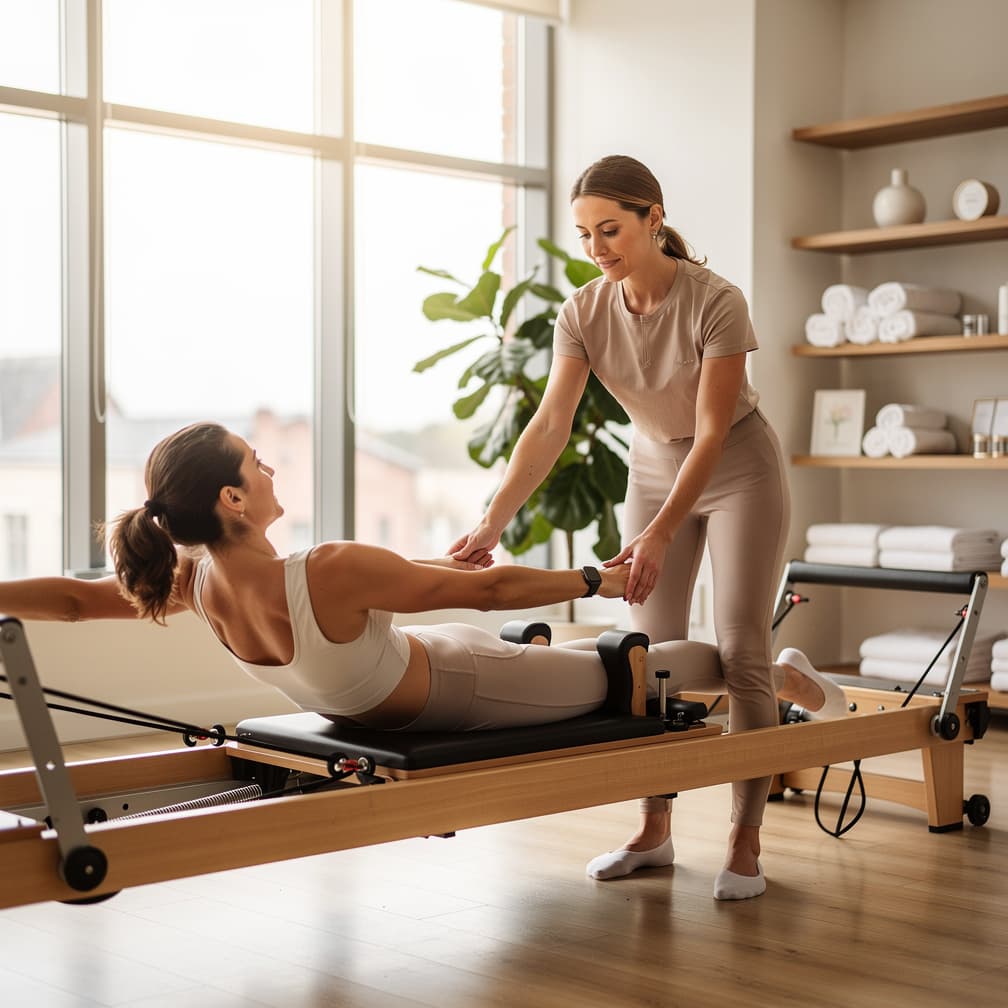

A student's finger catches between the carriage and the footbar during a crowded changeover, and the claim that follows is yours to answer. Pilates studio insurance in Rutland exists for those few seconds: the fall in the reception area, the shoulder that aches the day after a hands-on adjustment, the sprung floor ruined by a pipe overhead. A signed waiver helps, and it still does not stop anyone from filing. The landlord behind your lease can demand proof of liability limits before the keys change hands, so paperwork is part of opening rather than an afterthought. The sections below lay out what studios usually carry, what moves the price, and how participating carriers in Vermont read the same submission differently, so you can price the decision instead of guessing at it.
What Makes Rutland Different
A claim in a thin market moves at the speed of whoever can drive to you. Rutland County may have one adjuster covering a wide area and a short list of contractors who work on sprung floors. When a carriage cracks or a mirror wall comes down, the wait is the loss, and the wait is not on the quote. Ask a carrier how equipment claims get inspected where there is no shop nearby and no photographer on staff. Ask whether replacement is priced from a catalog or from what a technician within reach actually charges. A studio in Rutland that sits an hour from the nearest apparatus dealer pays freight, and freight belongs in the limit you choose. None of that shows up in a price comparison, and all of it shows up in a claim. The room you cannot teach in earns nothing while the answer travels.
Local Risk Factors in Rutland
Freezing weather reaches a studio through its pipes, and the shower plumbing you paid to install sits on your side of the lease in a lot of buildings. A line lets go over a long weekend and the sprung floor is under water before anyone opens the door. The ice outside creates the other claim: a client who slips between the car and your entrance, which is a liability question about where your responsibility starts. Commercial property may respond to burst pipe damage, subject to your limit, and it usually expects heat to have been maintained. Read that condition in Vermont, because a studio in Rutland that turns the heat off to save money can lose the argument later.
What Coverage Does a Pilates Studio in Rutland Need?
General Liability
A student crossing the floor to a reformer slips and lands hard: that third-party injury is the claim General Liability is meant for. It can also help with damage you do to the space you rent, and with the legal defense that follows a suit. What it typically leaves alone is any argument about your instruction itself.
Example: A client hurries toward the changing room, catches a mat edge near the water station, and breaks a wrist; the medical bills and the suit behind them are what this line is meant to answer.
Professional Liability
Instruction is the product, and Professional Liability is the line written for claims about it: a cue, a hands-on correction, a spring setting, a program built for someone returning from injury. It generally responds to allegations that your teaching caused harm, subject to the terms, and it usually has nothing to say about a wet floor.
Example: A client back from physical therapy follows the progression you built and blames the added load for a re-injury weeks later; defending that argument is where this coverage typically earns its place.
Commercial Property
Flood is excluded on the standard form, and wear on springs and straps counts as maintenance, so start from what Commercial Property is not. What it is: reformers, towers, mirrors, the sound system, retail stock, and the buildout you paid for, against causes like fire, theft, storm damage, and vandalism, subject to your limit and deductible.
Example: Fire in the unit next door pushes smoke through a studio in Rutland, and every strap, mat, and cushion has to go; a property claim is generally how the room gets refitted.
Business Owners Policy
Two forms in one envelope. A Business Owners Policy bundles the property side and the liability side, which suits a single-room studio with a landlord to satisfy and apparatus to insure. It often prices below the parts bought separately, and it commonly leaves instruction claims outside, so read the exclusions before treating it as the whole answer.
Example: A pipe lets go over a weekend and a student falls the week after in Rutland; one form, one deductible schedule, and one carrier fielding both calls is the practical draw, subject to the limits inside it.
How Much Does Pilates Studio Insurance Cost in Rutland?
Pilates Studio Insurance is a bundle of separate policies, priced separately. The ranges below are typical figures for Rutland for each line; a quote prices each one against your own operations.
| Coverage | Typical range | What moves your price |
|---|---|---|
| General Liability Insurance | $50 - $150 per month | Industry and risk classification, annual revenue, number of employees |
| Professional Liability Insurance | $45 - $150 per month | The services you actually perform, annual revenue or billed fees, limit and retention selected |
| Commercial Property Insurance | $70 - $240 per month | Building value and construction type, roof age and condition, fire protection class |
| Business Owners Policy Insurance | $85 - $260 per month | Annual revenue and industry class, building and contents values, square footage and building age |
Prices shown are general estimates, not guaranteed rates or quotes. Your actual premium will depend on the insurer, coverage selected, business details, location, claims history, and other underwriting factors. Learn about our pricing methodology.
What Are the Insurance Requirements for a Pilates Studio in Rutland?
Workers' comp is generally required once you have your first employee. Vermont generally requires employers to carry workers' compensation at that point. Common exemptions include sole proprietors, partners, and corporate officers. Confirm current thresholds with your state's workers' compensation agency before you hire.
Flood damage is typically excluded from standard policies. Standard commercial property and builders-risk-type policies typically exclude flood damage. Flood exposure varies address by address, so check your premises in FEMA's Flood Map Service Center before deciding; if you sit in a mapped flood zone, a separate policy through the National Flood Insurance Program is the usual starting point.
Where to verify licensing and coverage rules. The Vermont Department of Financial Regulation publishes consumer guidance and current insurance requirements for Vermont businesses. When a contract or lease demands specific wording, the Vermont Department of Financial Regulation's guidance is the authoritative place to check.
Get Your Pilates Studio Quote in Rutland
Compare rates from multiple carriers. Free quotes, no obligation.
Operating in Rutland
- Clients arrive straight out of physical therapy carrying an injury history they may or may not volunteer. The intake note you take before programming anything is the first document anyone asks for later.
- Waivers signed on a tablet are useful only if you can retrieve one three years later. Store them where a claim can reach them, not only inside an app you may stop paying for.
- Nobody walks out with a reformer, but the laptop at the front desk, the retail stock, and the sound system leave easily, and a door broken to reach them in Rutland is a property claim of its own.
- Water is the equipment risk that matters. A leak from the unit above finds the sprung floor, soaks the wood, and rusts springs in places nobody looks at until one fails.
How to Buy: Advice for Rutland Owners
Think about what you sell before you think about what you buy. You sell instruction, so the claim aimed at your teaching is the one your business creates every hour it is open: a cue, a hands-on adjustment, a plan for someone returning from injury. Professional Liability is the line written for that argument, and it gets priced off session mix, certifications, and who you accept as a client. General Liability answers the other kind of injury, the trip and the fall, and the two rarely trade places. If you run teacher training, say so, because your graduates carry your name into rooms you have never seen. Check the Vermont Department of Financial Regulation's guidance before deciding what to disclose in Vermont. Then let participating carriers compete on the same disclosure through CPK, which compares quotes for a Rutland studio rather than underwriting them.
FAQ
Pilates Studio Insurance in Rutland: FAQ
Expect questions on square footage, class schedule and caps, instructor count, whether instruction happens away from the studio, an apparatus list with values, the improvements you installed, and any incidents from the last few years. Have the insurance exhibit from your Rutland lease ready too, since it sets the limits you actually need. A complete file leaves fewer assumptions to price, and assumptions rarely get priced in your favor.
Do not assume it. A policy is written around the addresses you disclosed, and instruction somewhere else can fall outside what the form contemplates. Some carriers extend it, some want the location added first, and some decline. The venue or the parks office may also want a certificate naming them. Ask before you post the class in Rutland, because adding a location beforehand is routine and arguing about it after an injury is not.
Usually you do, even though you cannot take them with you. Building owners generally insure the shell, and tenant improvements land on the tenant's side of the line unless the lease says otherwise. Read the lease, then set a property limit that reflects a real replacement cost for the buildout and the machines in your Rutland room. A limit carried over from opening day is the one that falls short after a fire.
It is a sensible starting point, since a Business Owners Policy typically packages property and liability on one form at limits a landlord can accept. What it usually leaves out is the instruction claim, which is where Professional Liability comes in. Read the exclusions before you take the convenience, and check that the property limit inside the bundle reflects the apparatus you actually own rather than a default figure.
Wear and tear on springs, straps, and upholstery is maintenance, and maintenance generally sits outside a property form. Flood is normally excluded and priced separately. Damage you cause on purpose is never covered anywhere. Money lost because a class was canceled with no physical damage behind it usually falls outside the form as well. Ask what the form treats as a covered cause of loss before you assume.
Directly, and often unhappily. A single carriage repair or one mirror replacement is real money and still small next to a fire, so a high deductible can swallow the entire claim. That is the trade you are making: a lower monthly figure in exchange for carrying small losses yourself. Run the deductible against the losses you are most likely to have rather than the one you are least likely to have.
Sources
- 1.Vermont Department of Financial Regulation(Vermont Department of Financial Regulation publishes consumer guidance for insurance buyers.)
- 2.FEMA / FloodSmart(Flood coverage is typically purchased separately; FEMA administers the National Flood Insurance Program.)


