







































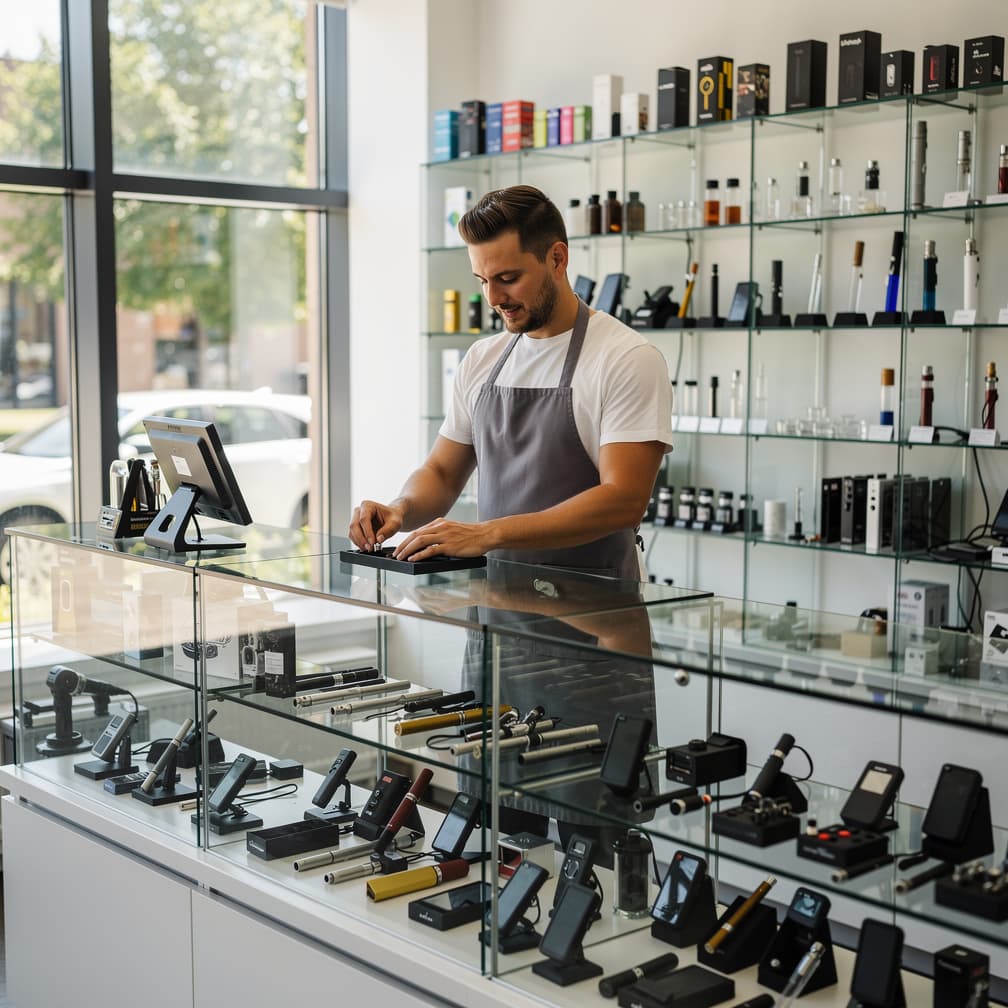

General Liability for a small retail shop commonly starts from $25/month, and the figure moves with foot traffic, square footage, and what you have already claimed. Smoke shop insurance in Rutland costs what it costs for reasons you can name out loud. A busier sales floor means more chances for someone to go down. A deeper inventory means a bigger fire loss. A second register and a second employee change how cash gets handled and who can walk out with it. None of that reaches a quote box until you feed it real numbers. Gather your payroll, your annual revenue, and a rough value of the stock on hand before you compare quotes from participating carriers writing in Vermont, because guessed inputs give you a guessed price.
What Makes Rutland Different
Word travels in a small Vermont county, and so does a claim, though not always accurately. Your customers will hear about the fire before your adjuster finishes the first walkthrough of the building. That matters less for coverage and more for how fast you need to reopen the doors. Reopening depends on vendors, and a thin market may hold one glazier, one electrician, and one restoration crew. A policy that pays promptly is worth little if nobody is available to rebuild the sales floor. Ask how lost income is measured and for how long it keeps being measured after a loss. Thin vendor pools stretch that timeline, and the timeline is where a small shop actually gets hurt. Price that question deliberately in Rutland rather than treating recovery time as somebody else's problem.
Local Risk Factors in Rutland
Before the first hard freeze, walk the back of the shop and find every pipe running along an exterior wall. Those are the ones that split, and a stockroom is exactly where nobody notices until morning. Insulate them, learn where the shutoff valve is, and make sure whoever closes knows it too. Water damage from a frozen pipe may be answered by a property policy, though the wording usually expects you to have maintained heat during a closure. That is one of the honest gaps: a preventable failure argues badly. An hour of work now in Rutland beats a stockroom of ruined product later in Vermont.
What Coverage Does a Smoke Shop in Rutland Need?
General Liability
A customer who goes down near your entry mat is the claim this line exists for. General Liability may respond to third-party injury and property damage arising from your operations, and in many cases to the defense costs behind them. Landlords commonly require it before handing over keys. It does not answer for injuries to your own staff.
Example: A shopper catches a heel on a curled floor mat and lands beside the counter; the injury claim and the lawyer's letter behind it are what this line is generally meant to absorb.
Commercial Property
Rising water sits outside this form, which surprises owners more than anything else in it. Otherwise Commercial Property is the line for the room itself: shelving, fixtures, point-of-sale equipment, and the stock on the floor and in back. It can help cover fire, storm, and vandalism damage, and it is rated off the inventory value you report, so an outdated figure costs you either way.
Example: A fire starts in a stockroom stacked with packaging and takes the shelving, the registers, and a full wall of product with it; this coverage could answer for the rebuild and the stock.
Commercial Crime
Where a property form stops, this one starts. Employee dishonesty, forgery, and stolen money are typically excluded from the policy covering your shelves, and Commercial Crime is designed for those losses instead. Underwriters ask who opens, who counts, and who banks, because separated duties are the control they price. A shop where one person does all three is a harder file to place.
Example: A long-trusted keyholder skims from the drawer for months and the shortage surfaces only at a quarterly count; a crime form may respond where a property policy would not.
Workers Compensation
This one is driven by state rules rather than by your landlord. Workers Compensation is rated against payroll and job duties, and it typically responds to medical costs and lost wages when an employee is hurt on shift: a stocker off a ladder, a cashier lifting a case. Thresholds vary by state and often include part-time staff. Estimated payroll gets audited later, so accurate figures matter now.
Example: A closing employee steps off a stool wrong while restocking a high shelf in Rutland and misses three weeks; this line could help cover the medical bills and part of the lost wages.
How Much Does Smoke Shop Insurance Cost in Rutland?
Smoke Shop Insurance is a bundle of separate policies, priced separately. The ranges below are typical figures for Rutland for each line, except workers compensation, which is rated per $100 of payroll; a quote prices each one against your own operations.
| Coverage | Typical range | What moves your price |
|---|---|---|
| General Liability Insurance | $80 - $260 per month | Industry and risk classification, annual revenue, number of employees |
| Commercial Property Insurance | $150 - $525 per month | Building value and construction type, roof age and condition, fire protection class |
| Commercial Crime Insurance | $30 - $110 per month | Employees who handle money or inventory, internal controls and separation of duties, funds and securities on hand |
| Workers Compensation Insurance | $0.75 - $2.74 per $100 of payroll | Employee classification codes, total annual payroll, experience modification rate |
Prices shown are general estimates, not guaranteed rates or quotes. Your actual premium will depend on the insurer, coverage selected, business details, location, claims history, and other underwriting factors. Learn about our pricing methodology.
What Are the Insurance Requirements for a Smoke Shop in Rutland?
Workers' comp is generally required once you have your first employee. Vermont generally requires employers to carry workers' compensation at that point. Common exemptions include sole proprietors, partners, and corporate officers. Confirm current thresholds with your state's workers' compensation agency before you hire.
Flood damage is typically excluded from standard policies. Standard commercial property and builders-risk-type policies typically exclude flood damage. Flood exposure varies address by address, so check your premises in FEMA's Flood Map Service Center before deciding; if you sit in a mapped flood zone, a separate policy through the National Flood Insurance Program is the usual starting point.
Where to verify licensing and coverage rules. The Vermont Department of Financial Regulation publishes consumer guidance and current insurance requirements for Vermont businesses. When a contract or lease demands specific wording, the Vermont Department of Financial Regulation's guidance is the authoritative place to check.
Get Your Smoke Shop Quote in Rutland
Compare rates from multiple carriers. Free quotes, no obligation.
Operating in Rutland
- Your entry mat is a liability control, and the day a corner curls it becomes the central piece of evidence in somebody's slip claim.
- A distributor supplying your Rutland shop can ask for proof of coverage before releasing an allocation, so a certificate you can send from a phone is worth more than one filed in a drawer.
- A build-out you paid for is usually your property under the lease, which means the shelving and counters you installed are yours to insure and yours to replace.
- Renewal certificates expire on a date nobody behind the counter remembers, and a property manager in Rutland can flag the lapse before anyone in your own building calls you.
How to Buy: Advice for Rutland Owners
Start from the loss that would actually close your doors, then work backwards to the policy. For many shops that is fire: shelving, fixtures, registers, and every case of stock gone in one night. Commercial Property is the line built for that, and what matters is whether the limit reflects a full shelf rather than a slow week. The second loss worth naming is the one that arrives with a lawyer, when a customer goes down near the entryway, because General Liability limits are what get tested there. Ask what a policy does about lost income while you are closed, and for how long it keeps doing it. The Vermont Department of Financial Regulation publishes consumer guidance on reading policy terms. Once you know what those two losses look like for your Rutland shop, put the same limits in front of several participating carriers and compare what comes back.
FAQ
Smoke Shop Insurance in Rutland: FAQ
Sometimes, and only after a covered physical loss. Lost income coverage generally starts from damage, so a slow week or a storm that keeps shoppers at home usually triggers nothing at all. Where it does apply, the payment period is defined in the wording and it is finite. Ask how long it runs and how income gets measured, because in Rutland the wait on repair vendors decides what that clock is worth.
They are usually rated as business personal property alongside your stock, though the settlement basis is worth checking. Commercial Property may settle on replacement cost or on a depreciated value, and that one word decides what arrives after a fire. Fixtures and build-out you paid for often sit on your side of the lease rather than the landlord's. List them at real numbers rather than leaving them off.
Some do, particularly where product sits on your shelves before it has been paid for. Anyone with money in your inventory has a reason to ask what happens if the shelves burn. Keep a current certificate somewhere you can send from a phone in two minutes. A supplier serving Rutland can quietly move an allocation to whoever answered the request first, and that costs you without ever touching a claim.
Badly, if you set the retention purely to shave the premium. Retail losses arrive small and often, so a high deductible means you fund most of them yourself while still paying for the policy. Set it where a bad month for your Rutland shop is survivable and no lower. Then decide in advance which small losses you will report at all, because carriers read the count of claims before the size.
Read the lease, because glass is one of the most commonly disputed lines in a retail tenancy. Some leases put exterior glass on the building owner, some hand it to the tenant, and plenty are simply silent. Whoever owns the obligation should be the one insuring it. A smashed pane in the middle of the night is a bad moment to discover the answer was you.
Usually yes, at least on paper. Commercial leases routinely require a certificate showing specific limits and additional insured wording before you take possession, and a landlord can hold the keys until it lands. Ask for the insurance exhibit while you are still negotiating rather than after signing. General Liability is the line such clauses commonly name, though a lease may also make you insure the improvements you paid for.
Sources
- 1.Vermont Department of Financial Regulation(Vermont Department of Financial Regulation publishes consumer guidance for insurance buyers.)
- 2.FEMA / FloodSmart(Flood coverage is typically purchased separately; FEMA administers the National Flood Insurance Program.)


