







































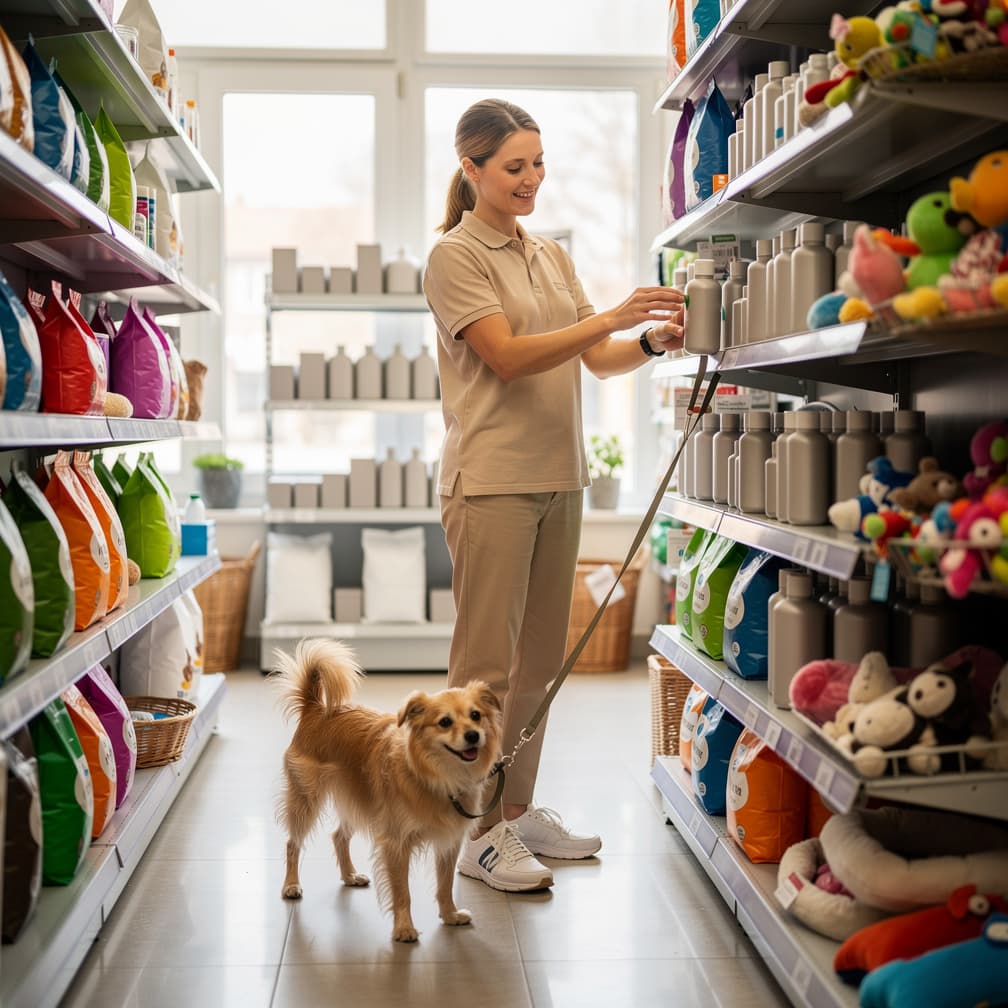

Cost follows exposure, and for this trade exposure sits at customer height. Every open habitat, every touch tank, every crate at a meet-and-greet puts a member of the public within reach of an animal you do not fully control. That is what underwriters are buying when they quote pet store insurance in South Burlington, and it is why two shops with identical revenue can land far apart. A store in Chittenden County that runs no grooming, sells no live stock, and keeps everything behind glass presents a different file than one that does all three. Nothing about your rent or your sign changes that. What changes it is the work, the animals, and the paper trail behind past incidents. Get those three straight, then look at what participating carriers come back with.
What Makes South Burlington Different
Permit offices, health inspectors, and the person renting you the bay each want proof of something different. Only one of those is an insurance certificate, and it is usually the landlord who asks for it. Where a South Burlington shop sits inside a building its owner runs personally, the requirement can feel informal. Informal does not mean absent, and a handshake lease still has an insurance clause buried somewhere in it. Read that clause the week you sign a South Burlington lease, because the limits in it set your floor. Buying below the floor is worse than buying nothing, since you paid money and still breached. Ask the person holding the lease which entity has to be named, and get the answer in writing. Then shop against that requirement, rather than shopping a monthly figure that quietly ignores it.
Local Risk Factors in South Burlington
Freezing weather damages a pet store through its pipes and its power rather than through the cold itself. A burst line above a South Burlington sales floor sends water down onto feed, bedding, and the electrical runs under your stands, and the repair closes you for days. Commercial Property may respond to sudden water damage from a burst pipe while leaving out damage a carrier attributes to a lapse in heat, so the condition about maintaining heat in the building is worth reading closely. That condition is real, and it applies whether or not you were open that week. Ask a carrier in Vermont exactly what it says on your form.
What Coverage Does a Pet Store in South Burlington Need?
General Liability
Landlords, property managers, and distributors ask for this line before they ask for anything else, because it is the one that answers when a member of the public is hurt on your floor. It can help cover their medical costs, the legal defense that follows, and damage you cause to someone else's property. It typically does nothing for injuries to your own staff.
Example: A shopper reaches toward a parrot, the bird lunges, and the wound needs stitches and a follow-up visit. A demand letter lands eleven months later, and this is the line that would be tested.
Commercial Property
Flood sits outside it, and so does a compressor that simply wore out. What sits inside is sudden, accidental damage to what you own: the building if you hold it, plus the tanks, stands, filtration, refrigeration, shelving, and the stock sitting on them. Whether live animals count as that stock depends on the wording, so ask before you assume.
Example: Wind lifts a section of roof, rain comes down onto a wall of tanks, and the display room is a loss by morning. A property form could respond to the structure and the fixtures beneath it.
Workers Compensation
Payroll is what this one is rated against, at a rate per hundred dollars of wages rather than a flat monthly figure. It generally responds to medical treatment and lost wages when an employee is hurt at work, including a groomer bitten while restraining a frightened dog. Thresholds for who has to be counted vary by state.
Example: A stock clerk in South Burlington lifts a forty-pound bag of feed off a pallet, feels the back go, and misses six weeks. Medical bills and part of those lost wages could fall here.
Business Owners Policy
Two contracts in one is the trade being offered: liability and property arrive bundled, which for a small shop is often the simpler and less expensive route. What the package assumes about you is the catch. Live animal sales, grooming, and public handling can sit outside a standard version or arrive with conditions attached, so read the exclusion list before the price.
Example: A tank seam fails overnight, water crosses into the neighbor's stockroom, and their claim and your ruined shelving arrive on the same morning. One packaged policy might reach both sides of that.
How Much Does Pet Store Insurance Cost in South Burlington?
Pet Store Insurance is a bundle of separate policies, priced separately. The ranges below are typical figures for South Burlington for each line, except workers compensation, which is rated per $100 of payroll; a quote prices each one against your own operations.
| Coverage | Typical range | What moves your price |
|---|---|---|
| General Liability Insurance | $65 - $190 per month | Industry and risk classification, annual revenue, number of employees |
| Commercial Property Insurance | $110 - $370 per month | Building value and construction type, roof age and condition, fire protection class |
| Workers Compensation Insurance | $0.75 - $2.74 per $100 of payroll | Employee classification codes, total annual payroll, experience modification rate |
| Business Owners Policy Insurance | $130 - $360 per month | Annual revenue and industry class, building and contents values, square footage and building age |
Prices shown are general estimates, not guaranteed rates or quotes. Your actual premium will depend on the insurer, coverage selected, business details, location, claims history, and other underwriting factors. Learn about our pricing methodology.
What Are the Insurance Requirements for a Pet Store in South Burlington?
Workers' comp is generally required once you have your first employee. Vermont generally requires employers to carry workers' compensation at that point. Common exemptions include sole proprietors, partners, and corporate officers. Confirm current thresholds with your state's workers' compensation agency before you hire.
Flood damage is typically excluded from standard policies. Standard commercial property and builders-risk-type policies typically exclude flood damage. Flood exposure varies address by address, so check your premises in FEMA's Flood Map Service Center before deciding; if you sit in a mapped flood zone, a separate policy through the National Flood Insurance Program is the usual starting point.
Where to verify licensing and coverage rules. The Vermont Department of Financial Regulation publishes consumer guidance and current insurance requirements for Vermont businesses. When a contract or lease demands specific wording, the Vermont Department of Financial Regulation's guidance is the authoritative place to check.
Get Your Pet Store Quote in South Burlington
Compare rates from multiple carriers. Free quotes, no obligation.
Operating in South Burlington
- A bite reported by a South Burlington customer can become a demand letter eighteen months later, once the staff who saw it have moved on. Whatever your closing shift wrote that night is the entire record you get to work from.
- Signage on a habitat, a written handling rule, and a log of every scratch cost nothing to maintain and change how a file gets defended. None of it prevents the incident, and all of it shapes the argument afterward.
- Power drops and the animals still need temperature, which means somebody staffs the building during the hours everyone else is being told to stay home. That staffing decision is a payroll exposure before it is anything else.
- A pallet of food arrives at the back door most mornings and gets dragged through an aisle customers are already using. A four-minute task in a shared space is where a surprising number of liability claims against a South Burlington store begin.
How to Buy: Advice for South Burlington Owners
Bundling deserves a hard look rather than a blind yes. A Business Owners Policy packages liability and property into one contract, and for a small South Burlington shop that can be the simplest route by far. The question is what the package assumes about your operation. Live animal sales, grooming, and public handling are the parts most likely to sit outside a standard package or to arrive with conditions attached. Ask for the exclusion list before you ask for the price. If the package will not reach your livestock or your handling exposure, separate General Liability and Commercial Property may fit better even though it is more work to manage. The Vermont Department of Financial Regulation publishes consumer guidance on package policies and their endorsements. Ask CPK for both structures side by side and let participating carriers show what each really costs.
FAQ
Pet Store Insurance in South Burlington: FAQ
Ask before the event rather than during it. Coverage for activity away from your premises depends on wording, and the partner hosting or joining you may want their name added for the day. Both are changes that take time to arrange. If a rescue group in South Burlington brings animals into your space instead, ask what they carry before you agree to host anything.
One file can follow you for years, and where few carriers in Vermont write this class there is nowhere for it to hide. What matters nearly as much as the claim is what you changed afterward: signage, a written handling rule, who is allowed to open an enclosure. Underwriters price controls. Document them the week you put them in, not the week you need them.
It can be, and it depends entirely on what the package assumes about you. A Business Owners Policy bundles liability and property into one contract, which suits a small South Burlington shop.
There are usually two separate questions hiding inside that one. Stock taken from a shelf and money taken from a drawer are commonly handled under different provisions with different sublimits, and the money sublimit is frequently smaller than owners expect. Shrinkage that cannot be tied to a specific event may not be addressed at all. Check both figures on the form before you rely on either.
The per-occurrence limit is what a single incident can draw. The aggregate is the total available across the whole policy term. For a pet store the first one bites hardest, since one water event reaching a neighboring unit can produce several claimants against a single occurrence. Ask a carrier how exactly that scenario would be treated on your form before you pick a number.
Yes, and sooner than your next renewal. Grooming changes your payroll, which is what Workers Compensation is rated against, and it puts staff and customers close to animals under restraint. A policy quoted for a shelf-only supply store may not reach the new work, and that mismatch tends to surface at the worst possible moment. Report material changes when they happen.
Sources
- 1.Vermont Department of Financial Regulation(Vermont Department of Financial Regulation publishes consumer guidance for insurance buyers.)
- 2.FEMA / FloodSmart(Flood coverage is typically purchased separately; FEMA administers the National Flood Insurance Program.)


