







































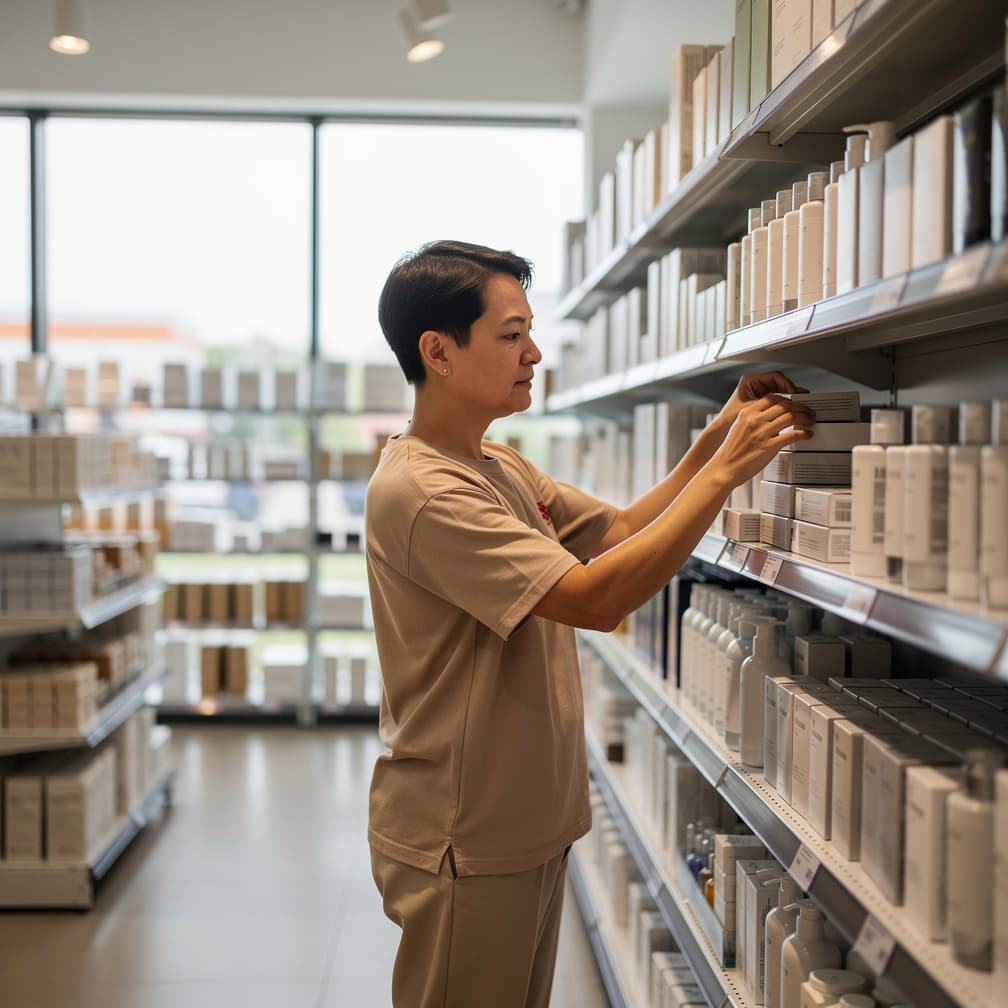

Water from a failed line behind the stockroom finds the cardboard first. Boxes wick it up overnight, labels lift, and by opening you are sorting salvage instead of ringing sales. Retail store insurance in South Burlington is worth reading closely on this point, because a burst pipe and a rising creek are handled by completely different forms. Where Chittenden County has one drying company and one shelving supplier, both an hour out, the closure stretches well past what the damage alone would suggest. Downtime is the real number to think about, and logistics drive it as much as destruction does. Ask what a policy does with soaked or unsellable stock. Then ask what it does with the days you cannot open the door at all.
What Makes South Burlington Different
A thin market changes the repair math far more than it changes the premium on your quote. When Chittenden County supports only a handful of contractors who can rebuild a storefront, the estimate you get may be the only estimate available. That single bid becomes the figure a claim settles around, which makes the adjuster conversation more important than owners assume. It also means a custom counter or a specialty fixture can wait weeks for the one person who builds them. Ask any quote you take in South Burlington how it handles a partial reopening while the rest of the floor stays under repair. Ask whether stock stored offsite during the work is treated the same as stock sitting on your shelves. Distance is a risk factor nobody prints on a quote sheet. It shows up on the calendar instead of on the invoice.
Local Risk Factors in South Burlington
Ice at the entrance is where a winter liability claim starts, and it starts the moment a shopper's foot leaves the mat. Salt, mats, and a log of when they were last checked are worth more than any wording after the fall, because General Liability may respond to the injury while the defense gets built from what you actually did. Slush travels a long way inside on shoe soles, so the hazard is never only at the threshold. Keep the log. A South Burlington store with a checked and initialed sheet argues from evidence in Vermont; a store without one argues from memory.
What Coverage Does a Retail Store in South Burlington Need?
General Liability
Landlords, lenders, and franchisors ask for this line by name, and the limit written into your lease is usually the limit you end up buying. It generally contemplates third-party injury and property damage tied to your premises: the shopper who goes down in an aisle, the door that swings into someone, the sign that lands on a stranger. Injuries to your own staff sit elsewhere, and your stock is not what it addresses.
Example: A shopper steps off a rain-slick mat, catches the corner of a display case on the way down, and leaves with a broken wrist and a lawyer. General Liability might respond to the medical bills and the defense, subject to your limit.
Commercial Property
Flood sits outside it, wear and tear sits outside it, and unexplained inventory shortage usually does too. What sits inside is the physical side of the store: stock, shelving, counters, the register system, and tenant improvements you paid for, against causes such as fire, smoke, wind, forced entry, and water from a failed pipe. Valuation wording decides what damaged stock is worth.
Example: Smoke from a fire two units down settles into every open box on the shelves overnight. Commercial Property might answer for the ruined inventory, though the valuation clause decides whether it settles at cost or at retail.
Workers Compensation
Where General Liability stops at the customer, this line starts with your staff: the stocker who comes off a ladder, the cashier whose back goes out lifting a case, the closer hurt during a break-in. It is rated on payroll rather than sold at a flat monthly price, and the rules on who must be covered vary by state. Medical treatment and part of lost wages are what it typically addresses.
Example: A part-time stocker reaches for a top-shelf box, the ladder shifts, and a shoulder tears. Workers Compensation is generally intended to take on the treatment and a portion of the lost wages while somebody else works the shift.
Business Owners Policy
One document, one renewal date, and both halves of a storefront's exposure: liability for the shopper on your floor, plus property terms for the stock, fixtures, and tenant improvements behind it. Interruption terms are often folded in. Eligibility can depend on class, size, and the building itself, and Workers Compensation always sits outside the package.
Example: A failed line closes a South Burlington store for eleven days while shelving dries out and stock gets replaced. A Business Owners Policy can help cover the property loss and, where interruption terms apply, some of the income that never arrived.
How Much Does Retail Store Insurance Cost in South Burlington?
Retail Store Insurance is a bundle of separate policies, priced separately. The ranges below are typical figures for South Burlington for each line, except workers compensation, which is rated per $100 of payroll; a quote prices each one against your own operations.
| Coverage | Typical range | What moves your price |
|---|---|---|
| General Liability Insurance | $50 - $130 per month | Industry and risk classification, annual revenue, number of employees |
| Commercial Property Insurance | $80 - $280 per month | Building value and construction type, roof age and condition, fire protection class |
| Workers Compensation Insurance | $0.75 - $2.74 per $100 of payroll | Employee classification codes, total annual payroll, experience modification rate |
| Business Owners Policy Insurance | $80 - $240 per month | Annual revenue and industry class, building and contents values, square footage and building age |
Prices shown are general estimates, not guaranteed rates or quotes. Your actual premium will depend on the insurer, coverage selected, business details, location, claims history, and other underwriting factors. Learn about our pricing methodology.
What Are the Insurance Requirements for a Retail Store in South Burlington?
Workers' comp is generally required once you have your first employee. Vermont generally requires employers to carry workers' compensation at that point. Common exemptions include sole proprietors, partners, and corporate officers. Confirm current thresholds with your state's workers' compensation agency before you hire.
Flood damage is typically excluded from standard policies. Standard commercial property and builders-risk-type policies typically exclude flood damage. Flood exposure varies address by address, so check your premises in FEMA's Flood Map Service Center before deciding; if you sit in a mapped flood zone, a separate policy through the National Flood Insurance Program is the usual starting point.
Where to verify licensing and coverage rules. The Vermont Department of Financial Regulation publishes consumer guidance and current insurance requirements for Vermont businesses. When a contract or lease demands specific wording, the Vermont Department of Financial Regulation's guidance is the authoritative place to check.
Get Your Retail Store Quote in South Burlington
Compare rates from multiple carriers. Free quotes, no obligation.
Operating in South Burlington
- Loss runs from your prior policy travel with you, so a small claim you filed years ago is still part of the file the next underwriter reads before pricing you.
- The rear door of a storefront is usually the oldest hardware in the building, which is why break-ins arrive through the alley rather than through the front window.
- A certificate does not renew itself when the policy does, and the party holding your South Burlington lease notices the gap at the worst imaginable moment rather than a convenient one.
- Water from a failed line behind the stockroom soaks cardboard from the bottom up overnight, so the morning count of what can still be sold matters more than the size of the puddle.
How to Buy: Advice for South Burlington Owners
Buy before the fixtures arrive rather than after. Property in a half-finished space is still your money, and contractors moving through it are an exposure whether the doors have opened or not. Ask when coverage attaches, what the wording says about goods in transit or stored offsite, and whether a Commercial Property form treats a store that has not opened differently from one that has. Line up General Liability before the first delivery, since a driver on an unfinished floor is a claim waiting for a wet patch. Check the Vermont Department of Financial Regulation's guidance on when business coverage should begin before deciding. Give an opening date in South Burlington a week of margin, then weigh what participating carriers offer through CPK instead of taking the first bindable quote because the calendar is tight.
FAQ
Retail Store Insurance in South Burlington: FAQ
Pull the lease with its insurance clause, a recent revenue figure, a payroll summary, an inventory total, and any loss runs from earlier policies. Add photographs of the entryway, the aisles, and the stockroom if you have them. Blanks get filled with cautious assumptions, so a complete file tends to price better than a hurried one. CPK puts the same submission to participating carriers, which only works when the facts hold still.
Tenant improvements and your own contents are generally handled under your policy, while the structure itself stays with the property owner's insurance. That split deserves a line by line read, because a counter you built and a wall you paid to move can be treated as different things. Ask what the wording calls each and what limit applies to it. A lease sometimes assigns responsibility differently than an owner would guess.
Usually not in the way owners hope. Unexplained shortage discovered only when the count comes up light is commonly excluded, since a policy generally responds to an identifiable event rather than to slow leakage. A forced entry with visible damage is a different matter entirely. That is why cameras, counts, and incident reports earn their keep: they turn a mystery into an event a claim can examine.
Usually yes. A lease commonly names limits and asks for a certificate listing the property owner as an additional insured before possession of a South Burlington storefront. The certificate is proof rather than the policy itself, so it can only be issued once coverage is bound. Read the insurance clause early and buy to the figure it names, because a wrong entity name or a short limit sends the document back and delays your opening.
It depends on what you sell and how much of it sits on the floor at once. Revenue, payroll, stock value, building age, security, and claims history move the number more than anything else does. Two stores of identical size can price apart because one carries heavy inventory and stays open late. The cost table on this page shows current ranges by coverage, and a quote sharpens them against your own figures.
That is the classic General Liability scene, and the line is generally intended to respond to bodily injury claims from shoppers on your premises, subject to your limit and deductible. It does nothing for your own injuries or an employee's, which sit with Workers Compensation instead. Mats, spill routines, and a wet floor sign do not change the wording, but they change how the claim gets defended.
Sources
- 1.Vermont Department of Financial Regulation(Vermont Department of Financial Regulation publishes consumer guidance for insurance buyers.)
- 2.FEMA / FloodSmart(Flood coverage is typically purchased separately; FEMA administers the National Flood Insurance Program.)


