

































Updated July 10, 2026

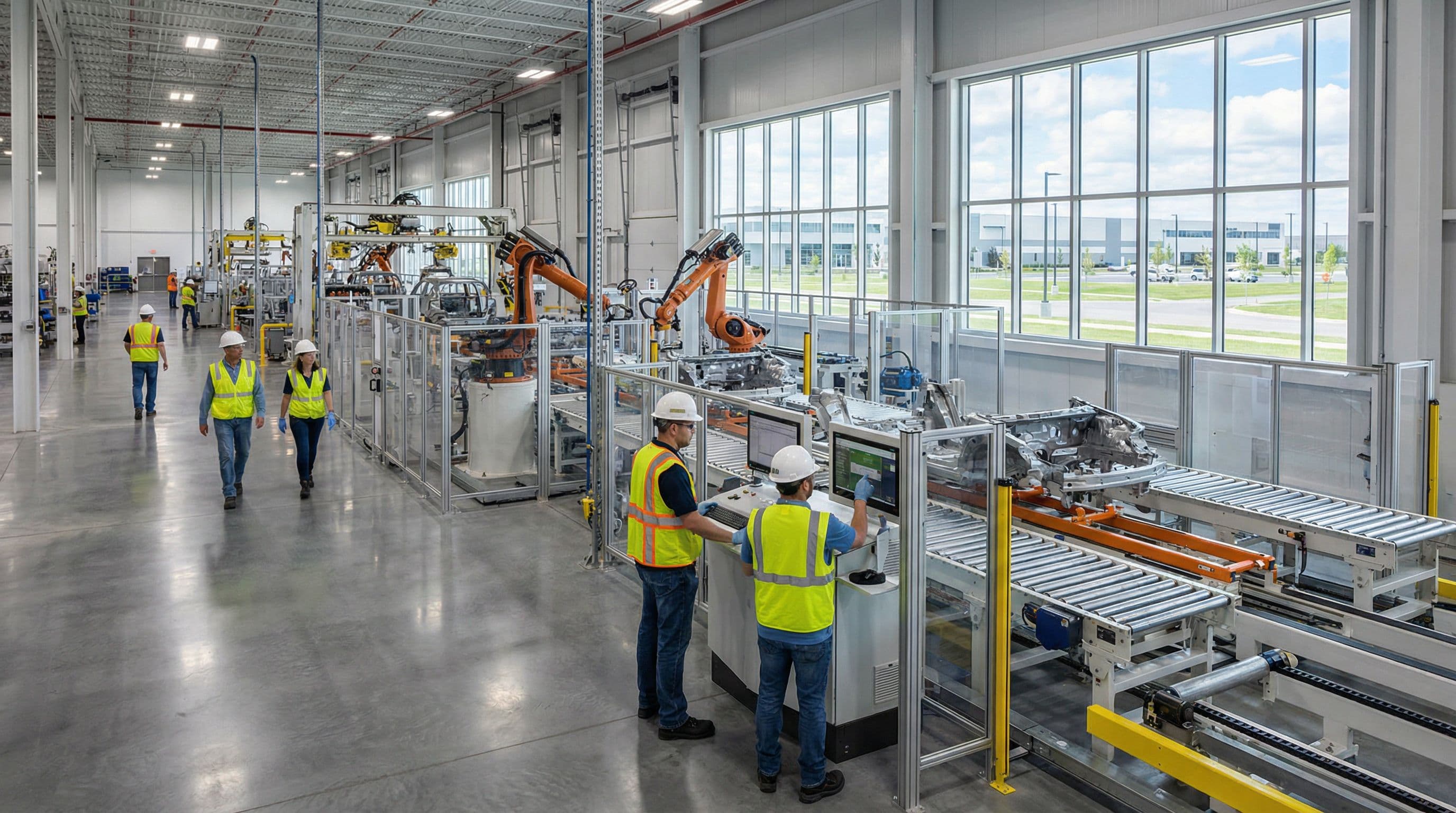
Manufacturing risk in Virginia splits between the floor and the field: worker injuries and machine failures inside, product claims outside. Virginia adds a legal floor here, because workers compensation is required once a business regularly has more than two employees [1]. On top of that, hurricane risk across Virginia shapes the property side of a quote, from deductibles to how carriers treat roofs and stock. The cost drivers below map what actually moves manufacturing quotes in Virginia.
Recommended Coverage for Manufacturing in Virginia
Manufacturing businesses face unique risks that require specific coverage types. Here are the policies most manufacturing operations need:

General Liability
Essential coverage for every business, protect against third-party bodily injury, property damage, and advertising claims.

Commercial Property
Safeguard your business property, equipment, and inventory against damage and loss.

Workers Compensation
Help cover your employees' medical expenses and lost wages for work-related injuries and illnesses.

Commercial Umbrella
Extend your liability limits beyond your primary policies for extra protection against catastrophic claims.

Inland Marine
Protect tools, equipment, and goods in transit or stored at locations away from your primary premises.

Commercial Auto
Protect your business vehicles and drivers with comprehensive commercial auto coverage.
Manufacturing Insurance Overview in Virginia
Customers, landlords, and supply-chain partners often expect a Virginia manufacturer to show current certificates before a lease, vendor setup, or site access moves forward. Manufacturing insurance in Virginia works best when those certificates match how your operation actually runs, because raw materials arrive on scheduled trucks, finished goods move between storage and production, and maintenance staff work around powered equipment. Supervisors balance plant, warehouse, and delivery exposures under one insurance program.
If you fabricate parts, package products, assemble components, or run light industrial processes, the practical question is not whether you need coverage. It is whether your limits, classifications, locations, and scheduled property line up with your floor layout, payroll, vehicle use, and offsite equipment movement. A quote review should test where stock is stored, who drives, which tools leave the premises, and whether umbrella limits are high enough for the contracts you sign.
Why Manufacturing Businesses Need Insurance in Virginia
Production areas have moving machinery, receiving and shipping activity stays constant, and stored raw materials sit in the same buildings where employees cross between office, warehouse, and floor duties. That mix changes what you should review on each policy.
General liability needs to fit visitor traffic, vendor pickups, and third-party injury or property damage claims. Commercial property should match the buildings you occupy, the value of stock at different stages, and whether a weather event could damage both structure and inventory in one loss. Inland marine becomes important when tools, dies, test equipment, or mobile machinery leave the main facility for installation, service, or temporary job use. Commercial auto applies if your business owns vans, pickups, or box trucks for deliveries, service calls, or inter-facility runs.
Workers compensation deserves special attention because Virginia requires it for employers with 2 or more employees. Skip it and the state can stop you from operating, fine you, and leave you personally exposed to injury lawsuits you would otherwise be defended against. Exemptions can apply to sole proprietors, partners, corporate officers, and farm laborers, so your headcount and ownership structure drive your compliance obligations before renewal or hiring. The Virginia Bureau of Insurance oversees carrier filings and classification rules if you need to compare policy terms or resolve compliance questions.
For many manufacturers, the real buying decision is coordination. Making sure property values, payroll, vehicle schedules, and umbrella limits are reviewed together keeps one gap from surfacing only after a claim.
Virginia requires workers' comp for businesses with 2+ employees (exemptions may apply: Sole proprietors; Partners). Non-compliance can result in fines and personal liability for owners. Commercial auto minimums are $50,000/$100,000/$25,000.
Key Risks for Manufacturing Businesses
Each of these risks can lead to claims that cost thousands, or more. Make sure your policy addresses every one:
- Product liability and recall costs
- Workplace injuries and safety violations
- Equipment breakdown
- Supply chain disruption
- Environmental contamination
- Property damage from fire or explosion
Cost Factors for Manufacturing Businesses in Virginia
A small fabrication shop with limited public access, modest payroll, and no delivery fleet is rated differently from a manufacturer with multiple shifts, higher employee counts, owned vehicles, and stock that spikes in value before shipment. Carriers usually look closely at your payroll by class code and the type of machinery on the floor. They also weigh loss history, building construction, protection features, vehicle use, and the replacement value of equipment and inventory. Property pricing often turns on the age and condition of the building, sprinkler protection, and electrical updates. The volume of raw material and finished goods you keep onsite plays a role as well. Liability pricing can move with customer foot traffic, product profile, and subcontracted work. Contract requirements from landlords or buyers add another layer. Commercial auto cost usually changes with vehicle type, radius of travel, and driver records. Whether employees make regular deliveries also factors in.
Inland marine cost depends on what equipment or tools leave the premises, how often they move, and where they are stored between jobs. Umbrella pricing is shaped by the underlying liability limits and the severity potential of your operation. If you want a quote that is actually usable, prepare current payroll estimates, a vehicle list, building details, loss runs, and an equipment schedule that separates permanently installed machinery from mobile or offsite property. That gives you a cleaner comparison between options and makes it easier to spot whether a lower premium is coming from narrower terms, lower limits, or missing scheduled items.
As a baseline, general liability, the coverage nearly every manufacturing business carries, averages about $150 to $650 per month in Virginia. The spread is wide because a shop with one location, low foot traffic, and a clean claims history pays far less than a multi-location operation with heavy visitor traffic and prior losses. Your final premium depends on payroll, annual revenue, claims history, and the specific risk class of your work.
Manufacturing businesses typically carry several separately priced policies. The ranges below are typical figures for Virginia for each line, except workers compensation, which is rated per $100 of payroll; a quote prices each one against your own operations.
| Coverage | Typical range | What moves your price |
|---|---|---|
| General Liability Insurance | $150 - $650 per month | Industry and risk classification, annual revenue, number of employees |
| Commercial Property Insurance | $260 - $1,150 per month | Building value and construction type, roof age and condition, fire protection class |
| Workers Compensation Insurance | $0.75 - $2.74 per $100 of payroll | Employee classification codes, total annual payroll, experience modification rate |
| Commercial Umbrella Insurance | $95 - $420 per month | Umbrella limit requested, limits carried on the underlying policies, loss history on those underlying policies |
| Inland Marine Insurance | $50 - $270 per month | Total insured value of the scheduled property, type and age of the equipment, where it is stored and how far it travels |
| Commercial Auto Insurance | $230 - $875 per month | Fleet size and vehicle types, driver records and experience, coverage limits and deductibles |
Prices shown are general estimates, not guaranteed rates or quotes. Your actual premium will depend on the insurer, coverage selected, business details, location, claims history, and other underwriting factors. Learn about our pricing methodology.
State Requirements
Insurance Regulations in Virginia
Key regulatory requirements for businesses operating in VA.
Regulatory Authority
Workers' Compensation InsuranceRequired
Required for employers with 2+ employees.
Exempt categories
- Sole proprietors
- Partners
- Corporate officers
- Farm laborers
Commercial Auto Minimum Liability
$50,000/$100,000/$25,000 (bodily injury per person / per accident / property damage)
Source: Virginia Department of Insurance, U.S. Department of Labor
What Drives Manufacturing Insurance Costs in Virginia
Product liability and recalls
A defect allegation follows the product wherever it sold. Product liability insurance can help cover injury claims, and recall costs typically need their own endorsement.
The production floor
A single machine failure can idle a line for weeks. Equipment breakdown coverage can help with repair and lost production, and underwriters ask about maintenance programs.
Hurricane and wind
Storm claims drive commercial property pricing in this market, and wind or hail damage may carry a separate deductible. Named-storm deductibles are often written as a percentage of insured value rather than a flat dollar amount, so translate that percentage into dollars before the season starts.
Payroll and workers compensation
Average pay in this sector runs $65,500 a year in Virginia [2], which matters because workers compensation premiums are computed on payroll. The rate applied to that payroll varies by class code, so how each role is classified matters as much as headcount.
Climate Risk Profile
Natural Disaster Risk in Virginia
Understanding climate-related risks helps determine appropriate insurance coverage levels.
Hurricane
High
Flooding
High
Severe Storm
Moderate
Winter Storm
Moderate
Expected Annual Loss from Natural Hazards
$1.2B
estimated economic loss per year across Virginia
Source: FEMA National Risk Index
Insurance Tips for Manufacturing Business Owners in Virginia
Before adding staff, confirm your workers compensation setup. Virginia requires coverage for employers with 2 or more employees, and ownership exemptions can change how your business qualifies.
Separating permanently installed production machinery from tools, dies, and mobile equipment that travel offsite keeps commercial property and inland marine each insuring the right assets.
Match your commercial auto policy to actual vehicle use, especially if plant vehicles handle deliveries, parts pickup, service calls, or regular trips between warehouse and production locations.
Check commercial umbrella limits against customer contracts and landlord requirements. A manufacturing loss can involve injury allegations, vehicle claims, and premises liability at the same time.
Update property values before renewal if raw material, work in process, or finished goods levels have changed, since underreported stock values can leave a serious gap after a weather-related loss.
Get Manufacturing Insurance in Virginia
Enter your ZIP code to compare manufacturing insurance rates from top carriers.
Business insurance starting at $25/mo
Manufacturing Business Types in Virginia
Find insurance tailored to your specific manufacturing business. Select your business type for coverage recommendations, pricing, and quotes:

Machine Shop Insurance
A machine shop insurance quote helps you compare coverage for CNC work, fabrication, equipment breakdown, and completed-product claims. It’s built for shops that need a fast, tailored path to coverage.

Food Manufacturer Insurance
Get a food manufacturer insurance quote built around contamination events, product recall costs, and production interruptions. Compare coverage for your facility, products, and contracts.

Woodworking Shop Insurance
Get a woodworking shop insurance quote built around fire hazards, heavy equipment, client projects, and shop equipment. Compare coverage for your shop, tools, and customer work.

Printing Company Insurance
Get printing business insurance built for presses, finishing equipment, and client-facing operations. Request a quote to review coverage for equipment failures, premises liability, and job errors.

Textile Manufacturer Insurance
Get a textile manufacturer insurance quote built around looms, dyeing lines, finishing equipment, and the day-to-day risks of fabric and garment production. Coverage can be shaped to your operation, location, and contract needs.

Electronics Manufacturer Insurance
Compare electronics manufacturer insurance options for defect claims, facility risks, and cyber exposures across production and distribution. Request a quote built around how your operation actually runs.

Plastics Manufacturer Insurance
Get a plastics manufacturer insurance quote built around polymer production, chemical exposure, and downstream product claims. Compare coverage options that fit your operation.
Manufacturing Insurance by City in Virginia
Insurance rates and requirements can vary by city. Find manufacturing insurance information for your area in Virginia:
FAQ
Manufacturing Insurance FAQ in Virginia
Yes, once you have 2 or more employees. Exemptions can apply to sole proprietors, partners, corporate officers, and farm laborers, so your ownership structure and hiring plans affect when you must bind or renew coverage.
The Virginia Bureau of Insurance oversees carrier filings, classification rules, and consumer complaints tied to the policies you buy.
Virginia manufacturers usually need to separate fixed plant machinery from tools, dies, testing devices, and other equipment that travels offsite. Commercial property is often reviewed for onsite assets, while inland marine is the policy many businesses consider for mobile property exposures.
Virginia manufacturers often need commercial auto if the business owns vehicles used for deliveries, parts pickup, service calls, or trips between facilities. Personal auto coverage may not fit business use, so vehicle ownership, driver lists, and travel patterns shape your policy.
Bring payroll estimates, loss runs, building details, a current vehicle schedule, and an equipment list that shows what stays onsite versus what travels. Having those ready means your quote reflects your actual operation instead of a rough class estimate.
Virginia manufacturers should review property limits, stock values, and building details with local weather exposure in mind. If one event can damage the structure, raw materials, and finished inventory together, a valuation mistake can leave a larger gap than expected.
Virginia manufacturers usually set umbrella limits by looking at customer contract requirements, delivery activity, visitor exposure, and the severity potential of floor operations. The right review compares your underlying liability limits first, then tests whether the umbrella meaningfully extends them.
Start with the pairing that carries most plants: commercial property for the building, machinery, and stock, and general liability for everything that touches the outside world. Workers compensation applies once you have employees, and auto, inland marine, and umbrella coverage enter the program as vehicles, mobile equipment, and larger contracts do.
Sources
- 1.Virginia Bureau of Insurance(Virginia requires workers compensation coverage once a business regularly has more than two employees.)
- 2.BLS Quarterly Census of Employment and Wages (2024)(Manufacturing workers in Virginia earn an average of $65,500 a year.)