







































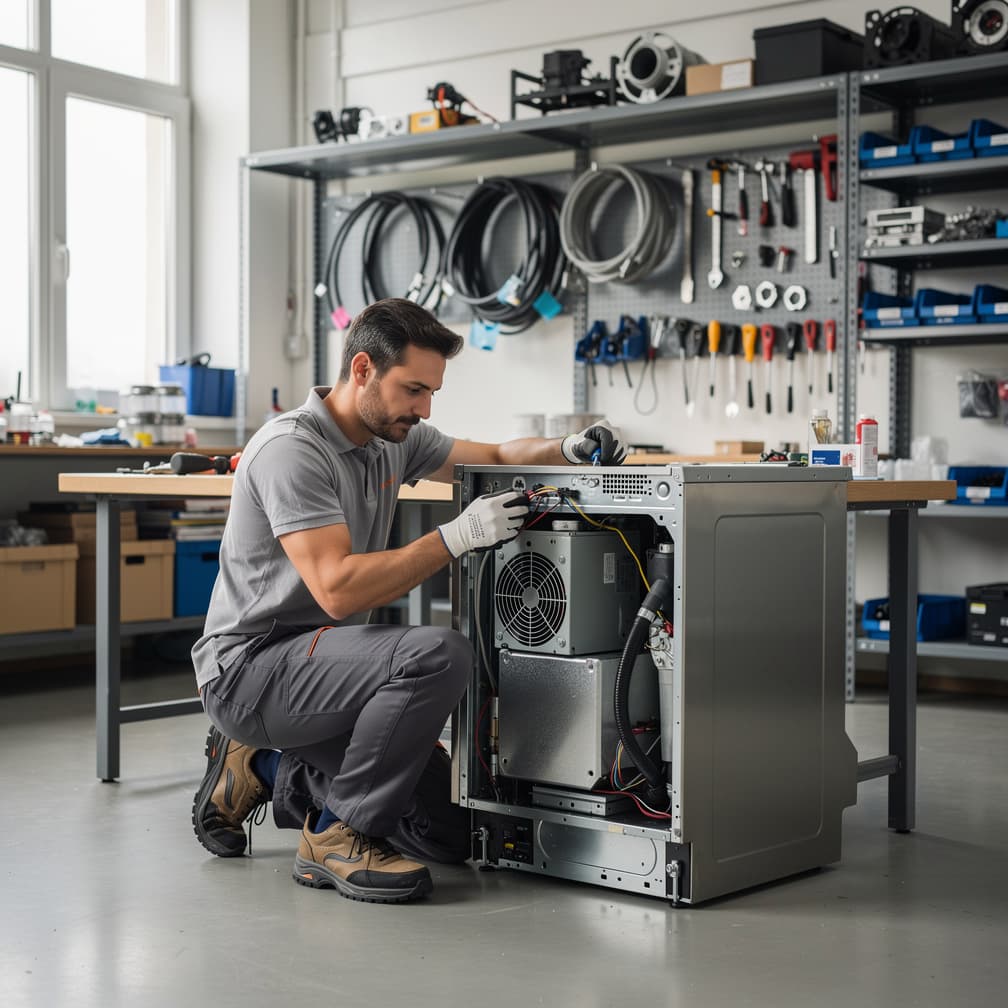

Rates do not fall to zero just because Norfolk city is quiet. A thin market means fewer technicians chasing the same calls, and it also means longer drives between them, which is exactly the exposure a vehicle rating cares about. Appliance repair insurance in Norfolk gets priced on miles, payroll, revenue, and the loss runs behind you, and the first of those does not shrink in a rural service area. Reputation carries jobs here, so a single unresolved damage complaint costs more than the repair bill ever would. A certificate is often the quickest way to end that argument early. Distance also thins the pool of adjusters and repair vendors who can look at a loss quickly. Everything below is aimed at what you should ask before you sign.
What Makes Norfolk Different
Rural accounts still ask for proof, and the ask often arrives from a school district, a clinic, or a chain's regional office. Thin markets are not informal ones; the institutional buyers are simply a larger share of what is available. Those buyers run the same vendor requirements they use in metro areas, with no exception for the only shop around. If you are the sole outfit in Norfolk that services a brand, the contract still gets written to a national template. Losing that account leaves nowhere obvious to replace the revenue. Distance also means an in-person fix to a paperwork problem is a half-day, so the document has to be right the first time. Keep a current copy where your technician can send it from a driveway. The Virginia Bureau of Insurance publishes consumer guidance on what proof of coverage should show.
Local Risk Factors in Norfolk
A closed building generates no service calls and no revenue, and the loan on the van does not pause for a coastal warning. A storm season compresses months of work into the weeks around it, which changes your payroll and your exposure at the same time. Temporary help hired for the surge shows up in a premium audit later. Accounts spread across Norfolk city also take longer to reach while routes are still blocked. Damage claims after a storm are harder to sort too: a customer whose appliance failed during an outage may blame the repair you did a month earlier. Professional Liability is the line aimed at that argument, and it is the one owners skip. Photograph your work and keep the ticket, because in Norfolk the documentation is what settles it.
What Coverage Does an Appliance Repair in Norfolk Need?
General Liability
Property managers, landlords, and warranty networks ask for this one by name before they let a technician through the door. It is generally the line for damage you cause at a customer's site and for injuries to people who do not work for you. Damage to the appliance you were working on is commonly excluded, which surprises owners.
Example: A hand truck clips a cabinet door while a washer comes out of a tight laundry closet, splitting the panel and the trim beside it. Repairs to that cabinetry might fall to the policy, subject to the deductible.
Commercial Auto
Every parts run, service call, and equipment haul is business use of a vehicle, and personal auto forms commonly exclude exactly that. This line is meant for the vans and trucks that carry your technicians, subject to who is listed as a driver. The meters and pullers inside are usually scheduled somewhere else.
Example: A van heading to a supplier for a compressor rear-ends a stopped car at a light. The other driver's repairs, the injury claim, and the damage to your van could all run through this policy, up to the limit.
Professional Liability
Sometimes nothing gets broken and the customer is still furious: the unit failed again a week later, and they say the diagnosis was wrong. That argument is about your work rather than about property, which is where General Liability usually stops and this line typically begins. Deliberate misconduct stays outside it.
Example: A customer says a misdiagnosed control board led to three visits and a freezer of spoiled food, then sends a demand letter naming the last technician. Defense costs for that dispute may be picked up here.
Tools & Equipment (Inland Marine)
Tools do not sit still in this trade. Diagnostic meters, vacuum pumps, specialty pullers, and part carriers ride between homes every day, and a building policy generally stops at the door while a vehicle policy generally stops at the tools. This line is written for property that travels, rated on a schedule you keep current. Wear and mechanical breakdown are usually outside it.
Example: A locked van in Norfolk is broken into overnight and the diagnostic gear inside walks, taking three days of scheduled calls with it. Replacement of the scheduled equipment can be within reach, depending on the list you filed.
How Much Does Appliance Repair Insurance Cost in Norfolk?
Appliance Repair Insurance is a bundle of separate policies, priced separately. The ranges below are typical figures for Norfolk for each line; a quote prices each one against your own operations.
| Coverage | Typical range | What moves your price |
|---|---|---|
| General Liability Insurance | $65 - $190 per month | Industry and risk classification, annual revenue, number of employees |
| Commercial Auto Insurance | $200 - $500 per month | Fleet size and vehicle types, driver records and experience, coverage limits and deductibles |
| Professional Liability Insurance | $55 - $160 per month | The services you actually perform, annual revenue or billed fees, limit and retention selected |
| Inland Marine Insurance | $30 - $100 per month | Total insured value of the scheduled property, type and age of the equipment, where it is stored and how far it travels |
Prices shown are general estimates, not guaranteed rates or quotes. Your actual premium will depend on the insurer, coverage selected, business details, location, claims history, and other underwriting factors. Learn about our pricing methodology.
What Are the Insurance Requirements for an Appliance Repair in Norfolk?
Workers' comp is generally required once you have 2 or more employees. Virginia generally requires employers to carry workers' compensation at that point. Common exemptions include sole proprietors, partners, and corporate officers. Confirm current thresholds with your state's workers' compensation agency before you hire.
State auto liability minimums apply to business vehicles. Virginia's minimum auto liability limits are $50,000/$100,000/$25,000 (bodily injury per person / per accident / property damage). Contracts and lenders often require more than the state floor.
Where to verify licensing and coverage rules. The Virginia Bureau of Insurance publishes consumer guidance and current insurance requirements for Virginia businesses. When a contract or lease demands specific wording, the Virginia Bureau of Insurance's guidance is the authoritative place to check.
Get Your Appliance Repair Quote in Norfolk
Compare rates from multiple carriers. Free quotes, no obligation.
Operating in Norfolk
- Proof of coverage gets requested the day before the work far more often than the week before, and a dispatcher in Norfolk can hold the job until it exists. A policy that lapsed quietly last month turns into a canceled visit and an account that starts looking around.
- Diagnostic meters, pullers, and vacuum pumps live in the van, which means they are exposed to theft, transit damage, and a hard stop every single working day. A vehicle policy generally answers for the van, not for what is strapped inside it.
- Water is the loss that pays for itself twice: the flooring, then the subfloor and the ceiling below. A supply line finished finger-tight during a rushed reassembly can flood a unit a week after you left.
- A homeowner in Norfolk may accept a discount on the next visit after a scratched floor. A management company opens a file, notifies its insurer, and expects a claim number from you.
How to Buy: Advice for Norfolk Owners
Before you renew anything, walk your own truck. Photograph the meters, pullers, vacuum pumps, and diagnostic gear, write down what each would cost to replace today, and total it. That total is what Inland Marine should be written to, and the number owners carry is usually the number from the year they bought the policy. Equipment inflates quietly. Then walk the jobs: how many are residential, how many commercial, how many are warranty network dispatches where somebody else set the terms. That mix is what General Liability underwriters are actually rating, and getting it wrong invites an audit adjustment you did not budget for. The Virginia Bureau of Insurance publishes consumer guidance on premium audits for small businesses. Give participating carriers in Virginia the real mix and the real equipment total, and take the quotes seriously only after that.
FAQ
Appliance Repair Insurance in Norfolk: FAQ
Homeowners rarely ask for a certificate, so plenty of residential shops go without and never feel it until they do. The exposure is the same either way: water on a floor, a hand truck through drywall, a slip on a puddle. The difference is that a homeowner may accept an apology while a management company files a claim. Residential work is also how most shops end up in front of a warranty network that does require proof.
Payroll, annual revenue, a vehicle list with drivers, an equipment schedule with current values, your entity name exactly as registered in Virginia, and five years of loss runs. Guessing on payroll or receipts produces a number that changes at audit. The equipment list is the one owners skip, and it is also the one that decides whether a stolen-tools claim actually helps. Assemble the page once and send the identical version to every carrier you compare.
Per-occurrence is what one event can draw. Aggregate is what the whole policy year can draw. One flooded kitchen can use most of a per-occurrence limit; three moderate claims in a busy year can use the aggregate and leave the fourth on you. Ask whether defense costs sit inside the limit or outside it, because inside-the-limit defense makes the number smaller than it looks on a certificate.
Flood sits outside a standard property form, and that is true almost everywhere. Coverage for rising water is written and priced separately, commonly through the federal program or a surplus market policy. Water that comes from a supply line you reassembled is a different question with a different answer. Ask participating carriers in Virginia which of your forms treats which kind of water, because owners routinely assume one document handles both.
It proves a policy existed on the day the certificate printed. It does not prove scope, it does not prove the endorsement your contract asked for, and it does not survive a cancellation. A property manager in Norfolk can reject a certificate for a legal entity name that differs by one word. Keep renewal dates somewhere you can reach from a driveway, because a lapse shows up as a scheduling problem first.
That depends entirely on the carrier, and it is worth asking before you buy rather than after. Nobody controls a carrier's turnaround, so treat responsiveness as part of the comparison and not an afterthought. Keep your entity name, your policy numbers, and your renewal dates in one place your dispatcher can reach. An account lost over a document nobody could produce is the most avoidable loss in this trade.
Sources
- 1.Virginia Bureau of Insurance(Virginia Bureau of Insurance publishes consumer guidance for insurance buyers.)


