







































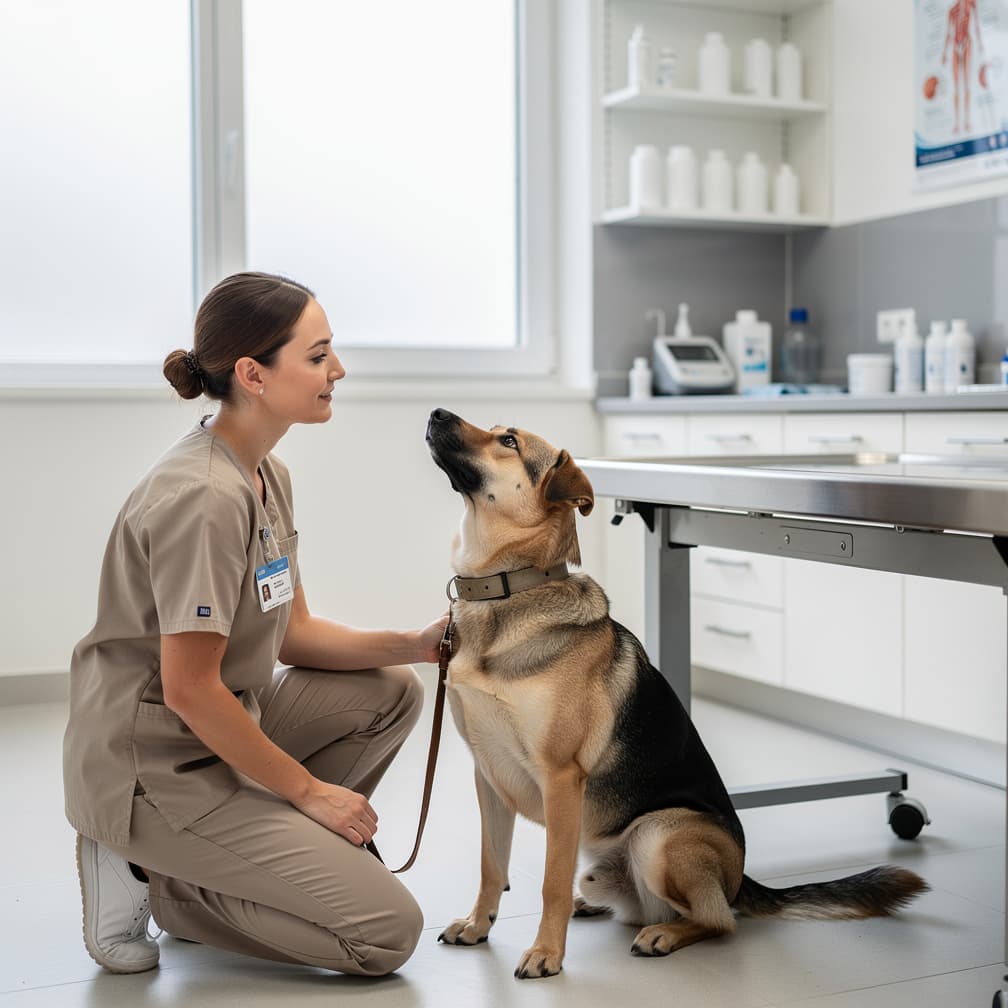

Behavior advice is the part of this job that creates a claim months after the session ends. You give handling instructions, an owner follows them loosely, the dog bites a guest, and the complaint says your guidance fell below standard. Dog trainer insurance in Suffolk has to reach that allegation and not only the accidents that happen while you are standing there holding a leash. Defense costs begin the day the letter arrives, whether or not anyone ever proves you got it wrong. It is easy to price a policy against the bite you can picture and forget the argument you cannot. This page separates those two exposures, then walks through what a quote in Virginia actually requires you to hand over.
What Makes Suffolk Different
Rural sessions run outdoors more of the time, which ties your schedule to the sky more tightly. A washed-out field costs the hour, the drive out from Suffolk, and a rescheduling call to every client. Ground conditions change the risk itself, because a client slipping on wet grass becomes a liability claim. General Liability is the line that may respond to that slip, subject to the policy's own terms. Whether you were negligent is the argument, and defense costs run while that argument is happening. Cancelling a session over footing is cheaper than defending the fall you could have prevented. Write a weather rule into your client agreement so calling it off is never a negotiation. When your clients are spread across Suffolk city, making that call early saves everyone the wasted drive.
Local Risk Factors in Suffolk
Hurricane conditions shut outdoor sessions down across Suffolk for days, and the hall you moved indoors to may lose power along with everything else. Wind through a roof soaks mats, crates, and agility gear stored in a space you do not own. Commercial Property can help cover wind-driven damage to equipment you scheduled, subject to deductibles that often run higher for named storms than for ordinary losses. That deductible is the detail trainers discover late. Storm surge is a different question entirely and typically sits outside the same form. Ask a carrier in Virginia how the policy separates wind from water before the season that tests the answer.
What Coverage Does a Dog Trainer in Suffolk Need?
General Liability
Landlords, pet retail floors, and parks departments ask for this one by name before they let you set up. It is the line that might respond when a dog you were handling bites a client or a passer-by, or when that dog wrecks property you do not own. Injury to you sits outside it, and so do intentional acts.
Example: A leash goes slack during a group class in Suffolk and a passer-by is bitten on the forearm. The medical bills and the defense of the resulting claim could fall to this line.
Professional Liability
A liability form is built for what happened while you were standing there, and it generally stops short of what your advice caused after you left. This is the line for that gap: allegations that a behavior plan, a handling instruction, or a training method fell below a reasonable standard. It matters most if you sell written plans.
Example: Six weeks after you write a desensitization plan, the dog bites a houseguest and the owner's attorney calls your instructions negligent. Defending that allegation is what this coverage is meant to fund.
Commercial Property
Crates, long lines, agility jumps, a decoy suit, and the mats in a rented room are the pile this line is built around. It can help cover them after fire, theft, vandalism, or storm damage, subject to the schedule and the deductible you chose. Standard forms typically exclude flood, and gradual wear is generally treated as your own cost.
Example: A vehicle window goes in overnight and a bag of long lines, clickers, and a training collar set disappears from the back seat. Replacing that kit may sit within this coverage, subject to your deductible.
How Much Does Dog Trainer Insurance Cost in Suffolk?
Dog Trainer Insurance is a bundle of separate policies, priced separately. The ranges below are typical figures for Suffolk for each line; a quote prices each one against your own operations.
| Coverage | Typical range | What moves your price |
|---|---|---|
| General Liability Insurance | $45 - $150 per month | Industry and risk classification, annual revenue, number of employees |
| Professional Liability Insurance | $35 - $110 per month | The services you actually perform, annual revenue or billed fees, limit and retention selected |
| Commercial Property Insurance | $40 - $140 per month | Building value and construction type, roof age and condition, fire protection class |
Prices shown are general estimates, not guaranteed rates or quotes. Your actual premium will depend on the insurer, coverage selected, business details, location, claims history, and other underwriting factors. Learn about our pricing methodology.
What Are the Insurance Requirements for a Dog Trainer in Suffolk?
Workers' comp is generally required once you have 2 or more employees. Virginia generally requires employers to carry workers' compensation at that point. Common exemptions include sole proprietors, partners, and corporate officers. Confirm current thresholds with your state's workers' compensation agency before you hire.
Flood damage is typically excluded from standard policies. Standard commercial property and builders-risk-type policies typically exclude flood. Given Suffolk's coastal flood exposure, a separate flood policy is worth pricing; FEMA's National Flood Insurance Program is the usual starting point.
Where to verify licensing and coverage rules. The Virginia Bureau of Insurance publishes consumer guidance and current insurance requirements for Virginia businesses. When a contract or lease demands specific wording, the Virginia Bureau of Insurance's guidance is the authoritative place to check.
Get Your Dog Trainer Quote in Suffolk
Compare rates from multiple carriers. Free quotes, no obligation.
Operating in Suffolk
- If a veterinarian or a groomer in Suffolk sends you clients, their own carrier can push them to stop referring work to a contractor who cannot produce current coverage.
- A lapsed policy leaves a valid-looking certificate sitting in a venue's file, and nobody discovers the gap until someone gets hurt at a class you should not have been running.
- Working across Suffolk city means gear stored in one place, taught with in another, and left in a vehicle overnight between the two. Policy forms treat each of those three situations differently.
- An assistant holding a second leash changes your application, because a second handler is a second set of decisions the carrier is now being asked to rate.
How to Buy: Advice for Suffolk Owners
Ask every venue for its insurance requirement in writing before you agree to anything else. The clause tells you the limit, the additional insured wording, and how much notice they want before cancellation. Those three details decide what you buy far more than any general advice about the trade does. Collect the clauses from every space you use in Suffolk, then buy one policy that satisfies the toughest of them. General Liability is the line those requirements name; Commercial Property is your own concern rather than theirs, so nobody will ever prompt you about the gear. The Virginia Bureau of Insurance publishes consumer guidance on additional insured endorsements and what they extend. With the clauses in hand you can compare quotes from participating carriers on identical terms instead of guessing at what each one includes.
FAQ
Dog Trainer Insurance in Suffolk: FAQ
Third-party bodily injury from a dog you were handling is the core reason General Liability exists for this trade. If a client, a bystander, or a houseguest is bitten during a lesson, that line may respond to medical costs and to the defense of a claim, subject to the policy's terms and limits. Intentional acts sit outside it. So does injury to you, since a liability form is built for other people rather than for the named insured.
Yes, and the request is routine. Additional insured status is an endorsement, and a certificate does not create it on its own. The endorsement extends some protection under your policy to the venue for claims arising out of your operations there. If a hall in Suffolk sends you a clause, forward the exact wording to the carrier rather than paraphrasing it, because endorsement forms differ and a facility's attorney can reject a generic one.
Two different numbers govern that. One caps what a single bite incident can draw. The other caps what the entire policy term can draw across every claim added together. A group class incident might land well under the first number and still matter, because a second dog and a second injured client months later draw down whatever remains of the second. By a third incident, a limit that looked generous on the binder can be very thin.
Property damage to something you do not own is one of the routine losses in this trade, and General Liability generally reaches it. A dog you were handling gouges a hallway floor or takes out a screen door, and the homeowner sends you the repair bill. The deductible you chose decides whether the policy gets involved at all, since plenty of these repairs land under it. Damage to your own gear is a separate line entirely.
A client who slips on wet grass while watching a recall drill is a third-party injury claim, and General Liability might respond depending on the circumstances and on the policy terms. Whether you were negligent is the argument, and defense costs run while that argument plays out. A signed waiver helps document what the client was told, though it does not end the claim. Ask a carrier in Virginia how the form treats outdoor sessions.
Possibly not, and it depends on what you actually sell. Professional Liability is built for allegations about advice, instruction, or judgment: someone follows your handling plan, it does not work, and the dog bites a guest weeks later. A trainer running only group manners classes carries a smaller version of that exposure than someone writing behavior modification plans. Look at what you put in writing for clients, because written plans are what get quoted back at you.
Sources
- 1.Virginia Bureau of Insurance(Virginia Bureau of Insurance publishes consumer guidance for insurance buyers.)
- 2.FEMA / FloodSmart(Flood coverage is typically purchased separately; FEMA administers the National Flood Insurance Program.)


