







































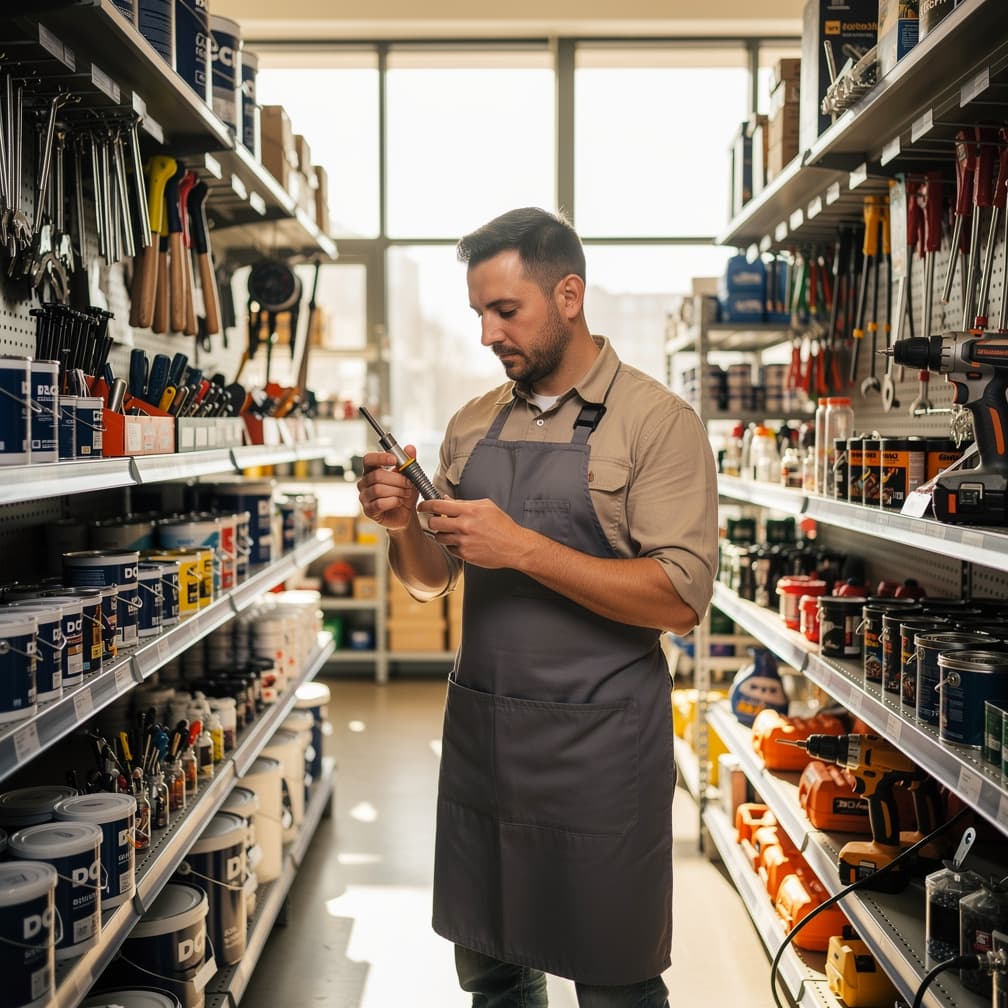

A boxed miter saw slides off a top shelf while a customer reaches for the one below it. That is a bodily injury claim with your name on it, and it is why hardware store insurance in Bellevue gets bought before the doors ever open. Aisles, entry mats, and the loading area produce most of the incidents that turn into demand letters. A single fall at checkout can outlive the sale that caused it by two years. Your limits, your deductible, and your claims history decide what that fight costs you. Paint, propane, and a packed stockroom sit behind the counter waiting for a bad wire. The rest of this page walks through what a store in Bellevue should ask a carrier about before signing anything.
What Makes Bellevue Different
King County has about 70,500 business establishments, which sets how many claim files land in one adjuster queue after a regional storm. Yours is one of thousands, and the store that documented its inventory well tends to move through first. A dense market carries a dense supply chain, so the drywall and shelving you need may already be committed elsewhere. That is a timing problem, and timing is what a business income limit is actually about. A metro floor plate is expensive to rebuild, and construction costs there run ahead of a limit set years ago. Underinsuring the rebuild is the quiet mistake, because it only surfaces on the day you file. Ask what each policy assumes about reconstruction cost and how often that assumption gets refreshed. In a market this size the difference between quotes is usually the assumptions, rarely the price.
Local Risk Factors in Bellevue
A wildfire week fills your store with people buying masks, hose, and pumps, right up until the road closes. Then the customers and the staff disappear on the same afternoon and the stock just sits. Product on the floor keeps absorbing smoke long after the air clears, and unsellable inventory is a loss documented item by item. Photograph and count now, because after an evacuation nobody takes your word for what was on the racks. A store in King County should also ask what deductible applies to a fire loss, and whether it differs from the everyday number in a Washington policy.
What Coverage Does a Hardware Store in Bellevue Need?
General Liability
A customer goes down on a wet entry mat, or a boxed tool comes off a high rack onto a shoulder. General Liability is the line retail landlords and suppliers ask you to carry, and it may take in the injury, the damage you did to somebody else's property, and the defense that follows. Injuries to your own staff and damage to your own building typically sit elsewhere.
Example: A shopper reaches for a gallon of primer, knocks a second one off the shelf, and cuts a hand open on the rim. The medical bills and any claim behind them could fall to this line, subject to the limit you bought.
Commercial Property
Your landlord wants the building looked after and your lender wants the inventory behind the loan accounted for. Commercial Property is built around both, and it may respond to fire, smoke, wind, and the racking and stock inside. Flood and gradual wear are typically outside it, and goods kept outdoors often fall under a smaller sublimit.
Example: A stockroom fire from an overloaded outlet takes the paint stock, the shelving, and the roof above them. Rebuilding and restocking a Bellevue store may be handled here, though the limit you chose sets the ceiling.
Commercial Crime
Theft by the people you trust sits outside a standard property form, and that gap is what Commercial Crime is meant to fill. Employee dishonesty, a forged check on a contractor account, counterfeit currency at the register, and money that never reaches the bank all belong to this family. These claims get proved from records, so your reconciliations matter as much as the limit.
Example: A long-serving cashier voids sales and pockets the difference, a little at a time, across eleven months. Once the ledger shows the pattern, the loss might be recoverable here, depending on the wording and the proof you kept.
Workers Compensation
Ladders, pallet jacks, and eighty pound bags are the daily reality of a floor that sells building material. Workers Compensation is rated on payroll by job duty, and it generally handles medical care and lost wages for staff hurt at work. Whether it is compulsory turns on headcount and on your state, so confirm the details with the Washington Office of the Insurance Commissioner.
Example: A stocker pulling a case of tile off the top rack twists, misses the step, and lands badly on the concrete. Care and time away from the floor generally land in this line, and payroll is what the premium was rated on.
How Much Does Hardware Store Insurance Cost in Bellevue?
Hardware Store Insurance is a bundle of separate policies, priced separately. The ranges below are typical figures for Bellevue for each line, except workers compensation, which is set by the state fund; a quote prices each one against your own operations.
| Coverage | Typical range | What moves your price |
|---|---|---|
| General Liability Insurance | $75 - $240 per month | Industry and risk classification, annual revenue, number of employees |
| Commercial Property Insurance | $180 - $550 per month | Building value and construction type, roof age and condition, fire protection class |
| Commercial Crime Insurance | $15 - $75 per month | Employees who handle money or inventory, internal controls and separation of duties, funds and securities on hand |
| Workers Compensation Insurance | Set by the state fund | Employee classification codes, total annual payroll, experience modification rate |
Prices shown are general estimates, not guaranteed rates or quotes. Your actual premium will depend on the insurer, coverage selected, business details, location, claims history, and other underwriting factors. Learn about our pricing methodology.
What Are the Insurance Requirements for a Hardware Store in Bellevue?
Workers' comp is generally required once you have your first employee, through the state fund. Washington runs workers' compensation through a state fund: employers buy coverage from the Washington State Department of Labor & Industries (L&I), not from private carriers. Common exemptions include sole proprietors and partners. Confirm current requirements directly with the fund before you hire.
Flood damage is typically excluded from standard policies. Standard commercial property and builders-risk-type policies typically exclude flood damage. Flood exposure varies address by address, so check your premises in FEMA's Flood Map Service Center before deciding; if you sit in a mapped flood zone, a separate policy through the National Flood Insurance Program is the usual starting point.
Where to verify licensing and coverage rules. The Washington Office of the Insurance Commissioner publishes consumer guidance and current insurance requirements for Washington businesses. When a contract or lease demands specific wording, the Washington Office of the Insurance Commissioner's guidance is the authoritative place to check.
Get Your Hardware Store Quote in Bellevue
Compare rates from multiple carriers. Free quotes, no obligation.
Operating in Bellevue
- Back door deliveries land while the floor is busy, and a driver, a pallet jack, and a customer can share one doorway at a Bellevue store. An injury there pulls in your staff, somebody else's driver, and two insurers arguing about whose ground it was.
- Key cutting looks like a courtesy and reads like a service. A key that opens the wrong door, or one cut for somebody who should not have it, becomes a complaint about your judgment rather than a return.
- Paint tinting puts an employee, a shaker, and an open can within a few feet of each other every hour you trade. A spilled quart on the aisle floor is the classic setup for the fall a Bellevue customer files over.
- Rental equipment comes back damaged, late, or with a story, and occasionally it comes back with an injury attached. Ask any quote how a rented auger that hurts the person renting it gets treated before you build a program around it.
How to Buy: Advice for Bellevue Owners
Value your stock before anyone else has to, because a property limit built on a guess fails on the day you file. Walk the stockroom, price the racking, count the seasonal peak, and write the number down with a date beside it. Coinsurance clauses cut a payout when the declared value sits under the real one, and nobody raises that at renewal. Commercial Property quotes look alike until you ask whether stock is valued at what you paid or what it costs to reorder. Ask what documentation a total loss requires, and start keeping it now rather than afterward. The Washington Office of the Insurance Commissioner publishes consumer guidance on property coverage basics, which is a useful primer. Workers Compensation and the rest of the file can wait until this number is honest for your Bellevue store. Bring a real value to participating carriers and the quotes get real too.
FAQ
Hardware Store Insurance in Bellevue: FAQ
The lease sets a floor, never a target. A limit that satisfies a Bellevue landlord can still fall short of what a serious injury costs, since that clause was written to protect the building owner rather than your business. Buy to the highest limit anyone has asked for, then ask what the next layer up would cost. The gap between those two numbers is usually smaller than owners expect.
Seasonal staff generally count the same as anyone else on payroll, and the year-end audit finds them either way. The real risk is silence, because a store that leaves them off the estimate gets a bill instead of a refund. Duties matter more than titles, so a temporary hire moving pallets is not rated like a cashier. Get the estimate right at quoting and the audit stops being a surprise.
You can collect numbers, though they are estimates, and estimates move once a carrier sees the history. A quote without loss runs is a placeholder that gets repriced at the worst moment, which is after you decided. Pull the runs from your current carrier and send the same file everywhere. CPK helps you compare quotes from participating carriers in Washington, and the quality of what comes back depends on the file you sent.
Property left in the open or under a canopy often sits under a sublimit, and that sublimit is far smaller than the main limit. Lumber, bagged goods, and racked stock outside the walls of a Bellevue store are the usual examples. Read the sublimit page before you read the premium. If the number does not match what genuinely sits out there overnight, ask what raising it would cost.
Retail leases routinely carry an insurance clause, and a landlord can hold the keys until a certificate and the right endorsement are on file. The clause usually names a limit and asks to be added as an additional insured. Read it before you shop, because it is the specification your policy has to satisfy for a Bellevue storefront. Buying to a guess and correcting later costs more than reading one page.
A wet entry mat, a spilled quart of sealer, or a pallet parked mid-aisle is how these begin. General Liability is the line typically tested by a customer injury on your floor, and it may take in medical costs, a settlement, and the lawyer you never wanted to hire. Defense costs can sit inside your limit or outside it depending on the form, so ask which. That one detail changes what your limit is really worth.
Sources
- 1.U.S. Census Bureau, County Business Patterns (2022), King County(King County has about 70,500 business establishments.)
- 2.Washington Office of the Insurance Commissioner(Washington Office of the Insurance Commissioner publishes consumer guidance for insurance buyers.)
- 3.FEMA / FloodSmart(Flood coverage is typically purchased separately; FEMA administers the National Flood Insurance Program.)


