







































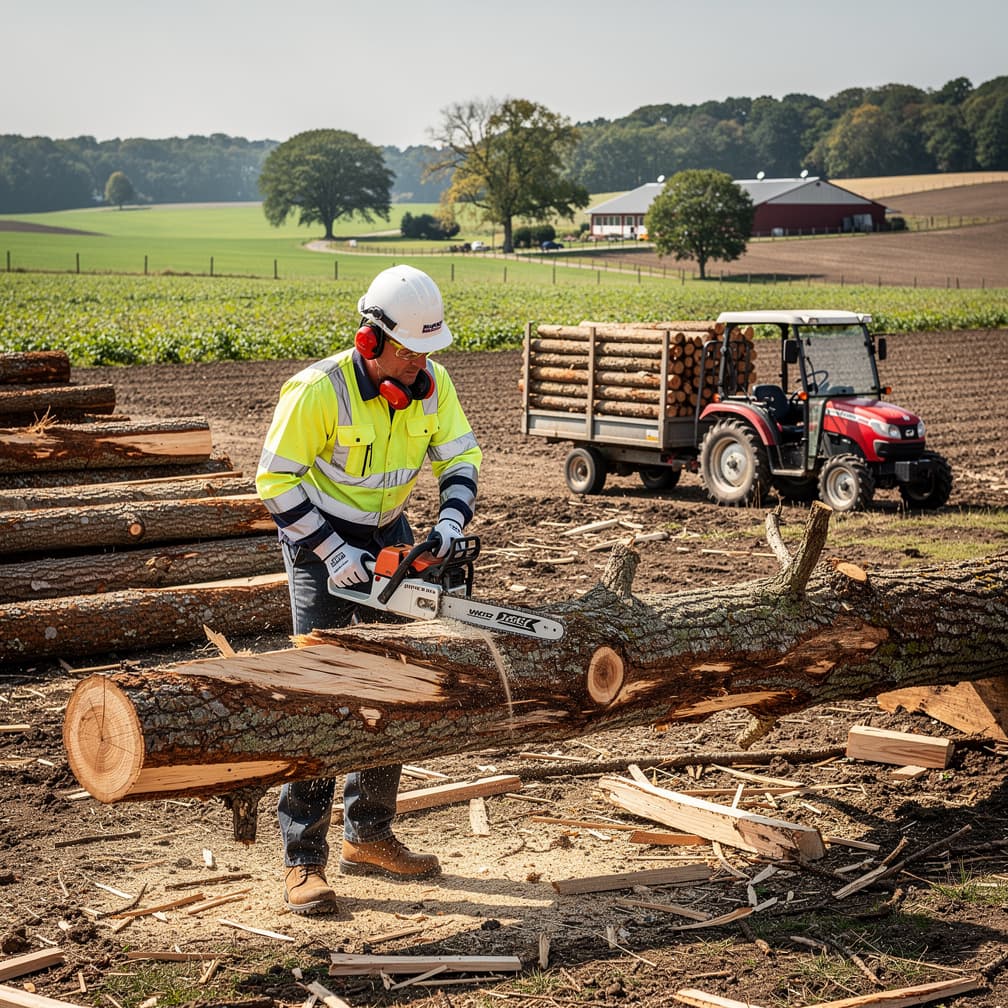

Premiums start with payroll, not with the price of your saws. Underwriters rate cutting and hauling by what you pay people to do, which is why adding one climber or one truck driver can move a renewal more than a new machine does. Dense counties add contract pressure on top of that: with about 70,500 businesses in King County, the outfits hiring timber work are the same outfits handing you limit requirements and additional-insured wording before a saw starts. Timber and logging insurance in Bellevue ends up priced by your payroll and shaped by their contracts. Those two forces do not always point the same direction, and the gap between them is where owners get surprised. Know both before you ask anyone for a number.
What Makes Bellevue Different
Clearing work for a utility or a public project comes with a procurement desk attached. Those buyers do not accept a certificate that names your business slightly wrong, and they will not chase you for a fix. The entity hiring you may run a vendor portal, a compliance clerk, and a checklist you never see. The requirement is the requirement, and matching it exactly is your job rather than theirs. Legal name, project number, additional insured wording, limits: every field has to line up with the contract in front of them. A mismatch can push a start date without anyone calling it a dispute. Ask for the insurance exhibit before you bid a Bellevue project, since limits you do not carry are a cost you have not priced. Participating carriers in Washington quote that exhibit differently, which is exactly why it belongs in the submission.
Local Risk Factors in Bellevue
A burn ban can cost a logging outfit a month of cutting without a single acre burning. When the woods around Bellevue dry out, land managers and agencies in Washington pull the plug on high-risk work, and a crew idled by restriction earns nothing while the payroll clock keeps its own time. That lost season is a business loss, not an insured one, which is the part owners find hardest to accept. The fire that does start is a different story: equipment caught at a landing may fall to an Inland Marine form, while the downtime around it does not. Diversifying into lower-risk work during fire season beats waiting for a form to solve a problem it was never built to solve. Watch the restriction calendar as closely as the weather.
What Coverage Does a Timber & Logging in Bellevue Need?
General Liability
Tract owners and timber buyers ask for this line by name, because it stands behind the damage your work does to other people and their property: a felled tree through a fence, a bystander struck, a crushed culvert. General Liability may respond to those third-party claims and the legal defense that follows. It typically will not answer for injuries to your own crew or damage to property in your care.
Example: A hinge cut goes wrong and a poplar drops across the neighbor's board fence instead of into the lay. The repair bill and an angry letter arrive together, and this line may pick up the third-party damage.
Workers Compensation
A chainsaw bite, a rolling stem, a fall on a steep landing: crew injuries are constant in felling and bucking, and this is the line built for them. Workers Compensation can help cover medical care and lost wages for an employee hurt on the job, regardless of fault. Owner and family-member rules vary by state, so who must be covered is worth confirming rather than assuming.
Example: A cutter's saw kicks back on a limbing pass and opens a deep gash that needs stitches and a week off. Workers Compensation may handle the medical bills and part of the wages he loses while healing.
Commercial Auto
Personal auto policies generally exclude a pickup once it is pulling a saw trailer to a tract, which is where this line comes in. Commercial Auto is meant for the trucks, trailers, and crew rigs that move between yard, landing, and mill. It might respond to a collision your driver causes on a haul road, though wear on the vehicle and the machine riding on the trailer usually belong to other forms.
Example: A loaded log truck comes over a rise to find traffic stopped and cannot haul down in time. The damage to the other vehicles from that rear-end collision is generally where Commercial Auto steps in.
Tools & Equipment (Inland Marine)
Saws, skidders, loaders, and a trailer of rigging spend their lives moving over rough ground and long roads, far from any fixed address a property policy assumes. Inland Marine is the line written around that mobile equipment, and it might respond when a machine is damaged, stolen, or lost in transit. Flood and simple mechanical breakdown typically sit outside it, so those are worth asking about directly.
Example: A skidder catches fire at a remote landing outside Bellevue and is a total loss before anyone can reach it with an extinguisher. Written on the schedule, that machine may be covered under this equipment line.
Commercial Umbrella
When a clearing contract or a utility agreement demands a limit higher than your primary lines carry, this is usually the least expensive way to reach it. Commercial Umbrella sits above your underlying liability and auto limits and can extend them after a large claim exhausts what sits beneath. It does not lower those underlying limits, which have to qualify first, and it follows the same exclusions they do.
Example: A groundman is badly hurt when a rolling stem catches him, and the injury award climbs past the limit on the primary liability policy. The umbrella layer is designed to absorb the excess above it.
How Much Does Timber & Logging Insurance Cost in Bellevue?
Timber & Logging Insurance is a bundle of separate policies, priced separately. The ranges below are typical figures for Bellevue for each line, except workers compensation, which is set by the state fund; a quote prices each one against your own operations.
| Coverage | Typical range | What moves your price |
|---|---|---|
| General Liability Insurance | $420 - $1,600 per month | Industry and risk classification, annual revenue, number of employees |
| Workers Compensation Insurance | Set by the state fund | Employee classification codes, total annual payroll, experience modification rate |
| Commercial Auto Insurance | $900 - $3,200 per month | Fleet size and vehicle types, driver records and experience, coverage limits and deductibles |
| Inland Marine Insurance | $200 - $1,000 per month | Total insured value of the scheduled property, type and age of the equipment, where it is stored and how far it travels |
| Commercial Umbrella Insurance | $230 - $1,075 per month | Umbrella limit requested, limits carried on the underlying policies, loss history on those underlying policies |
Prices shown are general estimates, not guaranteed rates or quotes. Your actual premium will depend on the insurer, coverage selected, business details, location, claims history, and other underwriting factors. Learn about our pricing methodology.
What Are the Insurance Requirements for a Timber & Logging in Bellevue?
Workers' comp is generally required once you have your first employee, through the state fund. Washington runs workers' compensation through a state fund: employers buy coverage from the Washington State Department of Labor & Industries (L&I), not from private carriers. Common exemptions include sole proprietors and partners. Confirm current requirements directly with the fund before you hire.
State auto liability minimums apply to business vehicles. Washington's minimum auto liability limits are $25,000/$50,000/$10,000 (bodily injury per person / per accident / property damage). Contracts and lenders often require more than the state floor.
Where to verify licensing and coverage rules. The Washington Office of the Insurance Commissioner publishes consumer guidance and current insurance requirements for Washington businesses. When a contract or lease demands specific wording, the Washington Office of the Insurance Commissioner's guidance is the authoritative place to check.
Get Your Timber & Logging Quote in Bellevue
Compare rates from multiple carriers. Free quotes, no obligation.
Operating in Bellevue
- A tract owner near Bellevue can keep the gate shut until a certificate naming them properly lands in an inbox, and a crew standing at that gate is being paid to stand there.
- Saw kits, chains, and wedges ride in a truck bed overnight because nobody wants to load them twice. That habit is why theft claims in this trade are small, frequent, and hard on a renewal.
- A fuel truck at a landing is a pollution question wearing a work uniform, and a ruptured tank on a Bellevue job can turn a routine cleanup into the largest number of your year.
- Neighbors and hunters walk onto active sites because those woods have always been open to them. A bystander inside the fall zone on a Bellevue tract is a liability claim waiting on one bad hinge, and posted signage is not a defense by itself.
How to Buy: Advice for Bellevue Owners
Look for the gap before you look at the price. Flood, wear and tear, mechanical breakdown, and damage from your own faulty work sit outside most forms, and none of that shifts because you paid more. On a logging job the honest gaps tend to be the days you lose, the wood degrading on a deck, and the machine that failed rather than got hit. Decide which of those you are keeping, and price that answer as a business decision instead of an oversight. General Liability and Inland Marine together can answer for a good share of what goes wrong on a tract, and the remainder is yours to carry. Participating carriers in Washington draw those boundaries differently, which is the whole reason to read forms rather than summaries. Comparing quotes through CPK gets much easier once you know which gaps you have chosen to live with in Bellevue.
FAQ
Timber & Logging Insurance in Bellevue: FAQ
A scale house wants a certificate on file naming the right entity, and the requirement lands on whoever owns the truck, which may be your hauler rather than you. Sort that out before wood moves, because a load turned around at a gate outside Bellevue is a day gone. Keep the paper current against the delivery schedule, not against a renewal date you half remember.
Insurance follows the work, so the policy has to describe where the work actually happens. Jobs that cross county or state lines belong on the application rather than in a claim conversation, since the description on file is what gets read after an incident. Tell the carrier the real footprint, including hauling for other outfits if you do it, because a narrow description can leave a wide gap.
Payroll split by duty, a driver list with motor vehicle records, an equipment schedule with values, your haul radius, five years of loss runs, and any written safety practice. A small class produces few submissions, so an underwriter pricing a Bellevue crew is reading yours closely rather than leaning on a big local book. A file that answers questions early tends to come back with fewer conditions attached.
It can, and the trade is plain enough: you keep more of the small losses and the rate may settle. That only works when a torn hydraulic line or a stolen saw kit is survivable out of pocket during a slow stretch, which is a cash question rather than an insurance one. Frequency also reads worse to underwriters than one severe loss, so absorbing the minor damage can protect the file itself.
Flood generally sits outside standard property and equipment forms, and it gets priced separately where it can be written at all. A machine parked in a low spot beside a creek is exactly the scene that finds this gap. Ask about flood directly, and ask how settlement would be figured, because assuming the answer is the expensive route to it.
That starts as a Commercial Auto claim, and if injuries run past the auto limit, a Commercial Umbrella can sit above it depending on how the program is built. Both get read closely, which is why the driver's record and the vehicle list matter long before a crash rather than after one. Report it the same day, because delay is what turns a payable claim into an argument.
Sources
- 1.U.S. Census Bureau, County Business Patterns (2022), King County(King County has about 70,500 business establishments.)
- 2.Washington Office of the Insurance Commissioner(Washington Office of the Insurance Commissioner publishes consumer guidance for insurance buyers.)


