







































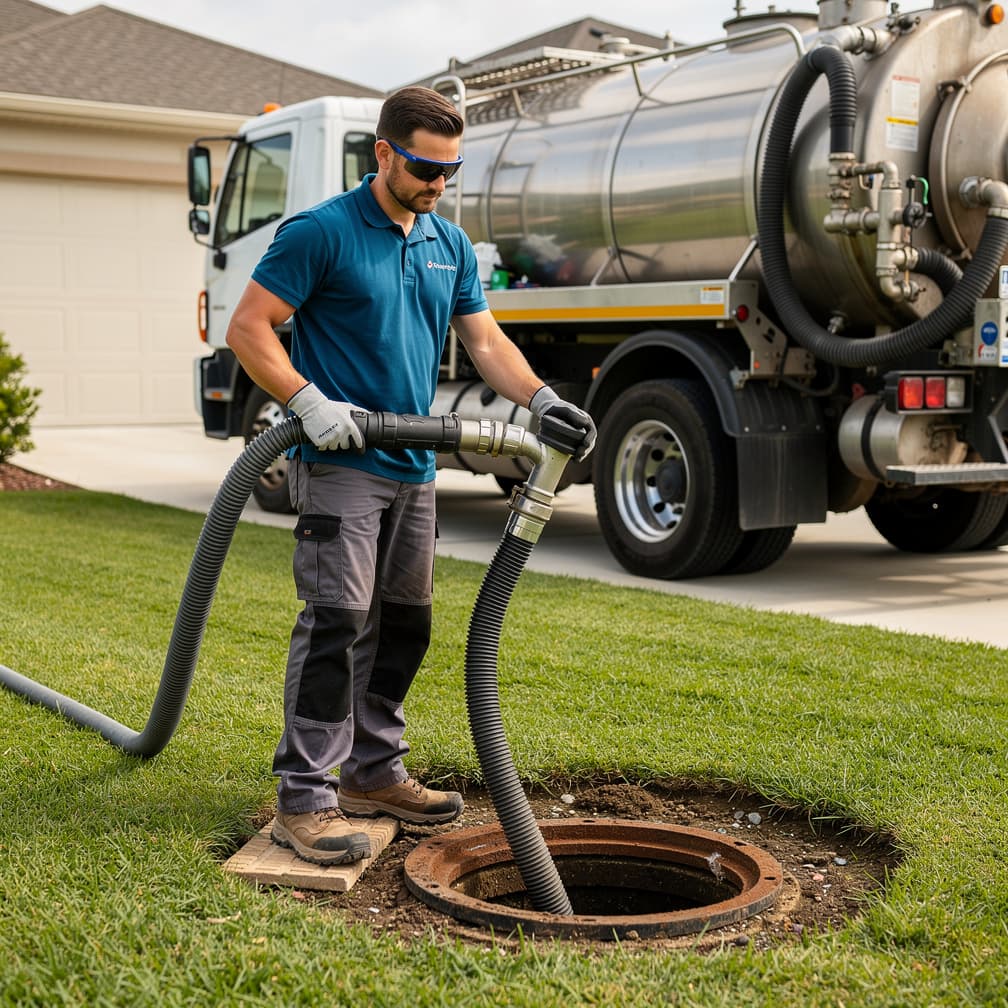

General Liability for a septic operation typically runs from $35 to $130 a month, and that spread is not random. Payroll, the number of trucks, claims history, and the limits your contracts demand all move you inside it. Septic service insurance in Kent gets priced off the work you actually do: how many pump-outs, how much digging, whether you install as well as service. An operation that only pumps prices differently from one that opens ground with a machine, because the ways a job goes wrong are different. Quotes that look identical on the summary page can sit far apart on exclusions and deductibles. Two carriers reading the same Kent submission can land in different corners of the same range. Read what changes the number before you read the number.
What Makes Kent Different
Denser markets pay more for the same truck, and the reason is exposure per mile rather than greed. Traffic, tight driveways, parked cars, and pedestrians all sit between you and a routine pump-out. Auto claim frequency rises with congestion, and vehicle premium is the biggest line in a septic budget. Labor costs more too, and payroll is the base a Workers Compensation rate gets applied to. Higher payroll at the same rate is simply a bigger bill, before anyone talks about experience. Commercial contracts in a dense market also demand higher limits, and limits are never free. None of that is negotiable, but which carrier prices it least brutally is worth finding. Get three real quotes in Washington before assuming the number in Kent is just what it costs.
Local Risk Factors in Kent
Ask where your equipment sits when it is not working, because that is the wildfire question in one sentence. A yard holding pumps, hoses, and a spare truck in an exposed area concentrates everything you own into a single address. Splitting the storage costs nothing and changes the worst-case number, which is a conversation worth having before a season in Kent gets going. Coverage for property away from your building is usually a different form from coverage on the building, and the seam between them is where a fire claim gets argued. General Liability has nothing to do with any of this, though owners often assume one policy is the whole program. Confirm which form names your equipment, and where, in Washington.
What Coverage Does a Septic Service in Kent Need?
General Liability
Commercial clients demand proof of it before a truck reaches the lot, and it is the line that generally answers when your work damages someone else's property or hurts someone who does not work for you. Cracked driveways, rutted lawns, a visitor going down over a hose: those are the claims. Employee injuries and damage to your own pumps sit elsewhere.
Example: A hose crosses the drive, a delivery driver catches a foot on it, and the emergency room bill arrives with a lawyer's letter; General Liability may take the claim and the defense costs from there.
Commercial Auto
A vacuum truck is not a car, and a personal auto policy generally will not treat it as one. This line is meant for the vehicles you work out of: liability to other drivers, collision, and comprehensive damage such as hail or theft. Waste in the tank and equipment on a trailer can be treated differently, so ask how each gets handled.
Example: A loaded truck rolls a stop sign on the way to a disposal site and clips a sedan; Commercial Auto is typically what stands behind the other driver's repairs and injuries.
Workers Compensation
Lifting lids, hauling hose, and working beside an open tank is how septic crews get hurt, and this is the line built for those injuries. Medical costs and lost wages for an employee typically run through it, rated per hundred dollars of payroll. Whether owners must be included varies by state, and the Washington Office of the Insurance Commissioner publishes the current requirements.
Example: A helper's back gives out lifting a concrete lid on a routine pump-out, and the treatment plus the weeks off work is what Workers Compensation is generally there to absorb.
Tools & Equipment (Inland Marine)
Property riding in a truck is rarely treated the way property in a building is, and that gap is what this line fills. Pumps, hoses, reels, jetters, cameras, and locators moving between your yard and a job can be scheduled here against theft and sudden damage. Wear, rust, and mechanical breakdown typically sit outside it.
Example: A truck gets broken into overnight and the locator and camera are gone by morning; Inland Marine can be what puts the replacements in your hands in Kent instead of on your credit card.
How Much Does Septic Service Insurance Cost in Kent?
Septic Service Insurance is a bundle of separate policies, priced separately. The ranges below are typical figures for Kent for each line, except workers compensation, which is set by the state fund; a quote prices each one against your own operations.
| Coverage | Typical range | What moves your price |
|---|---|---|
| General Liability Insurance | $180 - $600 per month | Industry and risk classification, annual revenue, number of employees |
| Commercial Auto Insurance | $675 - $1,825 per month | Fleet size and vehicle types, driver records and experience, coverage limits and deductibles |
| Workers Compensation Insurance | Set by the state fund | Employee classification codes, total annual payroll, experience modification rate |
| Inland Marine Insurance | $70 - $260 per month | Total insured value of the scheduled property, type and age of the equipment, where it is stored and how far it travels |
Prices shown are general estimates, not guaranteed rates or quotes. Your actual premium will depend on the insurer, coverage selected, business details, location, claims history, and other underwriting factors. Learn about our pricing methodology.
What Are the Insurance Requirements for a Septic Service in Kent?
Workers' comp is generally required once you have your first employee, through the state fund. Washington runs workers' compensation through a state fund: employers buy coverage from the Washington State Department of Labor & Industries (L&I), not from private carriers. Common exemptions include sole proprietors and partners. Confirm current requirements directly with the fund before you hire.
State auto liability minimums apply to business vehicles. Washington's minimum auto liability limits are $25,000/$50,000/$10,000 (bodily injury per person / per accident / property damage). Contracts and lenders often require more than the state floor.
Where to verify licensing and coverage rules. The Washington Office of the Insurance Commissioner publishes consumer guidance and current insurance requirements for Washington businesses. When a contract or lease demands specific wording, the Washington Office of the Insurance Commissioner's guidance is the authoritative place to check.
Get Your Septic Service Quote in Kent
Compare rates from multiple carriers. Free quotes, no obligation.
Operating in Kent
- One vacuum truck out of service cancels a week in Kent or anywhere else, not a day, because there is rarely a spare unit sitting idle nearby for you to borrow.
- Rural jobs across King County can put you an hour from a tow, so a truck sunk in a soft yard costs recovery, a lost day, and a lawn nobody wants to pay to rebuild.
- Owners who bid under a trade name while the policy names a different legal entity find the mismatch when a client's counsel reads the certificate, not when they buy the policy.
- A helper who drives to a supply house in a personal car creates a hired and non-owned exposure, and carriers in Washington treat that question differently from one another.
How to Buy: Advice for Kent Owners
Limits deserve more of your attention than premium does, and the two get shopped in the wrong order constantly. Per-occurrence is what one bad pump-out can draw; the aggregate is what a whole year of driveway repairs can drain. A septic operation with a busy access-damage record can burn a General Liability aggregate on small claims and have little left for the big one. Ask each carrier what the aggregate is and whether defense costs sit inside it or outside it, because that answer changes the real limit. Commercial Auto works differently, since each accident stands on its own rather than eating a shared pot. Deductibles are the mirror image: every dollar of retention is a dollar you fund yourself on a bad day. Check the Washington Office of the Insurance Commissioner's guidance before deciding where to set them. Then compare quotes from participating carriers in Washington at identical limits, which is the only comparison that means anything.
FAQ
Septic Service Insurance in Kent: FAQ
The work stops before anyone calls you about it. Vendor portals and compliance systems flag an expired certificate automatically, and an account manager in Kent does not have to be unhappy with you to lock you out of the schedule. Getting reinstated takes longer than renewing on time did. Set the reminder a month early and send the new certificate before anyone asks.
The whole approach: existing cracks, the apron, the lawn edge, sprinkler heads, and anything already broken. Access damage is the most common claim in this trade and the hardest to argue about later, because nobody remembers what a driveway looked like at eight in the morning. Two minutes of photos turns a dispute into a document. Carriers notice risk controls like that at renewal.
Requirements vary by state, and no page can tell you which threshold applies to your operation. What does not vary: if your truck cracks a driveway or your hose ruins a lawn, the homeowner looks to you rather than to their own policy. General Liability is the line operators usually carry for that, and many buy it before a single customer thinks to ask.
It proves a policy existed on the day the certificate was issued, and very little more. It is not a contract, it does not amend the policy, and it cannot grant wording the carrier has never endorsed. A client asking to be named as additional insured needs a real endorsement behind that line, so ask your carrier for the form number rather than trusting the certificate to carry it.
Commercial clients do: property managers, restaurant groups, campground operators, and general contractors, along with permit offices in many jurisdictions. Residential customers rarely ask at all. That is why a policy tends to get sized by the strictest account rather than the average one. If a facility in Kent wants you on site next week, the certificate request usually arrives before the scope of work does.
Payroll, vehicles, and claims history, roughly in that order of surprise. Workers Compensation prices per hundred dollars of payroll, so how your crew gets classified moves the bill. The vacuum truck is usually the largest single line item, because it is heavy, costly to repair, and on the road all day. Digging prices higher than pumping alone, since opening ground adds ways for a job to go wrong. Two outfits on the same street in Kent can land far apart for those reasons.
Sources
- 1.Washington Office of the Insurance Commissioner(Washington Office of the Insurance Commissioner publishes consumer guidance for insurance buyers.)


