







































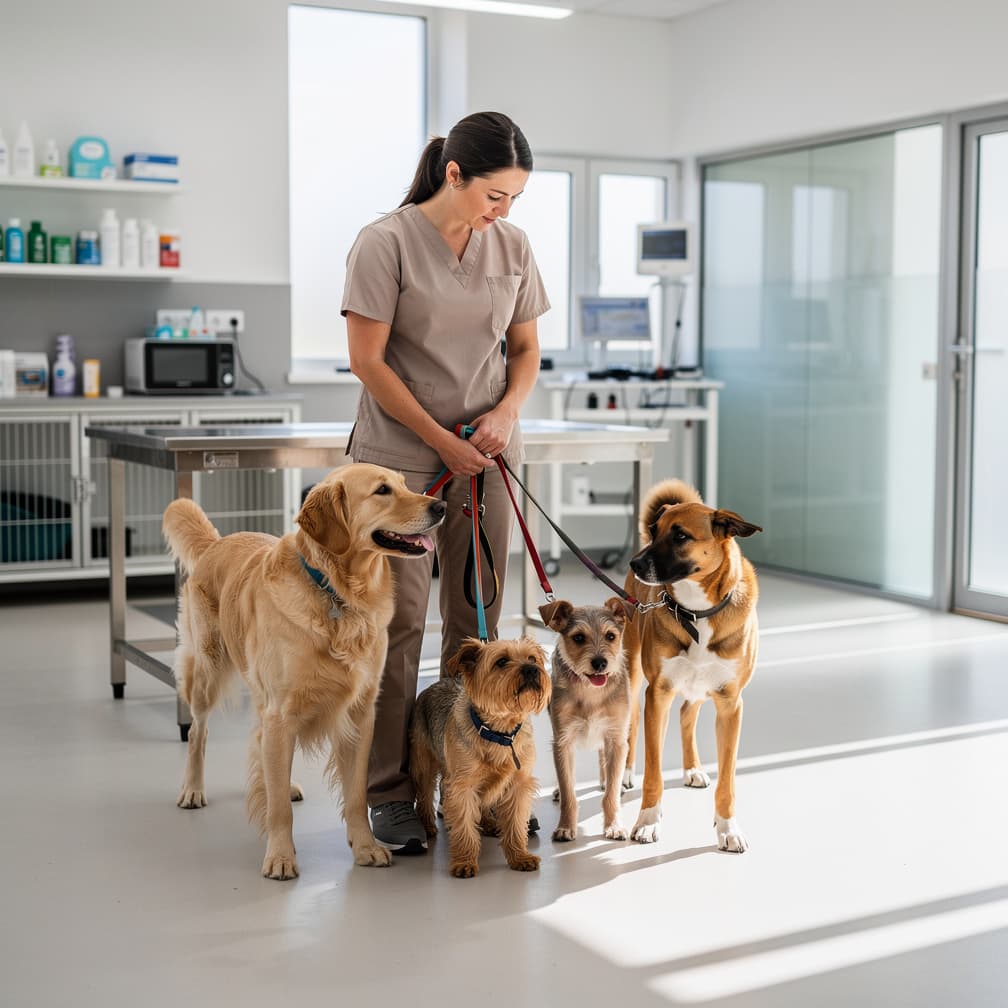

Nothing about a walking business is expensive until one afternoon is. Professional Liability sits in a published range starting from $45 a month, and it exists for the day a client says you ignored the written instructions and the dog paid for it. Dog walker insurance in Seattle is usually a bundle for that reason: the injury claim and the you-handled-it-wrong claim are different arguments with different price tags. What drives your number is client count, the limits named in your agreements, and whether you drive pets in your own vehicle. Ask any quote in Seattle to show the exclusions next to the price, because a policy that leaves out the animal in your care is no bargain on the day you need it.
What Makes Seattle Different
Limits named in a contract are not advice; they are a number you either meet or lose the job over. Building agreements and commercial clients pick a figure and stop negotiating around it. King County has about 70,500 businesses, and the ones with legal departments write vendor terms with no give in them. A client in Seattle can require a per-occurrence limit higher than anything a private owner would think to ask for. Meeting it is usually cheaper than the contract is worth, which is the whole calculation. Aggregate limits matter too, since several small claims in one year can quietly exhaust the annual ceiling. Read which number the contract names before assuming your current policy satisfies it. The certificate has to show it, so the policy has to have it first.
Local Risk Factors in Seattle
Wildfire smoke shuts down dog walking well before flames do, and the air in Seattle can stay unusable for weeks. Walking a flat-faced dog through heavy smoke is a decision a client can later call negligent, and the vet bill gives the allegation teeth. Professional Liability generally addresses that argument, subject to the policy's terms. Evacuation is the other version: clients leave, some with dogs and some asking you to get theirs out. Being the person who enters a home under an evacuation order is a set of legal and practical risks nobody drafted for you. Put the evacuation authority in the client agreement before smoke season starts in King County, because a text message is not an agreement.
What Coverage Does a Dog Walker in Seattle Need?
General Liability
A stranger bitten on a sidewalk is the claim this line exists for, along with the neighbor's wrecked fence and the client's scratched floor. Property managers and boarding facilities usually ask to see it before handing over a key. Defense costs commonly run alongside any settlement. The dog in your care is often treated as a separate question and may sit outside it.
Example: A leashed shepherd lunges at a jogger and a wrist gets broken; general liability may respond to the medical bills and the lawyer's letter that follows a month later.
Professional Liability
Allegations about judgment rather than accidents are the point here: a client says you ignored a medication note, took a reactive dog onto a crowded route, or handed the leash to someone else. Written care plans make the accusation specific. This line is generally intended for that argument, including defense costs, and it typically does nothing for physical damage you caused.
Example: A client insists their arthritic terrier was walked twice the agreed distance and now needs surgery in Seattle; professional liability could take on the negligence claim and the defense.
Commercial Auto
Driving between clients is business use, and a personal auto policy can deny a claim on that basis after the fact. This line is meant for the vehicle you work from, including the trip to an emergency vet with a client's dog in the back. Personal errands and the animal itself may be treated differently, so the terms matter.
Example: You rear-end a sedan on the way to a midday walk with two crates in the back; commercial auto might pick up the other driver's repairs and injury claim.
How Much Does Dog Walker Insurance Cost in Seattle?
Dog Walker Insurance is a bundle of separate policies, priced separately. The ranges below are typical figures for Seattle for each line; a quote prices each one against your own operations.
| Coverage | Typical range | What moves your price |
|---|---|---|
| General Liability Insurance | $50 - $180 per month | Industry and risk classification, annual revenue, number of employees |
| Professional Liability Insurance | $40 - $130 per month | The services you actually perform, annual revenue or billed fees, limit and retention selected |
| Commercial Auto Insurance | $200 - $525 per month | Fleet size and vehicle types, driver records and experience, coverage limits and deductibles |
Prices shown are general estimates, not guaranteed rates or quotes. Your actual premium will depend on the insurer, coverage selected, business details, location, claims history, and other underwriting factors. Learn about our pricing methodology.
What Are the Insurance Requirements for a Dog Walker in Seattle?
Workers' comp is generally required once you have your first employee, through the state fund. Washington runs workers' compensation through a state fund: employers buy coverage from the Washington State Department of Labor & Industries (L&I), not from private carriers. Common exemptions include sole proprietors and partners. Confirm current requirements directly with the fund before you hire.
State auto liability minimums apply to business vehicles. Washington's minimum auto liability limits are $25,000/$50,000/$10,000 (bodily injury per person / per accident / property damage). Contracts and lenders often require more than the state floor.
Where to verify licensing and coverage rules. The Washington Office of the Insurance Commissioner publishes consumer guidance and current insurance requirements for Washington businesses. When a contract or lease demands specific wording, the Washington Office of the Insurance Commissioner's guidance is the authoritative place to check.
Get Your Dog Walker Quote in Seattle
Compare rates from multiple carriers. Free quotes, no obligation.
Operating in Seattle
- A dog that pulls toward a bike, a child, or another dog is the same animal you were told is friendly, and the briefing you got is not a defense.
- Storm weeks cancel walks and cancel income, and liability coverage generally does nothing about lost bookings, so the cash plan for a bad stretch has to be your own.
- Neighbors whose fence or flower bed a dog wrecks are third parties with no contract and no patience, and a homeowner in Seattle can send you the bill regardless of how your client feels.
- About 220 dog walkers work in King County, and each claim still lands on the individual holding the leash, so market size changes your competition and not your exposure.
How to Buy: Advice for Seattle Owners
New clients are the moment to get this right. Before the meet-and-greet, have the certificate ready, the agreement drafted, and the limits already sized to what you expect to be asked. An owner in Seattle who sees the paperwork first stops asking about it, and the ones who never ask still deserve the same coverage behind the walk. General Liability is the line that answers when their dog hurts someone on your watch. Where a client hands over a written care plan, Professional Liability is the line pointed at disputes over how you followed it. The Washington Office of the Insurance Commissioner publishes consumer guidance on what proof of insurance should contain. Compare quotes from participating carriers before the season fills up, since the worst time to shop is the week a client is waiting on you.
FAQ
Dog Walker Insurance in Seattle: FAQ
Yes, and it is the least expensive risk control you have. A written scope naming the route, the instructions, the emergency vet permission, and the weather policy turns a later argument into a document. Your policy responds to what happened; the contract frames what everyone claims happened, and the gap between them is money out of your pocket. A client who never asks for proof is often the same one who disputes what was agreed, so write it down in Seattle the same as anywhere.
The injured person's claim generally lands on you, because you had the leash. Medical bills are only part of it; defense costs can run alongside them even when the allegation goes nowhere. General Liability is the line pointed at third-party bodily injury like that, subject to the policy's own exclusions and limits. Whether the owner is also pulled in depends on the state and on the facts, and it does not remove you from the claim.
Do not plan on it. The owner's policy exists for the owner, and a business providing a service is usually treated as a separate party with its own responsibility. Some homeowners forms address dog bites and some exclude certain situations entirely, and none of that is under your control. Your own coverage is the only part you can verify, price, and produce a certificate from.
The published ranges on this page are the starting point, though your number comes from your own inputs. Client count, walks per week, keys held, miles driven, limits demanded by contracts, and claims history all move it. Two walkers with the same schedule can price differently on history alone. No figure means much until a quote has seen those facts, which is why comparing quotes in Seattle on identical limits beats comparing headline prices.
Yes, and they do it constantly. A management company or a commercial client can name a per-occurrence limit, an annual aggregate, and additional insured wording as conditions of the job. Meeting the number is usually cheaper than losing the contract over it. Bring the exact language to any quote rather than a summary, since the endorsement either exists on the policy or it does not.
It extends certain protections of your policy to the party named, so your coverage can respond when they get pulled into a claim arising from your work. Property managers ask for it because a resident suing over a dog will name the building too. It is an endorsement rather than a checkbox on a certificate, so confirm it is actually on the policy. A certificate showing it when the policy lacks it is worse than no certificate at all.
Sources
- 1.U.S. Census Bureau, County Business Patterns (2022), King County(King County has about 70,500 business establishments.)
- 2.U.S. Census Bureau, County Business Patterns (2023), King County(King County has about 220 businesses in this trade's category (NAICS group 812910).)
- 3.Washington Office of the Insurance Commissioner(Washington Office of the Insurance Commissioner publishes consumer guidance for insurance buyers.)


