







































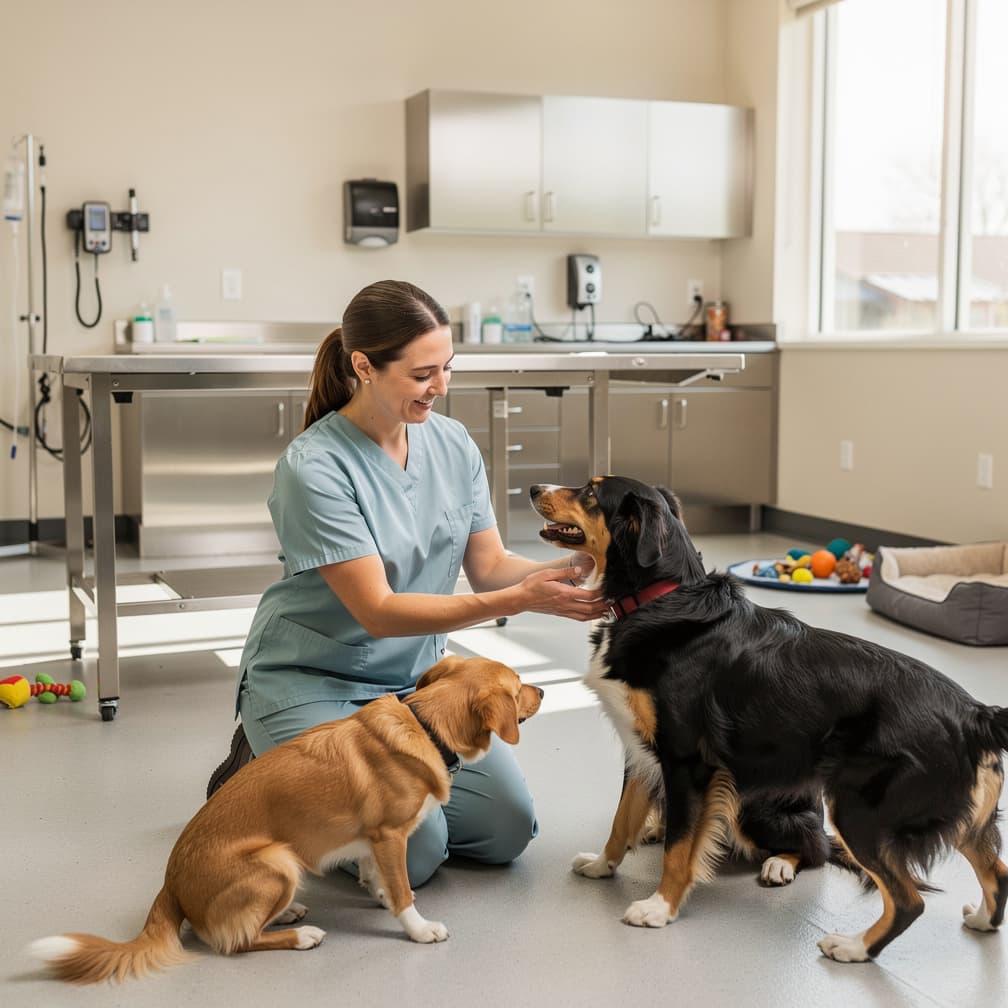

As a doggy daycare in Seattle, the wet floor at check in is a bigger liability question than most owners expect it to be. Dogs shake, bowls tip, and a parent in slick shoes crosses the same tile forty times a day. A slip claim from a human being is often the plainest claim a facility ever sees, and it is the one most likely to get filed. Doggy daycare insurance in Seattle is generally where that claim lands, alongside bites and escapes. Mats, signage, and a mop schedule are cheap. The defense of a fall claim is not cheap. The sections ahead lay out published ranges, what a quote requires, and how participating carriers in Washington price the same submission differently.
What Makes Seattle Different
Your lease is probably not the only contract demanding proof that your facility carries coverage. Dense markets layer agreements: a property manager, a building owner, a franchisor, a neighboring tenant. Each one can demand its own wording, and each one wants a certificate with its name on it. The more parties touch your Seattle building, the more certificates you issue and renew every year. One expired certificate in that stack can freeze an access badge or hold a vendor payment. Calendar the renewal date the day you bind, because nobody else in the chain will. Ask whoever quotes you to send certificates directly to each requesting party at renewal. Participating carriers in Washington do that routinely, and chasing the paper yourself is how weeks disappear.
Local Risk Factors in Seattle
Wildfire reaches a doggy daycare mostly as smoke, and smoke closes a play yard long before flames get near Seattle. Dogs cannot exercise outdoors in heavy particulate, staff with asthma cannot work, and the whole room moves inside for days, which raises the density and the odds of a fight. Smoke also settles into bedding, soft flooring, and ventilation filters, and the cleaning bill is real. Commercial property may respond to smoke damage to the building and contents, though a closure ordered for air quality rather than physical damage is often treated differently. Ask what triggers the income portion of a quote in Washington: physical damage, or an order to close. Those are not the same answer.
What Coverage Does a Doggy Daycare in Seattle Need?
General Liability
Landlords, lenders, and corporate clients ask for this line by name before you open, and it is generally the one aimed at claims from the people and dogs who are not yours: a parent who falls in the lobby, a passerby hurt by an escaped boarder. Injuries to your own staff belong on a payroll policy instead, and animals in your custody are often limited by separate wording worth reading.
Example: Two boarders tangle over a toy during afternoon play and one needs surgery; the owner's demand and an attorney's letter arrive together, and general liability can help cover the defense.
Commercial Property
Wear and tear on your dryers is your own problem; a fire that starts in one is a different question. This line generally addresses sudden accidental damage to your building, improvements, crates, gates, play structures, laundry equipment, and the office computer. Standard forms typically exclude flood and gradual breakdown, and the income you lose while the doors are shut is usually a separate part of the quote.
Example: A storm peels back a section of roof over the play room in Seattle, soaking bedding and shorting the ventilation; commercial property could respond to the repairs and the ruined contents.
Professional Liability
Judgment is a product a daycare sells: which dogs play together, which medication gets given, whether a temperament test happens on a busy morning. When an owner argues that a decision, rather than an accident, hurt their dog, this is the line built for that argument. It typically does nothing for a customer who slips in your lobby, which sits with your liability policy instead.
Example: You pair a nervous rescue with a rough play group after a rushed intake and the dog is injured; the owner's claim about that call is what professional liability is meant to reach.
Workers Compensation
Client claims and staff claims are different animals, and this is the staff side. Handlers get bitten separating dogs, wrench shoulders lifting a big boarder into a tub, and slip on hosed floors, and this line generally addresses their medical care and lost wages. Requirements for employees vary by state, and rating runs on payroll rather than on headcount.
Example: A handler's hand is bitten breaking up a scuffle and the repair costs weeks of restricted duty; workers compensation could take on the medical bills and part of the missed pay.
How Much Does Doggy Daycare Insurance Cost in Seattle?
Doggy Daycare Insurance is a bundle of separate policies, priced separately. The ranges below are typical figures for Seattle for each line, except workers compensation, which is set by the state fund; a quote prices each one against your own operations.
| Coverage | Typical range | What moves your price |
|---|---|---|
| General Liability Insurance | $120 - $450 per month | Industry and risk classification, annual revenue, number of employees |
| Commercial Property Insurance | $100 - $360 per month | Building value and construction type, roof age and condition, fire protection class |
| Professional Liability Insurance | $55 - $200 per month | The services you actually perform, annual revenue or billed fees, limit and retention selected |
| Workers Compensation Insurance | Set by the state fund | Employee classification codes, total annual payroll, experience modification rate |
Prices shown are general estimates, not guaranteed rates or quotes. Your actual premium will depend on the insurer, coverage selected, business details, location, claims history, and other underwriting factors. Learn about our pricing methodology.
What Are the Insurance Requirements for a Doggy Daycare in Seattle?
Workers' comp is generally required once you have your first employee, through the state fund. Washington runs workers' compensation through a state fund: employers buy coverage from the Washington State Department of Labor & Industries (L&I), not from private carriers. Common exemptions include sole proprietors and partners. Confirm current requirements directly with the fund before you hire.
Flood damage is typically excluded from standard policies. Standard commercial property and builders-risk-type policies typically exclude flood damage. Flood exposure varies address by address, so check your premises in FEMA's Flood Map Service Center before deciding; if you sit in a mapped flood zone, a separate policy through the National Flood Insurance Program is the usual starting point.
Where to verify licensing and coverage rules. The Washington Office of the Insurance Commissioner publishes consumer guidance and current insurance requirements for Washington businesses. When a contract or lease demands specific wording, the Washington Office of the Insurance Commissioner's guidance is the authoritative place to check.
Get Your Doggy Daycare Quote in Seattle
Compare rates from multiple carriers. Free quotes, no obligation.
Operating in Seattle
- Handlers get hurt more than clients do. A bite to the hand during a separation is the claim that most often turns into restricted duty and a payroll file.
- A fence line gets tested every day by animals with time on their hands, and a latch that half-catches at your Seattle building is an escape claim waiting for the right afternoon.
- About 220 doggy daycares operate in King County, so when yours closes for repairs your clients have somewhere else to go and a reason to stay there.
- Intake paperwork signed at the counter is the record of what you promised, and it is the first document anyone asks for after an incident.
How to Buy: Advice for Seattle Owners
Your judgment is a product here, and it is insured differently from your floor. Deciding which dogs play together, whether to accept an intact male, how to dose a medication a client dropped off: those decisions get second-guessed after a bad outcome. Professional liability is the line built for that argument, while general liability answers for the physical accident that anyone could have had. Owners buy the second and assume it contains the first, which is worth checking in your own policy rather than assuming. Write your play group rules down and follow them, because a written protocol you followed is a defense and one you ignored is evidence. Note who made the call and when. The Washington Office of the Insurance Commissioner publishes consumer guidance on how policy forms differ between carriers. CPK lets you compare participating carriers with your Seattle operation described the same way to each.
FAQ
Doggy Daycare Insurance in Seattle: FAQ
That is a separate part of a property quote from the limit on the building and contents, and it usually runs on a clock measured in months. Rent, payroll, and loan payments continue while your Seattle facility is dark, and clients find another routine in the meantime. Ask how many days are allowed and what documentation the claim requires. The answer varies more between quotes than the building limit does.
Appetite differs sharply between carriers. Some decline specific breeds outright, some price them higher, and some do not ask at all. A decline from one carrier tells you little about the next, which is exactly why comparing more than one quote for your Seattle facility matters here. Be accurate about what you accept; a policy written for the wrong operation is the kind that fails at claim time.
Usually, and the trade is real. A higher deductible means you fund the first slice of every claim, which only works if you could write that check during a slow week. Facilities that pick a deductible they cannot fund end up absorbing small claims and skipping the report. Match the number to your actual cash position, not to the premium you wish you had.
Cost turns on payroll, how many dogs you take per day, your square footage, the services you add like grooming or boarding, and your claims history. Facilities with written handling protocols and a clean loss run tend to be quoted differently from those without one. The cost table on this page shows published ranges by coverage, and participating carriers in Washington read the same submission differently.
General liability is generally the line aimed at third-party bodily injury and property damage, and a client's dog injured in your care is often treated as property rather than as a person. Some policies handle animals in your care under separate wording, and the details differ between carriers. Ask specifically how a dog in your custody is treated before you assume anything. That single question separates otherwise identical quotes.
An escape usually turns into a claim from the dog's owner, and sometimes from a driver or a neighbor as well. Liability wording may respond depending on how the policy treats animals in your care, custody, and control. That phrase is the one to look for, since many standard forms limit or exclude it. Read the endorsement, not the summary, before you decide how your own policy treats it.
Sources
- 1.U.S. Census Bureau, County Business Patterns (2023), King County(King County has about 220 businesses in this trade's category (NAICS group 812910).)
- 2.Washington Office of the Insurance Commissioner(Washington Office of the Insurance Commissioner publishes consumer guidance for insurance buyers.)
- 3.FEMA / FloodSmart(Flood coverage is typically purchased separately; FEMA administers the National Flood Insurance Program.)


