







































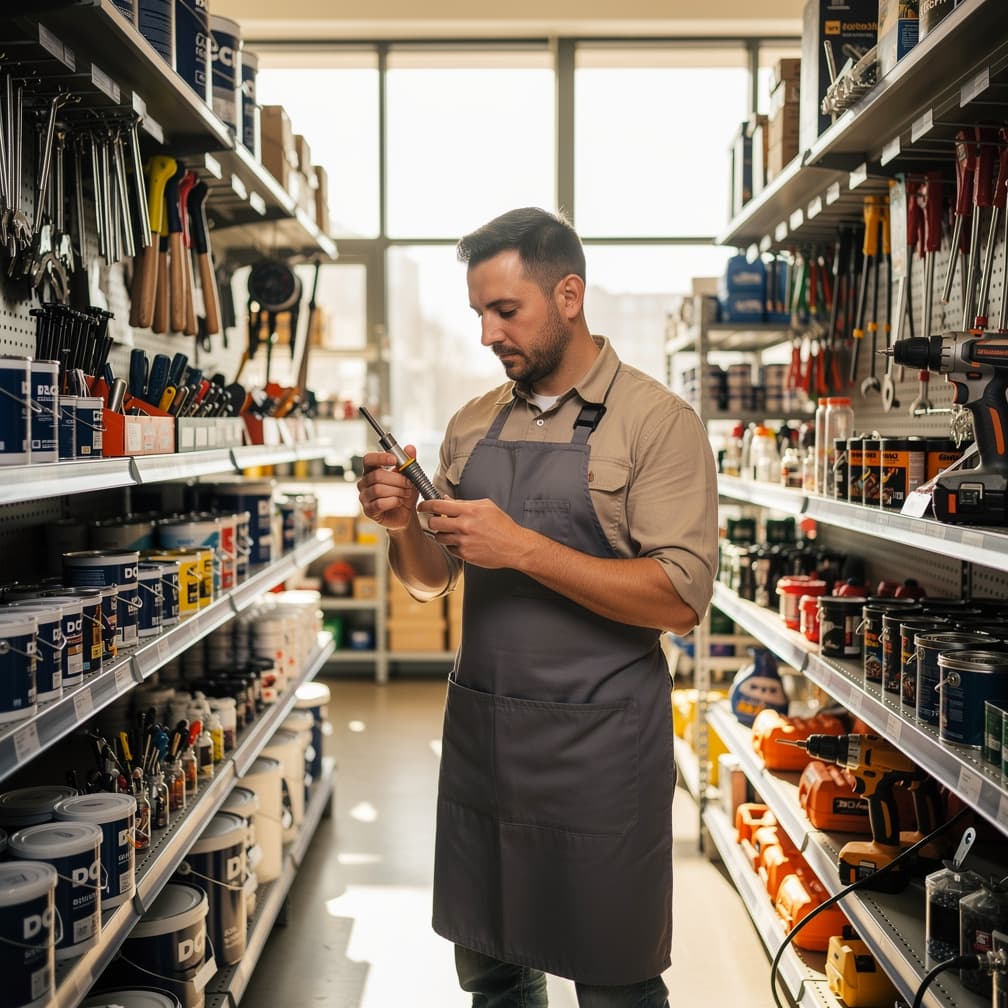

As a hardware store in Seattle, you run a retail floor, a warehouse, and a light service shop out of one building, and each of those makes a different claim. Customers walk your aisles carrying children and coffee. Staff move heavy stock on ladders and pallet jacks. The paint room mixes solvents a few feet from the wiring. Hardware store insurance in Seattle priced off a generic retail code can miss most of that. Tell the underwriter about the propane exchange, the rental augers, and the after-hours contractor pickup, because what you disclose shapes what gets paid. Coverage bought on an incomplete description is an argument you have not had yet. Compare quotes from participating carriers on the same disclosed facts, or you are comparing nothing.
What Makes Seattle Different
About 74 hardware stores share King County, and that number decides how quickly a dark store gets forgotten by regulars. Customers who cannot buy a fitting from you buy it two exits away and keep the new habit afterward. Competitive pressure shows up in your insurance decision as the length of the reopening clock you need to buy. It shows up in staffing too, because a crowded market pays up for experienced counter people who know stock. Payroll is the base your injury coverage is rated on, so a wage race raises premium without raising risk. A busy corridor also means more feet crossing a wet entry mat on a rainy afternoon. More traffic is more chances for the incident that starts a liability claim against you. Volume is what your quote is really measuring.
Local Risk Factors in Seattle
A wildfire week fills your store with people buying masks, hose, and pumps, right up until the road closes. Then the customers and the staff disappear on the same afternoon and the stock just sits. Product on the floor keeps absorbing smoke long after the air clears, and unsellable inventory is a loss documented item by item. Photograph and count now, because after an evacuation nobody takes your word for what was on the racks. A store in King County should also ask what deductible applies to a fire loss, and whether it differs from the everyday number in a Washington policy.
What Coverage Does a Hardware Store in Seattle Need?
General Liability
A customer goes down on a wet entry mat, or a boxed tool comes off a high rack onto a shoulder. General Liability is the line retail landlords and suppliers ask you to carry, and it may take in the injury, the damage you did to somebody else's property, and the defense that follows. Injuries to your own staff and damage to your own building typically sit elsewhere.
Example: A shopper reaches for a gallon of primer, knocks a second one off the shelf, and cuts a hand open on the rim. The medical bills and any claim behind them could fall to this line, subject to the limit you bought.
Commercial Property
Your landlord wants the building looked after and your lender wants the inventory behind the loan accounted for. Commercial Property is built around both, and it may respond to fire, smoke, wind, and the racking and stock inside. Flood and gradual wear are typically outside it, and goods kept outdoors often fall under a smaller sublimit.
Example: A stockroom fire from an overloaded outlet takes the paint stock, the shelving, and the roof above them. Rebuilding and restocking a Seattle store may be handled here, though the limit you chose sets the ceiling.
Commercial Crime
Theft by the people you trust sits outside a standard property form, and that gap is what Commercial Crime is meant to fill. Employee dishonesty, a forged check on a contractor account, counterfeit currency at the register, and money that never reaches the bank all belong to this family. These claims get proved from records, so your reconciliations matter as much as the limit.
Example: A long-serving cashier voids sales and pockets the difference, a little at a time, across eleven months. Once the ledger shows the pattern, the loss might be recoverable here, depending on the wording and the proof you kept.
Workers Compensation
Ladders, pallet jacks, and eighty pound bags are the daily reality of a floor that sells building material. Workers Compensation is rated on payroll by job duty, and it generally handles medical care and lost wages for staff hurt at work. Whether it is compulsory turns on headcount and on your state, so confirm the details with the Washington Office of the Insurance Commissioner.
Example: A stocker pulling a case of tile off the top rack twists, misses the step, and lands badly on the concrete. Care and time away from the floor generally land in this line, and payroll is what the premium was rated on.
How Much Does Hardware Store Insurance Cost in Seattle?
Hardware Store Insurance is a bundle of separate policies, priced separately. The ranges below are typical figures for Seattle for each line, except workers compensation, which is set by the state fund; a quote prices each one against your own operations.
| Coverage | Typical range | What moves your price |
|---|---|---|
| General Liability Insurance | $80 - $250 per month | Industry and risk classification, annual revenue, number of employees |
| Commercial Property Insurance | $180 - $575 per month | Building value and construction type, roof age and condition, fire protection class |
| Commercial Crime Insurance | $15 - $75 per month | Employees who handle money or inventory, internal controls and separation of duties, funds and securities on hand |
| Workers Compensation Insurance | Set by the state fund | Employee classification codes, total annual payroll, experience modification rate |
Prices shown are general estimates, not guaranteed rates or quotes. Your actual premium will depend on the insurer, coverage selected, business details, location, claims history, and other underwriting factors. Learn about our pricing methodology.
What Are the Insurance Requirements for a Hardware Store in Seattle?
Workers' comp is generally required once you have your first employee, through the state fund. Washington runs workers' compensation through a state fund: employers buy coverage from the Washington State Department of Labor & Industries (L&I), not from private carriers. Common exemptions include sole proprietors and partners. Confirm current requirements directly with the fund before you hire.
Flood damage is typically excluded from standard policies. Standard commercial property and builders-risk-type policies typically exclude flood damage. Flood exposure varies address by address, so check your premises in FEMA's Flood Map Service Center before deciding; if you sit in a mapped flood zone, a separate policy through the National Flood Insurance Program is the usual starting point.
Where to verify licensing and coverage rules. The Washington Office of the Insurance Commissioner publishes consumer guidance and current insurance requirements for Washington businesses. When a contract or lease demands specific wording, the Washington Office of the Insurance Commissioner's guidance is the authoritative place to check.
Get Your Hardware Store Quote in Seattle
Compare rates from multiple carriers. Free quotes, no obligation.
Operating in Seattle
- Rental equipment comes back damaged, late, or with a story, and occasionally it comes back with an injury attached. Ask any quote how a rented auger that hurts the person renting it gets treated before you build a program around it.
- A propane cage changes how an underwriter reads your whole building, whatever the revenue from it. Disclose it when you shop rather than when you file, since carriers writing retail in Washington weigh that detail differently.
- Staff pull boxed tools off the top rack all day, on ladders, in a hurry. That is your injury exposure in one sentence, and it is why payroll by duty, rather than headcount, is what a Seattle quote gets built on.
- Contractor house accounts are the margin in this trade, and they run on trust and on paper. A buyer can ask for proof of coverage before adding you to an approved supplier list, and a lapse can quietly end the account.
How to Buy: Advice for Seattle Owners
Renewal shopping during your busiest weeks is how stores end up renewing whatever they already had. Set a date a full quarter ahead and treat it like an order deadline you cannot miss. Pull last year's loss runs, update payroll, and recount your peak inventory before you make a single call. Commercial Property limits set two seasons ago rarely match today's rebuild cost or today's stock level. General Liability limits deserve the same question, since settlements do not shrink to fit an old policy. If a Seattle store is adding a rental program or a propane cage, disclose it before the season rather than after a loss. Check the Washington Office of the Insurance Commissioner's guidance before deciding what to change. Let participating carriers quote the store you run now, not the one you insured last year.
FAQ
Hardware Store Insurance in Seattle: FAQ
Property left in the open or under a canopy often sits under a sublimit, and that sublimit is far smaller than the main limit. Lumber, bagged goods, and racked stock outside the walls of a Seattle store are the usual examples. Read the sublimit page before you read the premium. If the number does not match what genuinely sits out there overnight, ask what raising it would cost.
Retail leases routinely carry an insurance clause, and a landlord can hold the keys until a certificate and the right endorsement are on file. The clause usually names a limit and asks to be added as an additional insured. Read it before you shop, because it is the specification your policy has to satisfy for a Seattle storefront. Buying to a guess and correcting later costs more than reading one page.
A wet entry mat, a spilled quart of sealer, or a pallet parked mid-aisle is how these begin. General Liability is the line typically tested by a customer injury on your floor, and it may take in medical costs, a settlement, and the lawyer you never wanted to hire. Defense costs can sit inside your limit or outside it depending on the form, so ask which. That one detail changes what your limit is really worth.
Shoplifting can fall under a property form's theft coverage, subject to the deductible you chose. The catch is that everyday shrink rarely clears a deductible, so in practice the loss stays yours. Theft by an employee is a different animal and usually sits outside that form, which is what Commercial Crime exists to handle. Cameras, counts, and a second person reconciling the drawer do more for that number than any limit.
Payroll drives it first, then revenue, then the building and what sits inside it. A yard crew loading block all day rates differently from a two-person counter at identical sales. Fire details matter as well: solvent storage, a propane cage, wiring age, sprinklers, and monitored alarms all move the number. Your claims history sits under all of it. A quote built on your own numbers is the only figure that counts for a Seattle store.
Naming another party happens through an additional insured endorsement, not by typing them onto a certificate. Carriers use different forms, and some grant that party rights only for claims arising out of your operations. Others require a written contract in force before the loss, so an informal arrangement can leave a hole. Ask for the form number, get a copy, and keep it with the lease.
Sources
- 1.U.S. Census Bureau, County Business Patterns (2023), King County(King County has about 74 businesses in this trade's category (NAICS group 444130).)
- 2.Washington Office of the Insurance Commissioner(Washington Office of the Insurance Commissioner publishes consumer guidance for insurance buyers.)
- 3.FEMA / FloodSmart(Flood coverage is typically purchased separately; FEMA administers the National Flood Insurance Program.)


