







































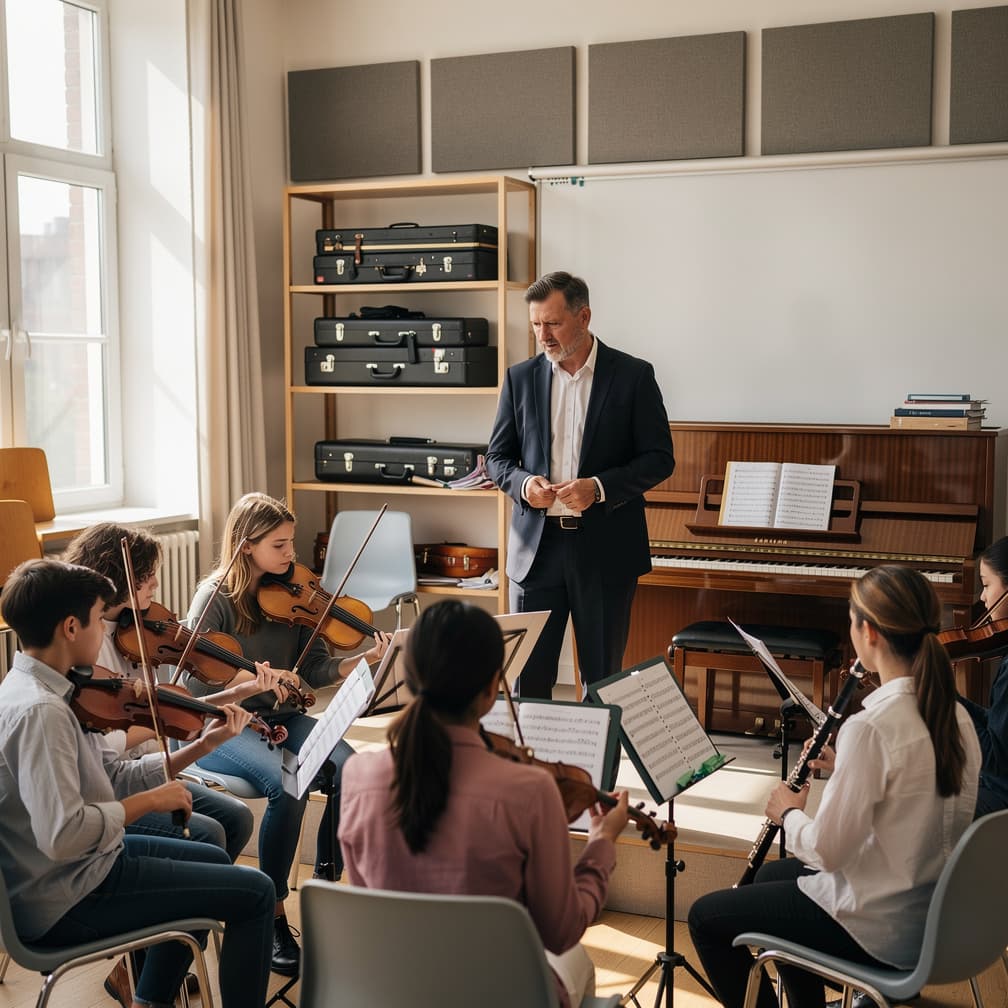

Someone knocks a rented cello off its stand between lessons and the neck cracks. The family who owns that instrument wants the repair bill, and a school with no answer pays it out of tuition. Damage to property in your care is one of the exposures music school insurance in Seattle exists to sort out, and it is also one a plain liability form can quietly leave alone. Instruments move through your rooms all week: student horns, loaner keyboards, a piano nobody ever moves. Value walks in and out of the building, and almost none of it is titled to you. Before you buy anything, list what sits in your rooms overnight and who owns each piece. The rest of this page works through what participating carriers in Washington ask about and where the honest gaps sit.
What Makes Seattle Different
Proof of coverage gets demanded by more parties than you expect once a school teaches outside its own rooms. A county with about 70,500 businesses runs on standardized vendor onboarding, and each portal wants its own version of your document. The landlord wants one wording, the recital venue wants another, the summer camp hiring your teachers wants a third. None of them talk to each other, and any one of them can stall a booking on its own. That is an administrative exposure with a financial edge: a stage you cannot use is tuition you cannot bill. Build a folder holding the policy, the certificate, and the endorsement wording before the first request lands. A school in Seattle that answers a document request the same hour keeps the date. One that cannot spends the week negotiating with an inbox.
Local Risk Factors in Seattle
Evacuation orders close a school that never sees a spark. The rooms are fine, the pianos are fine, and nobody can reach the building for ten days. Whether that is a claim turns on a civil authority clause and the distance rules written into it, which is a detail almost nobody reads before needing it. Ask what a quote says about orders issued by an authority and how close the damage has to be. A Business Owners Policy in Seattle may include some version, generally with a short time limit attached. Then ask what an adjuster in King County expects as proof that lessons genuinely stopped, because the roster is the evidence and few schools keep it well.
What Coverage Does a Music School in Seattle Need?
General Liability
Landlords and recital venues ask for this one by name, usually with a limit written into the agreement and a request to be listed on it. The line points at third-party injury and third-party property damage: a parent who falls in the lobby, a guest hurt at a concert. It generally says little about a student's instrument left in your care, which is a separate question worth asking.
Example: A grandmother steps back to photograph a recital, catches a floor cable, and fractures a wrist. The school gets the demand letter and the medical bills, and General Liability is generally the line that takes that claim.
Commercial Property
Pianos, amps, the sound desk, the shelf of loaners, and the improvements you built into a rented room: that is what this line is written around. It can help cover fire, theft, vandalism, and sudden water escape, subject to limits and deductibles. Flood and gradual seepage typically sit outside the form, and property belonging to students may carry a sublimit of its own.
Example: A supply line above the recital room lets go overnight and the upright underneath swells shut. With the loss documented and the deductible met, Commercial Property may answer for the instrument and the drying work.
Professional Liability
Slips and falls are not what this line is about. It is intended for allegations that the teaching itself caused harm: technique a parent blames for a strained hand, audition preparation that went badly, guidance a family says it relied on. Those claims arrive slowly, often long after the lesson, and the wording usually turns on when the claim was made rather than when the lesson happened.
Example: A parent claims months of instruction on the wrong hand position injured a child, and demands tuition back plus therapy costs. Professional Liability is the line intended to meet that argument, subject to its terms.
Business Owners Policy
Buying the property and the liability apart works perfectly well. A Business Owners Policy folds them into one form instead, and it often prices better for a single-location school in Seattle. The trade is shape: packaged forms follow a standard, so high-value instruments, students' property, and the income side of a long closure can fall outside or sit under sublimits.
Example: A kitchen fire two doors down fills the school with smoke and closes it for six weeks. A Business Owners Policy can help cover the cleanup and, depending on the trigger, some of the tuition that never arrived.
How Much Does Music School Insurance Cost in Seattle?
Music School Insurance is a bundle of separate policies, priced separately. The ranges below are typical figures for Seattle for each line; a quote prices each one against your own operations.
| Coverage | Typical range | What moves your price |
|---|---|---|
| General Liability Insurance | $55 - $170 per month | Industry and risk classification, annual revenue, number of employees |
| Commercial Property Insurance | $80 - $280 per month | Building value and construction type, roof age and condition, fire protection class |
| Professional Liability Insurance | $50 - $170 per month | The services you actually perform, annual revenue or billed fees, limit and retention selected |
| Business Owners Policy Insurance | $100 - $300 per month | Annual revenue and industry class, building and contents values, square footage and building age |
Prices shown are general estimates, not guaranteed rates or quotes. Your actual premium will depend on the insurer, coverage selected, business details, location, claims history, and other underwriting factors. Learn about our pricing methodology.
What Are the Insurance Requirements for a Music School in Seattle?
Workers' comp is generally required once you have your first employee, through the state fund. Washington runs workers' compensation through a state fund: employers buy coverage from the Washington State Department of Labor & Industries (L&I), not from private carriers. Common exemptions include sole proprietors and partners. Confirm current requirements directly with the fund before you hire.
Flood damage is typically excluded from standard policies. Standard commercial property and builders-risk-type policies typically exclude flood damage. Flood exposure varies address by address, so check your premises in FEMA's Flood Map Service Center before deciding; if you sit in a mapped flood zone, a separate policy through the National Flood Insurance Program is the usual starting point.
Where to verify licensing and coverage rules. The Washington Office of the Insurance Commissioner publishes consumer guidance and current insurance requirements for Washington businesses. When a contract or lease demands specific wording, the Washington Office of the Insurance Commissioner's guidance is the authoritative place to check.
Get Your Music School Quote in Seattle
Compare rates from multiple carriers. Free quotes, no obligation.
Operating in Seattle
- Sound systems and amplifiers die from power events rather than drama, and a practice room with a dead amp is a room you cannot bill for that week. Surge protection is cheaper than the claim and much cheaper than the downtime.
- Sheet music, method books, and the drive holding years of student recordings burn in the same fire as the pianos. Nobody itemizes any of it until an adjuster asks, and by then the list is a memory exercise.
- Tuition is billed ahead at most schools, so a closure in Seattle means refunds going out while rent and teacher pay keep going out too. The cash squeeze arrives long before any claim is settled.
- Students under ten are unpredictable in hallways. A bumped mic stand tends to injure the child who bumped it, and the claim still arrives at the school, because supervision is what the parent will be asking about.
How to Buy: Advice for Seattle Owners
Teachers are the exposure nobody puts on the application. Say plainly who teaches, whether they are on staff or engaged for a term, who supervises the room, and whether anyone gives lessons off site. Those answers move Professional Liability quotes more than anything else about the school, because a claim there starts with the instruction rather than the floor. General Liability picks up the parent who trips on the way in. Write the teaching agreements down before you buy, since an underwriter asking about supervision wants a procedure, not an anecdote. The Washington Office of the Insurance Commissioner publishes consumer guidance on what commercial applications typically ask for. With the roster and the agreements in hand, ask participating carriers through CPK to quote a school in Seattle and compare them line by line.
FAQ
Music School Insurance in Seattle: FAQ
That is a claim about the instruction rather than the premises, and it lands somewhere different. Professional Liability is the line intended for allegations that advice or teaching caused harm, while the form aimed at slips and falls generally has nothing to say about it. A school teaching technique to young hands is exactly what that wording contemplates. Ask whether your quote includes it or assumes you bought it elsewhere.
An equipment list with values, weekly student numbers, the lease and its insurance clause, the teaching roster, any off-site activity, and your loss history. Bring the recital schedule too. A school in Seattle that hands over real figures gets priced on its own facts, while one that rounds everything gets priced on assumptions, and assumptions cost money. Update the same file at renewal rather than copying last year forward.
Ask, but expect an answer about the policy year rather than the night. Limits are normally set for the term, and a venue asking for a higher figure is asking you to carry it while their agreement runs. Sometimes an endorsement for a specific event fits better. Price the step up before assuming it is out of reach, since the gap between limits is often smaller than the argument over the date.
Theft usually sits inside a property form, but the details decide it: whether the gear was scheduled, whether it belongs to you or a student, whether a sublimit applies, and what the wording says about signs of forced entry. Gear that vanishes with no break-in is the harder claim. A school in Seattle filing a police report the same day gives the adjuster something to work with; serial numbers and photographs do the rest.
It sets the share you fund yourself before anything else happens, on every claim, every time. A low deductible costs more each month and tempts you into filing small claims, which is what pushes your record the wrong way. Put it at the level where a cracked stand or a snapped string stays your problem and a fire does not, then keep a small repair budget for the rest.
No. The landlord's policy is written around the structure and the landlord's own interest, so your instruments, sound gear, and the improvements you installed are not on it. That is the most common misunderstanding in a leased studio. Ask what the lease makes you responsible for, fixtures included, and insure that side yourself. A certificate from a landlord proves their coverage exists, never that it reaches your gear.
Sources
- 1.U.S. Census Bureau, County Business Patterns (2022), King County(King County has about 70,500 business establishments.)
- 2.Washington Office of the Insurance Commissioner(Washington Office of the Insurance Commissioner publishes consumer guidance for insurance buyers.)
- 3.FEMA / FloodSmart(Flood coverage is typically purchased separately; FEMA administers the National Flood Insurance Program.)


