Updated July 5, 2026

On-Hook Towing Insurance in Seattle
King County has 70,530 business establishments, so a tow operator working around Seattle enters a dense service market where property managers, fleet contacts, medical offices, and commercial accounts often expect clean paperwork and fast claim handling before they trust you with repeat calls. That is where on-hook towing insurance in Seattle becomes a practical buying issue, not a box to check. Here, a lot of jobs happen in structured parking, alleys, loading zones, condo garages, and crowded curb lanes where a vehicle is already hard to access before you ever set the wheel lift or winch line. A minor scrape during hookup can turn into a customer dispute if your limit, deductible, or covered operations do not match the work you actually take. The local buyer usually needs to review more than the truck schedule. You should line up your on-hook limit with the kinds of vehicles you move, confirm whether loading and unloading are handled the way you expect, and be ready to show proof of coverage to commercial clients who want vendors with organized insurance documents. A free quote is most useful when it is built around your dispatch mix, storage arrangements, and the places your drivers actually recover vehicles.
On-Hook Towing Insurance Risk Factors in Seattle
Seattle's top risk factors include Earthquake damage, Liquefaction risk, Landslide, and Infrastructure failure.
Washington has a moderate climate risk rating. Top hazards: Earthquake (Very High), Wildfire (High), Volcanic Activity (High), Flooding (Moderate). The state's expected annual loss from natural hazards is $1.8B, which influences on-hook towing insurance premiums and may affect coverage availability in high-risk areas.
What On-Hook Towing Insurance Covers
In Washington, the practical review starts with the handoff points where claims are argued. A buyer usually needs to look closely at how the policy treats a vehicle during hookup, while it is secured for transport, and during release at the destination, because those are the moments when damage allegations often become specific. A scraped bumper after a steep driveway pull, suspension damage alleged after a wheel-lift tow, or body damage claimed after a tight recovery in rain all need to be evaluated against the policy language and your actual procedures.
State conditions make that review more operational than theoretical. If your routes move between dense city streets, suburban apartment complexes, rural shoulders, and mountain corridors, ask how the policy is written for the kinds of tows you actually perform. A flatbed operation handling dealer transfers may need a different conversation than a mixed fleet that also takes after-hours roadside calls, private impounds, and recovery work. The same applies if you tow low-clearance vehicles, electric vehicles, motorcycles, work vans, or lifted trucks. Each changes loading angle, securement method, and claim severity.
You should also review what is not intended to sit inside on-hook protection. If your operation stores vehicles after pickup, handles personal property disputes, or performs garage-related work around the yard, those exposures may need to be addressed elsewhere in the account. The cleanest buying approach is to match each service line to the policy section that is supposed to respond, then ask your agent to show where a towing claim would likely land before you commit to a policy.
Coverage Included

Collision on Hook
Covers damage to towed vehicles from collisions during transport.

Comprehensive on Hook
Covers theft, fire, and weather damage to vehicles being towed.
Loading & Unloading
Covers damage during the process of loading and unloading vehicles.
Winching Coverage
Covers damage to vehicles during winching and recovery operations.
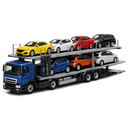
Multiple Vehicle
Covers all vehicles on multi-car carriers and rollback flatbeds.
Industries & Insurance Needs in Seattle
King County's establishment mix matters because the leading sectors are professional, scientific, and technical services at 15.6%, health care and social assistance at 12.1%, and construction at 9.6%. That mix points to a towing environment with very different service expectations depending on the account. Office and clinic properties often care about controlled access, documented condition reports, and low-drama vehicle removal from tight parking areas. Construction-related calls can involve pickups, vans, and work vehicles with racks, tools, or jobsite wear that make pre-tow documentation more important. For an on-hook buyer, the takeaway is operational: ask for a quote that reflects whether you mainly handle private property impounds, commercial account work, roadside tows, or contractor vehicles. If your book includes higher-value vehicles from professional districts or repeated vendor work for managed properties, review whether your on-hook limit and claims process fit that client base before you bind coverage.
What Makes Seattle Different
Density is the difference. In this market, the challenge is often not distance or highway mileage, but how often your driver has to hook, lift, and maneuver a customer vehicle in confined spaces with witnesses, cameras, and property rules all around the scene. That changes the buying calculus because small contact losses are easier to allege and harder to explain away after the fact. Seattle's median household income is $121,984, so disputes over vehicle condition can escalate quickly when the owner expects careful handling, prompt communication, and a clear path to a claim. For that reason, a local on-hook review should focus on claim friction as much as raw limit selection. You want coverage terms that match your actual towing methods, plus operating procedures that support the file later, such as photos before hookup, notes on existing damage, and clear dispatch records. If your work regularly involves garages, apartment complexes, or managed commercial sites, ask how those job conditions affect the way your policy should be structured.
Our Recommendation for Seattle
Start with your job mix, not a generic tow class. If most of your calls involve apartment enforcement, garage retrievals, dealer moves, or commercial property work, tell the quoting team exactly how vehicles are accessed, lifted, and documented. That helps you test whether the on-hook limit is realistic for the vehicles you actually touch and whether loading and unloading scenarios are addressed the way you expect. Next, review your proof-of-insurance workflow. In a county with a large commercial base, vendor relationships can depend on how quickly you can provide organized certificates and coverage details to property managers or account clients. Finally, tighten your loss documentation before renewal. Photo sets, dispatch timestamps, driver notes, and condition check procedures can matter just as much as premium when a damage allegation comes in after a difficult hookup. Bring two or three recent claim-free but complicated jobs to the quote conversation and ask whether your current policy language fits those exact situations.
Get On-Hook Towing Insurance in Seattle
Enter your ZIP code to compare on-hook towing insurance rates from carriers in Seattle, WA.
Business insurance starting at $25/mo
FAQ
Frequently Asked Questions
Seattle-area commercial accounts often screen vendors before assigning repeat work. You should expect property managers and fleet clients to ask for clear proof of on-hook coverage, limits, and effective dates before they add you to a rotation or approved list.
Seattle jobs often involve offices, clinics, apartments, and managed properties, so the vehicle types and customer expectations can vary by account. Review your limit against the highest-value vehicles you regularly tow, not just your most common dispatch.
King County's leading sectors are professional services at 15.6%, health care at 12.1%, and construction at 9.6%. That mix can mean anything from garage tows for office users to contractor vehicle moves, so your policy should match your real dispatch pattern.
Seattle's median household income is $121,984, which can translate into higher expectations around vehicle condition, communication, and documentation. That makes photos, pre-tow notes, and a clearly reviewed on-hook policy more important before a dispute starts.
Washington buyers often need to review both because liability and on-hook exposures are not the same. The Office of the Insurance Commissioner oversees the state's insurance market, so policy wording and complaint processes sit within that regulatory framework.
Washington operators usually start with the types of vehicles they tow, the mix of flatbed versus wheel-lift work, and how often they handle higher-value or harder-to-load units. From there, weigh the highest-value vehicle you typically move against the worst-case damage you could cause during a tow, and set your limit high enough to cover that scenario.
Washington claims often focus on those transition points, so you should ask the agent to walk through loading, securement, transport, and release scenarios in plain language. Some policies may cover damage during loading and unloading, but exclusions and conditions vary, so you need to confirm exactly how your specific policy wording applies.
Washington submissions are often evaluated differently when recovery work is part of the operation because the job conditions, vehicle condition, and damage allegations can be more complex. Separate those services clearly when you request quotes so the underwriting picture is accurate.
Sources
- 1.U.S. Census Bureau, County Business Patterns, King County(King County has 70,530 business establishments.; King County's leading sectors are professional, scientific, and technical services 15.6%, health care and social assistance 12.1%, and construction 9.6%.)
- 2.U.S. Census Bureau, ACS 5-Year Estimates, table B19013(Seattle's median household income is $121,984.)
Updated July 5, 2026