







































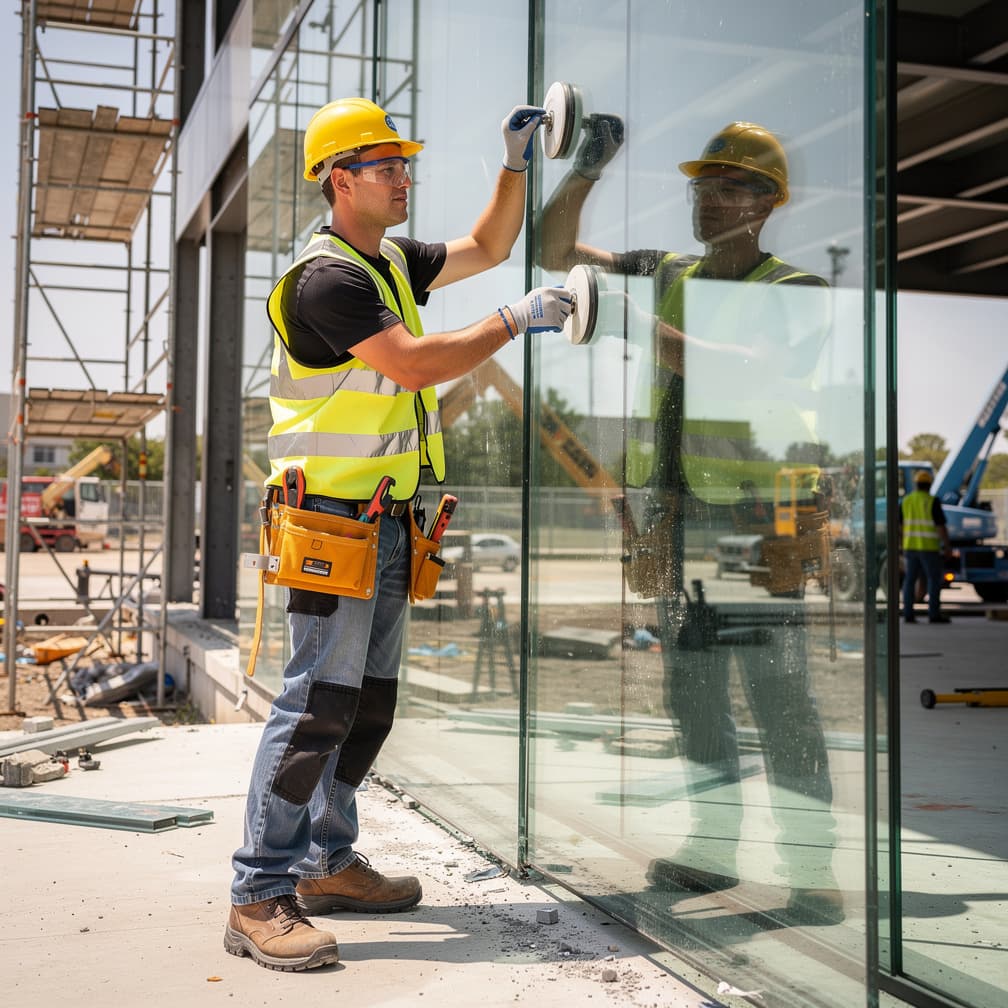

Running a glass crew in Spokane Valley means your worst day happens inside someone else's building, and that is the day glazier insurance in Spokane Valley either works or does not. Setting a heavy unit into a storefront opening puts your people, the customer's finishes, and the public sidewalk in the same ten feet. A slip there is an injury claim; a drop there is a property claim; a scratch on the adjacent frame is a repair argument. Those are three mechanisms with three different limits behind them, and quotes rarely spell that out. Your truck is a fourth exposure, loaded with racks and hardware and parked wherever there was room. What follows walks through what glaziers commonly carry and what each line is honestly for.
What Makes Spokane Valley Different
Seasonal swings decide when a glass shop is busy, and busy is when claims cluster. Heat, cold, and storms all break glass, so your slow season is somebody else's emergency. Hiring temporary help to cover a surge changes your payroll and your coverage picture at once. A helper hired for six weeks is a full exposure for those six weeks. Telling your carrier after the season ends is how audits turn into unexpected bills. Vehicles borrowed or rented for a surge raise the same question in a different place. Anything you add for a busy stretch in Spokane Valley belongs on the policy while it is there. Surprises are what cost money in Washington, and a seasonal crew should never be one.
Local Risk Factors in Spokane Valley
Wildfire smoke and closures can stop a glass crew without a single flame reaching the job. Air quality shuts down outdoor work, roads close, and a custom unit sitting on a truck goes nowhere for days. When the fires pass, the work that follows is heavy: heat-cracked storefronts, damaged frames, and buildings that need to be closed up quickly. Your own shop and stock are exposed, and commercial property coverage may respond to fire damage at your building, subject to what the policy says about the surrounding area. Coverage availability itself changes in high-risk parts of Washington, which is a real constraint rather than a formality. A shop in Spokane Valley should ask about availability early rather than at renewal.
What Coverage Does a Glazier in Spokane Valley Need?
General Liability
General contractors and building owners are the ones who insist on this line, and the contract usually names the limit. It can help cover third-party injury and property damage arising out of your work: a passerby hurt near a work zone, a customer's floor wrecked by a dropped unit. The pane you damaged yourself is typically excluded as your own workmanship.
Example: A carried pane clips a display case in an occupied lobby and the retailer's stock goes with it; general liability is generally where that claim lands.
Commercial Property
Flood is left out of this form, and so is ordinary wear on your racks and cutting tools. What remains is the shop itself: stock, hardware, suction cups, and the equipment that would stop your work if it burned or walked out the door overnight. Coverage might respond to fire, theft, and vandalism, subject to the deductible you picked.
Example: Someone pries the shop door overnight and leaves with the suction cups, the tools, and half the staged hardware; a property claim could put the shop back to work.
Workers Compensation
A pane slips on a stairwell landing and an installer's hand is cut to the tendon. Medical bills and lost wages from that injury are what this line is meant for, and it prices against payroll rather than at a flat monthly rate. Contracts commonly demand it, and thresholds vary, so the Washington Office of the Insurance Commissioner publishes the current requirements.
Example: An installer overreaches on a lift setting an upper-floor unit and tears a shoulder; workers compensation is typically the line that handles the treatment and the missed weeks.
Commercial Auto
Your truck is the piece that moves everything else, which is why this line is written against a schedule of vehicles rather than against your business generally. It might help cover liability and damage from an accident while hauling panes, hardware, and crews between sites. The units strapped to the rack are cargo, and cargo is often a separate question.
Example: A loaded rack shifts during a hard stop on the way to a Spokane Valley job and the truck ends up in a guardrail; commercial auto may pick up the vehicle side of it.
How Much Does Glazier Insurance Cost in Spokane Valley?
Glazier Insurance is a bundle of separate policies, priced separately. The ranges below are typical figures for Spokane Valley for each line, except workers compensation, which is set by the state fund; a quote prices each one against your own operations.
| Coverage | Typical range | What moves your price |
|---|---|---|
| General Liability Insurance | $150 - $500 per month | Industry and risk classification, annual revenue, number of employees |
| Commercial Property Insurance | $100 - $360 per month | Building value and construction type, roof age and condition, fire protection class |
| Workers Compensation Insurance | Set by the state fund | Employee classification codes, total annual payroll, experience modification rate |
| Commercial Auto Insurance | $220 - $650 per month | Fleet size and vehicle types, driver records and experience, coverage limits and deductibles |
Prices shown are general estimates, not guaranteed rates or quotes. Your actual premium will depend on the insurer, coverage selected, business details, location, claims history, and other underwriting factors. Learn about our pricing methodology.
What Are the Insurance Requirements for a Glazier in Spokane Valley?
Workers' comp is generally required once you have your first employee, through the state fund. Washington runs workers' compensation through a state fund: employers buy coverage from the Washington State Department of Labor & Industries (L&I), not from private carriers. Common exemptions include sole proprietors and partners. Confirm current requirements directly with the fund before you hire.
State auto liability minimums apply to business vehicles. Washington's minimum auto liability limits are $25,000/$50,000/$10,000 (bodily injury per person / per accident / property damage). Contracts and lenders often require more than the state floor.
Flood damage is typically excluded from standard policies. Standard commercial property and builders-risk-type policies typically exclude flood damage. Flood exposure varies address by address, so check your premises in FEMA's Flood Map Service Center before deciding; if you sit in a mapped flood zone, a separate policy through the National Flood Insurance Program is the usual starting point.
Where to verify licensing and coverage rules. The Washington Office of the Insurance Commissioner publishes consumer guidance and current insurance requirements for Washington businesses. When a contract or lease demands specific wording, the Washington Office of the Insurance Commissioner's guidance is the authoritative place to check.
Get Your Glazier Quote in Spokane Valley
Compare rates from multiple carriers. Free quotes, no obligation.
Operating in Spokane Valley
- The truck is your warehouse for most of the working day, so a smash-and-grab in a Spokane Valley parking lot can take out your hardware, your suction cups, and tomorrow's schedule at once.
- Occupied buildings are the hardest job sites: you carry a heavy pane past tenants, coffee cups, and children, and every one of them is a third party with a potential claim.
- Emergency board-ups get done at night by tired people, and a board that fails before you return turns into an argument about your workmanship rather than about the original break.
- A general contractor in Spokane County can withhold retainage over a scratched frame that another trade caused, because the glass sub is the one everybody remembers being there.
How to Buy: Advice for Spokane Valley Owners
Two numbers govern a General Liability policy, and owners tend to read only the bigger one. The per-occurrence limit is the most the policy may pay for a single event, like one pane going through one storefront and taking the display case with it. The aggregate is the ceiling across the entire term, and a glass shop that turns in several breakage claims in one busy stretch can exhaust it while months of work still sit ahead. Contracts routinely name the per-occurrence figure and stay silent on the aggregate, so that second number is one you have to track yourself. It is worth asking whether a claim against your Commercial Auto policy after a loaded-rack accident draws down a shared limit or a separate one. Check the Washington Office of the Insurance Commissioner's guidance before deciding how much room those limits should leave you. A glazier in Spokane Valley who understands both numbers can compare participating carriers on the ceiling rather than on the monthly price alone.
FAQ
Glazier Insurance in Spokane Valley: FAQ
Revenue, payroll broken out by role, a list of vehicles with rough mileage, the value of your equipment and stock, and a description of the work you actually do. Height, occupied sites, and how much is commercial versus residential all matter. A glazier in Spokane Valley who brings accurate figures gets a quote that holds up at audit; guessed figures get corrected later, usually upward.
Per-occurrence is the most a policy may pay for a single event, like one pane falling into one storefront. Aggregate is the ceiling across the whole policy term. A shop with several small breakage claims can burn through the aggregate and still face months of work with nothing left behind it. Check both numbers, because contracts often name only the per-occurrence one.
Yes, and you should tell your carrier rather than wait for the audit. Payroll drives the workers compensation figure, so a helper hired for six weeks is six weeks of exposure that has to be reported. Waiting turns it into a surprise bill at the end of the term. The same applies to any truck you borrow or rent to move units during a surge.
That is a completed-operations question, and it is worth asking about specifically. Some liability policies extend to damage caused by your finished work after you leave the site; others narrow it. The repair of your own faulty work is typically excluded either way, while the water damage that failure caused inside a tenant's space may be a different answer. Read that section before you sign.
In practice, yes. Contractors and property owners routinely require proof of coverage before a glass sub touches an opening, and the requirement lands in the contract rather than in the law. Expect the exhibit to name a limit, ask for additional-insured status, and demand a current certificate. Showing up without it is how a start date slips, because the work order sits until the paper clears.
Cost tracks a handful of drivers rather than a flat rate. Payroll and how each person is classified matter most, since a shop hand and an installer rate differently. After that come your vehicle list, the height you work at, your claims history, and the limits your contracts demand. The cost table on this page shows the published ranges; your own number in Spokane Valley comes from those inputs.
Sources
- 1.Washington Office of the Insurance Commissioner(Washington Office of the Insurance Commissioner publishes consumer guidance for insurance buyers.)
- 2.FEMA / FloodSmart(Flood coverage is typically purchased separately; FEMA administers the National Flood Insurance Program.)


