







































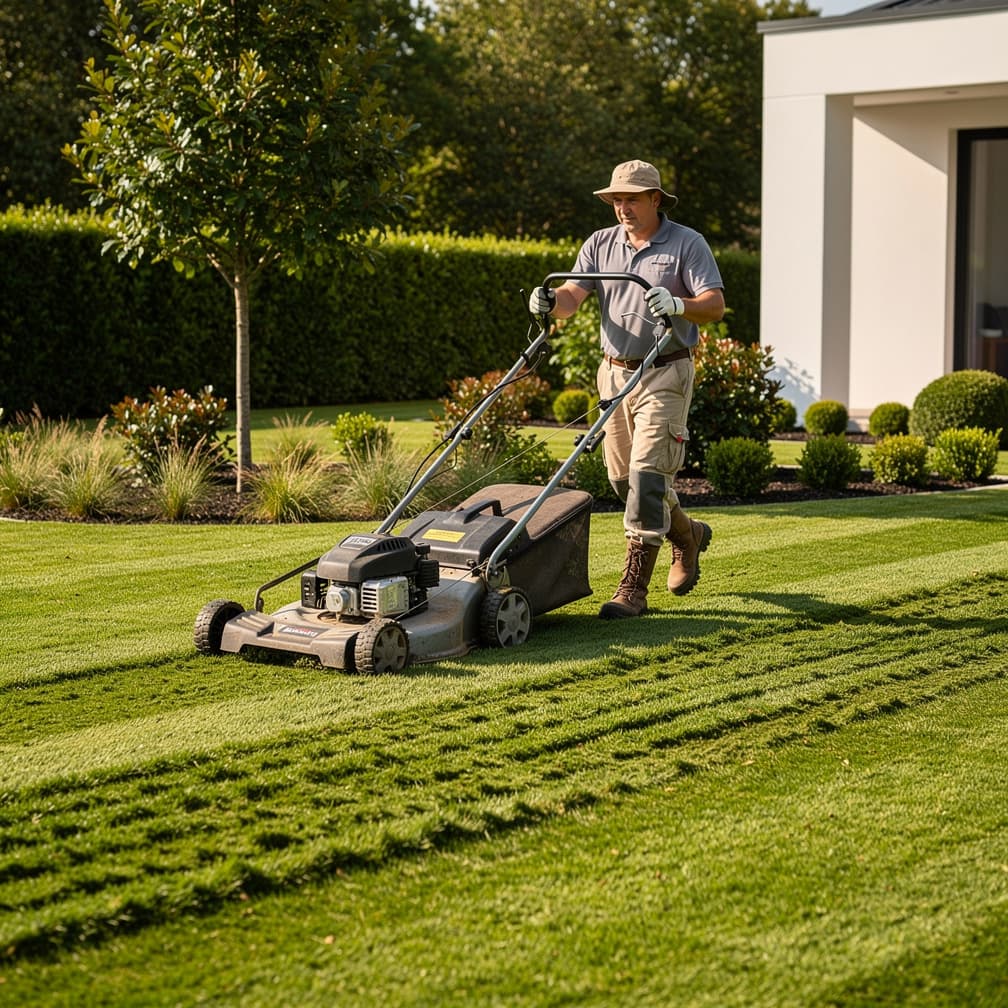

As a landscaper in Spokane Valley, you carry the risk of every property you touch, whether the crew is there ten minutes or all day. Damage to a client's fence, siding, or hardscape is the routine claim, and it arrives from equipment doing exactly what it was built to do. Clients rarely accept the argument that a thrown stone was unavoidable. Landscaping insurance in Spokane Valley is the thing standing between that conversation and your bank account. What you actually buy depends on how many people are on payroll, how many trucks leave the yard, and what your contracts already committed you to. The quote questions follow the work, which is why the sections below start there instead of at a price.
What Makes Spokane Valley Different
Competition sets the ceiling on your price, and your claims record sets the floor under your costs. Those two pressures squeeze a landscaping business from opposite sides, and the squeeze is where insurance decisions get made. A crew in Spokane Valley bidding against outfits that skip coverage will lose some jobs on price alone. Winning them back by dropping your own coverage trades a small monthly saving for an uncapped bill. The client who asks for a certificate is filtering for exactly that, and the filter works in your favor. Sell the document as part of the service, because the accounts worth keeping treat it that way. Participating carriers in Washington price the same crew differently, so the answer to a competitor's number is another quote rather than less coverage. Compare like for like: same limits, same vehicles, same payroll.
Local Risk Factors in Spokane Valley
Trailers and equipment staged near an evacuation zone are the loss landscapers never see coming, since gear left at a Spokane Valley property is gear you cannot reach once roads close. A mower does not survive a fire, and a schedule listing it at last decade's model does not make you whole. Inland Marine may respond to scheduled equipment destroyed by a covered peril, and the schedule is the whole argument. A client's burned plantings are their loss, though the replanting is work you can bid. A crew in Spokane County should update the equipment list every time it buys something, not every time it renews.
What Coverage Does a Landscaping in Spokane Valley Need?
General Liability
Clients demand this one by name, and it is the coverage a certificate usually proves. General Liability is meant for third-party losses: the fence your mower clipped, the window a stone found, the visitor who slipped on wet clippings. It typically excludes injuries to your own crew and damage to the specific work you were performing.
Example: A trimmer line catches a stone and the client's patio door cracks during a routine cut. The glass, and the argument over who pays for it, could land on this line.
Workers Compensation
Crews get hurt in ordinary ways: a strained back lifting sod, a cut from a blade, heat illness on a long afternoon. Workers' Compensation is intended for those work-related injuries and the wages lost after them, and it is rated per $100 of payroll. Rules and thresholds differ by state, so the Washington Office of the Insurance Commissioner publishes the current requirements for employers.
Example: A helper slips on a saturated lawn while dragging a hose and tears a shoulder. Medical bills and the missed weeks may be handled here rather than out of your own account.
Commercial Auto
Personal auto policies commonly exclude business use, and that exclusion shows up after the accident. Commercial Auto is written for the pickups, trailers, and service vehicles that move a landscaping crew between properties all day, and it can answer damage you cause on the road. Physical damage to your own truck is a separate coverage part you have to ask for.
Example: A loaded trailer swings wide at a turn in Spokane Valley and clips a parked sedan. Repairs to the other vehicle might fall to this policy instead of to you.
Tools & Equipment (Inland Marine)
Tools do not stay put. Mowers, blowers, trimmers, and the trailer they ride in move between the yard and several properties a day, and Inland Marine is built around gear in motion or stored off site. It generally responds to theft and sudden damage to scheduled items, while wear, rust, and mechanical breakdown usually sit outside it.
Example: Someone lifts two backpack blowers and a hedge trimmer from an open trailer while the crew works a back yard. Scheduled gear with serial numbers on file may be replaced through this coverage.
How Much Does Landscaping Insurance Cost in Spokane Valley?
Landscaping Insurance is a bundle of separate policies, priced separately. The ranges below are typical figures for Spokane Valley for each line, except workers compensation, which is set by the state fund; a quote prices each one against your own operations.
| Coverage | Typical range | What moves your price |
|---|---|---|
| General Liability Insurance | $60 - $200 per month | Industry and risk classification, annual revenue, number of employees |
| Workers Compensation Insurance | Set by the state fund | Employee classification codes, total annual payroll, experience modification rate |
| Commercial Auto Insurance | $200 - $625 per month | Fleet size and vehicle types, driver records and experience, coverage limits and deductibles |
| Inland Marine Insurance | $25 - $100 per month | Total insured value of the scheduled property, type and age of the equipment, where it is stored and how far it travels |
Prices shown are general estimates, not guaranteed rates or quotes. Your actual premium will depend on the insurer, coverage selected, business details, location, claims history, and other underwriting factors. Learn about our pricing methodology.
What Are the Insurance Requirements for a Landscaping in Spokane Valley?
Workers' comp is generally required once you have your first employee, through the state fund. Washington runs workers' compensation through a state fund: employers buy coverage from the Washington State Department of Labor & Industries (L&I), not from private carriers. Common exemptions include sole proprietors and partners. Confirm current requirements directly with the fund before you hire.
State auto liability minimums apply to business vehicles. Washington's minimum auto liability limits are $25,000/$50,000/$10,000 (bodily injury per person / per accident / property damage). Contracts and lenders often require more than the state floor.
Where to verify licensing and coverage rules. The Washington Office of the Insurance Commissioner publishes consumer guidance and current insurance requirements for Washington businesses. When a contract or lease demands specific wording, the Washington Office of the Insurance Commissioner's guidance is the authoritative place to check.
Get Your Landscaping Quote in Spokane Valley
Compare rates from multiple carriers. Free quotes, no obligation.
Operating in Spokane Valley
- Crews load trailers before daylight, and gear that sits in an open trailer at a Spokane Valley yard overnight is the easiest thing on the property to steal. Underwriters ask where it sleeps, so answer honestly before a claim answers for you.
- A property manager in Spokane Valley can hold your gate code, your access badge, or your first invoice until a current certificate is on file, so a lapsed policy stops the work before it starts.
- Mowers throw whatever the turf hides. One pass beside a driveway can send a stone into a car door, and the owner is usually standing right there when it happens.
- Most damage claims in this trade start with a phone call from a client rather than a letter from a lawyer, and how you answer that call decides whether it stays small.
How to Buy: Advice for Spokane Valley Owners
Read the exclusions first. Most landscapers buy a policy without ever learning what it will not do, and the gaps are predictable. Damage to the property you are actually working on gets treated differently than damage to the property beside it. Wear on your own blades is maintenance and never a claim. Employee injuries do not belong to General Liability at all, which is why Workers' Compensation exists as a separate line. Flood sits outside a standard property form and is priced through its own program. Ask each carrier to show where those boundaries sit in the actual form, not in the brochure. The Washington Office of the Insurance Commissioner publishes consumer guidance on policy exclusions, which is dull and useful. Then take the same questions to participating carriers in Washington and see who answers them plainly.
FAQ
Landscaping Insurance in Spokane Valley: FAQ
That depends on whether they are scheduled and how the policy treats storage. Inland Marine is the line most landscapers use for tools that move, and it could respond to theft from a trailer, a yard, or a jobsite. Serial numbers, receipts, and a current list are what make the claim routine. Gear left in an open trailer overnight at a Spokane Valley property may be rated or restricted differently, so tell the carrier where it sleeps.
Probably, once the truck is hauling a trailer, tools, and crew to jobs. Personal auto policies commonly exclude business use, and the exclusion surfaces after the accident rather than before it. Commercial Auto is written for vehicles used in the work, and clients that require proof usually name it in the agreement. Describe the actual use when you quote: how many trucks, who drives them, how far they run in a day.
Digging and edging find lines nobody marked, and the repair is small next to the argument that follows. Damage to a client's system during your own work may be treated differently than damage to property nearby, and some forms limit what happens to the part you were working on. Ask your carrier to show that boundary in the form. Request locates where you can, and note what you found before you cut.
A visitor who crosses a path your crew just washed down or left slick with clippings can name the landscaper as easily as the owner. The claim starts with a phone call, not a lawsuit, and the defense costs money regardless of fault. General Liability generally answers a third-party injury on a property you worked. Cleaning up after the job is the least expensive risk control available to you.
Often not, and this catches landscapers regularly. Liability forms commonly limit damage to the specific work you were performing, since that is workmanship rather than an accident. Ruts across a saturated lawn you were mowing sit close to that line. Damage to a fence, a wall, or a window beside the work is a different question and usually gets treated as third-party property damage. Ask where the form draws it before you rely on it.
Per-occurrence is the most a policy may pay for one event, like a truck backing into a garage door. Aggregate is the ceiling for the whole policy year across every event. A landscaping crew that files three small property claims in one season can spend more of the aggregate than expected, and it does not refill until renewal. Contracts usually name both numbers, so check which one your certificate shows.
Sources
- 1.Washington Office of the Insurance Commissioner(Washington Office of the Insurance Commissioner publishes consumer guidance for insurance buyers.)


