







































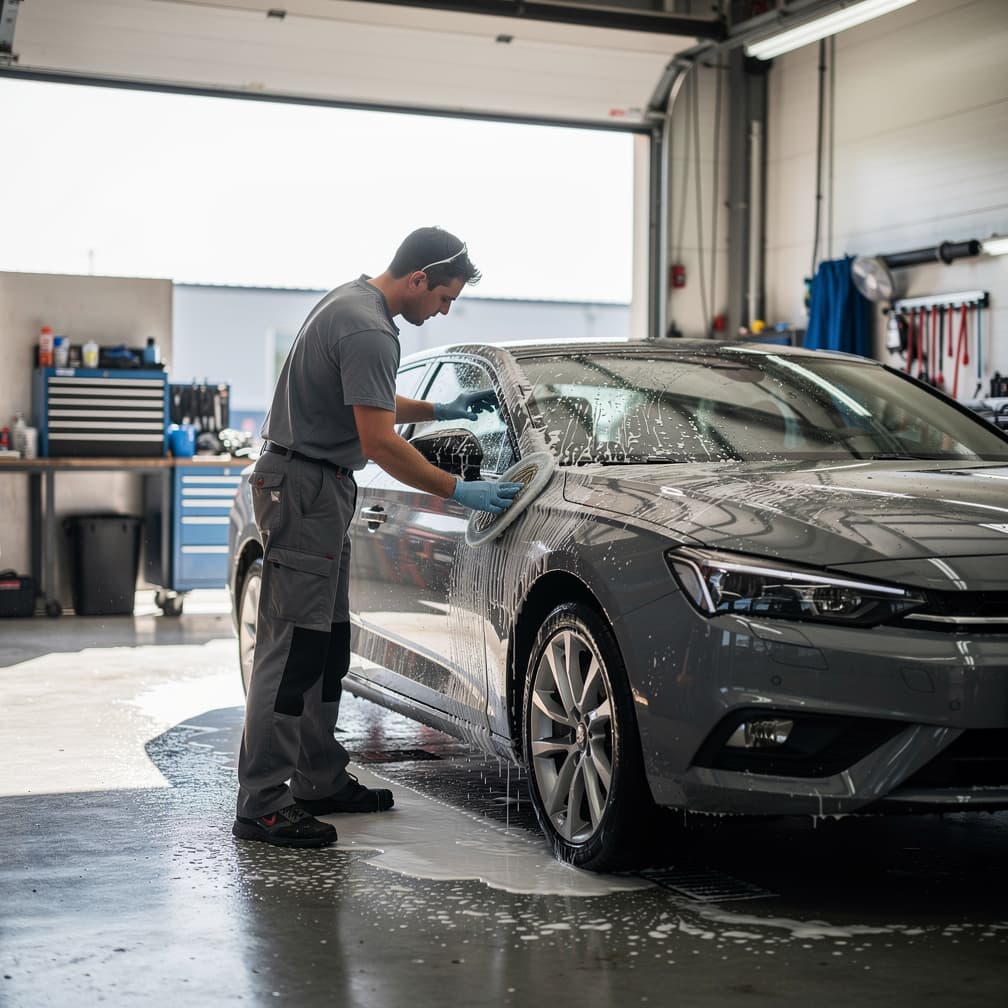

Payroll, not square footage, drives the biggest line on many wash policies. Workers Compensation is rated per $100 of payroll, and the rate follows the job code your staff actually work. Hand prep, tunnel loading, and detailing are not the same risk as a cashier, and misclassification surfaces during an audit, when it is expensive to fix. That audit is why the payroll figures behind a quote for car wash insurance in Spokane should match the ones your accountant files. Rates in this trade generally sit between $0.75 and $2.74 per $100 of payroll depending on classification and history, a band wide enough to be worth an hour of your time. Clean up the classifications first. Then compare, because identical numbers can land very differently across participating carriers in Washington.
What Makes Spokane Different
Three things move a wash premium, and none of them is the sign out front. Payroll drives the comp side, and the job codes behind it matter as much as the total does. Equipment values drive the property side, and a stale schedule quietly reprices your entire renewal. Claim frequency drives the rest, because underwriters read a pattern faster than they read an explanation. Two small damage claims can cost more at renewal than one large loss nobody saw coming. Hours matter too, since a site open late carries exposure a daytime site never sees. None of that appears on a quote sheet, but all of it sits behind the final number. Fix the inputs before you shop Spokane pricing, since the same inputs reach every carrier in Washington.
Local Risk Factors in Spokane
Wildfire reaches a wash mostly as smoke, ash, and a lot nobody can get to. Ash coats every car in the queue and every brush in the tunnel, and washing ash-covered paint is how a scratch dispute begins. Smoke damage to the equipment room, the ventilation, and the control boards is a property question, and Commercial Property may respond to smoke as a covered peril even when flames never arrive. Evacuation orders are a different matter, since lost traffic without damage generally sits outside the form. An owner in Spokane should ask how the policy treats smoke, ash, and civil authority orders under Washington wording, and should ask before the sky turns brown.
What Coverage Does a Car Wash in Spokane Need?
General Liability
Landlords, lenders, and fleet accounts ask for proof of this line before they ask about anything else. It generally responds to third-party claims: a guest who falls in a wet lane, an injury near the vacuum stalls, or damage to property that was never in your hands. Damage to a vehicle in your care during the wash itself typically falls outside it.
Example: A customer steps out of the pay lane onto wet concrete, lands hard, and sends a demand four months later with a lawyer attached. General Liability may pick up the defense and the settlement, subject to your limits.
Commercial Property
The equipment room is the real asset here, not the shell wrapped around it. Conveyors, pumps, dryers, control boards, signage, and the building can all be scheduled, with fire, storm, vandalism, and theft as the usual covered causes. Flood typically sits outside the form, and wear or mechanical breakdown generally needs an endorsement of its own.
Example: Someone pries open the pay terminal overnight, takes the coin box, and cracks a bay door on the way out. Commercial Property could fund repairs to the door and the terminal once your deductible is met.
Workers Compensation
An attendant catches a hand near a brush, or pulls a shoulder loading mats across a long shift. This line generally handles medical care and a share of lost wages, and it is rated on payroll by job classification rather than on your building. Rules on who must carry it vary, and the Washington Office of the Insurance Commissioner publishes the current requirements for employers.
Example: A tunnel loader slips on the wet apron mid-shift and tears a knee ligament that ends up needing surgery. Workers Compensation might handle the treatment and part of the missed pay, depending on how the claim is filed.
Business Owners Policy
Where separate policies split property and liability across two renewals, this package holds both for one site: one certificate, one deductible conversation, one bill. Workers Compensation stays outside it, flood and equipment breakdown usually do as well, and the limits sitting inside the package still deserve reading line by line.
Example: A fire in the equipment room stops the tunnel for three weeks in Spokane, and the repair bill lands beside a month of refunded memberships. A Business Owners Policy can be structured to answer for both, within its terms.
How Much Does Car Wash Insurance Cost in Spokane?
Car Wash Insurance is a bundle of separate policies, priced separately. The ranges below are typical figures for Spokane for each line, except workers compensation, which is set by the state fund; a quote prices each one against your own operations.
| Coverage | Typical range | What moves your price |
|---|---|---|
| General Liability Insurance | $85 - $310 per month | Industry and risk classification, annual revenue, number of employees |
| Commercial Property Insurance | $200 - $750 per month | Building value and construction type, roof age and condition, fire protection class |
| Workers Compensation Insurance | Set by the state fund | Employee classification codes, total annual payroll, experience modification rate |
| Business Owners Policy Insurance | $170 - $575 per month | Annual revenue and industry class, building and contents values, square footage and building age |
Prices shown are general estimates, not guaranteed rates or quotes. Your actual premium will depend on the insurer, coverage selected, business details, location, claims history, and other underwriting factors. Learn about our pricing methodology.
What Are the Insurance Requirements for a Car Wash in Spokane?
Workers' comp is generally required once you have your first employee, through the state fund. Washington runs workers' compensation through a state fund: employers buy coverage from the Washington State Department of Labor & Industries (L&I), not from private carriers. Common exemptions include sole proprietors and partners. Confirm current requirements directly with the fund before you hire.
Flood damage is typically excluded from standard policies. Standard commercial property and builders-risk-type policies typically exclude flood damage. Flood exposure varies address by address, so check your premises in FEMA's Flood Map Service Center before deciding; if you sit in a mapped flood zone, a separate policy through the National Flood Insurance Program is the usual starting point.
Where to verify licensing and coverage rules. The Washington Office of the Insurance Commissioner publishes consumer guidance and current insurance requirements for Washington businesses. When a contract or lease demands specific wording, the Washington Office of the Insurance Commissioner's guidance is the authoritative place to check.
Get Your Car Wash Quote in Spokane
Compare rates from multiple carriers. Free quotes, no obligation.
Operating in Spokane
- Water bills, drain maintenance, and reclaim filters are ordinary chores until a backup pushes runoff onto a neighbor's pavement and the argument turns into somebody's claim.
- Underwriters ask whether the alarm and the cameras exist, and if a claim shows they never did, the conversation in Spokane stops being about the loss and starts being about your application.
- Fleet and dealer accounts arrive with vendor packets, and the insurance page inside one can demand more limit than every retail customer in Spokane will ever require.
- A landlord can withhold keys until a certificate naming them sits in the file, so a policy that lapses quietly can stall a Spokane lease you thought was already settled.
How to Buy: Advice for Spokane Owners
Write the safety routine down before you need it. A wet-floor protocol, a mirror check at the loader, a daily drain inspection, and a signed training sheet for each attendant are ordinary tasks that become evidence. When a slip claim lands eighteen months later, that file is the difference between a defense and a settlement. Underwriters ask about routines because routines predict frequency, and frequency prices General Liability and Workers Compensation alike. Photograph your signage, keep the incident log dated, and record who trained whom. None of it costs money, and all of it shows up in your loss runs eventually. Bring it with your submission in Spokane instead of describing it from memory, then ask participating carriers in Washington what a documented program does to your price.
FAQ
Car Wash Insurance in Spokane: FAQ
A Business Owners Policy bundles property and liability for a single site, which means one renewal, one certificate, and one deductible conversation. It suits a straightforward wash at one location. Workers Compensation stays outside the package and is rated on payroll. The bundle is not automatically less expensive, and its inside limits still need reading. Ask what falls outside it before comparing against separate policies.
The claim can still land on you, since the lot is your premises whether or not anyone is on shift. Lighting, cameras, a locked equipment room, and clear signage all shape how that claim gets defended. Liability coverage may answer, subject to the conditions you agreed to, including any protective device warranties. If you told an underwriter the alarm exists, it needs to exist.
Frequency moves a renewal more than severity does, so a pattern of small claims often costs more than one large loss. That is why many owners settle minor paint and mirror disputes at the counter and save the policy for real losses. Write down what you paid and what changed afterward. An underwriter in Washington reading a documented fix prices differently than one reading a repeat with no notes.
Not automatically. Wear, gradual deterioration, and mechanical breakdown are commonly excluded from property forms, which respond to sudden events such as fire, storm, or vandalism instead. Equipment breakdown is usually added by endorsement, and it is worth asking for by name, since a wash is a building full of motors. Keep maintenance records dated, because an ignored alarm reads as wear to an adjuster.
With a certificate carrying the exact entity name, the required limits, the endorsement they asked for, and a current date. Vendor packets often route through a tracking service that rejects documents over formatting alone. Read the insurance page before signing anything. If the packet demands limits above what your lease already set, buy to the higher number once rather than amending the policy twice.
Whether the equipment schedule still matches the room, whether the building limit reflects today's rebuild cost, and whether a new account quietly changed your required limits. Then read your own loss runs and ask what a stranger would conclude from them. Renewal is the one moment when changing carriers costs you nothing, so compare quotes from participating carriers in Spokane instead of accepting the offer in front of you.
Sources
- 1.Washington Office of the Insurance Commissioner(Washington Office of the Insurance Commissioner publishes consumer guidance for insurance buyers.)
- 2.FEMA / FloodSmart(Flood coverage is typically purchased separately; FEMA administers the National Flood Insurance Program.)


