







































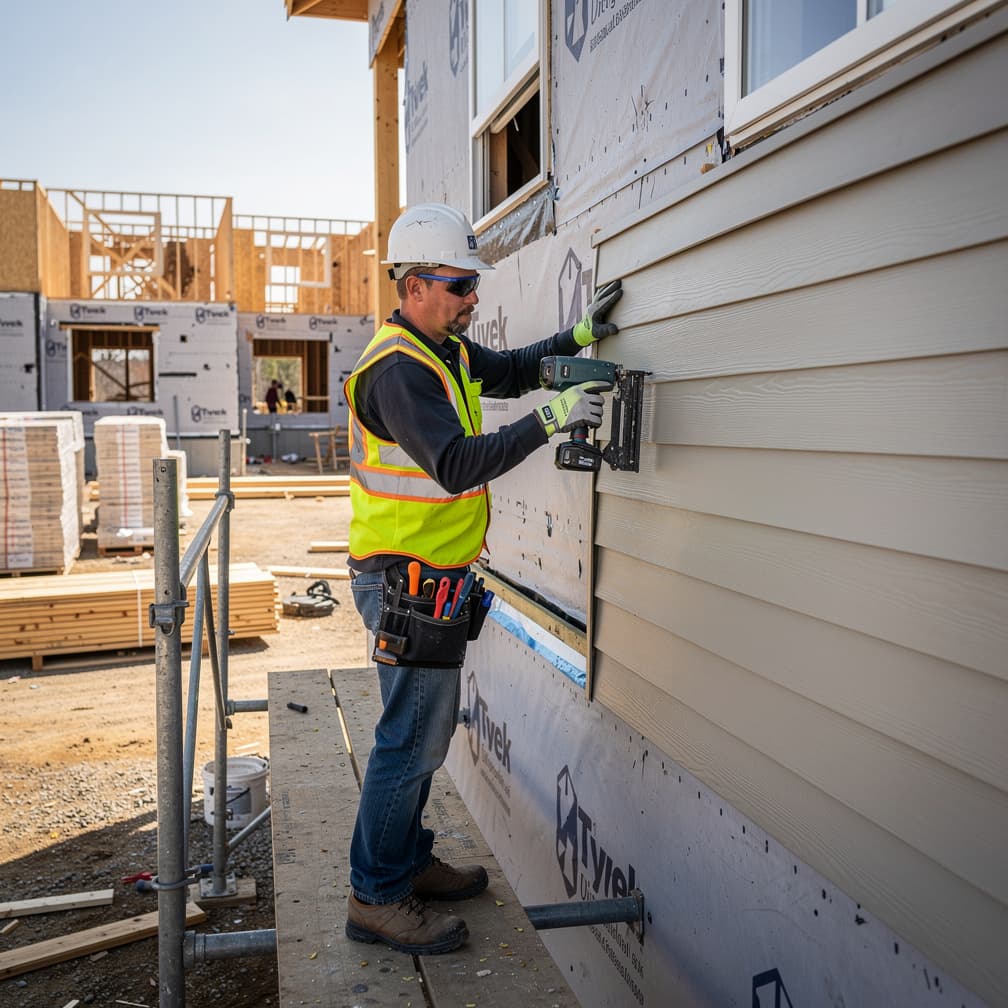

As a siding contractor in Spokane, you sign the insurance clause before you ever touch a wall, and that clause usually asks for limits, additional-insured status, and a waiver of subrogation. Signing first and shopping later is how owners end up buying a policy that cannot satisfy the contract they already committed to. Bring the contract to the quote. Siding contractor insurance in Spokane should be built against the paperwork you actually sign rather than a generic package. If a job calls for primary and noncontributory wording, that is an endorsement, and endorsements have prices and eligibility rules. A carrier that will not write the wording cannot do the job, whatever the monthly number says. The sections below break the clause into the pieces you have to buy.
What Makes Spokane Different
Lenders and title companies show up on financed remodels, and both want proof of coverage before funds release. A financed exterior project in Spokane can stall on a document rather than on the work itself. Retainage is the lever: money sits until somebody's file is complete, and your file is part of it. Nobody in that chain is trying to punish you, and nobody in that chain will chase your paperwork. The practical move is asking who needs naming at the contract stage, not at the draw request. One request handled early costs less than three handled while a crew waits on a released payment. Written wording beats a verbal assurance, and forms in Washington differ enough that reading yours matters. The document is part of the deliverable on jobs like these, and it should be scheduled like one.
Local Risk Factors in Spokane
Wildfire smoke stops exterior work long before flames reach anything, and that is the version of this hazard most siding crews actually meet. Air quality closes a site, respirators come out, and a job you scheduled for the week does not happen. Evacuation orders can cut access to a house in Spokane with your trailer still parked beside it. Inland Marine may help cover scheduled equipment lost to fire depending on how your form names the cause, though a job you could not reach is a schedule problem rather than a claim. Material sitting outside picks up smoke and ash, and a panel installed dirty becomes a callback. Track the days you lose, because a season built on a full calendar in Washington prices differently from the one you actually work.
What Coverage Does a Siding Contractor in Spokane Need?
General Liability
The owner or general contractor who hires you asks for this one by name, and the certificate they want is proof it exists. General Liability can respond to a stranger hurt near your scaffold and to property damage your crew causes to gutters, windows, or landscaping. Your own defective work is typically carved out, while the damage it causes to the rest of the house may be treated differently.
Example: A ladder shifts, a downspout tears loose from the fascia, and the homeowner sends you the repair invoice along with a bill from the landscaper whose beds it landed in. This line may take it from there.
Workers Compensation
A fall from staging ends a career and starts a claim on the same afternoon. Workers Compensation can pay medical bills and a share of lost wages for an injured employee, and it typically bars that employee from suing you over the same injury. Who counts as an employee varies by state, and uninsured subs usually get charged back onto your payroll at audit.
Example: A helper on the second course misses a rung with a bundle of trim in one hand and lands wrong on frozen ground. The medical bills and part of his lost wages could fall here.
Commercial Auto
Trucks, vans, and the trailer hauling ladders and panels drop outside a personal auto policy the moment they earn money. Commercial Auto rates on your vehicle list, your driving radius, and who is allowed to drive. It might answer for injury and property damage after an accident on the way to a job in Spokane, subject to the drivers you disclosed.
Example: Reversing out of a tight driveway with panels past the tailgate, the trailer clips a parked car and the neighbor calls a lawyer rather than you. Claims like that one may sit here.
Tools & Equipment (Inland Marine)
Property that leaves your shop is where a building policy stops, and that gap is why this line exists. Inland Marine might help cover ladders, staging, compressors, nailers, and brakes against theft or damage between job sites, subject to the schedule you filed. Gear left off the schedule is usually yours to replace, and wear on old equipment is not a claim.
Example: The trailer sits locked at a job in Spokane on a quiet night, and by morning the compressor and two nailers are gone. Scheduled equipment is generally where this coverage does its work.
How Much Does Siding Contractor Insurance Cost in Spokane?
Siding Contractor Insurance is a bundle of separate policies, priced separately. The ranges below are typical figures for Spokane for each line, except workers compensation, which is set by the state fund; a quote prices each one against your own operations.
| Coverage | Typical range | What moves your price |
|---|---|---|
| General Liability Insurance | $140 - $430 per month | Industry and risk classification, annual revenue, number of employees |
| Workers Compensation Insurance | Set by the state fund | Employee classification codes, total annual payroll, experience modification rate |
| Commercial Auto Insurance | $220 - $575 per month | Fleet size and vehicle types, driver records and experience, coverage limits and deductibles |
| Inland Marine Insurance | $35 - $140 per month | Total insured value of the scheduled property, type and age of the equipment, where it is stored and how far it travels |
Prices shown are general estimates, not guaranteed rates or quotes. Your actual premium will depend on the insurer, coverage selected, business details, location, claims history, and other underwriting factors. Learn about our pricing methodology.
What Are the Insurance Requirements for a Siding Contractor in Spokane?
Workers' comp is generally required once you have your first employee, through the state fund. Washington runs workers' compensation through a state fund: employers buy coverage from the Washington State Department of Labor & Industries (L&I), not from private carriers. Common exemptions include sole proprietors and partners. Confirm current requirements directly with the fund before you hire.
State auto liability minimums apply to business vehicles. Washington's minimum auto liability limits are $25,000/$50,000/$10,000 (bodily injury per person / per accident / property damage). Contracts and lenders often require more than the state floor.
Where to verify licensing and coverage rules. The Washington Office of the Insurance Commissioner publishes consumer guidance and current insurance requirements for Washington businesses. When a contract or lease demands specific wording, the Washington Office of the Insurance Commissioner's guidance is the authoritative place to check.
Get Your Siding Contractor Quote in Spokane
Compare rates from multiple carriers. Free quotes, no obligation.
Operating in Spokane
- Renewal dates matter more than the monthly figure, because a lapse is visible to every customer in Spokane who asks to see a certificate before letting a crew open a wall.
- About 39 siding contractors work in Spokane County, which means a homeowner comparing bids can verify exactly one thing about you in thirty seconds: whether your coverage is current.
- Rescue jobs arrive when another crew walks off, and you inherit whatever sits behind the wrap. Document the condition before you touch it or you have quietly bought the previous installer's mistakes.
- Fiber cement cuts throw silica dust, and the respirator rule you follow on site is a safety file an underwriter can ask to see at renewal.
How to Buy: Advice for Spokane Owners
Price the biggest uncovered loss first. For a siding crew that is usually water: a wall opened on a house in Spokane, a wrap that failed, and interior finishes ruined three rooms deep. Put one question to every quote about that scene, namely whether the form treats damage to the rest of the structure differently from your own defective work, because the answer decides whether the claim is a claim or a rebuild you fund. Ask the same about a ladder shifting near a walkway, which is where General Liability earns its keep, and about a nailer and compressor gone from a locked trailer, which is Inland Marine territory. Check the Washington Office of the Insurance Commissioner's guidance before deciding what limits make sense. Comparing quotes from participating carriers only helps once you know which two scenes you are buying against.
FAQ
Siding Contractor Insurance in Spokane: FAQ
Assume not. Personal auto forms typically exclude business use, and hauling crews, ladders, and panels is business use whoever holds the title. Commercial Auto rates on the vehicle list, the driving radius, and who is permitted behind the wheel. If employees ever run for material in their own cars, ask about hired and non-owned coverage, because that gap catches owners in Washington and everywhere else.
Payroll split by duty, three years of revenue, subcontractor spend, a vehicle list with named drivers, and an equipment schedule with replacement values. Loss runs too, if you have had claims. The clearer that file is, the tighter the quotes come back, because vagueness gets priced as risk. Carriers in Washington read the same submission differently, so send one clean version to several of them.
Usually not. Your own faulty work is typically excluded, and that exclusion is the one owners in this trade meet most often. What may be treated differently is the damage the faulty work caused elsewhere: the stained ceiling, the ruined floor, the insulation that has to come out. So the redo can be yours while the consequences may fall to General Liability. Have a carrier walk both clauses before you sign.
Additional insured status can extend some of your policy's rights to another party, usually the owner or the general contractor who hired you. A waiver of subrogation gives up your insurer's right to chase whoever actually caused a loss it paid. Contracts ask for both, carriers charge for both, and some decline the waiver on workers coverage depending on the state. Price the clause when you price the job.
Because siding claims arrive late. A wall that leaks shows up as a stain months after the last panel went on, and ongoing operations wording has stopped applying by then. Completed operations keeps that general contractor named for work already finished. It is a separate grant on the endorsement, and it is the one that matters on an exterior job.
The carrier compares your estimated payroll against what you actually paid, then bills or refunds the difference. Classification gets checked too: a helper who spends most of the week on staging is not a clerical exposure, and calling him one rarely survives review. Payments to uninsured subcontractors typically get added onto your payroll. Keep records split by duty from the first week and the audit becomes arithmetic instead of an argument.
Sources
- 1.U.S. Census Bureau, County Business Patterns (2023), Spokane County(Spokane County has about 39 businesses in this trade's category (NAICS group 238170).)
- 2.Washington Office of the Insurance Commissioner(Washington Office of the Insurance Commissioner publishes consumer guidance for insurance buyers.)


