







































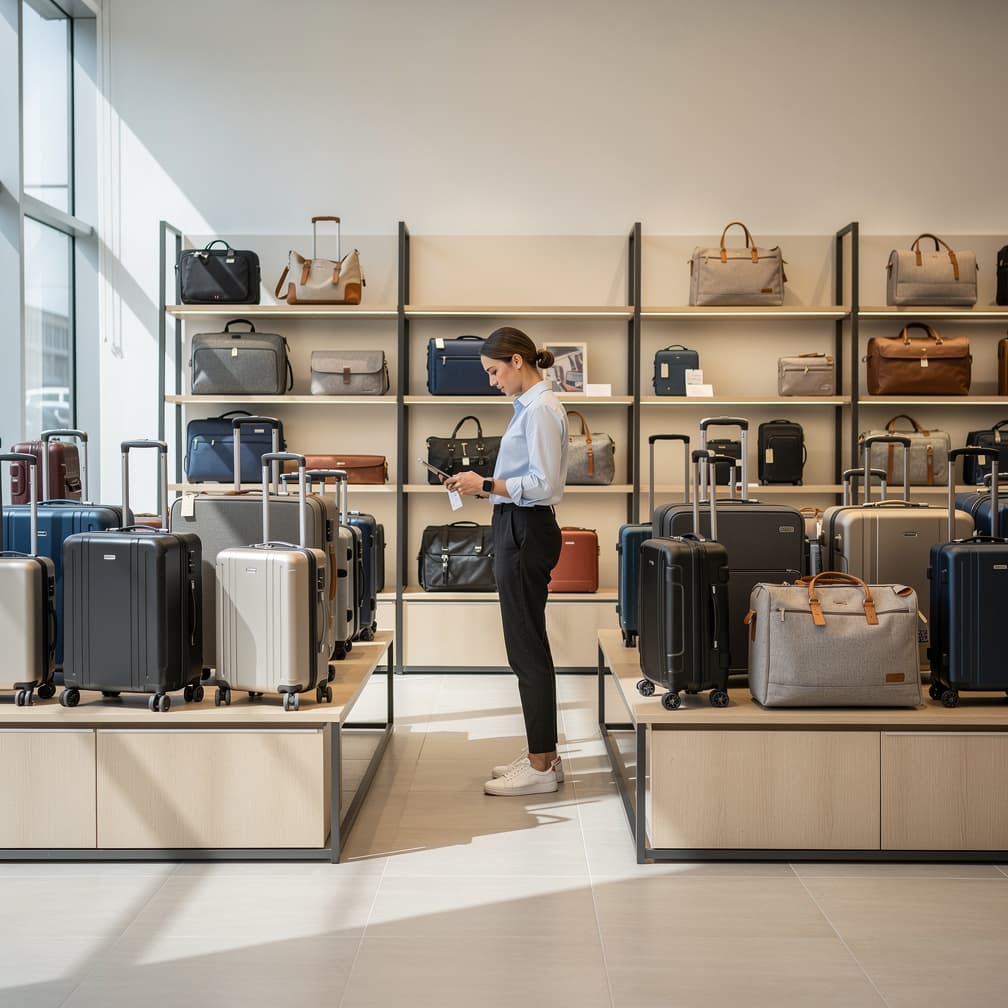

As a luggage store in Tacoma, you owe a duty of care to everyone who walks in to test a wheel or lift a carry-on off a shelf. That duty is where luggage store insurance in Tacoma starts, and it works outward from there to the building, the stock, and the people on payroll. A customer who trips on a display base does not care that the fixture came from your supplier; the claim still lands on you. Bags also fail after they leave, and a snapped handle at a baggage carousel can point back at the shop that sold it. Quotes hinge on details already in your records: payroll, revenue, hours, and what happened over the last three years. Gather those first and the comparison gets fast.
What Makes Tacoma Different
Premium follows exposure, and for a retail floor the exposures are people, stock, and square footage. Every extra hour you stay open adds shopper-hours, and shopper-hours are what a liability rate is built on. Payroll drives the comp side separately, and how you classify each role moves that rate meaningfully. Stock value drives the property side, and high-value accessories can sit under a sublimit of their own. Claims history sits on top of all of it and can undo an otherwise clean submission. None of those levers are local, but the price attached to them can be, depending on the market. Carriers in Washington file different rates and read the same file through different appetites entirely. That is why a store in Tacoma should collect three offers before believing any single number.
Local Risk Factors in Tacoma
Before the dry season, ask the landlord what the building's ventilation and filtration actually are, because smoke arrives through the mechanical system. Then ask yourself what a floor of smoke-tainted inventory would be worth, since that is the number your stock limit has to reach. A Business Owners Policy for a small retail floor bundles the property and liability sides, and its inner stock limit is where a wildfire claim tends to run short. Ask whether cleaning, ozone treatment, and disposal sit inside the limit or outside it. Ask what proof of unsalvageability a carrier quoting your Tacoma store expects to see. The Washington Office of the Insurance Commissioner publishes consumer guidance on commercial property claims, which is worth reading while nothing is burning.
What Coverage Does a Luggage Store in Tacoma Need?
General Liability
Landlords, mall offices, and corporate accounts name this line in their paperwork before anyone else does, because a third party hurt on your floor is the loss they fear most. It can help cover medical costs, defense, and a settlement after a fall beside a display, or a claim tied to a bag you sold that failed later. Damage to your own stock sits elsewhere.
Example: A shopper steps around a stack of carry-ons in Tacoma, catches a wheel, and lands hard; general liability might answer the medical bills and the lawyer who arrives behind them.
Commercial Property
Rising water and gradual wear sit outside this form; sudden accidental loss is what it is built around. Fire, storm damage, theft, and vandalism affecting the storefront, the fixtures, and the merchandise are the events it typically speaks to, and the income terms inside it address weeks you cannot open. Stock value and building limits drive what it costs.
Example: A pipe lets go above the stockroom overnight and cartons of new cases sit in an inch of water by morning; commercial property could pick up the ruined merchandise and the drying out.
Workers Compensation
Staff who lift hard cases onto high shelves get hurt in ordinary ways: a twisted back, a fall off a step stool, a hand caught in a security gate. This line is meant to handle medical treatment and lost wages after those injuries, and it rates against payroll rather than a flat monthly figure. Whether you must carry it varies by state.
Example: A stockroom hand reaches for a display case above shoulder height and tears a shoulder catching it on the way down; workers compensation is intended to carry the treatment and the missed shifts.
Business Owners Policy
Where standalone policies split liability and property into two files, this package puts them in one for a small retail floor and often prices under the pair. The tradeoff is fixed inner limits: a shop carrying deep stock in premium cases can outgrow the property side quietly. Ask where the sublimit on high-value accessories caps before assuming it fits.
Example: Fire in the unit next door pushes smoke across a Tacoma sales floor and shuts the doors for a fortnight; a business owners policy may take on both the ruined stock and the lost weeks.
How Much Does Luggage Store Insurance Cost in Tacoma?
Luggage Store Insurance is a bundle of separate policies, priced separately. The ranges below are typical figures for Tacoma for each line, except workers compensation, which is set by the state fund; a quote prices each one against your own operations.
| Coverage | Typical range | What moves your price |
|---|---|---|
| General Liability Insurance | $40 - $120 per month | Industry and risk classification, annual revenue, number of employees |
| Commercial Property Insurance | $75 - $250 per month | Building value and construction type, roof age and condition, fire protection class |
| Workers Compensation Insurance | Set by the state fund | Employee classification codes, total annual payroll, experience modification rate |
| Business Owners Policy Insurance | $80 - $240 per month | Annual revenue and industry class, building and contents values, square footage and building age |
Prices shown are general estimates, not guaranteed rates or quotes. Your actual premium will depend on the insurer, coverage selected, business details, location, claims history, and other underwriting factors. Learn about our pricing methodology.
What Are the Insurance Requirements for a Luggage Store in Tacoma?
Workers' comp is generally required once you have your first employee, through the state fund. Washington runs workers' compensation through a state fund: employers buy coverage from the Washington State Department of Labor & Industries (L&I), not from private carriers. Common exemptions include sole proprietors and partners. Confirm current requirements directly with the fund before you hire.
Flood damage is typically excluded from standard policies. Standard commercial property and builders-risk-type policies typically exclude flood damage. Flood exposure varies address by address, so check your premises in FEMA's Flood Map Service Center before deciding; if you sit in a mapped flood zone, a separate policy through the National Flood Insurance Program is the usual starting point.
Where to verify licensing and coverage rules. The Washington Office of the Insurance Commissioner publishes consumer guidance and current insurance requirements for Washington businesses. When a contract or lease demands specific wording, the Washington Office of the Insurance Commissioner's guidance is the authoritative place to check.
Get Your Luggage Store Quote in Tacoma
Compare rates from multiple carriers. Free quotes, no obligation.
Operating in Tacoma
- A property manager in Tacoma can hold your lease renewal until a current certificate is on file, so a lapsed policy becomes a leasing problem before it ever becomes a coverage problem.
- Entrance mats hold water for hours after the sidewalk dries, and the aisle closest to the door is where retail fall claims tend to begin.
- Premium cases walk out one at a time, and the loss surfaces at inventory rather than on camera, which is exactly the shape of claim carriers scrutinize hardest.
- Corporate gift accounts and hotel buyers can demand proof of coverage before a purchase order clears, and their deadlines run on their calendar rather than yours.
How to Buy: Advice for Tacoma Owners
Gather the numbers before you gather quotes, because an underwriter who has to guess prices the guess. Have annual revenue, square footage, hours, and the last three years of losses in one place. Have payroll broken out by role, since Workers Compensation rates a stockroom hand differently than a cashier and the split moves the rate. Have your stock value, including high-value accessories that can sit under their own sublimit on a property form. Have the alarm and sprinkler details, because credits exist and nobody applies them unprompted. General Liability gets quoted fastest and read least; ask what the aggregate is, not only the per-occurrence limit. Check the Washington Office of the Insurance Commissioner's guidance before deciding, since requirements differ from one state to the next. With one complete file you can send the same submission to participating carriers across Washington and read real differences instead of noise.
FAQ
Luggage Store Insurance in Tacoma: FAQ
Once a policy is in force, certificates move quickly, but a carrier controls its own queue and no timeframe should be promised to you. The bigger delay is usually a mismatch: a misspelled entity name, a missing operations description, or an expired date bounces the whole file. Keep your legal name, address, and description written exactly as the lease spells them.
Possibly, and the shape of the claim matters more than its size. A closed claim with no payout reads differently than an open file with an unknown reserve, which underwriters treat harshly. Loss history sits on top of every other rating factor and can undo an otherwise clean submission. Pull your loss run before renewal so you can explain what happened instead of letting the file speak alone.
The income terms inside a Washington property policy are where that gets answered, and they usually require physical damage to the premises before anything starts. A week that is simply slow because nobody wanted to shop is a budgeting problem, not a claim. Ask what triggers the income portion, what waiting period applies, and whether reopening at half capacity ends it early.
Online sales change the picture rather than remove it. There is still stock in a building that can burn or be stolen, and there is still exposure when a bag fails after it ships. What changes is the foot-traffic side, which is where liability rating leans hardest. Tell the carrier the real split between counter sales and shipping, because an undisclosed operation is where coverage arguments start.
Yes, and the exhibit attached to the lease is where that number lives. Landlords set their own conditions, and a leasing office with other tenants waiting has little reason to negotiate the point. Buy to the strictest document you have signed, since one policy has to satisfy all of them at once. A cheaper quote you cannot use is not a saving.
Per-occurrence is the ceiling for one incident, so a single shopper hurt beside a display gets measured against that figure alone. The aggregate is the ceiling for the whole term, and it is the number that runs out quietly. Three moderate fall claims in a single year can exhaust an aggregate while each one sat well under the per-occurrence figure. Ask for both numbers on every quote you compare.
Sources
- 1.Washington Office of the Insurance Commissioner(Washington Office of the Insurance Commissioner publishes consumer guidance for insurance buyers.)
- 2.FEMA / FloodSmart(Flood coverage is typically purchased separately; FEMA administers the National Flood Insurance Program.)


