







































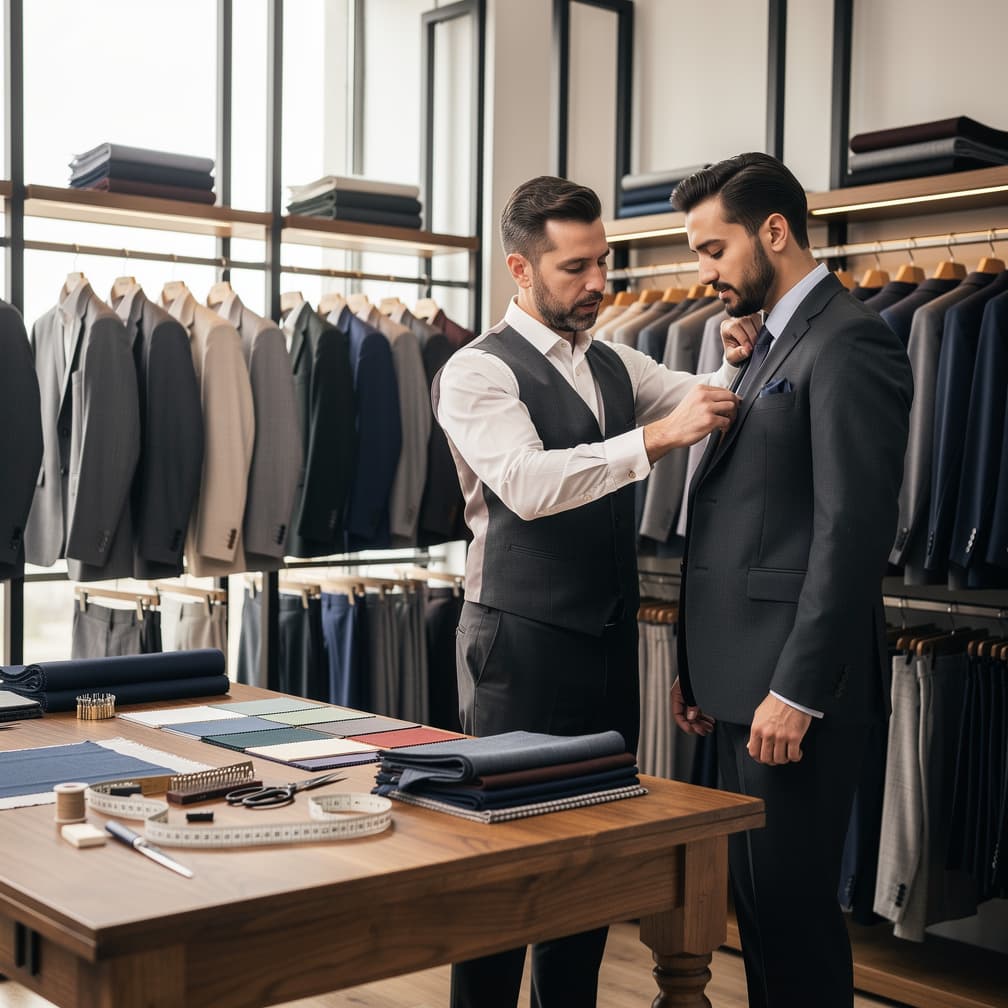

About 31 tailors operate in Pierce County, and every one of them is holding property tonight that belongs to somebody else. That is the unusual part of this trade, since your biggest exposure is often the tagged garments waiting on a rack rather than your own equipment. Tailor insurance in Tacoma has to answer for that inventory, for the fitting-room fall, and for the hand caught in a machine on a busy afternoon. Standard property forms think in terms of what you own, so the question worth asking any carrier is how customers' goods are treated and to what limit. Ask it before you buy, not after a pipe bursts over the rack. Cost drivers, coverage detail, and the fine print all sit further down.
What Makes Tacoma Different
The value of what you are holding is the input most shops guess at, and guessing low is the expensive habit. A rack of formalwear during a wedding stretch is worth several times the same rack in a slow month, and a policy limit does not adjust itself. Deductibles are the other lever, and raising one lowers the premium while moving more of a small loss onto your own books. That trade makes sense for a shop with cash in reserve and less sense for one without. Payroll, receipts, and the claims you have filed do the rest of the pricing. Underwriters in Washington weight those inputs by their own appetite, so the same shop can see quotes that are far apart. A spread like that is information rather than noise. Read it, then decide which number you are actually buying in Tacoma.
Local Risk Factors in Tacoma
Wildfire hurts a tailoring shop even when the flames stay miles away, because smoke does not respect a property line. Smoke and soot in Tacoma settle into fabric, and garments belonging to customers absorb odor that a normal press will not remove, which turns clean inventory into a claim about ruined property. Filters clog, air quality closes storefronts, and staff stay home. The pieces on the rack still have dates. Commercial Property may respond to smoke damage as well as fire damage, subject to the terms, though how a form treats gradual soot and odor rather than direct flame is a question worth asking in advance. Owners in Washington often discover that the argument is about whether the damage counts as physical loss, not about whether smoke reached the room.
What Coverage Does a Tailors in Tacoma Need?
General Liability
A customer catches a heel on the fitting platform and goes down: that is the claim this line exists for, along with the defense costs that follow it. Landlords and corporate clients demand it by name before keys or contracts move. It generally does not answer for the garment in your hands, since property you took custody of is treated separately.
Example: Pins scatter near the mirror and a customer in Tacoma falls while stepping down from the platform; General Liability might respond to the injury claim and the defense behind it.
Commercial Property
Machines, presses, fixtures, and the fabric and trim you own sit behind this line when fire, storm damage, theft, or vandalism reaches them. The gap worth knowing: garments belonging to customers are handled under a separate provision with its own limit, and water rising from outside the building is typically excluded and priced on its own.
Example: A break-in overnight clears the bench of sewing machines and the shop cannot take work in the morning; Commercial Property could pick up the replacement cost, subject to the deductible.
Business Owners Policy
Buying the property and liability pieces as one package is what a Business Owners Policy does, and for a small shop it often prices below the same parts bought apart. It can also bundle income protection while the doors are shut. The limits inside the bundle are the catch, because a package sized for a generic retailer may not fit a rack of formalwear.
Example: A fire in the pressing area closes the shop for three weeks; a Business Owners Policy might address the equipment, the interior, and the income lost while the doors stay locked.
Workers Compensation
Staff who lift loaded garment racks, haul inventory, and work over hot presses get hurt in predictable ways: backs, hands, and burns. This line is meant to handle the medical bills and lost wages that follow, and it is rated per $100 of payroll against what people physically do. Requirements for small employers vary by state and are not something to assume.
Example: A presser reaches across a hot plate and burns a forearm badly enough to miss two weeks of work; Workers Compensation is intended to take on the medical costs and the lost wages.
How Much Does Tailors Insurance Cost in Tacoma?
Tailors Insurance is a bundle of separate policies, priced separately. The ranges below are typical figures for Tacoma for each line, except workers compensation, which is set by the state fund; a quote prices each one against your own operations.
| Coverage | Typical range | What moves your price |
|---|---|---|
| General Liability Insurance | $40 - $110 per month | Industry and risk classification, annual revenue, number of employees |
| Commercial Property Insurance | $70 - $220 per month | Building value and construction type, roof age and condition, fire protection class |
| Business Owners Policy Insurance | $75 - $200 per month | Annual revenue and industry class, building and contents values, square footage and building age |
| Workers Compensation Insurance | Set by the state fund | Employee classification codes, total annual payroll, experience modification rate |
Prices shown are general estimates, not guaranteed rates or quotes. Your actual premium will depend on the insurer, coverage selected, business details, location, claims history, and other underwriting factors. Learn about our pricing methodology.
What Are the Insurance Requirements for a Tailors in Tacoma?
Workers' comp is generally required once you have your first employee, through the state fund. Washington runs workers' compensation through a state fund: employers buy coverage from the Washington State Department of Labor & Industries (L&I), not from private carriers. Common exemptions include sole proprietors and partners. Confirm current requirements directly with the fund before you hire.
Flood damage is typically excluded from standard policies. Standard commercial property and builders-risk-type policies typically exclude flood damage. Flood exposure varies address by address, so check your premises in FEMA's Flood Map Service Center before deciding; if you sit in a mapped flood zone, a separate policy through the National Flood Insurance Program is the usual starting point.
Where to verify licensing and coverage rules. The Washington Office of the Insurance Commissioner publishes consumer guidance and current insurance requirements for Washington businesses. When a contract or lease demands specific wording, the Washington Office of the Insurance Commissioner's guidance is the authoritative place to check.
Get Your Tailors Quote in Tacoma
Compare rates from multiple carriers. Free quotes, no obligation.
Operating in Tacoma
- Uniform and formalwear runs stack your racks to their peak at exactly the moment a single loss would touch the most customers, and a flat property limit does not know the season changed.
- A corporate client in Tacoma can demand a certificate before the first box of garments leaves its dock, and the deadline is usually shorter than the time it takes to buy the limit it wants.
- Machines are the whole capacity of the shop. When a press dies, work does not slow down, it stops, and the orders on the rack keep the dates they were promised.
- Employees who move loaded racks and haul inventory carry a different injury profile than employees who finish by hand, and that difference is priced into workplace coverage by classification, which carriers in Washington rate their own way.
How to Buy: Advice for Tacoma Owners
Deductibles and limits are the two knobs you actually control, and they pull against each other. A higher deductible lowers the premium and pushes more of every small loss onto your own cash, which is fine for a shop with reserves and painful for one without. A higher limit costs less than most owners expect, because the underlying exposure did not change, only the ceiling. Set the Commercial Property limit against a full rack, not an average one, and set the General Liability limit against the largest contract you want to win. The Washington Office of the Insurance Commissioner publishes consumer guidance on how policy limits and deductibles work. Then put identical numbers in front of participating carriers through CPK, since a spread between two quotes on the same inputs is the only comparison worth making in Tacoma.
FAQ
Tailors Insurance in Tacoma: FAQ
By telling the carrier it exists before it arrives. High-value formalwear breaks the assumption behind a flat property limit, since a single garment can be worth a serious fraction of the whole rack. Some policies address property of others with a sublimit that a gown blows straight through. Ask what the sublimit is, ask whether it can be raised for a season, and get the answer in writing while the dress is still at the client's house.
Usually not in the way owners hope. Fixing your own work is a business cost, and policies are generally written for sudden accidental damage rather than for the quality of the workmanship itself. Where it can turn into a coverage question is when a mistake damages the garment beyond repair and the customer demands its value. That distinction, between rework and destruction, decides most of these disputes. Ask a carrier how workmanship disputes are treated before you need the answer.
Less than the difference in rent, and far less than the difference owners expect. Rating leans on payroll, revenue, the value you hold, and your claims record, and those follow the shop rather than the postcode. Location does move a few things: property rates track local repair costs and loss patterns, and thinner markets mean fewer carriers competing for the account. That last part shows up as a narrower spread between quotes rather than as a higher base price.
A client can demand almost anything in a contract, and being named on your policy is one of the more common asks. It is a real endorsement, which means your carrier has to agree to it and may charge for it. Some carriers add named parties easily and some decline depending on the work involved. Sort that out before you sign, because agreeing to naming language you cannot deliver leaves you in breach of a contract you already signed in Tacoma.
Document what belonged to customers before you touch anything else. Photographs of the racks, your ticket records, and a written list of whose garments were where turn a chaotic loss into a claim somebody can adjust. Your own machines are easy to prove with receipts; other people's clothing is not, and that is where these claims stall. Report the loss promptly, because notice deadlines are written into the policy and a late report can complicate an otherwise straightforward claim.
It is the classic tailoring claim and it usually starts with paperwork, not fabric. A ticket gets misfiled, a suit goes to the wrong rack, and the customer wants its value rather than an apology. How a policy responds depends on how it treats property of others in your care, which is a specific question and not something a standard property form handles automatically. Ask any carrier in Washington where customers' goods sit in the policy and what limit applies to them.
Sources
- 1.U.S. Census Bureau, County Business Patterns (2023), Pierce County(Pierce County has about 31 businesses in this trade's category (NAICS group 811490).)
- 2.Washington Office of the Insurance Commissioner(Washington Office of the Insurance Commissioner publishes consumer guidance for insurance buyers.)
- 3.FEMA / FloodSmart(Flood coverage is typically purchased separately; FEMA administers the National Flood Insurance Program.)


