







































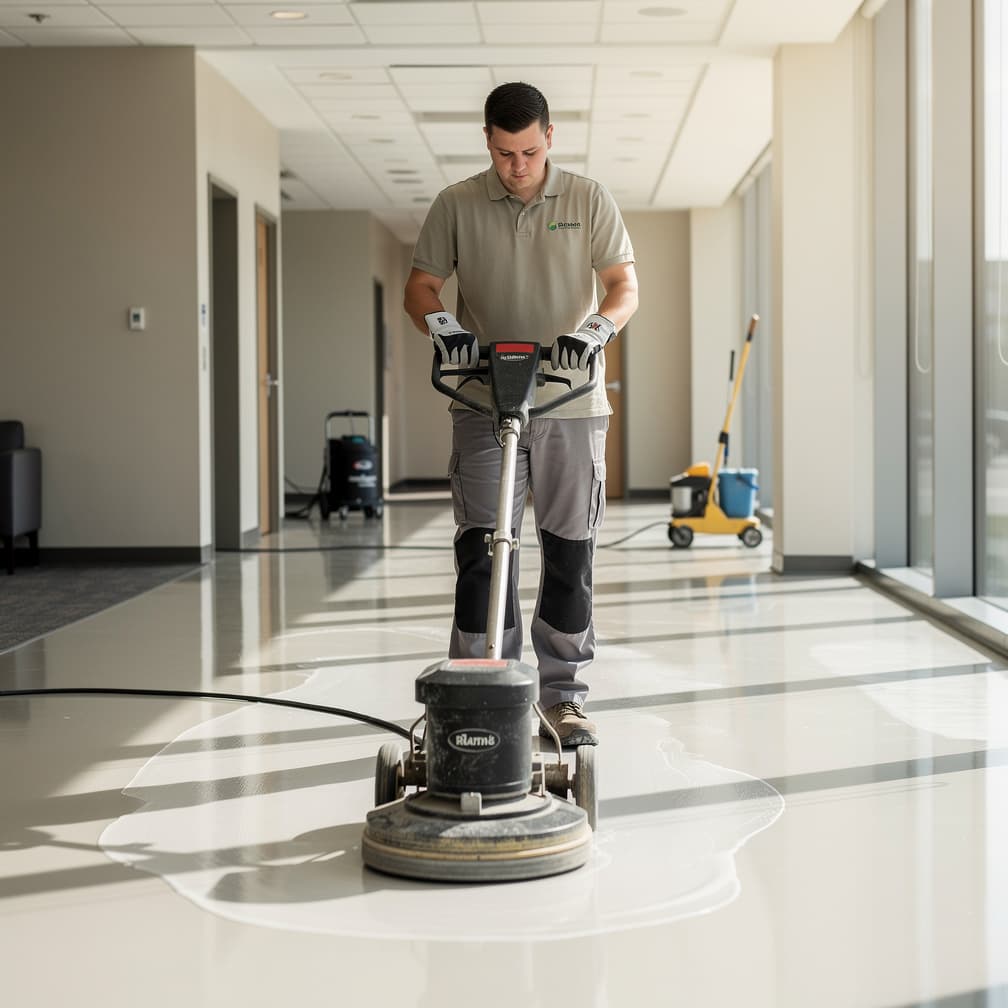

Buffers do damage in the one direction nobody is watching. The pad is on the floor, so the operator's eyes are down, and the machine walks sideways into a baseboard, a door frame, or the base of a glass display case. That is third-party property damage, and it is one of the two losses that make floor waxing service insurance in Vancouver worth carrying at all. The repair bill belongs to the building owner, who has a contractor on retainer and no interest in your estimate. Add a finish spill onto carpet and the argument moves from a patch to a whole run of flooring. Your agreement with a client in Vancouver probably assigned you both bills before anyone plugged a machine in. Read that clause before you price the job.
What Makes Vancouver Different
Limits named in a service agreement are a floor, and nobody will tell you when they rise. A tenant improvement project can push a building's vendor requirement up without warning to the vendors. You find out when the certificate you sent last year gets rejected on a routine document check. Per-occurrence and aggregate are different promises, and contracts in Washington routinely name both separately. One bad slip claim can eat an aggregate and leave the rest of your season thin. That is the number to check before a Vancouver account renews, not after the loss lands. Reinstatement of an aggregate does not happen mid-term simply because you need it to. Match your limits to your biggest contract, then confirm the paper says what the client believes.
Local Risk Factors in Vancouver
Ask where your drums of stripper and finish are stored, then ask whether the answer would worry a firefighter. Chemical stock changes how a shop gets rated in a fire-prone area, and quantity on hand matters far more than owners expect. A crew in Clark County that keeps a small working supply and reorders often is telling a different story from one with a wall of drums. Commercial Property may respond to fire and smoke damage, subject to how the stock is described on the application. Describe it accurately in Washington, because a claim is a bad moment to discover the application described a different shop.
What Coverage Does a Floor Waxing Service in Vancouver Need?
General Liability
Property managers name this line on every vendor certificate they hand out, and for a floor waxing crew the reason is a visitor who falls on a hallway you just finished. It could respond to third-party injury and to damage you cause to a client's walls, fixtures, or adjacent carpet. Damage to the floor you were actually working on is commonly excluded.
Example: A tenant crosses a lobby before the finish has cured, goes down, and files a claim through the building. Defense and settlement costs might fall to your liability limits, depending on how the form reads.
Commercial Property
Rising water sits outside this form, which surprises owners who assume water is water. What it may help cover is your shop and what fills it: burnishers, auto-scrubbers, drums of finish, and pads, against causes like fire, theft, and a burst pipe. Equipment kept in a trailer or a client's closet can fall outside a basic form, so where machines sleep belongs on the application.
Example: Someone cuts the lock on your shop overnight and two burnishers are gone before the first job of the morning. Replacement of the scheduled equipment could be addressed, less your deductible.
Workers Compensation
Payroll is the rating basis here, and the exposure is a crew that lifts heavy machines, hauls drums, and works on wet surfaces after hours. It is intended to handle medical costs and lost wages when a helper is hurt on the job. Thresholds vary by state, and many contracts demand proof whatever the threshold happens to say.
Example: A helper carrying a burnisher down a stairwell slips on a damp landing and tears a shoulder. Medical bills and time away from work would typically be handled through this line.
Business Owners Policy
Where General Liability answers for other people and Commercial Property answers for your own things, this packages both into one form, which usually means one certificate and one renewal for a small crew. It is generally meant for smaller operations, and the property limits inside it deserve a hard read against your real equipment list. Employee injuries stay outside it.
Example: A pipe bursts above the shop in Vancouver overnight, soaking pads, stock, and an auto-scrubber, while a client separately claims a gouged door frame. One policy might pick up both, up to the limits you chose.
How Much Does Floor Waxing Service Insurance Cost in Vancouver?
Floor Waxing Service Insurance is a bundle of separate policies, priced separately. The ranges below are typical figures for Vancouver for each line, except workers compensation, which is set by the state fund; a quote prices each one against your own operations.
| Coverage | Typical range | What moves your price |
|---|---|---|
| General Liability Insurance | $70 - $210 per month | Industry and risk classification, annual revenue, number of employees |
| Commercial Property Insurance | $55 - $170 per month | Building value and construction type, roof age and condition, fire protection class |
| Workers Compensation Insurance | Set by the state fund | Employee classification codes, total annual payroll, experience modification rate |
| Business Owners Policy Insurance | $95 - $270 per month | Annual revenue and industry class, building and contents values, square footage and building age |
Prices shown are general estimates, not guaranteed rates or quotes. Your actual premium will depend on the insurer, coverage selected, business details, location, claims history, and other underwriting factors. Learn about our pricing methodology.
What Are the Insurance Requirements for a Floor Waxing Service in Vancouver?
Workers' comp is generally required once you have your first employee, through the state fund. Washington runs workers' compensation through a state fund: employers buy coverage from the Washington State Department of Labor & Industries (L&I), not from private carriers. Common exemptions include sole proprietors and partners. Confirm current requirements directly with the fund before you hire.
Flood damage is typically excluded from standard policies. Standard commercial property and builders-risk-type policies typically exclude flood damage. Flood exposure varies address by address, so check your premises in FEMA's Flood Map Service Center before deciding; if you sit in a mapped flood zone, a separate policy through the National Flood Insurance Program is the usual starting point.
Where to verify licensing and coverage rules. The Washington Office of the Insurance Commissioner publishes consumer guidance and current insurance requirements for Washington businesses. When a contract or lease demands specific wording, the Washington Office of the Insurance Commissioner's guidance is the authoritative place to check.
Get Your Floor Waxing Service Quote in Vancouver
Compare rates from multiple carriers. Free quotes, no obligation.
Operating in Vancouver
- Buffers walk sideways whenever the operator's eyes stay on the pad, which is why gouged baseboards and dented door frames generate more small claims for this trade than anything the wax itself touches.
- Work in occupied buildings happens after the tenants leave, so the people who slip on your finish are strangers who never signed anything with you. An injury to a Vancouver tenant still begins with the building's own incident report.
- Drums of finish and cases of stripper sitting in a shop are stock and a chemical exposure at the same time, and the quantity on hand can change what a carrier is willing to write.
- Machines sleep somewhere every night, and where they sleep decides whether a theft claim goes anywhere: a locked shop, a trailer behind the house, and a client's janitor closet across Clark County are three different answers.
How to Buy: Advice for Vancouver Owners
Pull every service agreement you have signed before you ask anyone for a price. The insurance clause inside each one names your real minimum: a limit, sometimes additional insured wording, sometimes a waiver you already granted. General Liability is the line those clauses name most often, because a slip on a freshly finished floor is the loss buildings fear from your trade. If anyone is on payroll, Workers Compensation belongs in the same conversation, since lifting machines and walking wet surfaces is how crews get hurt. Rules on proof and licensing vary by state, and the Washington Office of the Insurance Commissioner publishes the current requirements for contractors working in Washington. Once you know the wording you have to satisfy, put the same specification in front of several participating carriers through CPK and compare what comes back for Vancouver work. Identical requirements, different prices: that is the only comparison worth making.
FAQ
Floor Waxing Service Insurance in Vancouver: FAQ
Annual revenue, payroll split by role, where equipment is stored, a list of machines by value, and your loss history including the small repairs you paid for yourself. Vague answers get priced defensively. If you decline specialty flooring, say so, because what you refuse to touch is a legitimate part of the picture. Participating carriers in Washington weigh those inputs in their own proportions.
Nothing about the machine requires it, but the building will. Service agreements for occupied space routinely demand proof of liability coverage, additional insured wording, and a named limit before anyone hands over a key in Vancouver. General Liability is the line that gets named, because a visitor slipping on a finished hallway is the loss the owner worries about. Without the certificate, the work simply does not start.
More than the medical bill, usually. A contested fall generates lawyers, an incident report you never see, and months of argument over signage and cure time. Defense costs get charged against your General Liability limits in many policies, so a claim you eventually win can still consume a large part of an aggregate. That is why the limit matters more than the monthly price.
Yes. Liability coverage responds to what happens to other people and their property, and that exposure exists whether or not anybody is on payroll. Working alone mostly changes the workers compensation question, since there may be no payroll to rate. It does not change what a property manager can demand on a certificate before letting you into the building after hours.
Often not, and this surprises owners every time. Liability forms commonly exclude damage to the specific property you were working on, on the theory that redoing your own work is a business cost rather than an insurable accident. Damage you cause to a wall, a fixture, or an adjacent carpet is a different question entirely. Read the wording before you assume either way.
It adds the building or its owner to your policy for claims arising out of your work, so they can turn to your coverage instead of their own. Property managers ask for it as a matter of routine on vendor contracts. The endorsement is a real change to the policy, not a line you type onto a certificate yourself, and carriers handle the request differently.
Sources
- 1.Washington Office of the Insurance Commissioner(Washington Office of the Insurance Commissioner publishes consumer guidance for insurance buyers.)
- 2.FEMA / FloodSmart(Flood coverage is typically purchased separately; FEMA administers the National Flood Insurance Program.)


